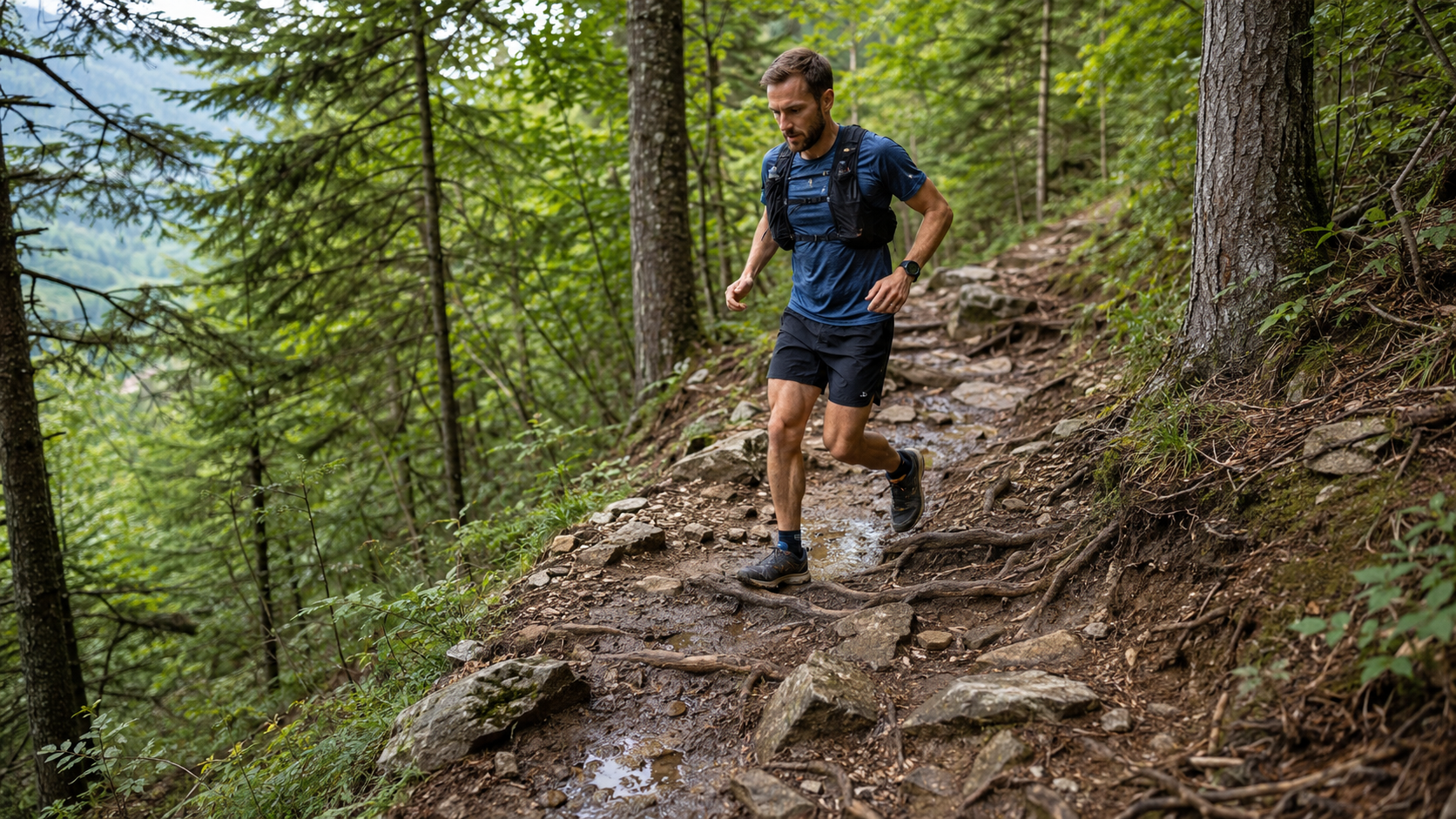
Trail Running Precautions: What to Watch Out for on Uneven Ground
Minjin Park
·
Trail running feels different from running on pavement in the best way. The air is fresher, the scenery changes constantly, and every route feels a little more like an adventure than a workout. Instead of staring at traffic lights or counting blocks, you are moving through dirt paths, roots, rocks, hills, leaves, mud, and open stretches of nature.
But that same variety is also what makes trail running more demanding.
Uneven ground asks more from your ankles, knees, hips, eyes, balance, and judgment. A smooth road lets you settle into a steady rhythm. A trail rarely does. One step may land on packed dirt, the next on loose gravel, and the next near a hidden root. That does not mean trail running is unsafe. It simply means it rewards awareness.
Whether you are new to trail running or moving from road running to dirt paths, a few precautions can make your runs feel smoother, safer, and more enjoyable.
Why Trail Running Requires a Different Kind of Attention
Road running is repetitive. Your stride, pace, and foot placement can stay fairly consistent for long stretches. Trail running is more reactive. Your body is constantly making small adjustments.
On uneven ground, your foot may land at a slight angle. Your ankle may need to stabilize quickly. Your eyes have to scan ahead, not just look straight down. Your pace may change from minute to minute depending on the terrain.
That is part of the appeal. Trail running builds coordination, agility, and strength in ways flat roads often do not. But it also increases the chance of trips, rolled ankles, slips, and fatigue-related mistakes.
The goal is not to be nervous on the trail. The goal is to stay alert enough that your body can respond before a small obstacle turns into a fall.
Start With Easier Trails Before Chasing Technical Routes
A common mistake is assuming that “trail running” means steep mountain paths, rocky climbs, and narrow forest tracks. It does not have to start there.
For beginners, a flat or gently rolling dirt path is enough. Park trails, riverside paths, wide forest roads, and beginner hiking routes are good places to start. These trails still give you a different surface from pavement, but they are not so technical that every step feels stressful.
A good beginner trail usually has:
Clear visibility ahead
Moderate elevation changes
Minimal loose rocks
A wide enough path to adjust your footing
Easy access back to the starting point
Once your ankles, calves, and coordination adapt, more uneven routes become easier to handle. Jumping too quickly into rocky or root-covered trails can make trail running feel harder than it needs to be.
Watch the Ground, But Do Not Stare at Your Feet
It is tempting to look directly at your shoes when the ground gets uneven. That feels safer at first, but it can actually make your reactions slower. By the time your foot is already above a rock or root, you have very little time to adjust.
A better habit is to scan several steps ahead. Let your eyes move between the trail in front of you and the ground closer to your feet. You want to notice what is coming before you reach it.
Think of it like driving. You do not stare at the hood of the car. You look down the road while still staying aware of what is nearby.
On smoother parts of the trail, you can look farther ahead and relax your vision. On technical sections, shorten your gaze and focus more closely on foot placement. This small habit can prevent many avoidable trips.
Shorten Your Stride on Uneven Ground
Trail running is not the place to force a long, road-style stride. Long strides can make it harder to react when your foot lands on an unstable surface.
A shorter stride gives you more control. Your feet stay closer to your body, your balance improves, and each step carries less impact. This is especially helpful on rocky sections, downhill paths, muddy ground, and narrow trails.
Shorter steps also allow quicker corrections. If your foot slips slightly, you can recover more easily because your body weight is not thrown too far forward.
You do not need to shuffle the whole time. Just let your stride naturally shorten when the trail becomes uneven. On smoother stretches, your stride can open up again.
Protect Your Ankles With Strength and Awareness
Ankles work hard during trail running. Every uneven landing asks the ankle joint and surrounding muscles to stabilize your body. If your ankles are not used to this, they can fatigue quickly.
A rolled ankle is one of the most common trail running concerns. It often happens when the foot lands partly on a rock, root, slope, or edge of the trail. The risk increases when you are tired, distracted, or moving too fast downhill.
To reduce the risk, pay attention to both preparation and technique.
Simple ankle-supporting exercises can help, such as calf raises, single-leg balance, controlled step-downs, and slow side-to-side movements. You do not need a complicated routine. A few minutes a few times a week can improve stability over time.
During the run, be especially careful when stepping on:
Loose stones
Wet roots
Slanted dirt
Leaf-covered ground
Trail edges
Narrow downhill turns
Not every rock is a problem, but unstable rocks are. If something looks loose, avoid landing your full weight on it.
Do Not Trust Leaves, Mud, or Wet Roots
Some trail hazards are obvious. A big rock in the middle of the path is easy to see. Other hazards are sneaky.
Leaves can hide holes, roots, and uneven ground. Mud can look shallow but behave like a slippery layer over hard dirt. Wet roots can be surprisingly slick, especially when they run across the trail at an angle.
After rain, shaded trails often stay wet longer than open areas. Wooden bridges, mossy stones, and packed clay can also become slippery.
When you reach these sections, slow down before you step onto them. Avoid sudden turns or hard braking. Keep your steps light and controlled.
For wet roots, try to step over them instead of directly on top of them. If you must step on one, place your foot as flat and controlled as possible, not at an angle.
Adjust Your Pace Instead of Fighting the Terrain
Trail running pace is not the same as road running pace. This is important.
A 30-minute trail run may feel much harder than a 30-minute road run, even if the distance is shorter. Hills, soft ground, uneven footing, and constant stabilizing movements all add effort.
Many runners get frustrated because their pace looks slower on a trail. But that is normal. Trail running should be judged more by effort than by speed.
On uneven ground, your pace should change naturally. Slow down on technical sections. Walk steep climbs if needed. Take extra care on descents. Then pick up the pace again when the trail opens up.
Trying to maintain a road-running pace on uneven terrain can lead to sloppy foot placement. Sloppy foot placement leads to trips, slips, and ankle mistakes.
A smart trail runner is not the person who runs every section fast. It is the person who knows when to slow down.
Be Extra Careful on Downhills
Downhill trail running can feel fun, but it is also where many falls happen. Gravity pulls you forward, your reaction time shrinks, and your legs absorb more impact.
The biggest mistake is leaning too far back and braking hard with each step. This can make your feet slide out from under you, especially on gravel or dry dirt.
Instead, try to stay controlled and slightly forward from the ankles, not hunched from the waist. Keep your knees soft. Use quick, shorter steps. Let your arms help with balance.
On steep or technical descents, there is nothing wrong with walking. In fact, hiking down a difficult section may be the smartest choice, especially if you are tired.
Watch for loose gravel on top of hard ground. It can act like tiny marbles under your shoes. Also be careful near switchbacks, where the outside edge of the trail may be loose or narrow.
Use Your Arms for Balance
On roads, your arm swing may be compact and repetitive. On trails, your arms often need to work more like balance tools.
When the ground gets uneven, allow your arms to move a little wider. This helps stabilize your body when your foot lands awkwardly or when you need to change direction quickly.
You may notice experienced trail runners spreading their arms slightly on technical descents. That is not just style. It helps with balance.
Avoid holding your phone in one hand for long stretches, especially on technical ground. It can affect your arm movement and make it harder to catch yourself if you stumble. A running belt, vest, or pocket is usually safer.
Choose Shoes With Enough Grip
You do not always need expensive trail shoes for easy dirt paths, but grip matters once the terrain becomes loose, muddy, rocky, or steep.
Road running shoes are built mainly for smooth surfaces. Their soles may not grip well on dirt, mud, wet leaves, or gravel. Trail running shoes usually have deeper lugs, more stable construction, and better traction.
Look for shoes that match the type of trail you actually run. A heavily lugged shoe may feel awkward on smooth park paths. A light trail shoe may not be enough for muddy or rocky routes.
Fit also matters. Your toes should have enough room, especially on downhills, because your feet can slide forward. At the same time, your heel should feel secure so your foot does not move around inside the shoe.
Poor fit can cause blisters, black toenails, and unstable landings.
Do Not Ignore Visibility
Trail visibility can change quickly. Dense trees, curves, hills, tall grass, and shadows can make it harder to see what is ahead. Early morning and late afternoon light can also create glare or dark patches.
Good visibility matters because trail running depends on quick reading of the ground.
Avoid technical trails in low light unless you have a proper headlamp and already know the route. A phone flashlight is not ideal for running because it keeps one hand occupied and usually does not provide stable, wide lighting.
Also consider whether other people can see you. On shared trails, hikers, cyclists, and other runners may come around corners unexpectedly. Bright or noticeable clothing can help, especially in wooded areas.
If you run during hunting season in areas where that applies, wearing highly visible colors is even more important.
Stay Aware of the Trail Around You
Uneven ground is not the only thing to watch. Trail running often means sharing space with other people, animals, bikes, and changing weather.
Keep your music low or use only one earbud if the trail is busy or remote. You want to hear cyclists, approaching runners, dogs, wildlife, or weather changes.
When passing others, slow down and communicate clearly. A simple “on your left” or “passing when you have room” can prevent awkward collisions.
On narrow paths, yield respectfully. Trail etiquette is not just about being polite; it also helps everyone move safely.
Plan for Weather and Surface Changes
A trail can feel completely different depending on the weather. A dry dirt path may become slick after rain. A shaded section may stay icy or muddy longer than expected. A hot exposed trail may become draining even if the distance is short.
Before heading out, consider recent weather, not just current weather. If it rained heavily yesterday, the trail may still be wet today. If it has been dry for weeks, dusty ground and loose gravel may be more common.
Wind can also knock down branches or scatter debris across the path. After storms, familiar trails may have new obstacles.
This is one reason trail running requires flexibility. The route you planned may not be the route you should complete that day.
Carry the Basics, Even on Shorter Runs
For a short, familiar trail close to home, you do not need to pack like you are going on an expedition. But it is wise to carry a few basics, especially if the trail is quiet or unfamiliar.
Useful items include:
Water
Phone
ID
Small snack for longer runs
Basic first-aid item, such as a bandage
Weather-appropriate layer
Map or offline route
Whistle if running remote trails
Trail runs can take longer than expected. A wrong turn, muddy section, ankle tweak, or sudden weather change can turn a simple run into a slower walk back.
Having basics with you does not mean you expect something bad to happen. It means you are giving yourself options.
Tell Someone Where You Are Going
This may sound overly cautious for a casual run, but it is a smart habit. Trail routes can be less predictable than road routes. Cell service may be weak. A small injury can make returning slower than expected.
Before running an unfamiliar or quieter trail, tell someone where you are going and roughly when you expect to be back. You can also share your location through your phone if that feels appropriate.
For solo runners, this habit is especially important. Even confident runners can trip, get turned around, or misjudge daylight.
Be Honest About Fatigue
Many trail running mistakes happen near the end of the run. Your legs are tired, your ankles are less responsive, and your attention starts to drift.
That is when roots seem to appear out of nowhere.
If you notice that you are tripping more often, dragging your feet, or struggling to focus, slow down. Walk for a few minutes. Shorten the route if needed.
Trail running requires mental focus as well as physical effort. When your body is tired, your brain also has less energy for quick decisions.
It is better to finish slightly slower than to force the last stretch and fall.
Build Trail Skills Gradually
Trail running is a skill. You improve by doing it, but you improve best when the difficulty increases gradually.
Start with shorter distances than you would run on the road. A 3-mile trail run may feel more demanding than a 5-mile road run depending on terrain. Give your calves, ankles, and stabilizing muscles time to adapt.
Add more technical trails slowly. Try gentle dirt paths first, then routes with mild roots or rocks, then hillier or narrower trails.
You can also practice simple movement skills, such as stepping lightly, lifting your feet higher, changing direction smoothly, and walking technical sections without feeling like you “failed” the run.
Trail running confidence comes from repeated good decisions.
Warm Up Before Technical Terrain
A cold start on uneven ground can feel clumsy. Your ankles, hips, and calves may not be ready for quick adjustments right away.
Begin with easy movement. Walk for a few minutes or jog slowly on the smoother part of the trail. Let your body wake up before you hit rocky, rooty, or steep sections.
Dynamic warm-up movements can also help, such as ankle circles, leg swings, gentle lunges, or calf raises. You do not need a long routine. The point is to prepare your joints and muscles for varied movement.
This is especially helpful if you are running early in the morning, in colder weather, or after sitting for a long time.
Walk steep climbs. Walk slippery descents. Walk through mud if running would tear up the trail or risk a fall. Walk when visibility is poor. Walk when you are unsure where the route goes.
Walking is not a weakness in trail running. It is part of the sport. Even experienced trail runners hike difficult sections.
The goal is not to run every single step. The goal is to move efficiently and safely through changing terrain.
Final Thoughts
Trail running is rewarding because it asks you to be present. You cannot fully zone out the way you might on a flat road. The ground keeps changing, and your body has to change with it.
That is also why precautions matter.
Watch the trail ahead. Shorten your stride when the ground gets uneven. Respect wet roots, loose rocks, mud, leaves, and downhill sections. Choose shoes with proper grip. Adjust your pace based on effort, not ego. Carry the basics, especially on unfamiliar routes.
Uneven ground does not have to be scary. With the right habits, it becomes part of what makes trail running enjoyable. Every step teaches balance, patience, and awareness — and those are exactly the skills that help you feel more confident on the trail.
Hi, I’m the creator and editor behind ZestyHabit. I research everyday safety, first aid, and practical wellness topics using official guidance and reliable public sources, then turn that information into clear, realistic steps for daily life.
My goal is to help readers make safer, better-informed choices at home and beyond.