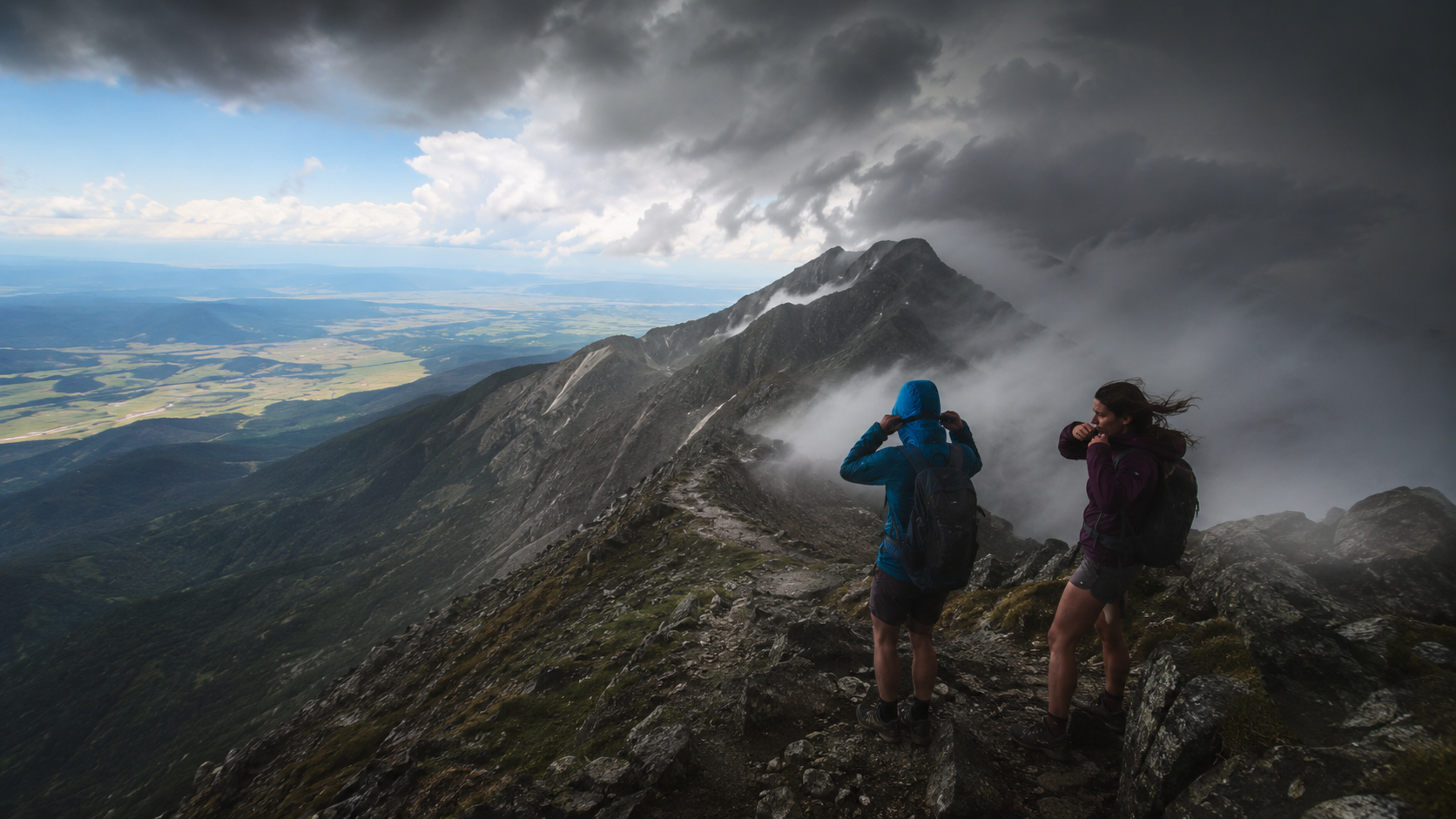
Why Mountain Weather Changes Faster Than Weather on Flat Ground
Minjin Park
·
Mountain weather can shift quickly from sunny to cold, windy, rainy, or foggy. Learn why conditions change faster at higher elevations and how hikers, drivers, and travelers can prepare safely.
The sky is blue. The trailhead feels warm. The parking lot is calm. Families are packing snacks, hikers are tying boots, and everyone is thinking the same thing: this looks like perfect weather.
Then, a few hours later, everything feels different.
Clouds build around the peaks. The temperature drops. Wind picks up. A light mist turns into steady rain. A clear trail becomes foggy. Thunder is suddenly closer than expected.
This is one of the reasons mountain weather deserves special attention. It can change faster than weather in flat areas, and those changes can feel more dramatic because you may be farther from shelter, cell service, paved roads, or your car.
The goal is not to make mountain travel sound scary. Millions of people safely enjoy hiking, camping, skiing, scenic drives, and national parks every year. But mountains have their own weather personality. Understanding that personality can help you pack smarter, turn around earlier, and avoid being surprised by conditions that were not obvious at the start of the day.
The Main Reason: Elevation Changes Everything
The biggest difference between mountain weather and lowland weather is elevation.
As you go higher, the atmosphere changes. The air is usually cooler, thinner, and more exposed to wind. Even if the lower valley feels mild, the summit or ridge may feel much colder.
A common rule of thumb is that air temperature drops as elevation increases. The exact amount varies, but many hikers notice a clear difference between the trailhead and the top of a mountain.
That means you can leave your car in a T-shirt and need a jacket later the same day.
A warm trailhead does not guarantee a warm summit. Calm air in a valley does not mean calm wind on a ridge. Clear skies near town do not mean clouds will not form higher up.
Mountains create different weather zones over short distances. In flat areas, you may drive for miles and feel similar conditions. In the mountains, you can climb a few thousand feet and feel like you entered a different season.
Mountains Force Air to Rise
Mountains physically interrupt moving air.
When wind pushes air toward a mountain range, that air has to go somewhere. Often, it is forced upward along the slope. As the air rises, it cools. Cooler air can hold less moisture, so clouds may form. If enough moisture builds, rain, snow, fog, or storms can develop.
This process is one reason one side of a mountain may be wet while the other side is dry.
Why Clouds Seem to Appear Out of Nowhere
People often say mountain clouds “came out of nowhere.” In reality, the mountain helped create them.
Moist air rises up the slope, cools, and condenses into visible clouds. What looked like clear air earlier may turn cloudy quickly once the sun warms the ground, wind shifts, or moisture increases.
This is especially noticeable in the afternoon. A clear morning can turn into a cloudy, windy, or stormy afternoon, particularly in summer mountain areas.
Temperature Swings Are Bigger at Higher Elevations
Mountain temperatures can change quickly because of elevation, sunlight, shade, wind, and time of day.
A trail may feel warm in direct sun but cold in the shade. A ridge may be chilly because it is exposed to wind. A canyon or forested slope may hold cool air longer than open ground. Once the sun dips behind a ridge, the temperature can drop faster than people expect.
Why Layering Matters
This is why experienced hikers often dress in layers instead of relying on one heavy jacket or one light shirt.
A practical mountain clothing setup might include a breathable base layer, a warm layer, and a wind or rain shell. You may not need all of them at the beginning, but having them gives you options.
The mistake is thinking, “I’m warm now, so I’ll be fine.” Mountain safety is not about how you feel at minute one. It is about how prepared you are for hour three, hour five, or the walk back down.
Wind Is Stronger and Less Predictable
Wind often behaves differently in mountain terrain.
Ridges, passes, saddles, cliffs, and valleys can funnel wind and make it stronger. A light breeze in a parking lot may turn into a steady push on an exposed overlook. Wind can also shift direction quickly as air moves around terrain.
Why Wind Makes Weather Feel Worse
Wind does not just make your hair messy. It can make cold temperatures feel colder, dry out your skin, make it harder to communicate, and increase fatigue.
For hikers, wind can also affect balance on narrow trails, rocky areas, snowy slopes, or exposed viewpoints. For drivers, wind can be challenging on mountain roads, especially when towing, driving a high-profile vehicle, or crossing open passes.
A windy summit may not be unsafe by itself, but wind combined with cold, rain, fog, or fatigue can make a simple outing feel much more difficult.
Afternoon Storms Can Build Quickly
In many mountain areas, especially during warmer months, mornings are often calmer and afternoons are more active.
The sun heats the ground. Warm air rises. Moisture builds. Clouds grow taller. Thunderstorms may develop faster over mountains than over nearby flat areas.
This is why many hikers try to start early and plan to be below exposed ridges or summits before afternoon storms become more likely.
Lightning Risk Is Different in the Mountains
Lightning is especially concerning in exposed mountain areas because hikers may be near ridgelines, summits, open meadows, isolated trees, metal poles, or rocky high points.
A storm that looks distant can become a problem quickly if you are on exposed terrain with a long way back.
If thunder is heard, it is time to take the situation seriously. Mountain storms can move fast, and sound may be confusing around ridges and valleys.
Fog and Low Clouds Can Reduce Visibility Fast
Mountain fog can be beautiful from a distance and disorienting when you are inside it.
Low clouds may move across ridges, passes, and trails quickly. A clear view can shrink to a few yards. Trail markers, road edges, landmarks, and signs can become harder to see.
Why Fog Is More Than an Inconvenience
Fog can make it easier to miss a turn, step off a trail, underestimate a drop-off, or lose track of your group.
Drivers may also be surprised by sudden fog on mountain roads. A curve that seemed easy in clear weather can feel very different when visibility drops.
The best habit is to slow down, stay aware of your route, and avoid pushing forward into conditions that make navigation uncertain.
Rain and Snow Can Happen When the Valley Is Dry
Mountains can receive precipitation even when nearby lowlands stay dry.
Air rising over mountains cools and forms clouds. Higher elevations are also colder, which means rain may turn into snow, sleet, or freezing rain sooner than people expect.
In shoulder seasons like spring and fall, this can be especially surprising. A town may feel like autumn while the higher trail feels like winter.
The “Just a Little Rain” Problem
Light rain may not sound serious, but in the mountains it can change the whole experience.
Trails become slippery. Rocks get slick. Dry creek beds may rise. Clothing gets wet. Wind makes wet clothes feel colder. Dirt roads may become muddy or difficult for vehicles.
If temperatures drop, wet conditions can become uncomfortable or even risky for unprepared hikers.
This is why a lightweight rain jacket is one of the most useful items to bring, even when the forecast looks mostly good.
Snowfields and Shaded Areas Can Create Their Own Microclimates
Mountain terrain is full of small weather differences called microclimates.
A sunny slope may feel warm and dry. A shaded forest just around the bend may be cool and damp. A north-facing slope may hold snow long after nearby areas have melted. A canyon may trap cold air. A rocky ridge may heat up quickly in the sun.
Why This Matters for Everyday Visitors
You do not have to be a meteorologist to notice microclimates. You just have to pay attention.
If you are hiking in spring, a trail may begin dry and later cross snow patches. If you are driving in winter, one side of the road may be clear while shaded curves remain icy. If you are camping, a low valley may get colder at night than a slightly higher, more open area.
Small location changes can make a big comfort difference.
Weather Forecasts Are Helpful, But Mountains Add Uncertainty
Forecasts are useful, and checking them before a mountain trip is one of the smartest habits you can build. But mountain forecasts can be more complicated than city forecasts.
A forecast for a nearby town may not match the trail, summit, pass, or campground you plan to visit. Elevation matters. Exposure matters. Terrain matters.
Check the Right Forecast
Instead of only checking the nearest town, look for a forecast that matches your actual destination or elevation as closely as possible.
For hikes, check trailhead and summit conditions if available. For scenic drives, check mountain pass forecasts. For camping, look at nighttime lows, wind, and precipitation chances, not just daytime highs.
Also check the hourly forecast. A day labeled “partly cloudy” may still have thunderstorms after 2 p.m. or strong winds in the evening.
Common Mistakes People Make With Mountain Weather
Dressing for the Car, Not the Mountain
This happens all the time. People dress for the weather they feel when they step out of the car.
But the car is usually at a lower elevation, near shelter, and not exposed to the same wind or temperature changes as the trail ahead.
Bring layers even when you do not think you will need them.
Starting Too Late
A late start can put you at higher elevations during the most active part of the weather day.
This matters most during summer thunderstorm season, but it can also matter in winter when daylight fades early and temperatures drop quickly.
Starting earlier gives you more flexibility.
Ignoring Clouds That Are Building Vertically
Flat, thin clouds may not mean much. But clouds growing taller and darker can signal changing weather.
If clouds are building quickly over peaks or ridges, pay attention. You do not have to turn around at the first cloud, but you should start thinking ahead.
Relying Only on a Phone
Phones are useful, but mountain areas often have weak service. Weather apps may not update. Batteries drain faster in cold conditions. GPS can be less helpful if you do not have offline maps.
Carry basic backups: a paper map when appropriate, a charged power bank, and a plan that does not depend entirely on signal.
Refusing to Turn Around
This is one of the biggest safety mistakes.
People sometimes keep going because they are close to the viewpoint, summit, waterfall, or campsite. But mountain weather does not care how close you are to your goal.
Turning around early is not failure. It is good judgment.
Warning Signs That Weather May Be Changing Fast
You do not need advanced training to notice basic warning signs.
Watch for darkening clouds, sudden temperature drops, wind increasing, thunder, fog moving in, rain curtains in the distance, clouds forming around peaks, or a sudden change in how the air feels.
Also pay attention to your own comfort. If you are getting cold, tired, wet, or unsure of the route, conditions are already affecting your safety margin.
A good outdoor habit is to ask, “Would this still feel manageable if it got colder, windier, or darker?” If the answer is no, it may be time to adjust your plan.
Simple Ways to Prepare for Fast-Changing Mountain Weather
Pack for the Weather You Might Get
Do not pack only for the weather you hope for.
A basic mountain day pack might include a rain jacket, warm layer, extra socks, water, snacks, sun protection, a small first aid kit, flashlight or headlamp, map, power bank, and emergency blanket.
For longer hikes or remote areas, you may need more.
Start Early and Set a Turnaround Time
An early start gives you more daylight and usually calmer conditions.
Before you begin, choose a turnaround time. This helps you avoid the trap of pushing onward just because the destination feels close.
Check Multiple Weather Sources
Look at the general forecast, hourly forecast, radar if available, and any local park or ranger updates.
For mountains, local information is valuable. A national weather app may not capture trail-specific conditions, recent washouts, snowfields, or road closures.
Tell Someone Your Plan
Before heading into mountain areas, let someone know where you are going and when you expect to return.
This is a simple habit, especially for solo hikers, scenic drivers, and families exploring less crowded areas.
Be Willing to Change the Plan
A mountain trip can still be a good day even if you do not reach the original destination.
Choose a lower trail. Visit a viewpoint closer to the car. Wait out mild weather in a safe place. Save the summit for another day.
Flexibility is one of the best safety tools you have.
Why This Matters for Families and Casual Travelers
Mountain weather safety is not only for serious hikers.
Families visiting national parks, couples taking scenic drives, tourists stopping at overlooks, photographers chasing sunset, and kids playing near mountain cabins can all be affected by sudden weather changes.
A child who was comfortable at the trailhead may get cold quickly in wind. A driver may not expect fog around the next pass. A family picnic may become uncomfortable if rain and lightning move in.
The more casual the outing feels, the easier it is to underprepare.
That is why small habits matter: bring layers, check the forecast, carry water, watch the sky, and leave room in the schedule to turn back.
Conclusion: Mountains Make Their Own Weather
Mountain weather changes faster than lowland weather because mountains change the air around them. Elevation cools the air. Slopes force air upward. Wind moves differently around ridges and valleys. Clouds can build quickly. Fog, rain, snow, and temperature drops can appear even when the valley looks calm.
You do not need to be afraid of mountain weather. You just need to respect how quickly it can shift.
Check a forecast that matches your actual route. Dress in layers. Start earlier than you think you need to. Watch the clouds and wind. Keep your phone charged, but do not rely on it completely. Most importantly, be willing to turn around when the weather starts changing.
A beautiful mountain day is even better when you are prepared for the surprises that come with it.
Hi, I’m the creator and editor behind ZestyHabit. I research everyday safety, first aid, and practical wellness topics using official guidance and reliable public sources, then turn that information into clear, realistic steps for daily life.
My goal is to help readers make safer, better-informed choices at home and beyond.