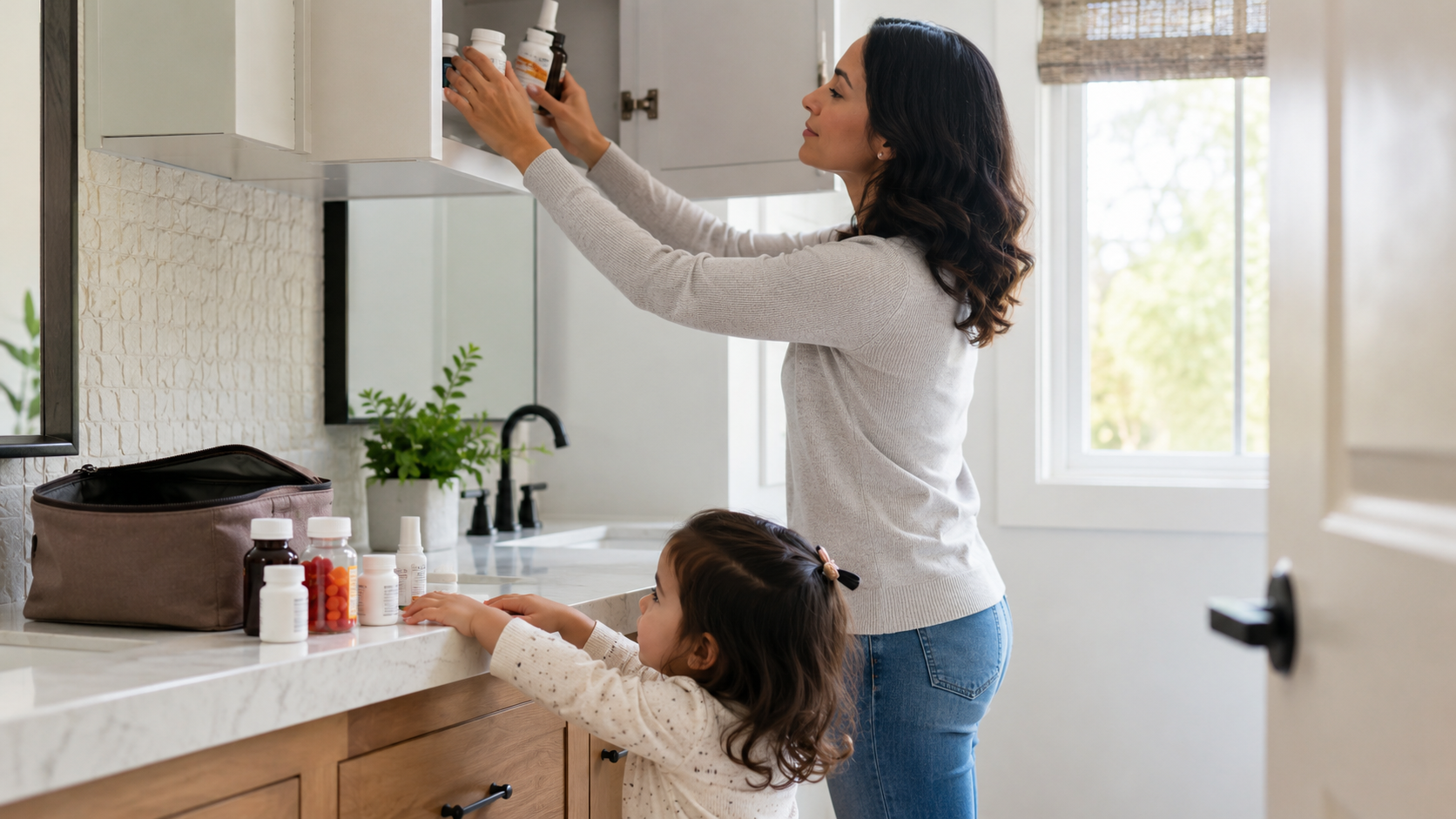
Why Keeping Supplements and Medicine Within a Child’s Reach Is Risky
Minjin Park
·
Vitamins, supplements, and medications can look harmless or even candy-like to children, but accidental ingestion can become serious quickly. Learn where hidden risks show up at home and how to store these products more safely.
Most adults do not think twice about a bottle of vitamins on the kitchen counter.
It may be part of a morning routine: coffee, breakfast, multivitamin, fish oil, allergy pill, prescription medication, maybe a gummy supplement. The bottle stays near the sink or next to the coffee maker because that makes it easier to remember.
To an adult, that bottle is ordinary.
To a child, it can look interesting, colorful, sweet, or forbidden in exactly the way that invites curiosity.
This is why supplements and medications should never be kept where children can reach them. The risk is not limited to prescription drugs. Children can get into vitamins, melatonin gummies, iron supplements, pain relievers, cold medicine, herbal products, sleep aids, antacids, and many other everyday products.
Even products that seem “natural” or “healthy” can be harmful if a child takes too much or takes something meant for an adult. The CDC’s medication safety guidance says medicines and supplements should be kept in a safe location that is too high for young children to reach or see, and they should not be left out on counters or at a child’s bedside, even if another dose is needed later.
This article is not meant to make parents panic. It is meant to make one simple household habit feel automatic: medicine and supplements go up, away, and out of sight after every use.
Why Supplements and Medicine Are Especially Tempting to Kids
Young children explore the world with their hands and mouths. They do not understand the difference between a gummy vitamin and gummy candy. They may not know that a “tiny pill” can be powerful.
Many Products Look Like Candy
Gummy vitamins, chewable tablets, flavored melatonin, children’s pain relievers, cough drops, and brightly colored pills can all look appealing.
Some smell fruity. Some taste sweet. Some come in fun shapes. Some are stored in bottles that rattle like toys.
Adults may see labels, doses, warnings, and expiration dates. Children see color, sound, texture, and curiosity.
This is why it is risky to leave a bottle on a nightstand, bathroom counter, coffee table, purse, backpack, kitchen island, or low shelf. A child does not need much time to open, chew, or swallow something.
“Child-Resistant” Does Not Mean Child-Proof
Safety caps help, but they are not magic. Some children can open them. Some bottles are not closed correctly after use. Some supplements do not have child-resistant packaging at all. Pill organizers are especially easy to open unless they are specifically designed to be child-resistant.
The Up & Away campaign recommends keeping medicines in original, child-resistant containers and relocking caps fully after each use; it also notes that many pill organizers are not child-resistant and can be opened easily by young children.
A safety cap is a backup. Safe storage is the main protection.
Children Imitate Adults
Kids watch everything.
If they see an adult take a pill every morning, they may copy the action later. If a parent says, “This vitamin is like a little treat,” a child may remember the “treat” part more than the “only one” part.
It helps to use neutral language. Call medicine medicine, not candy. Explain that only adults give medicine, and only when it is needed. But do not rely on teaching alone. Young children are impulsive, and safe storage matters more than explanations.
Why “Just Vitamins” Can Still Be Dangerous
Many people treat supplements as gentler than medication. Sometimes they are less potent than prescriptions, but that does not mean they are harmless.
A child’s body is smaller. A dose meant for an adult may be far too much. Some products contain concentrated ingredients. Some combine several ingredients in one capsule, chewable, powder, or gummy.
Iron Supplements Deserve Extra Caution
Iron is a common ingredient in prenatal vitamins, multivitamins, and standalone supplements. It is useful when taken appropriately, but too much iron can be dangerous for children.
Because iron tablets may look small and ordinary, they should be stored as carefully as prescription medication.
Melatonin Gummies Can Be Confusing
Melatonin is often sold as a supplement, and many products look like candy. Because gummies can taste sweet, children may eat several if the bottle is accessible.
The CDC has reported concerns about pediatric melatonin ingestions, including accidental ingestion involving young children. That does not mean every home must avoid melatonin, but it does mean these products should be treated like medicine and stored securely.
Herbal and “Natural” Products Still Matter
Herbal drops, essential oil capsules, sleep blends, immune support products, weight-loss supplements, pre-workout powders, and concentrated extracts can all create risk if a child gets into them.
Natural does not mean safe for a child in any amount.
Adult Medications Can Be Powerful in Small Amounts
Prescription medication, heart medication, blood pressure pills, diabetes medication, antidepressants, sleep medication, pain relievers, and many other adult medicines should be kept locked or otherwise secured.
Some medications can be dangerous to a child even in small quantities. If there is any possibility that a child swallowed medication, do not guess. Contact Poison Control or emergency help.
Common Places Adults Leave Medicine Without Realizing the Risk
The danger often comes from convenience. People leave products where they use them.
Kitchen Counters
The kitchen counter is one of the most common places for vitamins and daily medication. It is convenient, visible, and part of the morning routine.
But counters are not always out of reach. A toddler can climb. A preschooler can pull over a chair. An older child may grab something while no one is watching.
A bottle near the coffee maker may be helpful for memory, but it should not stay there after use.
Nightstands
Nightstands are risky because they are low and often hold sleep aids, pain relievers, allergy pills, antacids, or supplements.
A child wandering into a bedroom can open a drawer, climb onto the bed, or reach a bottle beside a lamp.
If you need medication at night, use a child-resistant storage option that still keeps it secure.
Bathroom Cabinets
Many people store medicine in bathroom cabinets. The problem is that some bathroom storage is low, unlocked, or easy to open. Bathrooms also have privacy, which means a child may be alone long enough to explore.
A high, locked cabinet is better than a low vanity drawer.
Purses, Backpacks, and Coat Pockets
Visitors often carry medication. Grandparents may have pill cases. Guests may bring pain relievers, prescriptions, vitamins, or supplements in a purse or travel bag.
A child can unzip a bag quickly, especially if it is left on the floor, couch, or entry bench.
The American Academy of Family Physicians’ Up & Away summary includes asking family members and visitors to keep purses, bags, and coats out of a child’s sight and reach.
Weekly Pill Organizers
Pill organizers are convenient for adults but often easy for children to open. They may contain a whole week’s worth of medication in one container.
If a pill organizer is needed, choose one with child-resistant features and still store it securely.
Travel Bags
Travel disrupts routines. Medicine may end up on hotel nightstands, in suitcase pockets, or in toiletry bags on the floor.
When traveling with children, treat medicine storage the same way you would at home: up, away, and out of sight.
Everyday Scenarios That Lead to Accidental Ingestion
Accidental medicine ingestion usually happens in ordinary moments.
“I’ll Put It Away After Breakfast”
A parent takes a vitamin, gets interrupted, and leaves the bottle on the counter. A child climbs onto a stool and finds it.
The bottle was not left out for hours. It only took a short distraction.
“Grandma’s Purse Is on the Couch”
A visiting relative arrives with a purse full of daily medications. The purse looks harmless. A child opens it while adults are talking.
This is common because visitors may not think about childproofing their own belongings.
“The Cap Was Almost Closed”
A bottle may look closed, but if the safety cap is not fully locked, a child may open it more easily.
After every use, twist the cap until it is fully secured. Some caps click. Some require lining up arrows. Check the specific bottle.
“It Was Just a Gummy Vitamin”
A child finds gummy vitamins and eats several. Because they look and taste like candy, the child may not stop at one.
Gummy products should be stored with the same care as medication.
“The Medicine Was Needed Again Soon”
Sometimes medicine is left out because another dose is due in a few hours. The CDC specifically warns not to leave medicines or supplements out, even if you need to give the medicine again later.
Use a phone alarm, written note, or medication tracking app instead of leaving the bottle within reach.
Warning Signs a Child May Have Gotten Into Medicine
Sometimes ingestion is witnessed. Other times, you may only notice clues.
These signs can have many causes, but if medication or supplements are involved, take the possibility seriously.
What To Do If a Child May Have Swallowed Medicine or Supplements
This is one of those situations where guessing is not helpful.
If you think a child swallowed medication, vitamins, supplements, or an unknown product, contact Poison Control in the U.S. at 1-800-222-1222 or use the official online Poison Control tool. Poison Control says both options provide free, expert, confidential help; if the person collapses, has a seizure, has trouble breathing, or cannot be awakened, call 911.
Do Not Wait for Symptoms
A child may look fine at first. Some effects may take time. The safest move is to ask for expert guidance right away.
Do Not Try Home Remedies
Do not try to make the child vomit unless Poison Control or emergency professionals specifically tell you to. Do not give random food, milk, water, or other substances as a “fix” without guidance.
Save the Bottle or Package
If possible, keep the bottle, label, package, or pill organizer nearby. Poison Control may ask about the product name, strength, amount missing, child’s age, and timing.
If you are going to urgent care or the emergency department, bring the container with you.
How to Store Supplements and Medicine More Safely
A safe storage system should be easy enough that adults actually use it every day.
Store Products Up High
Keep medicine and supplements high enough that children cannot reach them. Remember that children climb, so “high” should mean truly out of reach, not just above waist level.
A high locked cabinet is better than a high open shelf.
Keep Them Out of Sight
Out of sight matters. If a child sees a colorful gummy bottle on a shelf, they may try harder to reach it.
Store products behind a closed door, in a cabinet, or in a secured container.
Use Locked Storage When Possible
A lockbox or locked cabinet is especially useful for prescription medication, sleep aids, gummies, iron supplements, and products that look appealing to kids.
This is also helpful in homes where visiting children come over.
Keep Products in Original Containers
Original containers include labels, dosing information, ingredients, expiration dates, and safety caps. Moving pills into random bags or containers can create confusion.
If you use a pill organizer, store it securely and choose one with child-resistant features when possible.
Put Products Away Immediately After Use
This is the habit that matters most.
Take the medicine, close the cap, and put it away right away. Do not leave it out while making coffee, answering a text, brushing teeth, or helping a child.
Check Caps Every Time
Make sure safety caps are fully locked. If a cap is broken or no longer closes properly, transfer the product only according to pharmacist guidance or replace it safely.
Do not keep using a bottle that does not close.
What About Medicine You Need Quickly?
Some adults need medication within quick reach. That can make child-safe storage feel inconvenient.
The goal is to balance access with safety.
If you need medicine regularly, consider a locked container that is easy for you to open but not accessible to children. Keep a reminder system on your phone instead of leaving the bottle out. Talk with your pharmacist if you need packaging that works for both safety and accessibility.
For emergency medications, ask your healthcare provider or pharmacist how to store them safely while keeping them available when needed.
Teaching Children About Medicine
Children should learn basic medication safety, but teaching is not a substitute for storage.
Use Clear Language
Say, “Medicine is not candy.” Say, “Only a grown-up gives medicine.” Say, “Never eat something you find.”
Keep it simple and repeat it often.
Avoid Calling Vitamins Candy
Even if a gummy vitamin tastes good, do not call it candy. That can make children more likely to seek it out.
Model Careful Behavior
Take medicine calmly, put it away, and avoid leaving bottles open. Children learn from routines.
Teach Older Children to Ask First
Older children should know not to take medicine or supplements without an adult’s permission, even if it is something they have taken before.
A Quick Home Safety Check
Walk through your home and look for medicine and supplement risks.
Check:
Kitchen counters
Coffee stations
Bathroom drawers
Nightstands
Bedside tables
Purses and backpacks
Coat pockets
Diaper bags
Grandparent bags
Travel toiletry kits
Desk drawers
Gym bags
Weekly pill organizers
Children’s rooms
Guest rooms
If a child can see it, reach it, climb to it, or open it, move it.
Special Care During Visits and Holidays
Holiday gatherings, sleepovers, and family visits can create extra risk.
Guests bring medications. Bags sit on floors. Coats pile on chairs. Kids explore unfamiliar rooms. Adults get distracted by cooking and conversation.
Before guests arrive, choose a safe place for purses, coats, and bags. A bedroom with a closed door may not be enough if children can enter. A high closet shelf or locked room is better.
If grandparents or relatives take daily medication, gently remind them that young children can get into pills quickly. This is not about blame. It is about creating a child-safe home for the visit.
Safely Getting Rid of Unneeded Medicine
Old or unused medicine adds unnecessary risk.
Check expiration dates and remove products you no longer need. Many communities have medicine take-back programs or pharmacy disposal options. Follow local guidance for safe disposal.
Do not leave old pills in drawers “just in case.” The fewer unnecessary products in the home, the easier it is to keep the remaining ones secured.
Final Thoughts: Convenience Should Not Beat Safe Storage
Supplements and medicine are part of everyday life in many homes. They help adults manage routines, support health, and treat common issues. But to a child, those same bottles may look like candy, toys, or something worth exploring.
That is why storage matters so much.
Keep medicines and supplements up, away, and out of sight. Use child-resistant containers, but do not rely on caps alone. Put products away immediately after every use. Watch purses, backpacks, nightstands, and pill organizers. Be extra careful with gummies, iron supplements, sleep aids, and any adult medication.
And if a child may have swallowed something, contact Poison Control or emergency help right away rather than waiting to see what happens.
A safe routine does not have to be complicated. It just has to be consistent. The bottle comes out, the dose is taken, the cap is locked, and the bottle goes back to its secure place. That small habit can prevent a frightening accident and make your home safer for every child who lives there or visits.
Hi, I’m the creator and editor behind ZestyHabit. I research everyday safety, first aid, and practical wellness topics using official guidance and reliable public sources, then turn that information into clear, realistic steps for daily life.
My goal is to help readers make safer, better-informed choices at home and beyond.