Why Human Medications Can Be Dangerous for Pets—and How to Prevent Accidental Poisoning
Minjin Park
·
Human medicines can seriously harm dogs and cats. Learn which medications are risky, how accidental exposure happens, and how to keep pets safer at home.
A bottle of pain reliever on the nightstand may not look like a pet hazard. Neither does a dropped allergy pill, a tube of prescription skin cream, or a weekly pill organizer sitting beside the coffee maker.
Yet human medications are among the household substances pets frequently encounter. The ASPCA Animal Poison Control Center handled more than 451,000 animal toxin-related calls in 2024, showing how common accidental exposures can be.
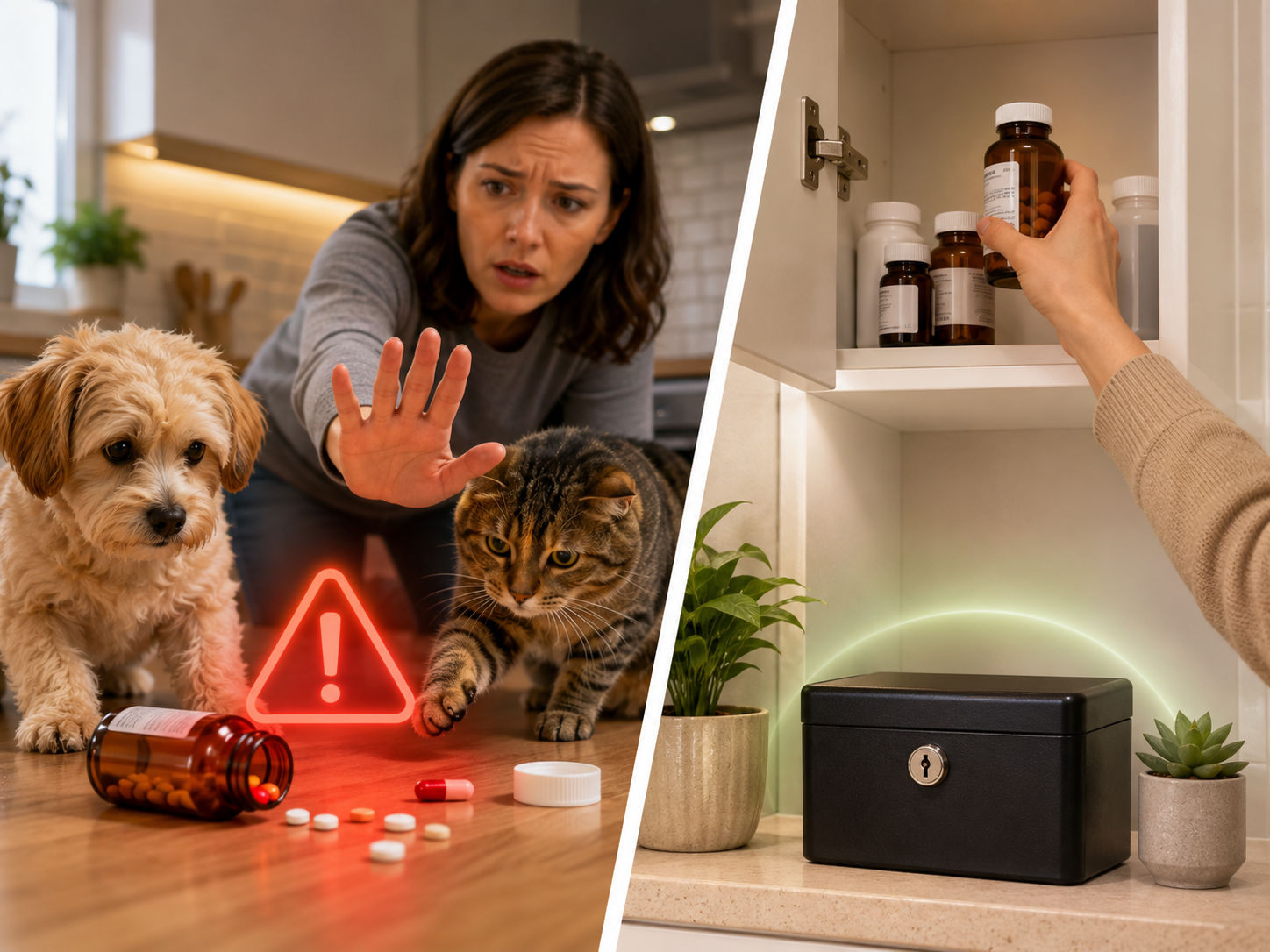
Most incidents are not caused by neglect or intentional misuse. A dog chews through a bottle left in a purse. A cat bats a dropped capsule under the furniture and later bites it. A pet licks medication from someone’s skin or finds pills in an unsecured trash can.
The problem is that medications designed for people are not automatically safe for animals. Dogs and cats may absorb, process, and eliminate drugs differently, and the amount contained in one human tablet may be far too high for a small pet.
Understanding the risk can help you create a safer routine without making your home feel like a pharmacy vault.
People sometimes assume that a medicine sold without a prescription must be relatively harmless. However, “over the counter” only describes how a product is sold to people. It does not mean that it is safe for another species.
Pets Are Not Small Humans
A dog or cat has a different body size, metabolism, and ability to break down certain drugs.
A dose intended for a 150-pound adult may be enormous for a 10-pound dog or cat. Even when a medication is sometimes used in veterinary medicine, the correct dose, timing, formulation, and medical circumstances may be very different.
Cats require particular caution because they have a reduced ability to process some medications. The FDA notes that cats may be especially sensitive to nonsteroidal anti-inflammatory drugs, commonly called NSAIDs.
The Same Drug Can Affect Different Organs
A human medication may irritate a pet’s stomach, reduce blood flow to the kidneys, damage the liver, interfere with the nervous system, or change heart rate and blood pressure.
The effect depends on the drug, the amount consumed, the animal’s species and size, existing health conditions, and how quickly the exposure is recognized.
This is why it is difficult to judge the seriousness of an incident by looking at the pet or counting pills alone.
A Pet May Look Normal at First
Some medications cause signs quickly, while others may create damage before obvious symptoms appear.
A pet that seems fine immediately after swallowing a pill is not necessarily in the clear. Waiting for visible illness can delay professional assessment during a period when early action may be most useful.
Common Human Medications That Can Harm Pets
Almost any medication can cause trouble if enough is consumed. However, several categories deserve special attention because they are common in American homes.
Pain Relievers
Pain relievers are often kept on countertops, bedside tables, in handbags, and in bathroom cabinets.
Ibuprofen and Naproxen
Ibuprofen and naproxen are NSAIDs commonly used by people for headaches, muscle pain, inflammation, and fever.
In pets, inappropriate exposure can cause vomiting, loss of appetite, stomach or intestinal ulcers, bleeding, and kidney damage. More severe exposures may affect the nervous system as well.
Never assume that a human pain reliever is a substitute for medication prescribed by a veterinarian.
Acetaminophen
Acetaminophen is found in many pain, fever, cold, and flu products.
It can damage the liver and red blood cells in dogs and cats. Cats are especially vulnerable to red blood cell damage, which can interfere with the blood’s ability to carry oxygen.
Combination products can be particularly confusing because acetaminophen may be only one of several active ingredients.
Aspirin
Veterinarians may occasionally use aspirin under specific circumstances, but that does not make unsupervised home dosing safe.
The appropriate amount for a pet is not the same as the amount listed on a human label. Aspirin may also interact with other medications or increase the risk of digestive bleeding.
Cold, Flu, and Allergy Medicines
Cold remedies often contain several active ingredients in one tablet, capsule, syrup, or dissolvable powder.
These may include pain relievers, cough suppressants, antihistamines, or decongestants such as pseudoephedrine and phenylephrine.
Depending on the product and amount, signs can include vomiting, agitation, weakness, shaking, changes in blood pressure, abnormal heart rhythms, or collapse. Some decongestant-related signs can appear within hours.
Never identify a cold medicine only by its brand name. Different versions of the same brand may contain completely different ingredients.
Antidepressants, Anxiety Medications, and Sleep Aids
Prescription medications are sometimes stored in weekly organizers or carried loose in pockets and bags, making them easier for pets to access.
An overdose of an antidepressant can cause digestive upset, unusual sleepiness, poor coordination, agitation, shaking, heart-rate changes, seizures, or a dangerous collection of symptoms known as serotonin syndrome.
Sleep aids and anxiety medications may cause heavy sedation, weakness, disorientation, poor coordination, or slowed breathing. Some pets experience the opposite reaction and become unusually restless or excited.
ADHD and Other Stimulant Medications
Stimulant medications may be prescribed for attention-deficit/hyperactivity disorder or certain sleep conditions.
Dogs that consume amphetamine- or methylphenidate-based medications may become restless, vocal, agitated, unusually active, or aggressive. More serious signs can include a rapid heart rate, overheating, tremors, and seizures.
Because these medicines are often taken every morning, they may be left beside breakfast, carried in school bags, or stored in an easy-to-open organizer.
Heart and Blood Pressure Medications
Beta blockers, calcium channel blockers, diuretics, and other cardiovascular medications are formulated to change blood pressure, heart rate, fluid balance, or heart rhythm.
In a pet, an inappropriate dose can cause weakness, vomiting, abnormal heart rate, low blood pressure, collapse, breathing changes, or serious electrolyte problems. Some concentrated medications can be concerning even when only a small number of pills are missing.
Topical Creams, Gels, and Patches
Not every dangerous medication comes in a pill bottle.
Pets can be exposed by chewing a tube, licking recently treated skin, eating a medicated patch, or contacting medicine that has spilled onto bedding or clothing.
One important example is fluorouracil, also called 5-FU, a prescription cream or solution used for certain human skin conditions. The FDA warns that even a small exposure can make a pet seriously ill and may be fatal. Pets may be exposed by chewing the container or licking treated skin.
Hormone creams, pain-relieving gels, nicotine products, and medicated patches also require careful storage and disposal.
How Pets Accidentally Get Into Medication
Understanding the everyday scenarios behind an exposure makes prevention much easier.
A Pill Falls on the Floor
Small tablets bounce, roll, and disappear beneath furniture.
A person may believe the pill was picked up, only for a dog to find it later. Cats may chase capsules because they move like small toys.
When you drop medication, close pets out of the room until you locate it. Use a flashlight to check under cabinets, beds, and appliances.
Medication Is Left in a Purse or Backpack
Many pets associate bags with food, treats, or interesting smells.
A zippered purse is not necessarily pet-proof. Dogs may chew through fabric, open loose zippers, or pull out a pill organizer while searching for gum or snacks.
Place bags on a hook, shelf, or inside a closed closet rather than leaving them on the floor.
A Weekly Organizer Is Left on the Counter
Pill organizers are convenient but often easier to open than child-resistant prescription bottles.
Some also rattle when moved, which may attract a curious pet. Keep the organizer in a closed cabinet between uses, even if you normally take medication at the same time every day.
A Pet Licks Someone’s Skin
Dogs and cats often lick their owners’ hands, arms, legs, and faces.
If you use a topical prescription, ask your pharmacist or healthcare provider how to prevent contact with pets. Wash your hands after applying it, and do not allow animals to lick the treated area.
Pills Are Hidden in Food
A family member may leave medication wrapped in cheese, peanut butter, or meat while preparing to take it or give it to another household pet.
To an opportunistic dog, that looks like a treat.
Prepare and administer medications immediately rather than leaving them on a plate or counter.
Medicine Is Thrown Into an Open Trash Can
Discarded patches, partly used tubes, inhalers, pill bottles, and dropped tablets may still contain active medication.
The FDA recommends using a medication take-back program for most expired or unwanted medicines. When home disposal is permitted, the medicine should be handled according to its label and federal guidance, then placed in a closed container that pets cannot access.
Warning Signs of Possible Medication Poisoning
Symptoms vary widely, but possible warning signs include:
Vomiting or diarrhea
Drooling
Loss of appetite
Unusual tiredness or weakness
Restlessness, pacing, or agitation
Poor balance or stumbling
Shaking or tremors
Changes in breathing
Very fast or unusually slow heart rate
Pale, blue, brown, or yellow-tinged gums
Excessive thirst or changes in urination
Collapse, seizures, or loss of consciousness
These signs do not prove that a medication caused the problem. Many illnesses can produce similar symptoms.
However, a missing pill, damaged bottle, chewed tube, or open organizer is important information that should not be ignored.
What to Do After a Suspected Exposure
Contact your veterinarian, an emergency veterinary hospital, or an animal poison-control service promptly.
In the United States, ASPCA Poison Control is available 24 hours a day at (888) 426-4435, and a consultation fee may apply.
Gather the Right Information
Have the following details ready:
Your pet’s species and approximate weight
The exact medication name
The active ingredient and strength
The possible number of pills or amount consumed
When the exposure may have happened
Any symptoms you have noticed
Other medications your pet currently takes
Bring or photograph the packaging. The label provides information that may be difficult to remember under stress.
Do Not Try a Home Remedy
Do not give milk, oil, salt, food, activated charcoal, or another substance unless a veterinary professional specifically instructs you to do so.
Do not try to make the pet vomit without professional guidance. Vomiting may be inappropriate when a pet is already sleepy, shaking, having trouble breathing, or exposed to certain products.
The safest response depends on the exact medication and the animal’s condition.
Common Mistakes Pet Owners Make
Giving a Pet Medicine Because It Helped Another Animal
Two dogs may have similar symptoms but very different health problems, body weights, medications, and risk factors.
Do not give one pet another pet’s prescription, even when both animals are the same species.
Splitting a Human Tablet and Guessing the Dose
Cutting a tablet into a smaller piece does not make it automatically safe.
Some extended-release or coated tablets should not be divided, and the active ingredient may not be evenly distributed. A small fragment may still contain too much for a pet.
Assuming One Pill Cannot Matter
The seriousness of one tablet depends on the drug’s strength and the pet’s size.
A single human dose may represent several times the intended amount for a small dog, cat, bird, rabbit, or other companion animal.
Waiting Because the Pet Seems Fine
Some medication effects are delayed.
Calling early allows a veterinarian or poison specialist to assess the product, dose, timing, and potential risk before symptoms become more difficult to manage.
Simple Ways to Prevent Medication Exposure
Store all human and veterinary medications in a closed cabinet, preferably above counter height.
Keep pills in their original labeled containers. Avoid carrying loose tablets in a pocket, napkin, or plastic bag where they can be dropped or mistaken for something else.
Take medication over a clear counter or sink rather than over carpet, bedding, or a cluttered nightstand. If a pill falls, find it before allowing pets back into the area.
Keep purses, backpacks, suitcases, and overnight bags off the floor. Remind guests that their medication needs secure storage too.
Separate human medicine from veterinary medicine. Clearly label each pet’s prescription, and double-check the animal’s name and instructions before every dose.
Dispose of unused products properly, and secure the trash afterward.
Finally, save the contact information for your regular veterinarian, the nearest emergency clinic, and an animal poison-control service before an accident happens.
Final Thoughts
Human medication is part of everyday life, which makes it easy to underestimate as a pet hazard.
A single dropped pill, an open backpack, or a tube of cream left beside the bed may be enough to create a serious problem. Dogs and cats do not process medicines exactly as people do, and products that are safe at a human dose may damage a pet’s stomach, kidneys, liver, heart, blood cells, or nervous system.
The most useful habits are straightforward: store medicine behind a closed door, keep it in labeled containers, find dropped pills immediately, protect treated skin, and dispose of unused products securely.
Never give a pet human medicine unless a veterinarian has specifically recommended that medication and provided instructions for that animal.
When an accidental exposure may have occurred, gather the package and seek professional guidance promptly rather than waiting for symptoms.
Hi, I’m the creator and editor behind ZestyHabit. I research everyday safety, first aid, and practical wellness topics using official guidance and reliable public sources, then turn that information into clear, realistic steps for daily life.
My goal is to help readers make safer, better-informed choices at home and beyond.