What to Do If Wild Animals Attack While Camping: Realistic Scenarios Every Camper Should Know
Minjin Park
·
Camping has a way of making people feel both wonderfully free and slightly overconfident. Once the tent is pitched, the fire is crackling, and the stars start to come out, it is easy to imagine that nature is peaceful as long as you respect it. Most of the time, that is true. But the outdoors is not a theme park. It is an active ecosystem, and when humans enter it carelessly, sometimes things go wrong.
Wild animal attacks during camping trips are still relatively rare compared to more common outdoor risks like dehydration, falls, hypothermia, or getting lost. Still, the possibility is real enough that every camper should take it seriously. The problem is that many people think of “animal attack” as one dramatic movie-style moment, usually involving a bear. In reality, the risks are more varied than that. A camping trip can go sideways because of a wild boar near food scraps, a snake under gear, a raccoon acting aggressively around a cooler, or even a moose defending its space.
The dangerous part is not just the animal itself. It is the fact that most campers do not know how differently animals behave. The wrong reaction in the wrong moment can escalate a tense encounter into a full-blown attack.
If you camp often, or are planning your first serious outdoor trip, it helps to think beyond generic advice. Different animals attack for different reasons. Some defend territory. Some protect young. Some are attracted to food. Some panic when startled. Knowing the difference can matter more than courage or strength.
Here is a realistic look at what can happen when camping puts you face-to-face with various wild animals, and what you should actually do if things turn dangerous.
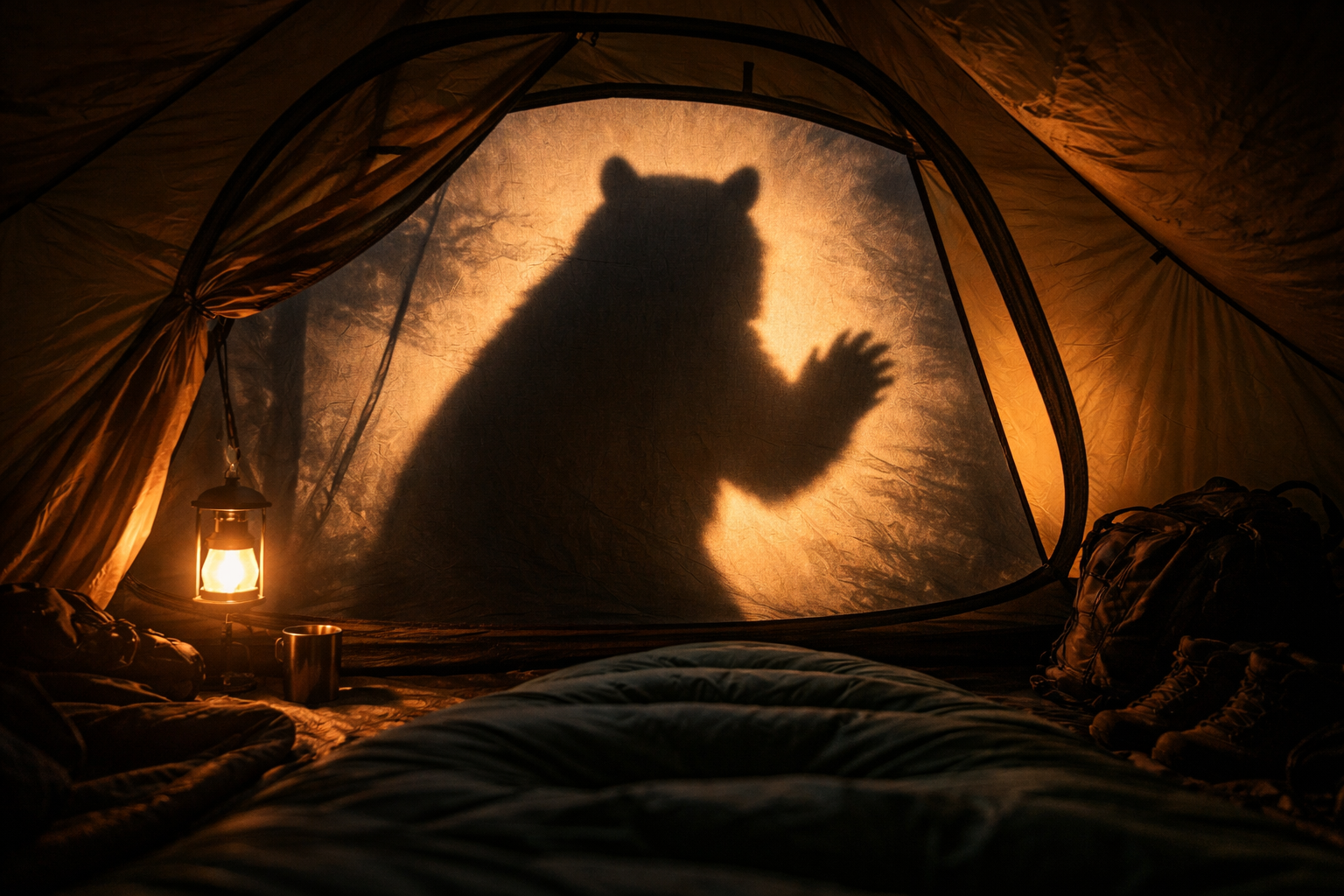
When people think about animal attacks while camping, bears are usually the first creature that comes to mind. That is partly because the idea is so primal. A large predator or omnivore wandering into camp feels like the ultimate nightmare. But not every bear encounter becomes an attack, and understanding the context is everything.
Bears usually show up around campsites for one reason: food. That includes obvious things like meat, snacks, and trash, but also less obvious items such as toothpaste, cooking residue, scented wipes, and even pet food. A careless campsite can draw a bear in faster than many campers realize.
If a bear enters camp, panic makes everything worse. Running can trigger pursuit, and screaming wildly can escalate the situation. In many cases, the bear is investigating rather than hunting. That distinction matters. A bear sniffing around a cooler is dangerous, but it is not necessarily acting with predatory intent.
The smartest response is to stay calm, make yourself look bigger, speak firmly, and slowly back away without turning your back. If the bear is close, you do not want to crowd it or block what it sees as an exit route. If it is a black bear behaving aggressively, experts often recommend fighting back if an attack actually happens. If it is a grizzly or brown bear acting defensively, such as around cubs or a carcass, playing dead may sometimes be the advised response during a mauling. That difference is why local knowledge matters so much. “One rule for all bears” is not reliable advice.
What catches many campers off guard is how quickly a harmless-seeming mistake becomes a high-risk scene. One bag of food left in the tent. One pan left unwashed. One late-night snack wrapper in a backpack. By the time people hear movement outside the tent, the problem has already started.
Wild boars are faster and meaner than people expect
Bears get the headlines, but wild boars deserve far more respect than they usually get. In many regions, boars are one of the most unpredictable and physically dangerous animals a camper can encounter. They are muscular, aggressive when threatened, and capable of charging with shocking speed.
A boar attack often does not begin like a predator encounter. It may happen because the animal feels cornered, surprised, or protective of young. Campers walking near brush at dawn or dusk may suddenly find themselves too close before they even realize a boar is there.
The biggest mistake is underestimating the animal because it is “just a pig.” Wild boars are not farm animals. An adult boar can slash with its tusks and knock a person down hard. If one charges, climbing onto a solid object, getting behind a tree, or creating a barrier can be more realistic than trying to outrun it over uneven ground.
This is one of those outdoor threats that feels almost absurd until it is right in front of you. A family might be making breakfast, kids moving around camp, food smells in the air, and then a boar appears from the tree line. If people scream and scatter, the confusion can make the encounter even more dangerous.
The lesson with boars is simple: never approach, never corner, and never assume the animal will back down first.
Snakes turn ordinary campsite routines into risk zones
Snake encounters are different from large-animal attacks because they often happen at close range and with almost no warning. There is no dramatic buildup. Someone reaches into a pile of firewood, steps into tall grass at night, slips a foot into a boot left outside the tent, or unzips a bag near rocks. Suddenly there is a strike.
Most snakes do not want anything to do with humans. That is important to remember. But when a snake is startled or trapped, it may bite in a split second. And because bites can involve venom depending on the species, even a brief encounter can become a medical emergency.
Camping creates perfect conditions for accidental contact. Warm rocks, food scraps attracting rodents, dark corners around gear, and barefoot movement around camp all increase the chance of trouble. People become less careful when they are relaxed, tired, or moving around in low light.
If a snake is spotted, distance is the priority. Do not poke it, do not try to move it, and definitely do not attempt some heroic catch-and-release unless you are trained. If someone is bitten, the response should be calm and practical: reduce movement, keep the person as still as possible, and seek medical help fast. Old myths about cutting the bite, sucking out venom, or tying off the limb can make things worse.
What makes snakes so unnerving is not just the bite. It is how easily a peaceful moment can flip. You can be brewing coffee at sunrise and feel completely safe, only to realize your hand is inches from a coiled animal hidden in shade.
Moose and elk can be more dangerous than predators
One of the biggest misunderstandings in camping culture is assuming herbivores are harmless. People fear wolves and bears, but then casually walk too close to moose, elk, or deer for photos. That is a dangerous miscalculation.
Large herbivores can be incredibly aggressive when threatened, especially during mating season or when females have young nearby. A moose, in particular, is not an animal any camper should treat lightly. It is massive, can move quickly, and may stomp or charge if it feels challenged. Unlike a predator, it does not need a reason beyond irritation or stress.
This kind of attack often starts with body language the average camper does not know how to read. A moose may pin its ears back, raise the hair on its hump, lick its lips, or stare intensely. To an experienced outdoors person, those are warning signs. To an inexperienced camper, they may look like random behavior.
The danger increases when people try to stand their ground for photos or get closer because the animal seems calm. The outdoors is full of moments where “it looked fine a second ago” is the last thought before a charge.
If a large hoofed animal acts aggressively, the goal is to get away fast and use obstacles like trees, large rocks, or vehicles as cover. Unlike with some predator encounters, there is no macho advantage in facing the animal down. This is not a dominance contest. It is a survival problem.
Raccoons, foxes, and smaller animals can still create chaos
Smaller wild animals are often treated like cute campsite visitors until they become a serious problem. Raccoons are especially notorious. They are clever, persistent, unafraid of human spaces, and heavily drawn to food. In some places, they have learned that campsites are easy targets.
A raccoon may not look terrifying, but one that feels cornered or rabid is absolutely dangerous. The same goes for foxes, badgers, or other medium-sized mammals. They may bite, scratch, or lunge if trapped, threatened, or sick. Rabies risk is one reason even a small bite should never be brushed off.
The biggest issue with smaller animals is that campers get careless. They try to shoo them away with their feet, grab at a food bag while the animal is still near it, or laugh and move closer for pictures. That false sense of safety disappears quickly when an animal suddenly snaps.
In many cases, these encounters are preventable. Secure food. Clean up thoroughly. Do not feed wildlife. Do not leave trash exposed overnight. The more your campsite smells and looks like a free buffet, the more likely you are to attract persistent visitors that stop being amusing once they get bold.
Predators like coyotes and wolves are less common, but not impossible
Coyotes and wolves occupy a strange place in the camping imagination. People either exaggerate them into constant threats or dismiss them completely. Reality sits somewhere in the middle. Attacks are uncommon, but encounters do happen, especially in remote areas or places where animals have become habituated to humans.
Coyotes are more likely to test boundaries when food is involved, when people leave pets unattended, or when they associate campsites with scraps. Wolves, where present, generally avoid humans, but any wild predator can become dangerous under unusual conditions.
If a predator approaches camp, the goal is not to run or crouch into a submissive position. Instead, stand tall, make noise, maintain awareness, and keep the group together. Small children and pets should be brought close immediately. Predators pay attention to vulnerability and separation.
This is another reason campsite discipline matters. Food left out, fish remains near water, cooking areas too close to sleeping spaces, and uncollected garbage all create unnecessary risk. Wild predators are far more manageable when they stay wild. Once they begin associating humans with easy food, everyone loses.
The psychological mistake that causes many attacks
When you read through real outdoor incident patterns, one thing becomes clear: many animal attacks do not happen because the animal is “evil” or because nature is randomly hostile. They happen because humans misread the situation.
Some campers act too casual. Others panic too fast. Some freeze when they should create distance. Others charge in when they should retreat. The central problem is that people bring human assumptions into animal encounters. They expect warning, hesitation, or predictable reactions. Wildlife does not work that way.
An animal can shift from neutral to aggressive in seconds. The environment also makes everything harder. You may be tired, cold, carrying gear, watching children, cooking dinner, or navigating darkness. Decision-making is worse when stress is high and visibility is low.
That is why preparation matters before the trip, not during the crisis. You do not want your first thought about bear spray, food storage, snake awareness, or wildlife spacing to happen in the exact moment an animal is already inside camp.
How campers can reduce the odds of an attack
No one can remove all outdoor risk, but a lot of danger can be cut down with simple habits. Store food properly. Keep cooking and sleeping areas separate when possible. Dispose of trash correctly. Do not leave scented products all over camp. Check boots, sleeping bags, and gear before using them. Use lights at night. Pay attention to tracks, scat, broken brush, and local warnings.
Most importantly, respect distance. A good rule in the outdoors is that if you are close enough to photograph an animal easily without zoom, you may already be too close.
It also helps to camp with the mindset that wildlife is not entertainment. The moment campers start treating wild animals like part of the experience package, judgment slips. Nature is beautiful partly because it is not under human control.
Final thoughts
Camping is one of the best ways to reconnect with the natural world, but that connection comes with responsibility. Wild animal attacks are not the most common outdoor emergency, yet they are serious enough that every camper should think through them honestly.
The real danger is not just the bear outside the tent or the snake near the trail. It is the combination of poor preparation, bad habits, and split-second reactions that make an encounter spiral into injury. Different animals create different threats, and there is no single brave response that works for all of them.
The best camper is not the one who acts fearless. It is the one who understands that the wilderness is shared space. Respect the animals, secure your camp, learn local risks, and never assume that a peaceful forest means a harmless one.
Because when things go wrong outdoors, they usually go wrong fast. And by then, what saves you is not confidence. It is preparation.
Hi, I’m the creator and editor behind ZestyHabit. I research everyday safety, first aid, and practical wellness topics using official guidance and reliable public sources, then turn that information into clear, realistic steps for daily life.
My goal is to help readers make safer, better-informed choices at home and beyond.