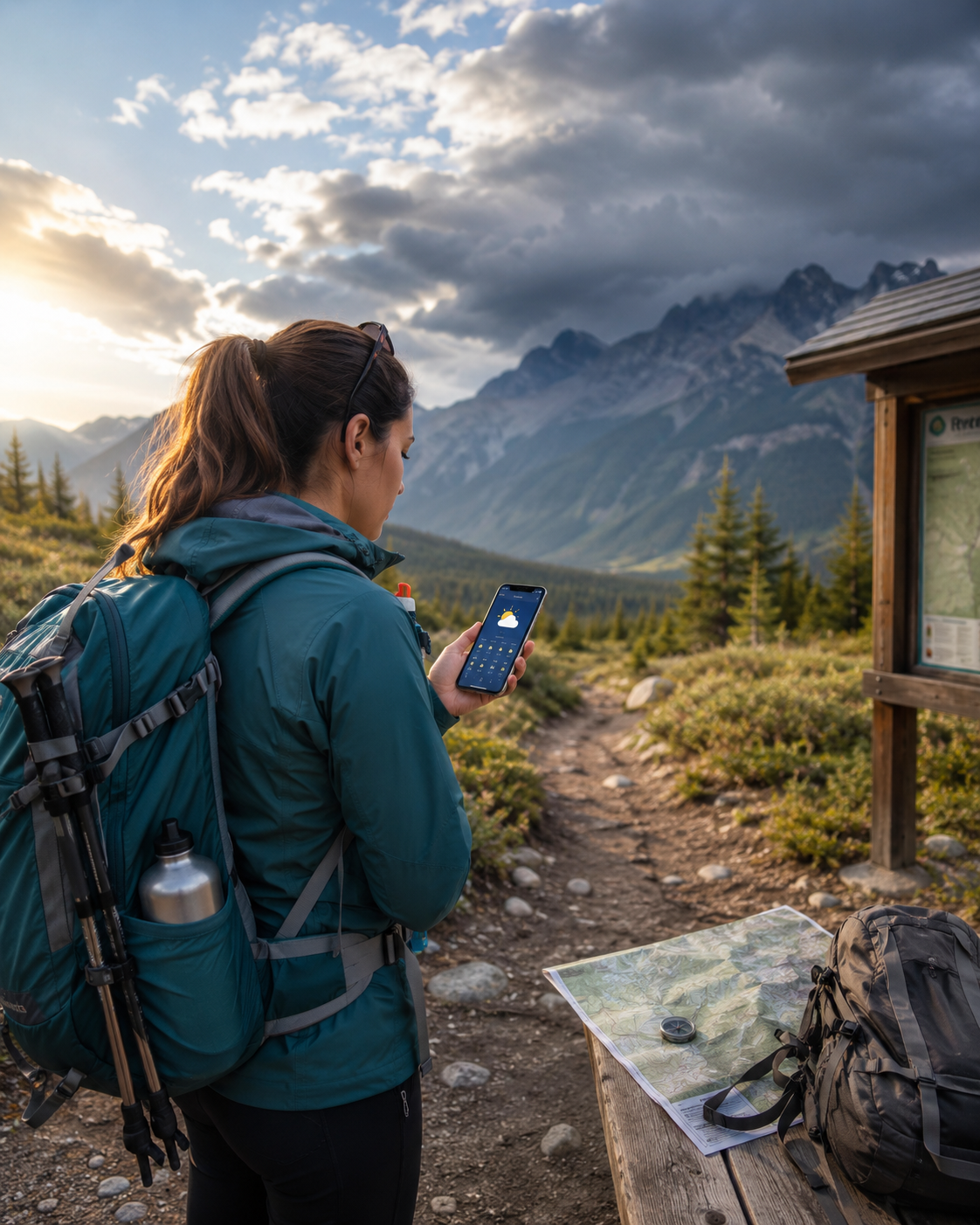
Why Checking the Weather Before a Hike Is One of the Smartest Safety Habits
Minjin Park
·
Checking the weather before a hike helps you avoid preventable risks like storms, heat, cold, poor visibility, and slippery trails. Learn simple planning habits for safer outdoor adventures.
You pick a trail, pack a snack, lace up your shoes, and head out. Maybe it is a short loop near town. Maybe it is a weekend mountain trail. Maybe it is a family walk through a state park.
Many people think of weather as a comfort issue. Will it be sunny enough for photos? Should I wear shorts or a jacket? Will the view be clear?
Those questions matter, but weather is also a safety issue. Rain can make rocks slippery. Heat can drain energy faster than expected. Wind can make exposed ridges feel unstable. Lightning can turn a scenic overlook into a place you do not want to be. Fog can make trail signs harder to see. Cold rain can make even a summer hike feel uncomfortable fast.
Checking the forecast does not mean you are being overly cautious. It means you are giving yourself more control before you step onto the trail.
A good hike starts before the trailhead.
The Forecast Helps You Choose the Right Trail
Not Every Trail Fits Every Weather Day
One of the biggest reasons to check the weather is that it helps you choose the right hike for the day you actually have.
A steep trail with exposed rock may be enjoyable on a dry morning but unpleasant after rain. A desert trail may be fine at sunrise but too hot by midday. A mountain ridge may be beautiful in calm weather but risky during high wind or lightning. A shaded forest loop may be a better choice on a warm day than an open hillside with no cover.
The trail itself does not change. But the weather changes how safe and comfortable that trail feels.
Instead of asking, “Can I still do the hike?” try asking, “Is this the right hike for today’s conditions?”
That small shift helps you make better decisions.
A Plan B Is Part of Good Planning
Checking the weather gives you time to make a backup plan.
Maybe you choose a shorter trail. Maybe you start earlier. Maybe you switch to a lower-elevation route. Maybe you decide to visit a nature center, scenic drive, or easy paved path instead.
This is not failure. It is smart outdoor planning.
The mountain, canyon, waterfall, or overlook will still be there another day. A flexible plan keeps the trip enjoyable instead of forcing you into conditions that do not feel right.
Weather Can Change Faster Outdoors
Mountains Create Their Own Surprises
Many hikers are surprised by how different the weather can feel on the trail compared with the parking lot.
At higher elevations, temperatures can drop. Wind can pick up. Clouds can build quickly. A sunny trailhead can turn into a cold, misty ridge. A calm morning can become a stormy afternoon.
This is especially common in mountain areas, but it can happen in many outdoor places. Canyons, coastlines, deserts, forests, and lakes can all have changing conditions.
That is why checking only the weather for the nearest town may not be enough. If you are hiking in a park, forest, or mountain area, look for trail-specific or area-specific conditions when available.
Afternoon Weather Can Be Different From Morning Weather
A lot of hikers check the weather once in the morning and see sunshine. Then they forget that the forecast may change later in the day.
Afternoon thunderstorms, rising temperatures, stronger winds, and changing cloud cover can all affect your return trip.
A hike is not only about the weather when you start. It is also about the weather when you are farthest from your car.
Before leaving, check the hourly forecast. Notice what is expected during the entire time you plan to be outside, not just the first hour.
Rain Can Change Trail Conditions Quickly
Wet Trails Are Slipperier Than They Look
A little rain may not sound like a big deal. But on the trail, moisture can change the surface under your feet.
Rocks become slick. Wooden bridges can become slippery. Dirt trails can turn muddy. Leaves can hide wet roots. Steep downhill sections can become harder to control.
This matters even on short hikes. Many falls happen not because the trail is extreme, but because someone steps too quickly on a wet surface and loses traction.
If rain is in the forecast, choose shoes with good grip, slow your pace, and consider hiking poles if you use them.
Streams and Low Areas Can Rise
Rain does not have to fall directly on you to affect your hike.
If heavy rain falls upstream, creeks, washes, or low-water crossings can change. A dry-looking drainage area may become muddy or unsafe after storms. Trails near rivers, slot canyons, and low-lying areas deserve extra caution.
This is especially important in desert and canyon regions, where flash flooding can occur far from where rain is visibly falling.
Before hiking near washes, canyons, or stream crossings, check local alerts and park guidance. If storms are possible, choose a different route.
Heat Can Sneak Up on Hikers
A Mild Day in Town Can Feel Hot on the Trail
Heat is not only about the temperature number.
Sun exposure, humidity, elevation, lack of shade, dark clothing, steep climbs, and carrying a pack can make a hike feel much hotter than expected. A trail that sounds manageable on paper can feel exhausting when there is no shade and the sun is high.
Checking the weather helps you plan the start time, water amount, clothing, and route.
On hot days, an early start is often better. A shorter shaded trail may be safer than a long exposed one. A hike that seemed perfect in spring may not be the best choice in July.
Heat Affects Decision-Making
When people get hot and tired, they may make poorer choices.
They may push farther than planned, drink too little, stop paying attention to trail signs, or become impatient with the group. Children, older adults, and people who are not used to hiking in heat may struggle sooner than expected.
This is why the forecast matters before you commit to the day. It helps you avoid relying on willpower when your body is already under stress.
Cold, Wind, and Rain Can Be a Bad Combination
Cold Weather Is Not Only a Winter Problem
Many hikers associate cold risk with snow and winter hikes. But cold stress can happen in milder seasons too, especially when wind and rain are involved.
A breezy 55-degree day may feel fine while standing at the trailhead. But if your clothes become wet and the wind picks up, your body can lose heat faster than expected. This can be especially uncomfortable if you are tired, hungry, or moving slowly.
That is why packing a light rain layer or extra warm layer can be smart even when the forecast looks mostly pleasant.
Wind Can Make Hiking Harder
Wind does more than mess up your hair.
Strong wind can make exposed trails feel unstable. It can blow dust, reduce visibility, make temperatures feel colder, and increase the chance of falling branches in wooded areas.
On ridges, cliffs, open desert trails, and coastal paths, wind can change the feel of the hike dramatically.
If strong winds are in the forecast, consider a lower, more sheltered route.
Lightning Is a Serious Trail Concern
Thunder Is a Signal to Act
Lightning risk is one of the clearest reasons to check the weather before hiking.
Open ridges, summits, exposed fields, isolated trees, water, and rocky overlooks are not places you want to be during a thunderstorm. If thunderstorm chances are high, it may be better to choose a different activity or start very early with a clear turnaround time.
If you hear thunder while hiking, it is time to move toward safer shelter. Do not wait until rain starts. Lightning can occur before heavy rain arrives.
“Just One More View” Can Be a Bad Trade
Many hikers get into trouble because they are close to the destination and do not want to turn back.
The summit is right there. The waterfall is only ten minutes away. The overlook is just around the bend.
But weather does not care how close you are to the view.
Checking the forecast ahead of time helps you set a firm turnaround plan. If storms are expected by afternoon, you can decide before the hike that you will be off exposed areas by a certain time.
That decision is easier to make at home than when you are almost at the top.
Poor Visibility Can Make Navigation Harder
Fog, Snow, and Heavy Rain Can Hide the Trail
Some trails are easy to follow in clear weather but confusing when visibility drops.
Fog can hide trail markers. Heavy rain can make signs harder to see. Snow can cover footprints and paths. Even blowing dust or smoke can change visibility.
If you are hiking somewhere unfamiliar, poor visibility can increase the chance of taking a wrong turn.
Checking the weather helps you decide whether to bring a map, download offline navigation, choose a simpler trail, or postpone the hike.
Darkness Comes Faster Than People Expect
Weather and timing often work together.
Cloud cover, storms, or fog can make the trail feel darker earlier. If your hike starts late and the forecast is uncertain, you may have less daylight than expected.
Always check sunset time along with the weather. A flashlight or headlamp is a smart item even for day hikes, but it is better not to depend on it because the hike ran too long.
Common Mistakes Hikers Make With Weather
Checking Only the Temperature
Temperature matters, but it is not the whole story.
A forecast of 72 degrees can still include high wind, thunderstorms, heavy humidity, poor air quality, or intense sun. A 50-degree forecast can feel much colder with rain and wind.
Look at the full forecast: temperature, wind, rain chance, storm risk, humidity, heat index, air quality, and hourly changes.
Checking the Wrong Location
The weather for the nearest city may not match the trail.
A trail at higher elevation, near water, deep in a canyon, or on an exposed ridge may have different conditions. Use the most local forecast you can find. Park websites, ranger stations, trail alerts, and local land-management pages can be helpful.
Assuming a Short Hike Does Not Need Planning
Short hikes can still be affected by weather.
A one-mile trail can become slippery in rain. A short desert walk can feel draining in heat. A quick overlook hike can be exposed during lightning.
Distance matters, but conditions matter too.
Ignoring Recent Weather
Today’s forecast is not the only thing to consider.
Rain from the previous day can leave mud, swollen streams, or slippery rocks. Snow from last week may still cover higher trails. Windstorms may leave fallen branches. Heat waves can dry out water sources.
Recent weather can shape trail conditions long after the sky clears.
What to Check Before You Hike
The Hourly Forecast
Look at the hours you will actually be outside. Notice when temperatures rise, when rain chances increase, and whether storms are expected later.
Wind Speed
Wind can affect exposed trails, ridges, cliffs, and cold-weather comfort. Strong gusts can make a hike feel very different from what the temperature suggests.
Rain and Storm Chances
A low chance of rain may be manageable on some trails. A high chance of thunderstorms may change the whole plan.
Heat Index or Wind Chill
These “feels like” numbers can be more useful than temperature alone. They help you understand how your body may experience the weather.
Trail and Road Conditions
Check whether roads, trailheads, bridges, or routes are closed or damaged. Weather can affect access before you even start hiking.
Sunrise and Sunset
Make sure your plan fits within daylight, with extra time for breaks and delays.
Simple Weather-Based Packing Tips
If Rain Is Possible
Bring a rain jacket, waterproof bag protection, shoes with grip, and a willingness to turn around if the trail becomes slippery or water rises.
If Heat Is Expected
Bring extra water, sun protection, breathable clothing, snacks, and a plan to hike early or choose shade.
If Cold or Wind Is Expected
Bring layers, a wind-resistant outer layer, gloves or a hat if needed, and avoid exposed trails if conditions look uncomfortable.
If Storms Are Possible
Avoid summits, ridges, open fields, and long exposed routes. Choose a safer plan or postpone.
If Visibility May Be Poor
Bring a map, offline navigation, a flashlight or headlamp, and choose a simpler route.
A Simple Pre-Hike Weather Routine
The night before your hike, check the forecast and trail alerts.
The morning of the hike, check again.
Before starting at the trailhead, look at the sky and conditions around you.
During the hike, keep noticing changes: building clouds, rising wind, sudden temperature drops, distant thunder, darker skies, or changing trail surfaces.
Have a turnaround point and respect it.
This routine takes only a few minutes, but it can make your hike feel calmer and safer.
Practical Example: The Sunny Morning Storm
Imagine you start a mountain hike at 9 a.m. The sky is bright, and the parking lot is warm.
But the hourly forecast shows thunderstorms after 2 p.m. If the hike takes six hours, you may be on an exposed ridge right when storms arrive.
With that information, you can start earlier, choose a shorter hike, or set a firm turnaround time. Without it, you may not realize the problem until clouds are already building.
Practical Example: The “Only 20% Rain” Hike
A 20% rain chance may sound small.
But if the trail involves steep rock, creek crossings, or muddy slopes, even light rain can matter. The question is not only “Will it rain?” It is “What happens to this trail if it rains?”
That is the kind of thinking that helps you choose wisely.
Conclusion: Checking the Weather Is Part of the Hike
Checking the weather before a hike is not a boring chore. It is one of the simplest ways to protect your time, energy, comfort, and safety outdoors.
Weather affects trail surfaces, visibility, water levels, temperature, lightning risk, wind exposure, and how tired you feel. It can turn an easy trail into a difficult one or make a beautiful route better saved for another day.
The habit is simple: check the forecast, look at hourly changes, review trail conditions, pack for the weather, and keep a flexible backup plan.
You do not need to cancel every hike because the forecast is not perfect. You just need to understand what the day may bring and prepare honestly.
A safe hike does not begin when your boots touch the trail. It begins when you take a few minutes to look up, check the conditions, and choose the right plan for the day.
Hi, I’m the creator and editor behind ZestyHabit. I research everyday safety, first aid, and practical wellness topics using official guidance and reliable public sources, then turn that information into clear, realistic steps for daily life.
My goal is to help readers make safer, better-informed choices at home and beyond.