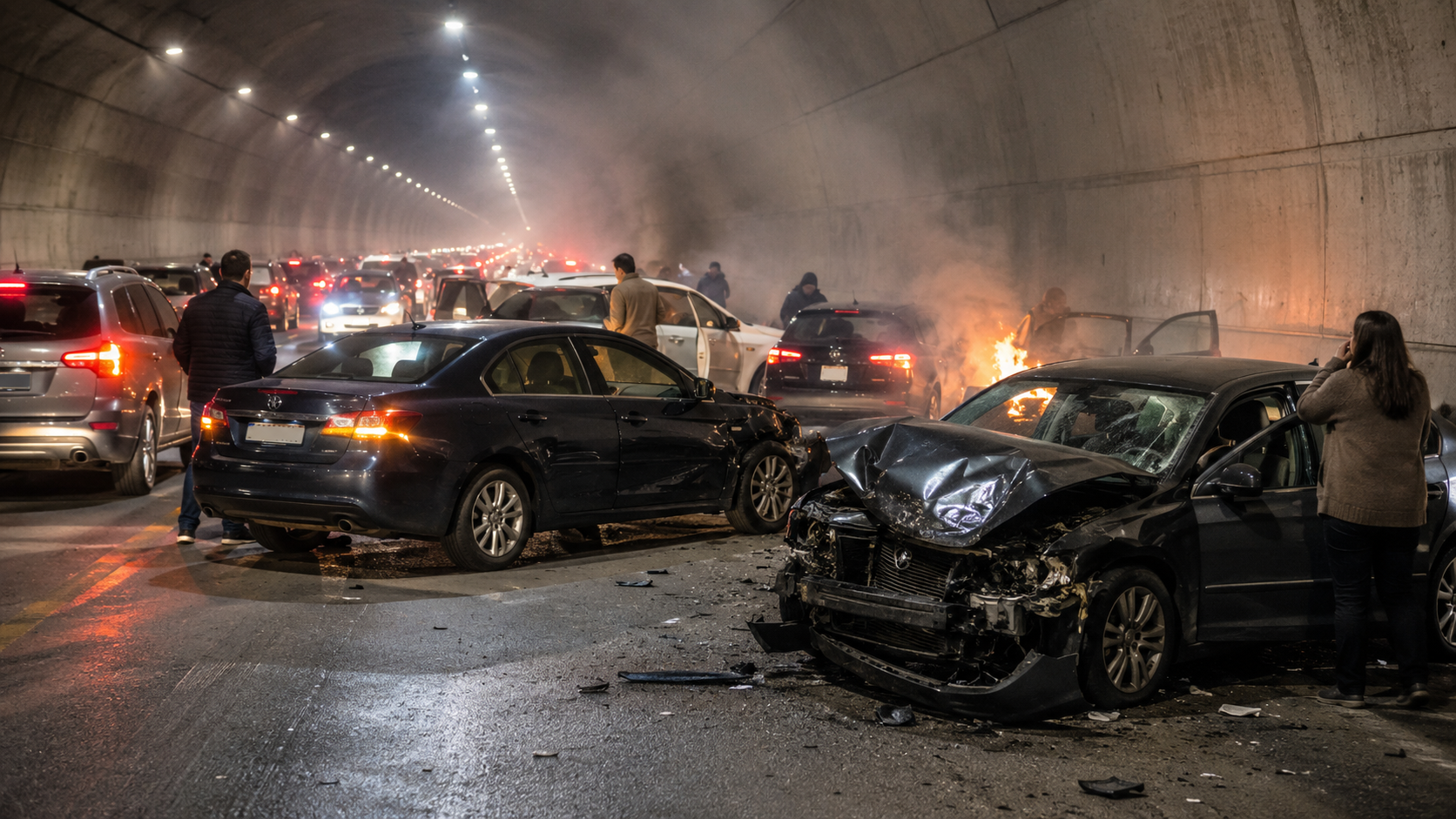
Why Tunnel Accidents Can Be More Dangerous Than Regular Road Crashes
Minjin Park
·
Tunnel accidents can become more serious because of limited space, poor visibility, smoke, and slower emergency access. Learn simple driving habits that can help you stay safer before, during, and after entering a tunnel.
Most drivers pass through tunnels without thinking much about them. You slow down a little, turn on your headlights if they are not already on, stay in your lane, and come out the other side a few minutes later.
Because tunnels are so common in many parts of the United States, it is easy to treat them like any other stretch of road.
But a tunnel is not quite the same as an open highway.
Inside a tunnel, space is limited. Shoulders may be narrow or missing. Lighting changes quickly. Noise echoes. Traffic has fewer places to move. Smoke, fumes, or a stopped vehicle can affect drivers behind it much faster than they would in open air.
This does not mean tunnels are unsafe by default. Modern tunnels are designed with ventilation, lighting, cameras, signs, emergency exits, and other safety features. Still, when something does go wrong, the environment can make the situation more complicated.
That is why tunnel driving deserves a few extra habits. Not fear, not panic—just awareness.
What Makes a Tunnel Different From an Open Road?
On an open road, drivers usually have more space to react. If a car breaks down, it may be able to move onto the shoulder. Smoke can spread into the open air. Emergency vehicles may have more approach options. Drivers behind the problem can often see what is happening from farther away.
Inside a tunnel, those options may be limited.
A tunnel has walls on both sides. Some tunnels have no full shoulder. Others have emergency pull-off areas, but they may be spaced apart. If traffic stops, vehicles can quickly back up. If visibility drops, drivers may have less time to understand what is ahead.
The tunnel itself can also affect how people react. The enclosed space may make sounds louder and lights more distracting. Some drivers feel nervous in tunnels, while others speed up to get out quickly. Both reactions can create problems.
A calm, steady driving style matters more than most people realize.
Visibility Can Change Suddenly
The Entrance and Exit Effect
One of the first challenges of tunnel driving is the quick change in light.
On a bright day, entering a tunnel can feel like driving into a darker space. Your eyes need a moment to adjust. When leaving the tunnel, the opposite happens—the outside light can feel very bright for a second or two.
That short adjustment time can matter if traffic slows suddenly.
This is one reason it is smart to avoid tailgating near tunnel entrances and exits. If the driver ahead brakes while your eyes are still adjusting, you may have less time to react.
Turn on your headlights before entering a tunnel if they are not automatic. Headlights help you see, but they also help other drivers see you.
Smoke, Dust, or Steam Can Reduce Visibility
In an open area, smoke or dust can spread out more easily. In a tunnel, it may linger or move through the tunnel in a concentrated way.
A small vehicle fire, overheated engine, spilled load, or even dust from a crash can make the road ahead harder to see. Drivers may brake suddenly, change lanes without warning, or become confused about where the problem is.
If visibility becomes poor inside a tunnel, slow down gradually, increase your following distance, and avoid sudden lane changes. Keep your focus on lane markings, brake lights ahead, and posted signs.
There Is Less Room to Escape or Pull Over
One of the biggest reasons tunnel accidents can become more serious is the lack of extra space.
On a regular highway, a driver with a flat tire or engine trouble may be able to move onto a wide shoulder. In a tunnel, the shoulder may be narrow, blocked, or unavailable.
That means a disabled vehicle can end up close to moving traffic. Other drivers may have to slow down quickly, merge, or stop behind it.
This is why it is so important not to enter a tunnel if your vehicle is already showing serious warning signs. If the engine is overheating, a tire feels unstable, smoke is coming from under the hood, or warning lights are flashing, it may be better to pull over before the tunnel if there is a safe place to do so.
Once inside, your options may be more limited.
Traffic Can Back Up Quickly
A minor crash in an open area may affect one lane while traffic slowly moves around it. In a tunnel, even a small incident can create a backup because vehicles have fewer ways to avoid the blockage.
If one lane is blocked, merging can be harder. If all lanes stop, vehicles behind may have little room to maneuver. Large trucks, buses, and emergency vehicles may also need extra space.
This is why sudden braking inside tunnels is especially risky. A driver who follows too closely may not have enough time to stop. A chain reaction can happen quickly.
A good habit is to leave more space than usual between your car and the vehicle ahead. This gives you more time to respond if traffic suddenly slows.
Smoke and Fumes Are More Concerning in Enclosed Spaces
One reason tunnel incidents can become more complicated is air quality.
Tunnels have ventilation systems, but smoke from a vehicle fire or heavy fumes from an incident can still be a serious concern. Smoke can reduce visibility and make it harder for drivers to think clearly.
If you see smoke ahead, do not drive toward it casually just because traffic is still moving. Slow down carefully, follow posted signs or instructions, and be prepared for stopped traffic.
If traffic stops and smoke is nearby, stay alert to official directions, emergency signs, and tunnel announcements. Many tunnels have evacuation routes, marked exits, or emergency phones. Knowing that these features exist can help you stay calmer if something unusual happens.
Emergency Access Can Be More Complicated
Emergency responders are trained for tunnel incidents, but the tunnel environment can still make access more challenging.
Traffic may block lanes. There may be limited room for fire trucks, ambulances, tow trucks, or police vehicles to pass. If drivers do not leave space, help may take longer to reach the problem area.
This is why drivers should avoid crowding, lane-hopping, or stopping too close to the vehicle ahead when traffic slows in a tunnel. Leave enough space so you can move if directed.
If you hear sirens or see emergency lights, follow instructions and make room as safely as possible. In a tunnel, every bit of clear space matters.
Common Mistakes Drivers Make in Tunnels
Following Too Closely
Tailgating is risky anywhere, but it is especially unhelpful in tunnels. The enclosed space, lighting changes, and limited shoulders all make reaction time more important.
If the car ahead brakes suddenly, you need enough room to stop smoothly. A few extra seconds of following distance can make the difference between a close call and a collision.
Changing Lanes Without a Clear Reason
Some drivers change lanes inside tunnels because they feel trapped behind a slower vehicle. Others do it because they are anxious and want to get out faster.
Unnecessary lane changes can surprise other drivers, especially when visibility is limited. Unless lane changes are clearly allowed and truly needed, it is usually better to stay steady and predictable.
Speeding to “Get Through Faster”
A tunnel can make some people uncomfortable, so they press the gas without realizing it. Others speed because the road feels straight and controlled.
But speeding reduces your time to react. It also makes it harder to stop if traffic suddenly backs up, a lane closes, or a vehicle breaks down ahead.
A tunnel is a place to drive smoothly, not aggressively.
Stopping to Take Photos or Videos
Scenic or unusual tunnels may tempt passengers, and sometimes even drivers, to record videos. This is a bad idea if it distracts the driver.
The driver’s attention should stay on the road, speed, lane position, and traffic ahead. Tunnels can change quickly, and distracted driving leaves less room for error.
Ignoring Warning Signs
Tunnel signs are not decoration. They may warn of lane closures, speed changes, height limits, traffic backups, ventilation issues, or emergency instructions.
Pay attention before and during the tunnel. If a sign says to slow down or stop, treat it seriously.
Warning Signs Before Entering a Tunnel
Before you enter a tunnel, take a quick mental check of your vehicle and surroundings.
Be extra careful if traffic ahead is already slowing, brake lights are visible inside the tunnel, emergency signs are flashing, or visibility looks poor.
Also pay attention to your vehicle. If you smell burning, see smoke, hear a loud mechanical noise, feel a tire vibration, or notice an overheating warning, avoid entering the tunnel if you can safely stop before it.
This is not about being overly cautious. It is about choosing the safer place to deal with a problem.
A breakdown outside a tunnel is usually easier to manage than one inside.
Simple Habits for Safer Tunnel Driving
Turn On Your Headlights
Even if the tunnel is well lit, headlights make your vehicle easier to see. Many cars have automatic lights, but do not rely on them completely. Some systems may not turn on quickly enough at the entrance.
Make it a habit to check.
Keep a Steady Speed
Avoid sudden speeding or braking. Match the flow of traffic while staying within the posted limit.
A steady speed helps drivers behind you understand what to expect. It also reduces the chance of sudden reactions.
Increase Following Distance
Leave more room than you normally would. This is especially important in long tunnels, heavy traffic, wet conditions, or when large trucks are nearby.
More space gives you time to react if the road ahead changes.
Stay in Your Lane
Lane discipline matters in tunnels. Avoid drifting, weaving, or changing lanes just to gain a few seconds.
If lanes are narrow, keep both hands steady on the wheel and focus on lane markings.
Watch for Brake Lights Far Ahead
Do not look only at the car directly in front of you. Try to scan farther ahead when possible. A wave of brake lights can tell you traffic is slowing before the car in front of you reacts.
This gives you a smoother, safer response.
What to Do If Traffic Stops Inside a Tunnel
If traffic comes to a stop inside a tunnel, stay calm and avoid sudden moves.
Stop with enough space between your car and the vehicle ahead. Keep your seat belt on. Turn on hazard lights if traffic behind you may not expect the stop.
Do not get out unless there is a clear reason and it is safer to do so. Listen for announcements, watch signs, and follow instructions from tunnel staff or emergency responders.
If you are stopped for a while, avoid running the engine unnecessarily if officials instruct drivers to turn engines off. Every situation is different, so follow posted or spoken directions when available.
What to Do If Your Car Breaks Down in a Tunnel
If your car starts failing inside a tunnel, turn on your hazard lights immediately. Try to move to the right lane, a shoulder, or an emergency pull-off area if one is available and you can reach it safely.
Do not stop in the middle of a lane if the vehicle can still move to a safer spot.
Once stopped, keep your hazard lights on. Check traffic before opening any door. If there is an emergency phone, marked walkway, or exit nearby, use the safest option available. If staying in the vehicle is safer because traffic is moving close by, keep your seat belt on and call for help.
Do not stand behind your vehicle. Do not try to repair the car in a narrow lane with traffic passing close by. In a tunnel, protecting people matters more than fixing the car quickly.
Do not rush toward the scene. Do not stop next to the crash unless directed or unless it is clearly necessary and safe. Leave room for emergency vehicles.
If lanes are blocked, wait for instructions. Avoid making U-turns or reversing unless an official clearly directs traffic to do so. Unexpected reversing inside a tunnel can create more confusion.
If you call for help, give the tunnel name, direction of travel, nearest exit or mile marker, and what you can see without putting yourself at risk.
Helping Children and Passengers Stay Calm
Tunnel incidents can feel more intense because of the enclosed space. Children may become frightened by stopped traffic, sirens, flashing lights, or echoes.
A calm driver helps everyone else stay steady.
Use simple words: “Traffic has stopped. We are staying buckled and waiting for instructions.” Give passengers a clear job, such as staying seated, keeping voices low, or helping spot signs.
Avoid letting passengers open doors or step out without your direction. In a tunnel, one person acting impulsively can create more risk.
Prepare Before Long Trips With Tunnels
If your route includes long tunnels, mountain tunnels, bridge-tunnels, or major urban tunnels, a little preparation helps.
Check your fuel level before the trip. Make sure your tires are properly inflated. Pay attention to warning lights before entering high-speed roads. Keep your phone charged. Know how to turn on hazard lights quickly.
If you are driving a rental car, take a minute to locate the hazard light button, headlights, defroster, and door locks before leaving the parking lot.
These small steps are useful everywhere, but they are especially helpful in places where stopping is harder.
Final Thoughts: Drive Through Tunnels With Calm Awareness
Tunnel accidents can be more dangerous than regular road crashes because the environment gives drivers fewer options. There may be less space to pull over, less room for emergency vehicles, quicker traffic backups, and more concern about visibility, smoke, and fumes.
Turn on your headlights. Keep a safe following distance. Avoid unnecessary lane changes. Watch signs and brake lights. Do not enter a tunnel if your vehicle is already showing serious trouble and you have a safe place to stop before it.
If something does happen inside a tunnel, focus first on visibility, space, and calm decisions. Turn on hazard lights, avoid stepping into traffic, follow official instructions, and call for help when needed.
Most tunnel drives are routine. With a little extra awareness, they can stay that way.
Hi, I’m the creator and editor behind ZestyHabit. I research everyday safety, first aid, and practical wellness topics using official guidance and reliable public sources, then turn that information into clear, realistic steps for daily life.
My goal is to help readers make safer, better-informed choices at home and beyond.