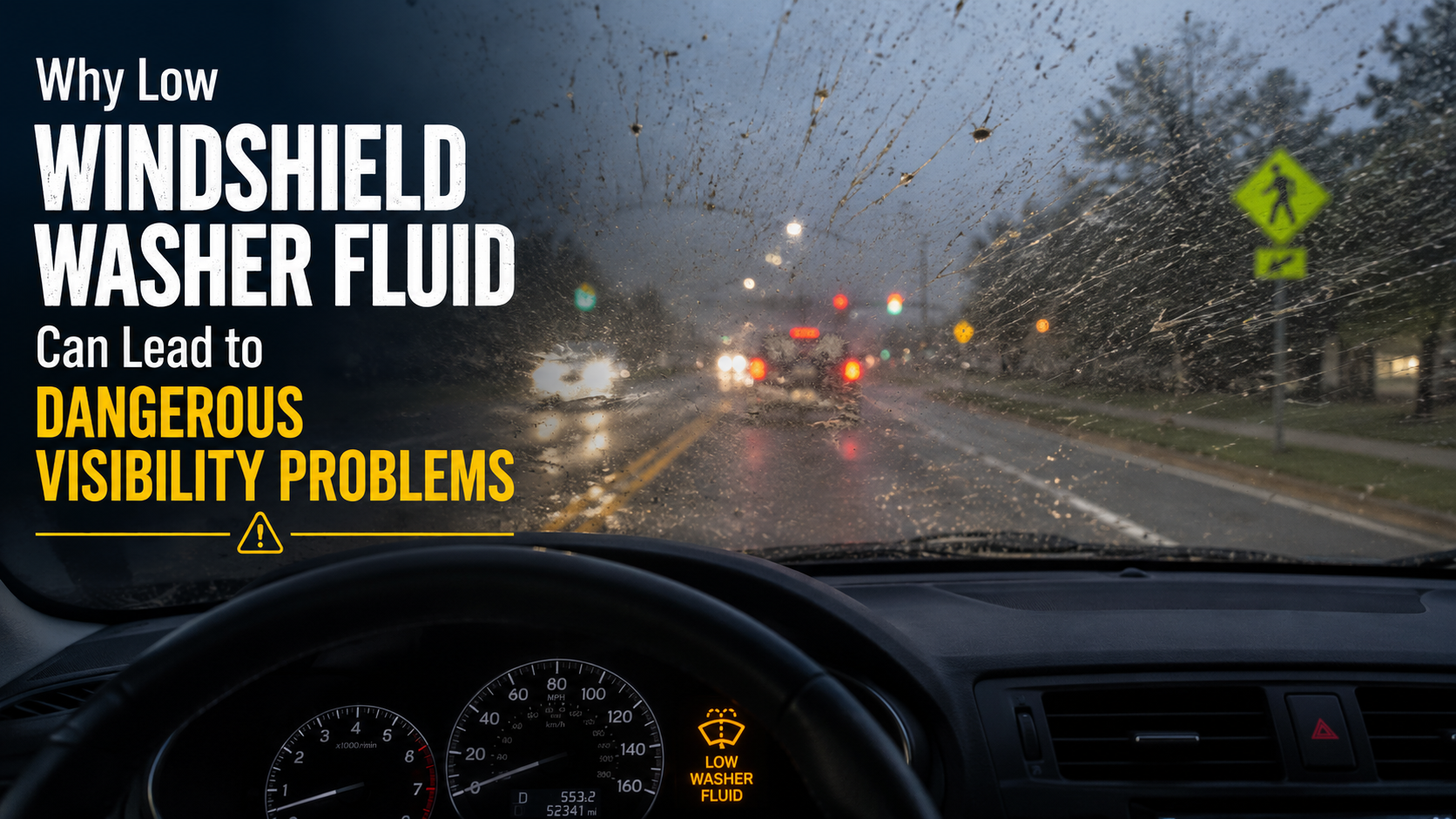
Why Low Windshield Washer Fluid Can Lead to Dangerous Visibility Problems
Minjin Park
·
Low windshield washer fluid may seem like a small car maintenance issue, but it can quickly affect visibility in bad weather, traffic spray, dust, and winter driving. Learn why it matters and how to prevent it.
Windshield washer fluid is one of those things most drivers do not think about until they need it.
You press the washer button, expect a quick spray across the windshield, and wait for the wipers to clear away the mess. Most of the time, it works so automatically that it barely feels like part of driving. But when the reservoir is empty, clogged, frozen, or nearly dry, that simple habit can suddenly become a visibility problem.
A dirty windshield is not just annoying. It can make road signs harder to read, hide pedestrians at crosswalks, increase glare from headlights, and make rainy or snowy driving feel much more stressful. In some situations, you may not realize how much you rely on washer fluid until road spray, salt, bugs, or dust hit your windshield all at once.
The good news is that washer fluid is one of the easiest vehicle supplies to check and refill. It is inexpensive, simple to store, and usually takes only a minute to top off. Still, many drivers forget about it because it does not seem as important as gas, oil, tires, or brakes.
But when you are driving, visibility is safety. If you cannot see clearly, every decision becomes harder.
Why Windshield Washer Fluid Matters
It Helps Remove Sudden Windshield Mess
A windshield can get dirty very quickly. One splash from a muddy truck, a wave of road spray, a swarm of bugs, or dust from a construction zone can cover the glass in seconds.
Wipers alone are not always enough. Dry wipers can smear dirt across the glass instead of removing it. Washer fluid helps loosen grime so the blades can clear the windshield properly.
Without fluid, you may be left with streaks, smears, or a cloudy film directly in your line of sight.
It Supports Your Wipers
Your windshield wipers are designed to move water and loosened debris across the glass. They work best when the windshield has enough moisture.
If the glass is dry and dirty, wipers may drag, chatter, or smear residue. This can also wear out the rubber blades faster.
Washer fluid gives the wipers something to work with. It helps reduce friction and improves cleaning, especially when the windshield is coated with dirt, pollen, salt, or bug residue.
It Helps in More Than Rain
Many people connect windshield washer fluid with rainy days, but it is useful in many driving conditions.
In summer, it helps remove bugs, tree sap mist, pollen, and dust. In winter, the right washer fluid helps clear salty road spray and slush. In dry seasons, it helps remove fine dirt that can build up into a hazy layer.
Washer fluid is not just for bad weather. It is part of everyday visibility.
How Low Washer Fluid Can Become a Visibility Risk
Road Spray Can Cover the Glass Quickly
One of the most common situations happens on wet roads. You are driving behind another vehicle, especially a truck or SUV, and dirty water sprays up onto your windshield.
For a moment, your view may become cloudy or streaked. Normally, you would spray washer fluid and clear it right away. But if the reservoir is empty, the wipers may only smear the dirty water into a wider film.
That can be especially stressful at highway speeds, where you need to see brake lights, lane markings, and traffic movement clearly.
Salt and Slush Can Create a White Film
In winter areas of the United States, road salt can build up on windshields quickly. Salt spray often dries into a cloudy white film that catches sunlight during the day and headlight glare at night.
If you run out of washer fluid during winter driving, the windshield can become harder and harder to see through with each mile.
This is one reason cold-weather drivers should check washer fluid more often. Winter roads can use up fluid much faster than expected.
Bugs Can Smear Across the Windshield
During warm months, bugs can be a major visibility problem, especially on highways, rural roads, and evening drives. If bugs hit the windshield and dry quickly, wipers alone may smear them across the glass.
Washer fluid helps soften and loosen the residue. Without it, you may end up with streaks right where you need to see.
This is a common issue on road trips. A windshield can look fine when you leave home, then become messy after an hour of highway driving.
Dust and Pollen Can Turn Into a Hazy Layer
Dust and pollen may not seem serious at first. But over time, they can leave a thin film on the windshield. When sunlight hits that film, it can reduce contrast and create glare.
The problem often becomes more noticeable during sunrise, sunset, or nighttime driving. You may feel like the glass is “foggy,” even when it is not moisture.
A quick washer fluid spray can help clear this layer, but only if there is fluid in the reservoir.
Everyday Situations Where Washer Fluid Matters
Morning Commutes
Morning commutes often involve low sun angles, dew, dust, and traffic spray. If the windshield is already dirty, sunlight can make it harder to see.
A low washer fluid reservoir may not seem important until the sun hits the glass and every streak becomes visible.
Keeping fluid topped off helps you start the day with a clearer windshield.
School Drop-Offs and Neighborhood Driving
Visibility matters just as much at low speeds. In neighborhoods, drivers need to watch for children, cyclists, pets, parked cars, and pedestrians.
A smeared windshield can hide small movements at the edge of your vision. Even if you are driving slowly, clear glass helps you notice what is happening around you.
Highway Driving
At highway speeds, visibility problems feel more urgent. Things happen faster, and you have less time to react.
If road spray suddenly covers your windshield and washer fluid does not come out, you may feel tempted to keep wiping, lean forward, or slow abruptly. None of those are ideal.
A full washer fluid reservoir gives you a simple way to restore visibility without panic.
Long Road Trips
Road trips use more washer fluid than many people expect. Bugs, dust, rain, road grime, and changing weather can all add up.
This is why washer fluid should be part of a basic pre-trip check, along with tire pressure, oil level, lights, and wiper condition.
Common Mistakes Drivers Make
Waiting for the Warning Light
Some vehicles have a washer fluid warning light. Others do not. Even when a warning light exists, drivers may ignore it because the car still runs normally.
The problem is that you may not know the reservoir is empty until the exact moment you need fluid.
It is better to check and refill before it becomes urgent, especially before long drives or bad weather.
Using Plain Water in Cold Weather
Some drivers use plain water instead of washer fluid. In warm weather, water may seem to work for light cleaning, but it does not clean as well as washer fluid and can freeze in cold conditions.
If water freezes in the reservoir, lines, or nozzles, the washer system may stop working when you need it most. Ice expansion may also damage parts.
In winter climates, use washer fluid rated for low temperatures.
Forgetting That Different Seasons Need Different Fluid
Not all washer fluids are the same. Some are made for general use, some help with bugs, and some are designed for freezing temperatures.
A summer bug-removing fluid may not be suitable for winter if it does not have freeze protection. A winter fluid may be better for cold weather but not as strong against bug residue.
Check the label and choose a fluid that matches your climate and season.
Ignoring Weak Spray
If the washer fluid sprays weakly, unevenly, or only from one nozzle, drivers may assume it is “good enough.” But weak spray can become a problem when the windshield is heavily dirty.
Weak spray may mean the fluid level is low, the nozzles are clogged, the lines are frozen, or the washer pump is struggling.
It is worth checking before the next rainy, snowy, or dusty drive.
Running Wipers on a Dry, Dirty Windshield
Turning on the wipers without fluid can make the windshield worse. Dry dust, grit, and bug residue can smear across the glass. In some cases, grit may contribute to fine scratches over time.
If the windshield is dry and dirty, use washer fluid first. If no fluid is available, it is better to clean the windshield manually when safely parked rather than dragging dry wipers over debris repeatedly.
Warning Signs Your Washer Fluid Is Low or Not Working
No Fluid Comes Out
This is the most obvious sign. You press the washer control, hear the wipers move, but no fluid sprays.
The reservoir may be empty, the fluid may be frozen, or there may be a system issue. Start by checking the fluid level.
The Spray Looks Weak
If fluid sprays only a short distance or does not reach the windshield properly, the level may be low or the nozzles may need cleaning.
Weak spray may not be enough to clear heavy road grime.
Only One Side Sprays
If one nozzle works and the other does not, a clog or line issue may be present. This can leave part of the windshield dirty, especially in front of the passenger side or driver side depending on the vehicle.
The Windshield Streaks More Than It Clears
If you have fluid but the windshield still streaks badly, the issue may be worn wiper blades, dirty glass, old fluid, or oily residue.
Washer fluid and wipers work together. If one part is not doing its job, visibility can suffer.
The Warning Light Comes On
If your vehicle has a washer fluid warning light, do not treat it as a minor annoyance. Refill the reservoir soon, especially if rain, snow, dust, or highway driving is expected.
How to Check and Refill Washer Fluid
Step 1: Park on a Level Surface
Park somewhere safe and level. Turn off the vehicle and allow the engine area to cool if needed.
Washer fluid is usually easy to access, but the engine bay can still contain hot parts, moving components, and other fluids, so take your time.
Step 2: Find the Washer Fluid Reservoir
Open the hood and look for the washer fluid cap. It is often blue or marked with a windshield/water spray symbol.
If you are unsure, check the owner’s manual. Do not pour washer fluid into the wrong reservoir. It should not go into the coolant, brake fluid, oil, or power steering area.
Step 3: Choose the Right Fluid
Use windshield washer fluid made for vehicles. In cold climates, choose one with freeze protection. In bug-heavy seasons, you may prefer a formula designed for bug removal.
Avoid mixing random household cleaners into the reservoir. They may damage paint, rubber, plastic, or washer system parts.
Step 4: Pour Slowly
Use a funnel if needed. Pour slowly to avoid spilling. Fill until the reservoir reaches the recommended level or until it appears full, depending on your vehicle design.
Wipe up spills and close the cap securely.
Step 5: Test the Spray
After refilling, test the washer system briefly. Make sure fluid reaches the windshield and the wipers clear it properly.
If nothing sprays after refilling, there may be a clog, frozen line, pump issue, or another problem that needs attention.
How Often Should You Check Washer Fluid?
Check Monthly
A simple monthly check is enough for many drivers. Pair it with tire pressure, oil level, lights, and general vehicle inspection.
This habit helps prevent surprises.
Check Before Long Trips
Before a road trip, top off the washer fluid even if it is not completely empty. Highway driving can use a lot of fluid, especially in bug season or winter.
Keeping an extra bottle in the trunk can be helpful, especially on longer drives.
Check More Often in Winter
Winter driving can use washer fluid quickly because of salt, slush, and dirty spray from other vehicles.
If you drive in snow or on salted roads, check weekly or whenever you stop for fuel during bad weather.
Check After Heavy Use
If you used the washer system several times during a rainy or muddy drive, check the level soon afterward.
It is easy to use half a reservoir faster than expected during messy road conditions.
Choosing the Right Washer Fluid for Your Conditions
All-Season Fluid
All-season washer fluid works well for many drivers in moderate climates. It can handle everyday dirt, dust, and light grime.
Check the label to make sure it suits your local temperature range.
Winter Washer Fluid
Winter washer fluid is designed to resist freezing. This is important in areas where temperatures drop below freezing.
Using the wrong fluid in winter may leave you with frozen nozzles or lines just when salty road spray is at its worst.
Bug-Removing Fluid
Bug-removing washer fluid can be useful in summer, especially for highway drivers or people in rural areas.
It helps soften bug residue so wipers can clear it more effectively.
Rain-Repellent Additives
Some washer fluids include rain-repellent properties. These can help water bead off the windshield, but they should still be used according to the vehicle and product instructions.
If a product causes streaking or wiper chatter, switch to a different formula.
Washer Fluid Is Only Part of the Visibility System
Wiper Blades Matter Too
Even with a full washer fluid reservoir, worn wiper blades can leave streaks. If the rubber is cracked, torn, stiff, or noisy, the blades may need replacement.
Many drivers replace wipers once or twice a year, depending on climate and use.
The Windshield Needs Occasional Hand Cleaning
Washer fluid is great for quick cleaning while driving, but it does not replace a full windshield cleaning. Oily film, interior haze, and stubborn residue may need a proper wipe-down.
Clean both the outside and inside of the windshield. Interior glass can develop a film from dust, temperature changes, and cabin materials.
Washer Nozzles Can Clog
Nozzles may clog with wax, dirt, mineral deposits, or debris. If spray patterns look uneven, the nozzles may need gentle cleaning.
Avoid using anything that could break off inside the nozzle. If you are unsure, ask a service technician during routine maintenance.
Headlights and Mirrors Also Affect Visibility
A clean windshield is important, but so are clean headlights, mirrors, and backup camera lenses. Road grime often coats all of these surfaces at the same time.
When you refill washer fluid, take a moment to wipe headlights and mirrors if they look dirty.
Practical Tips to Avoid Visibility Problems
Keep an Extra Bottle in the Car
A spare bottle of washer fluid in the trunk can be very helpful, especially during winter or road trips.
Make sure the bottle is sealed tightly and stored upright so it does not leak.
Refill Before the Reservoir Is Empty
Do not wait until fluid completely runs out. If the spray seems weaker or you know you have used it often, top it off.
If your windshield is covered with dust, frost, bugs, or grime before you leave, clean it while parked. Do not rely only on the washer system once you are already moving.
Starting with a clear windshield reduces how much fluid you need during the drive.
Replace Wipers When They Streak
If the wipers leave lines or make noise even with fluid, replace them. Washer fluid cannot make damaged blades perform like new.
Match Fluid to the Season
In cold areas, switch to winter-rated fluid before freezing weather arrives. Do not wait until the first icy morning to find out your fluid is not suitable.
A Simple Visibility Safety Routine
A good routine does not need to be complicated.
Once a month, take two minutes to check the washer fluid level, look at the wiper blades, and clean the windshield if needed. Before a long drive, top off the reservoir. In winter, check more often because road salt and slush can use up fluid quickly.
When you drive, pay attention to how the washer system behaves. Strong, even spray is a good sign. Weak spray, streaking, or no fluid means something needs attention.
This small routine can prevent the frustrating moment when your windshield suddenly gets dirty and you have no way to clear it.
Conclusion: Clear Visibility Starts With Small Habits
Low windshield washer fluid may seem like a small maintenance issue, but it can become a real visibility problem at the wrong time. Road spray, salt, bugs, dust, and pollen can cover the windshield quickly, and dry wipers may only smear the mess.
The practical solution is easy: check your washer fluid regularly, use the right fluid for the season, keep your wiper blades in good condition, and clean your windshield before it becomes a problem.
You do not need to overthink it. Just make washer fluid part of your regular car care routine. A full reservoir and a clear windshield can make everyday driving calmer, safer, and much easier on your eyes.
Hi, I’m the creator and editor behind ZestyHabit. I research everyday safety, first aid, and practical wellness topics using official guidance and reliable public sources, then turn that information into clear, realistic steps for daily life.
My goal is to help readers make safer, better-informed choices at home and beyond.