Why Hot Asphalt Can Hurt Your Pet’s Paws in Summer
Minjin Park
·
Hot summer asphalt can burn or irritate your pet’s paw pads faster than many owners realize. Learn why pavement gets so hot, warning signs to watch for, and simple ways to keep walks safer.
Why Summer Pavement Is a Real Concern for Pet Owners
A summer walk can seem harmless. The sky is clear, your dog is excited, and you may only be planning a quick loop around the neighborhood. But while the air might feel warm but manageable to you, the asphalt under your pet’s feet can be much hotter.
This is one of those everyday safety issues that is easy to miss because humans usually wear shoes. We do not feel the pavement directly. Our pets do.
Dogs and some cats who spend time outdoors walk on bare paw pads. Those pads are tough in many ways, but they are not immune to heat. On a hot day, asphalt, concrete, and other hard surfaces can become uncomfortable or even damaging.
The goal is not to avoid summer walks completely. Pets still need exercise, fresh air, and mental stimulation. The key is learning when pavement is too hot, how to adjust your routine, and what simple habits can help protect your pet’s paws.
Why Asphalt Gets So Hot in the Summer
Asphalt heats up quickly because of how it absorbs sunlight. Dark surfaces collect and hold heat much more than grass, dirt, or shaded paths.
Dark Pavement Absorbs Heat
Asphalt is usually black or dark gray. Dark colors absorb more sunlight than lighter surfaces. That means the pavement can become much hotter than the air around it.
For example, a summer afternoon might feel like 85 degrees in the shade, but the road or sidewalk may be far hotter. The pavement has been sitting under direct sunlight for hours, collecting heat the whole time.
This is why a walk that feels tolerable from your perspective can be uncomfortable for your pet.
Pavement Holds Heat After the Sun Has Been Out
Another problem is that asphalt does not cool down immediately when the sun starts to drop. It can hold heat into the evening, especially after a long, sunny day.
Many pet owners assume that once the air feels cooler, the ground must be safe. But pavement may still be warm enough to bother sensitive paws.
This is especially true in parking lots, driveways, city sidewalks, and roads with little shade.
Paw Pads Are Tough, but They Can Still Be Hurt
A pet’s paw pads are designed to handle walking, running, and normal outdoor surfaces. They provide grip, cushioning, and protection.
But “tough” does not mean heat-proof.
Paw Pads Still Have Sensitive Tissue
Paw pads may look thick and leathery, but they contain living tissue. They can become irritated, sore, cracked, or burned when exposed to surfaces that are too hot.
Pets cannot always tell us right away that something hurts. Some dogs keep walking because they are excited, nervous, or eager to follow their owner. By the time the owner notices, the paws may already be uncomfortable.
Heat Exposure Can Build Up During a Walk
Paw discomfort does not always happen the second your pet steps outside. It can build gradually.
Your dog may seem fine at first, then slow down halfway through the walk. They may start shifting their weight, pulling toward grass, or stopping more often.
That is one reason summer walks require more attention. A route that seems fine at the beginning can become too much after several minutes on hot pavement.
Why Pets Are at a Disadvantage on Hot Pavement
People often underestimate pavement heat because we are protected by shoes. Pets are not.
Shoes Hide the Problem From Us
If you walk across a parking lot in sneakers, you may not notice anything unusual. But your dog is feeling that same surface directly.
This creates a mismatch. You may think, “It’s only a short walk,” while your pet is dealing with a surface that feels much hotter than expected.
A helpful habit is to think of pavement from your pet’s point of view. If you would not want to stand barefoot on it, your pet probably should not be walking on it for long.
Pets Are Closer to the Ground
Dogs, especially small breeds, are closer to the pavement than humans are. Heat rises from the ground and can make the walk feel hotter overall.
Small dogs, senior pets, puppies, and pets with health or mobility concerns may have a harder time with heat in general. They may also tire faster, making hot surfaces more stressful.
Even larger dogs can have trouble if the pavement is hot enough or the walk is long.
Common Places Where Paw Burns and Irritation Happen
Hot asphalt is not limited to roads. Many everyday surfaces can heat up in summer.
Parking Lots
Parking lots can be especially hot because they are wide, open, and often have little shade. They absorb sunlight for hours and may be surrounded by cars and buildings that radiate even more heat.
A quick walk from the car to a store entrance can be uncomfortable for a pet if the pavement is hot.
Driveways
Driveways may look harmless because they are familiar. But dark driveways can heat up just like roads.
If your dog likes to wait in the driveway while you unload groceries or talk to a neighbor, keep an eye on how long they are standing there.
Sidewalks
Concrete sidewalks may be cooler than asphalt in some conditions, but they can still become hot in direct sun. Newer, lighter concrete may be less intense than blacktop, but it is not automatically safe.
Always check the surface rather than guessing.
Patios and Pool Decks
Stone patios, brick paths, artificial turf, and pool decks can also heat up. Some surfaces become surprisingly hot even when they look light-colored or decorative.
If your pet spends time in the yard, check the surfaces they walk on most often.
Signs the Ground May Be Too Hot for Your Pet
You do not need special equipment to make better decisions. Simple observation helps a lot.
Your Pet Keeps Lifting Their Paws
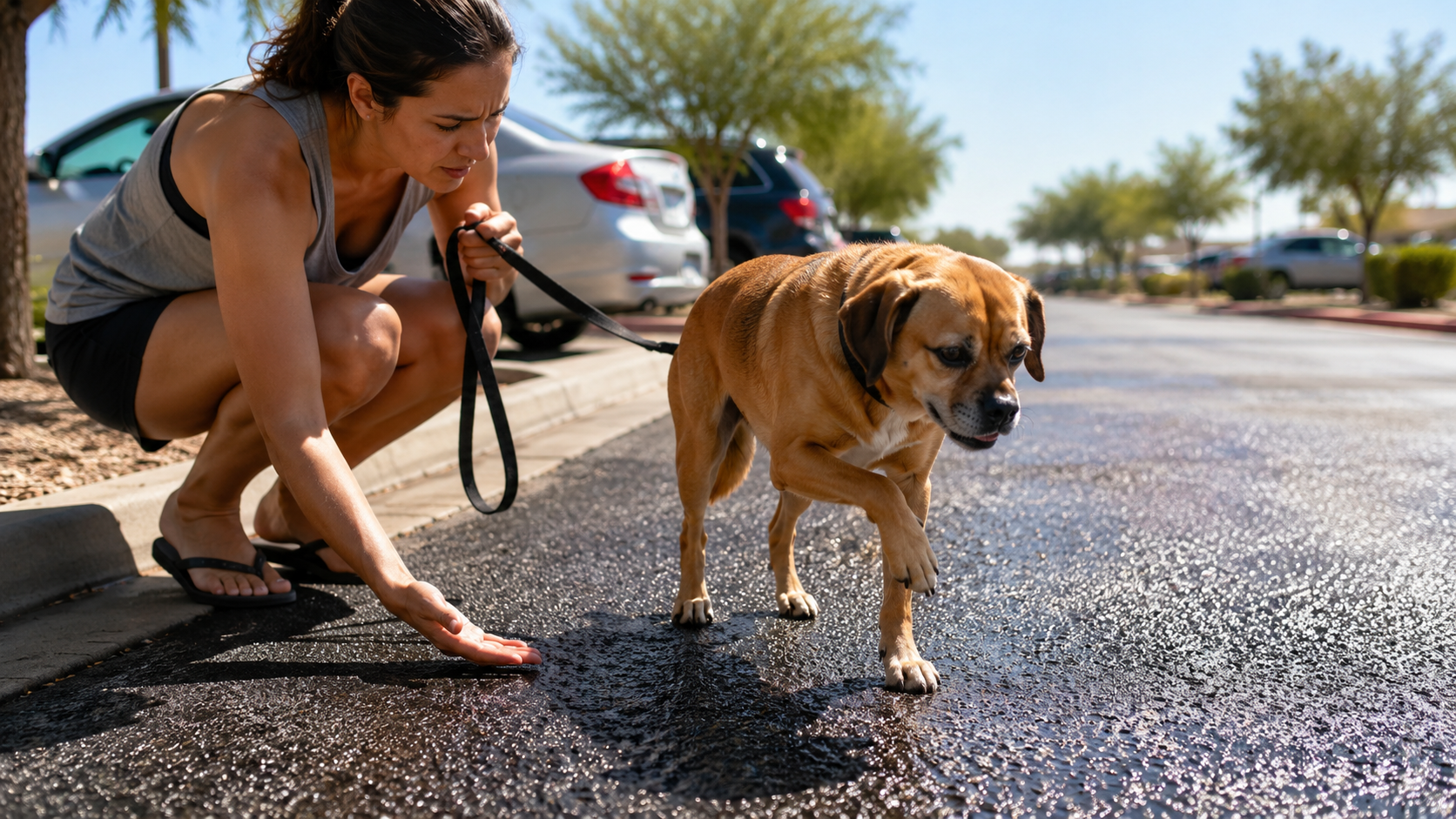
If your dog starts lifting one paw and then another, that may be a sign the ground feels uncomfortable. Some pets may look like they are dancing, hopping, or stepping strangely.
Do not ignore this as a cute behavior. Move to a cooler surface.
Your Pet Pulls Toward Grass or Shade
Pets often seek relief naturally. If your dog keeps moving toward grass, dirt, or shaded areas, they may be trying to avoid the hot pavement.
Let them choose the cooler route when possible.
Your Pet Slows Down or Refuses to Walk
A dog that suddenly stops, sits, or refuses to continue may be tired, overheated, nervous, or uncomfortable. Hot ground is one possible reason, especially during summer.
Instead of pulling them forward, pause and check the conditions.
The Pavement Feels Hot to Your Hand
A simple check is to place the back of your hand on the pavement for several seconds. If it feels too hot for your hand, it is probably too hot for your pet’s paws.
This is not a perfect scientific test, but it is a useful everyday habit.
Common Mistakes Pet Owners Make in Summer
Most paw injuries happen not because owners do not care, but because the risk is easy to overlook.
Mistake 1: Walking at Midday
Midday and afternoon are usually the hottest times for pavement. Even if your pet is used to a lunchtime walk, summer may require a different schedule.
Early morning and later evening are often safer and more comfortable.
Mistake 2: Assuming a Short Walk Is Always Fine
A short walk can still be uncomfortable if the pavement is very hot. Even a few minutes across a parking lot or down a sunny sidewalk can bother sensitive paws.
Length matters, but surface temperature matters too.
Mistake 3: Forgetting About the Walk Back
Many owners check how their pet feels at the start of a walk but forget that they must return home on the same pavement.
If your route has very little shade, your dog may be more tired and uncomfortable on the way back.
Choose routes that allow easy breaks or shortcuts.
Mistake 4: Relying Only on Air Temperature
Air temperature is helpful, but it does not tell the full story. Pavement in direct sun can be much hotter than the air.
Humidity, sunlight, wind, shade, and surface color all affect how hot the ground feels.
Mistake 5: Thinking Paw Pads Will “Toughen Up”
Some people assume dogs can build up stronger paws by walking on rough or hot surfaces. While regular walking can condition paw pads for normal activity, heat is different.
Exposing paws to hot pavement is not a good way to toughen them. It can cause discomfort and injury.
Simple Ways to Protect Your Pet’s Paws
You do not need complicated gear or a perfect routine. A few practical changes can make summer walks much safer.
Walk Early or Late
The easiest prevention tip is to walk during cooler parts of the day.
Early morning is often best because pavement has had all night to cool down. Later evening can work too, but remember that asphalt may still hold heat after sunset.
If the day has been extremely hot, check the ground before heading out.
Choose Grass, Dirt, or Shaded Paths
When possible, choose routes with grass, dirt trails, tree cover, or shaded sidewalks. Parks, wooded paths, and neighborhood streets with mature trees are often better than open roads or parking lots.
Let your dog walk on grass beside the sidewalk if it is allowed and safe.
Keep Walks Shorter on Hot Days
Summer walks do not need to be the same length as spring or fall walks. On very hot days, shorter and more frequent outings may be better than one long walk.
You can add indoor play, training games, or puzzle toys to help your pet burn energy without spending too much time on hot pavement.
Carry Water
Water does not protect paw pads directly, but it helps your pet stay more comfortable during warm weather. Bring water on longer walks and offer breaks in the shade.
Avoid pushing your pet to keep going if they seem tired.
Use Pet Booties Carefully
Pet booties can help protect paws from hot surfaces, but they need to fit properly. Some dogs need time to get used to them.
Try them indoors first. Make sure they do not rub, slip, or cause your dog to walk awkwardly.
Booties are not a reason to stay out longer in extreme heat. They are a tool, not a guarantee.
Consider Paw Wax for Mild Protection
Some pet owners use paw wax to add a light protective layer. It may help with minor roughness or surface contact, but it should not be treated as full protection from hot asphalt.
If the pavement is too hot, wax is not enough. Choose a cooler route instead.
What to Do If You Think the Pavement Is Too Hot
The safest response is simple: change the surface or change the timing.
Move to Shade or Grass
If your dog seems uncomfortable, guide them to grass, dirt, or shade right away. Avoid making them continue on the same hot surface.
If you are in a parking lot, carry a small dog if needed and if you can do so safely.
Turn Around Early
There is nothing wrong with cutting a walk short. A shorter walk on a hot day is better than pushing through discomfort.
You can always provide enrichment indoors later.
Check the Paws Calmly
After a hot walk, you can gently look at your pet’s paw pads for obvious redness, tenderness, cracking, or unusual licking.
This is not about panicking. It is about noticing changes early and adjusting future walks.
If you see concerning signs or your pet seems painful, contact a veterinarian for guidance.
Special Considerations for Different Pets
Every pet is different. Some need extra care in summer conditions.
Puppies
Puppies are still learning how to walk on different surfaces and may not signal discomfort clearly. Their paw pads may also be more sensitive than adult dogs.
Keep puppy walks short and choose cooler surfaces.
Senior Dogs
Older dogs may move more slowly, which means their paws spend more time in contact with hot ground. They may also have joint stiffness or health concerns that make summer walks harder.
Give senior dogs plenty of breaks and avoid rushing.
Small Dogs
Small dogs are close to the hot ground and may heat up quickly. They may also take more steps to cover the same distance as a larger dog.
Short routes and shaded paths can help.
Dogs With Dark Coats or Thick Fur
Dogs with dark coats may absorb more heat from the sun, while thick-coated dogs may struggle to stay cool. Paw safety is only one part of summer comfort for these pets.
Choose cooler times of day and watch their overall behavior.
A Quick Summer Paw Safety Checklist
Before heading out, take a few seconds to check the basics.
Is the pavement in direct sun?
Can you comfortably hold your hand on it?
Is there a grassy or shaded route nearby?
Is your pet slowing down or lifting their paws?
Do you have water for longer walks?
Can you shorten the walk if needed?
Are parking lots or driveways especially hot?
This quick checklist can become part of your normal summer routine.
Everyday Examples That Make a Difference
A few small choices can prevent problems before they start.
Instead of walking your dog at 2 p.m., go at 7 a.m.
Instead of crossing a large sunny parking lot, park closer to shade when possible.
Instead of standing on the driveway while chatting, move your dog to the lawn.
Instead of forcing a full neighborhood loop, do a short potty break and play indoors.
Instead of assuming the sidewalk is fine, check it with your hand.
These changes are simple, but they show your pet that their comfort matters.
Final Thoughts: Keep Summer Walks Safe and Comfortable
Hot asphalt can hurt your pet’s paws because it absorbs and holds heat far beyond what we feel in the air. Since humans usually wear shoes, it is easy to forget how intense pavement can be for a dog walking barefoot.
The best approach is practical and calm. Walk during cooler times, check the pavement, choose grass or shade, shorten walks when needed, and watch your pet’s behavior.
Summer does not have to mean skipping outdoor time. With a little awareness, you can still enjoy walks, errands, and fresh air while keeping your pet’s paws safer and more comfortable.
Hi, I’m the creator and editor behind ZestyHabit. I research everyday safety, first aid, and practical wellness topics using official guidance and reliable public sources, then turn that information into clear, realistic steps for daily life.
My goal is to help readers make safer, better-informed choices at home and beyond.