
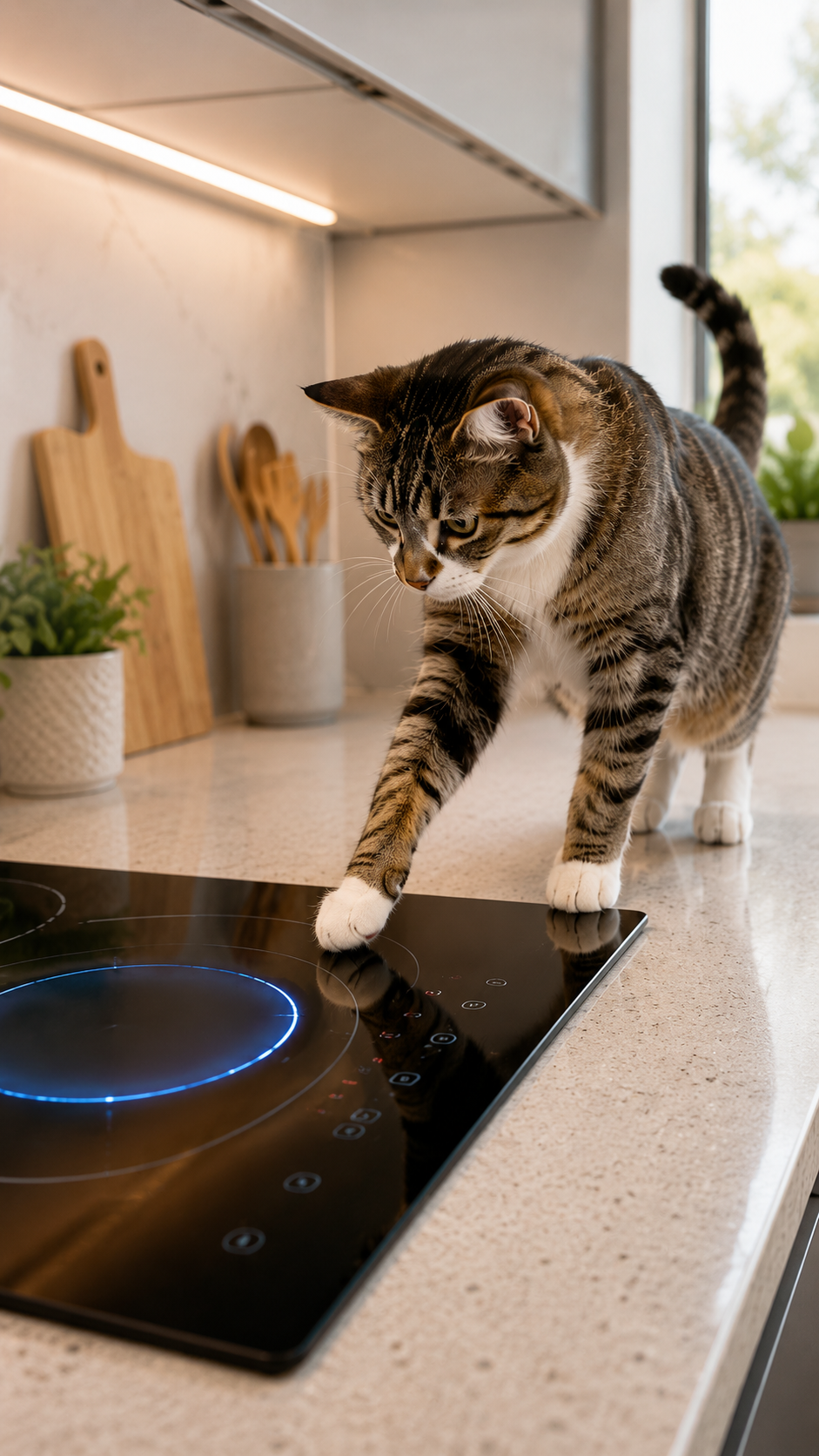
Can a cat turn on an induction cooktop? Learn how curious pets may activate touch controls, what risks to watch for, and simple kitchen safety habits that help prevent accidents.

Can a Cat Really Turn On an Induction Cooktop?
If you live with a cat, you already know the kitchen counter is not always “off limits” in your cat’s mind. You may say no, move them down, clean the surface, and try again the next day—only to find tiny paw prints near the sink or stove.
So it is a fair question: can a cat turn on an induction cooktop?
In some cases, yes, it is possible.
Many modern induction cooktops use flat touch controls instead of knobs. These controls may respond to fingers, moisture, certain objects, or pressure on the control area. A cat walking across the cooktop, stepping on the control panel, or sitting in the wrong spot could accidentally activate buttons, especially if the cooktop is not locked.
That does not mean every cat will turn on every induction stove. Some models have safety locks, pan detection, automatic shutoff features, or controls that require a longer press. But depending on the appliance design, the cat’s weight, the sensitivity of the touch panel, and what is sitting on the stovetop, accidental activation is something pet owners should take seriously.
This is not about panicking. It is about creating a kitchen routine that works in real life—especially if you have a curious cat who loves warm surfaces, high places, and exploring when nobody is watching.
Why This Matters in Everyday Life
For many people, the kitchen is the busiest room in the home. It is where coffee is made half-awake in the morning, dinner is cooked after work, groceries are unpacked, and dishes are left to dry. It is also a place full of interesting smells, crumbs, warmth, and shiny surfaces.
To a cat, that can be irresistible.
Induction cooktops are often seen as safer than gas burners because there is no open flame. That is true in many ways. But “safer” does not mean “risk-free.” An induction surface can still create heat when the right cookware is present. A pan left on the burner, a pot with oil, a metal item, or a forgotten cooking utensil can turn a small mistake into a bigger problem.
The concern is not only whether your cat can press a button. The bigger issue is what might happen afterward.
For example, imagine you finish cooking dinner and leave a pan on the cooktop to cool. Later, your cat jumps onto the counter and steps across the controls. If the child lock is off and the pan is still in place, the burner may heat again. Even if nothing dramatic happens, the pan could become dangerously hot, food residue could smoke, or nearby items could be affected.
Most households do not need complicated safety systems. But they do need a few consistent habits.
How Induction Cooktops Work in Simple Terms
Induction cooking is different from gas or traditional electric burners. Instead of heating a visible flame or glowing coil, induction uses magnetic energy to heat compatible cookware directly.
That is why induction cooktops usually require specific pots and pans. If a pan has a magnetic base, the cooktop can heat it. If the cookware is not compatible, the burner usually will not work properly.
This is one reason people assume induction cooktops are completely safe when nothing is cooking. In many situations, they are safer than older stove styles. But if compatible cookware is left sitting on the burner, the cooktop may be able to heat it if the controls are activated.
Touch Controls Can Be Sensitive
Many induction cooktops have touch panels on the glass surface. These can be sleek and easy to wipe clean, but they can also create a new kind of household safety issue.
A cat may accidentally:
- Step on the power button
- Hold a paw on the control area long enough to activate it
- Walk across temperature controls
- Trigger a burner selection button
- Disable or change settings if the control lock is not active
Some cooktops are harder to activate than others. Some require multiple steps. Others may beep and turn off if they do not detect cookware. But if there is a pan on the burner, the appliance may behave differently.
That is why prevention matters.
Common Scenarios That Can Lead to Trouble
Most accidents do not happen because someone made one huge mistake. They usually happen because several small, ordinary things line up at the wrong time.
Here are a few realistic examples.
A Pan Is Left on the Cooktop
This is probably the most common risk factor. Many people leave a frying pan, kettle, or pot on the stovetop after cooking. It feels harmless because the burner is off.
But with an induction cooktop, a compatible pan left in place can become a problem if the controls are accidentally turned on.
A cat may jump up later, step on the panel, and activate a burner under the pan. Even if the cooktop shuts off after a while, the pan may still get hot enough to cause smoke, damage the pan, or create a burn risk.
A Cat Likes Warm Surfaces
Cats often enjoy warm places. After cooking, the cooktop surface may stay warm from the cookware, even though induction itself heats differently from a traditional electric stove.
A cat that learns the stove area feels warm may return to it often. That habit can become risky if the appliance is not locked or if cookware is left on the burners.
Food Smells Attract Curiosity
A pan with bacon grease, sauce, fish, or meat residue can be very tempting. A cat may jump up to investigate the smell. While sniffing or licking near the pan, they could step on touch controls or knock nearby items around.
This is especially important after dinner, when people are tired and may plan to “clean it later.”
The Kitchen Is Quiet Overnight
Many pet-related kitchen accidents happen when no one is watching. Cats are often more active at night or early in the morning. A cooktop that seems safe during the day may become a concern if a cat explores the kitchen while everyone is asleep.
This is why the best safety habits are the ones you do automatically before leaving the kitchen.
Common Mistakes Pet Owners Make
Most cat owners are not careless. They are busy. They get distracted. They assume their cat will not do something until the cat does it.
Here are a few common mistakes that are easy to fix.
Relying Only on “My Cat Knows Better”
Cats can be trained, but they are still animals with curiosity, instincts, and their own schedule. A cat that usually stays off the counter may jump up if there is a strong food smell, a new object, or a quiet room.
It is better to use layers of prevention instead of relying only on behavior.
Leaving Cookware on the Stove
A clean, empty stovetop is one of the simplest safety habits you can build. When you are done cooking, move pots and pans away from the active cooking area once they are safe to handle.
If a pan needs to cool, place it somewhere your cat cannot reach, or stay nearby until it can be cleaned and put away.
Not Using the Control Lock
Many induction cooktops have a control lock or child lock feature. It may seem unnecessary in an adult-only home, but pets are a good reason to use it.
If your cooktop has this feature, make it part of your routine. Turn off the cooktop, clear the surface, and activate the lock.
Storing Items Near the Cooktop
Paper towels, plastic containers, dish towels, wooden utensils, food packaging, and mail should not be stored near the stove. Even if the induction surface itself does not create an open flame, cookware can become hot, and nearby items may still be affected.
Keeping the area clear gives you more room for error.
Ignoring Beeping Sounds
Some cooktops beep when controls are touched, when there is moisture on the panel, or when something is placed over the controls. If you hear unexpected beeping, check the cooktop.
Do not assume it is just being sensitive. A beep may be your early warning that a paw, object, spill, or towel is interacting with the control area.
Warning Signs to Watch For
You do not have to live in fear of your stove. But it helps to notice signs that your kitchen setup may need improvement.
Paw Prints on the Cooktop
If you see paw prints on the glass surface, your cat is already visiting the area. Even if nothing has happened yet, this is a sign to start using the control lock and clearing the stove every time.
Random Beeping
Unexpected beeping may mean something is touching the control panel. It could be a cat, a spill, a towel, or even a container placed too close to the controls.
Repeated beeping should not be ignored.
Cooktop Lights Turning On
If you ever notice indicator lights turning on when you did not intend to use the stove, treat it as a serious reminder to review your settings and habits.
Check whether your model has a lock feature, automatic shutoff, or sensitivity settings.
Your Cat Shows Interest in the Stove
Some cats are not interested in counters. Others are professional kitchen inspectors. If your cat watches you cook, jumps up after meals, sniffs pans, or sits near the cooktop, you need a stronger prevention routine.
Practical Prevention Tips That Actually Help
The goal is not to make your kitchen perfect. The goal is to make the safest choice the easiest habit.
Use the Control Lock Every Time
The control lock is one of the most useful features for pet owners. If your induction cooktop has it, use it whenever the stove is not actively being used.
A good routine is:
Turn the burner off.
Remove cookware.
Wipe the controls if needed.
Activate the lock.
At first, it may feel like an extra step. After a few days, it becomes automatic.
Remove Pots and Pans After Cooking
Do not leave induction-compatible cookware sitting on the burner when you are done. This is especially important overnight or when leaving the house.
If you need to let a pan cool, keep it pushed back from the controls, away from edges, and supervised when possible. Once it is safe, wash it or move it off the stovetop.
Keep the Cooktop Clear
A clear cooktop is safer and easier to clean. Avoid using it as extra counter space.
Try not to leave these items on or near the cooktop:
Paper towels
Plastic bags
Food wrappers
Dish towels
Wooden spoons
Pet treats
Mail or receipts
Empty pans
This simple habit reduces several risks at once.
Wipe the Control Area
Moisture, grease, crumbs, and spills can interfere with touch controls. A quick wipe after cooking helps keep the panel working properly and removes smells that may attract your cat.
Use the cleaning method recommended for your specific cooktop model.
Create a Better Cat Perch
Some cats jump on counters because they want height, attention, or a view. If your cat loves the kitchen, give them a safer place nearby.
A cat tree, window perch, or small approved sitting area outside the cooking zone may help redirect the habit. Reward them when they use that spot instead of the counter.
Block Access When Needed
If your cat is persistent, you may need to limit kitchen access when you are not home or when you are sleeping.
This could mean closing a door, using a pet gate if it works for your layout, or keeping tempting food smells cleaned up before bedtime.
Not every home allows for this, but even partial barriers can help.
Check Your Appliance Manual
Every induction cooktop is different. Some have stronger safety features than others. Take a few minutes to look up your model’s manual and learn how the lock function, auto shutoff, pan detection, and warning lights work.
This is one of those boring tasks that can make daily life much easier.
What to Do Before Leaving the Kitchen
A simple end-of-cooking checklist can prevent a lot of stress. You do not need to overthink it.
Before leaving the kitchen, ask yourself:
Is the cooktop off?
Are the controls locked?
Are pots and pans removed?
Is the surface clear?
Are towels and paper products away from the stove?
Is there food residue that may attract the cat?
This takes less than a minute once it becomes routine.
If you have children, guests, roommates, or family members in the home, make sure everyone understands the same routine. A safety habit works best when it is shared.
What If Your Cat Already Turned It On Once?
If your cat has already activated the cooktop, do not brush it off as a one-time funny story. It may never happen again, but it also may happen when you are not nearby.
Start by checking your cooktop settings. Learn whether there is a control lock and whether it can stay locked when the appliance is off. Some models require the lock to be activated each time.
Next, change the environment. Remove cookware from the stove, keep the surface clear, and reduce anything that attracts your cat to that area.
You may also want to watch your cat’s pattern. Are they jumping up after meals? At night? When the kitchen is quiet? When a certain pan is left out? Understanding the trigger makes prevention easier.
If the appliance seems unusually easy to activate, consider contacting the manufacturer or checking the manual for safety setting options.
Are Induction Cooktops Safe for Homes With Cats?
Yes, many homes with cats use induction cooktops safely every day. The key is not assuming that safety features replace good habits.
Induction cooking has several advantages. There is no open flame, the cooking surface often cools faster than traditional electric burners, and many units include automatic shutoff features. These are helpful.
But a cat walking across touch controls is a real-life situation that appliance designers may not fully account for in every model. That is why pet owners should be more intentional about locking controls and keeping cookware off the surface.
Think of it like childproofing, even if you do not have children. You are not expecting disaster. You are simply reducing the chance that a curious household member can accidentally start something.
Simple Kitchen Rules for Cat Owners
If you want an easy version, focus on these rules:
Do not leave pans on the induction cooktop.
Use the control lock when the stove is not in use.
Keep the cooktop and nearby counter clear.
Clean food smells and grease after cooking.
Give your cat a better place to perch.
Pay attention to unexplained beeping or lights.
These small habits are much easier than worrying every time your cat jumps onto the counter.
Final Thoughts
So, can a cat turn on an induction cooktop? Depending on the model and situation, yes, it can happen. A curious paw, sensitive touch controls, and a pan left on the burner can create a risk that many pet owners do not think about until they see it for themselves.
The good news is that prevention is simple. You do not need to redesign your kitchen or panic every time your cat walks near the stove. Start with the basics: remove cookware, use the control lock, keep the surface clear, and pay attention to your cat’s habits.
A safe kitchen is usually built through small routines repeated every day. For cat owners, that means treating the induction cooktop as something that should be off, locked, and clear when not in use.
With a few practical habits, you can enjoy the convenience of induction cooking while keeping your curious cat—and your home—a little safer.

Hi, I’m the creator and editor behind ZestyHabit. I research everyday safety, first aid, and practical wellness topics using official guidance and reliable public sources, then turn that information into clear, realistic steps for daily life.
My goal is to help readers make safer, better-informed choices at home and beyond.


