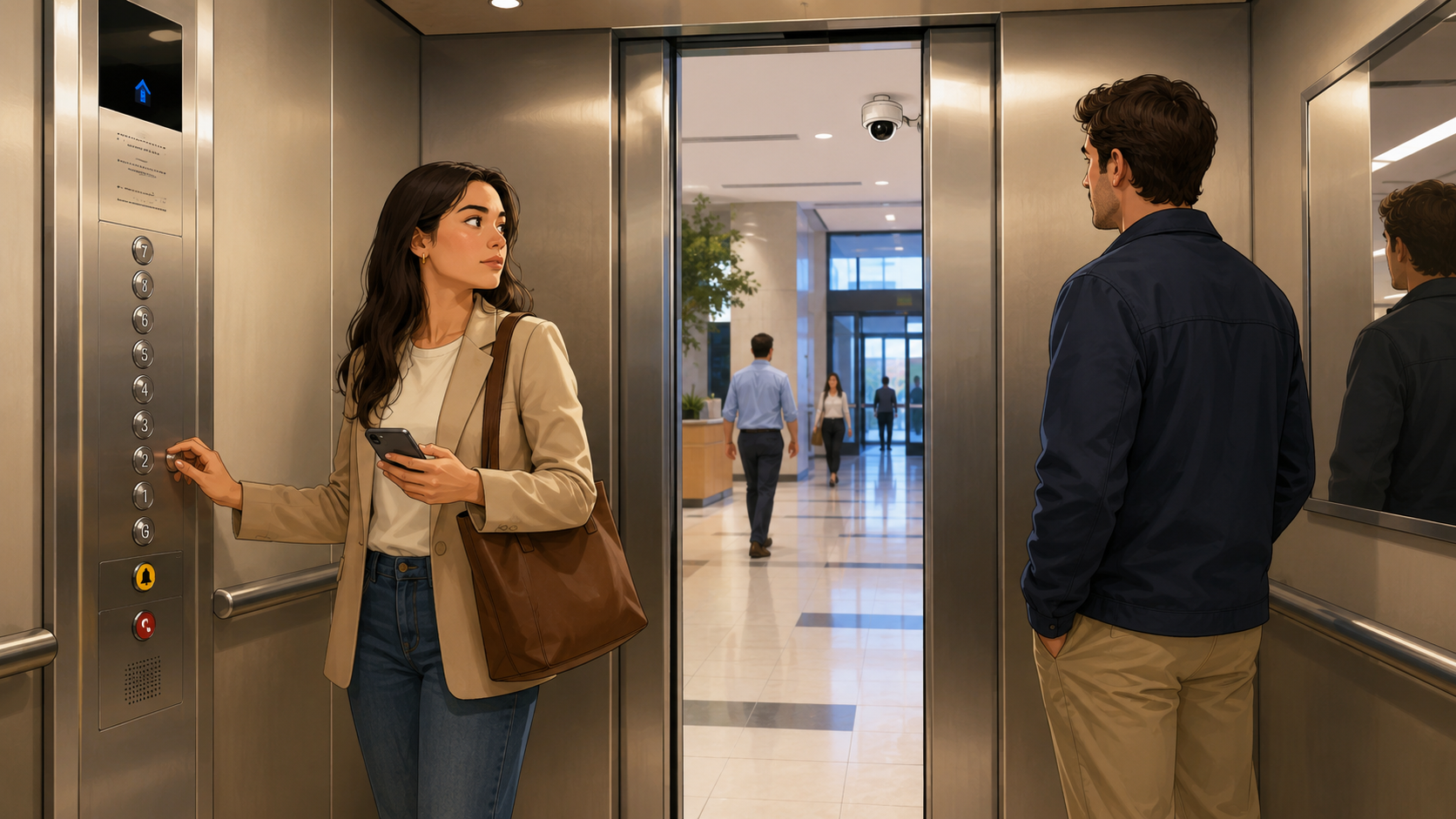
Elevator Safety Tips When You Are Alone With a Stranger
Minjin Park
·
Being alone in an elevator with a stranger can feel uncomfortable. Learn practical, calm safety habits that help you stay aware and respond confidently.
Riding an elevator is one of those everyday activities most people barely think about. You step inside, press a button, wait a few seconds, and continue with your day.
Sometimes, though, the situation feels different.
You may enter an elevator in an apartment building, hotel, parking garage, office tower, or hospital and realize that you are alone with someone you do not know. In most cases, nothing unusual happens. The other person is simply trying to reach another floor, just like you.
Still, an elevator is a small, enclosed space with limited exits. That can make people feel vulnerable, especially late at night, in an unfamiliar building, or when the other person’s behavior seems unusual.
The goal is not to assume that every stranger is dangerous. It is to stay aware, trust reasonable instincts, and know a few simple ways to protect your personal space.
Unlike a hallway or lobby, there is usually no easy way to step several feet away from another person. The doors close, the elevator begins moving, and you may be alone together for several floors.
This does not automatically make the situation unsafe. However, it means that small choices—such as where you stand, whether you stay distracted, and how you respond to uncomfortable behavior—can matter.
Personal safety is often less about reacting to an obvious emergency and more about noticing early signs that something feels wrong.
That might include someone standing unusually close, ignoring your request for space, blocking the control panel, or following you after you leave.
Awareness gives you more time to make a calm decision.
Do Not Ignore Your Instincts
People often talk themselves out of discomfort because they do not want to seem rude.
You may think:
“Maybe I am overreacting.”
“I do not want to embarrass this person.”
“It is only a short elevator ride.”
Those thoughts are understandable. Most of us are taught to be polite and avoid making others uncomfortable.
However, you are allowed to leave a situation that does not feel right. You do not need proof that someone has bad intentions before deciding not to enter an elevator.
If the doors open and the person inside makes you uneasy, simply step back and wait for the next elevator. You can pretend you forgot something, check your phone, or allow the doors to close without explanation.
Your safety does not require a dramatic confrontation.
Discomfort Is Not the Same as Accusation
Choosing not to share an elevator with someone does not mean you are accusing that person of a crime.
You are simply making a decision about your own comfort and surroundings.
Sometimes the concern may come from behavior. Other times, the location or timing may be the main issue. An isolated parking garage at midnight naturally calls for more caution than a crowded office lobby in the middle of the day.
Use the full situation rather than judging someone only by appearance.
Pause Before Stepping Inside
One of the simplest safety habits is taking one second to look before entering.
When the doors open, notice:
Who is already inside
Whether the elevator is unusually crowded
Whether anyone appears upset, intoxicated, or aggressive
Whether the person inside is watching you in a way that feels unusual
Whether the floor looks clear of spilled liquids or hazards
Whether the elevator appears to be working normally
Most of the time, the quick check will reveal nothing concerning. You can enter and continue your trip.
If something feels off, waiting for another elevator is usually an easy option.
Be Careful With Last-Second Entry
Someone may hold the door and invite you to hurry inside. While this is often ordinary politeness, you do not have to rush into an elevator without looking.
Take a moment. If you would rather wait, say, “That’s okay, I’ll take the next one.”
Similarly, avoid running toward closing elevator doors without noticing who is inside or where the elevator is going.
Choose a Practical Place to Stand
Where you stand can affect both comfort and awareness.
A useful position is near the control panel and within easy reach of the buttons, while still allowing other passengers enough room. This makes it easier to select another floor, open the doors when they stop, or use the alarm or call button if necessary.
Try not to stand deep in a corner with another person between you and the door.
You also do not need to press yourself directly against the doors. Stand naturally, keep a reasonable distance, and remain aware of the exit.
Avoid Becoming Trapped Behind Luggage or Equipment
In hotels, apartment buildings, and parking garages, people may bring carts, suitcases, bicycles, or large packages into elevators.
Large objects can reduce the available space and make it harder to move toward the door.
If the elevator is already crowded with bulky items, consider waiting for the next one. This is especially sensible if you would be forced into a corner or would not be able to reach the control panel.
Stay Aware Without Staring
Awareness does not mean watching the other person continuously.
You can remain alert while looking at the floor indicator, control panel, elevator doors, or your reflection in a mirrored wall.
Keep track of which floor was selected and notice whether the elevator stops where expected.
Avoid becoming completely absorbed in your phone, especially in a quiet or unfamiliar building. Headphones with loud music can also make it harder to notice what is happening around you.
You do not need to put your phone away completely. In fact, keeping it accessible can be useful. The key is not letting the screen take all of your attention.
Protect Personal Information
Casual conversation in an elevator is usually harmless. A stranger may comment on the weather, ask whether the building has a gym, or make ordinary small talk.
You can be polite without sharing personal details.
Be cautious about revealing:
Your exact apartment or hotel room number
Whether you live alone
Your daily work schedule
Whether you are new to the area
How long you will be staying
That your family or roommates are away
Where your car is parked
If someone asks which unit you live in, a simple answer such as “I’m visiting someone in the building” can protect your privacy.
You are not required to provide complete or accurate personal information to a stranger who makes you uncomfortable.
You Do Not Have to Press Your Exact Floor
In residential buildings and hotels, pressing your floor can reveal where you are staying.
Usually, this is not a concern. But if someone’s behavior makes you uneasy, consider getting off at a public or busier floor instead of leading the person directly to your home or room.
For example, you might choose:
The lobby
A floor with a staffed reception desk
A common area
A floor where other people are present
A nearby floor, followed by the stairs if that is safe and permitted
Do not lead someone into an isolated stairwell merely to avoid them. Choose a place with people, lighting, and visible activity.
Pay Attention to Unusual Behavior
Most people in elevators behave predictably. They press a button, stand quietly, and leave at their floor.
Some behavior deserves extra attention, especially when several warning signs appear together.
Standing Too Close
Elevators are small, so some closeness is unavoidable. However, a person who repeatedly moves closer when space is available may be testing your boundaries.
Take a step away and move nearer to the controls or doors.
A clear statement such as “Please give me some space” is reasonable if the behavior continues.
Blocking the Door or Control Panel
A person should not prevent you from leaving or reaching the buttons.
If someone stands in front of the door when it opens, use a firm voice: “Excuse me, this is my floor.”
Do not worry about sounding unfriendly. Direct language is often easier to understand than hints.
Pressing Your Floor Without Being Asked
Someone may notice which button you press and claim to be going to the same floor. That alone is not proof of a problem, particularly in apartment or office buildings.
Still, pay attention if the person had previously selected a different floor, changes direction after watching you, or continues following you once you exit.
Asking Intrusive Questions
Ordinary small talk is different from persistent personal questioning.
Questions about whether you live alone, which room you are in, where you are going next, or why no one is with you can be warning signs when the person ignores attempts to end the conversation.
Give brief answers or do not respond.
Preventing the Elevator From Stopping
Tampering with buttons, repeatedly pressing door controls, or behaving aggressively around the panel is not normal.
Move toward the call or alarm button if you can do so safely, and exit at the next public floor when the doors open.
Common Mistakes to Avoid
People sometimes make safety decisions based on politeness or habit rather than the situation.
Entering Because You Feel Obligated
You may feel rude allowing an elevator door to close while someone is holding it for you.
It is still acceptable to wait.
Say “Thanks, I’ll take the next one,” and step back.
Looking Completely Distracted
Scrolling with both hands, wearing noise-canceling headphones, or focusing on a long message can make it harder to notice changes in someone’s behavior.
Keep your phone available, but stay connected to your surroundings.
Revealing Your Room or Apartment Number
Someone may casually ask, “What floor are you on?” You can answer vaguely, press a different public floor, or allow the other person to make a selection first.
Privacy is a normal boundary.
Confronting Someone Unnecessarily
Awareness should not turn into aggressive behavior.
Avoid staring, insulting someone, or making accusations based only on appearance. Escalation can make a manageable situation more unpredictable.
Whenever possible, create distance, leave at a populated floor, or seek help rather than starting an argument.
Getting Off in an Isolated Area
If you believe someone may be following you, do not automatically exit into an empty hallway, parking level, or stairwell.
Remaining in the elevator and returning to the lobby may be safer than getting off alone.
What to Do If Someone Follows You
Sometimes the concern becomes clearer after the doors open.
You leave the elevator, and the stranger also leaves. This may be a coincidence, especially in a building where many people share the same floors.
Look for additional behavior before drawing conclusions. Does the person walk toward a different door, office, or hallway? Or do they continue matching your movements and distance?
If you believe someone is following you, avoid going directly to your apartment, hotel room, or parked car.
Instead, move toward:
A front desk
Security personnel
A staffed business
A busy lobby
A group of people
A well-lit public area
You can say clearly to a receptionist, guard, or employee, “I’m uncomfortable because someone appears to be following me. May I stay here for a moment?”
Making your concern known reduces isolation.
Using Elevator Safety Features
Most modern elevators have emergency features, although the design varies by building.
These may include:
An alarm button
An emergency call button
A phone or intercom
Security cameras
Floor buttons that allow you to stop at another level
Door-open controls
Notice these features when you enter, especially in an unfamiliar building.
Do not press the emergency alarm for ordinary discomfort alone. However, if someone prevents you from leaving, threatens you, touches you without consent, or creates an immediate safety concern, use the available help system when you can do so safely.
In some cases, pressing several floor buttons can create more opportunities for the doors to open, but the safest action depends on the situation. Focus on reaching a public, occupied location rather than following a rigid rule.
Special Considerations in Parking Garages
Parking garage elevators deserve additional attention because they often open into quieter areas.
Before entering, look around the elevator lobby and notice whether anyone is lingering nearby.
When you leave the elevator, have your keys ready so you are not searching through a bag beside your vehicle. Avoid unlocking your car from a long distance, since flashing lights can show exactly where it is parked.
If someone makes you uncomfortable, return to a staffed area or wait for security assistance rather than walking alone through an isolated garage.
Whenever available, park near lighting, pedestrian routes, elevators, or security cameras.
Helping Children and Teens Build Good Habits
Children and teens should learn elevator awareness without being taught that every stranger is dangerous.
Simple rules are easier to remember:
Do not share your address, room number, or schedule
Wait for another elevator if you feel uncomfortable
Stay near the buttons and door
Keep headphones low enough to hear your surroundings
Go to a lobby, front desk, or trusted adult if someone follows you
Do not enter an elevator with someone who is behaving aggressively
Parents can practice these situations through calm conversation rather than frightening warnings.
For example, ask, “What could you do if someone in an elevator keeps asking which apartment you live in?” This gives children a chance to think through a safe response before they need it.
A Simple Elevator Safety Routine
You do not need to treat every elevator ride as a dangerous event.
A short routine can help you stay aware without becoming anxious.
Before entering, look inside.
Once inside, stand where you can reach the controls and leave easily.
Keep your phone accessible, but do not become completely distracted.
Protect your personal information.
If the situation feels wrong, exit at a busy floor or return to the lobby.
If someone follows you, move toward other people and ask for help.
These habits are simple enough to become automatic.
Final Thoughts
Being alone in an elevator with a stranger is usually uneventful. Most people are simply traveling between floors and have no interest in bothering anyone else.
Still, elevators are enclosed spaces, and it makes sense to use basic personal-safety habits.
Pause before entering. Choose a practical place to stand. Stay aware of the doors and controls. Avoid sharing private details. Pay attention to behavior that crosses normal boundaries, and remember that you are allowed to leave a situation that feels uncomfortable.
You do not need to panic, make assumptions, or confront someone without reason. Calm awareness is usually the most useful approach.
A few small choices—waiting for the next elevator, getting off in a busy lobby, or keeping your exact floor private—can help you feel more confident while moving through apartments, offices, hotels, hospitals, and parking garages.
Hi, I’m the creator and editor behind ZestyHabit. I research everyday safety, first aid, and practical wellness topics using official guidance and reliable public sources, then turn that information into clear, realistic steps for daily life.
My goal is to help readers make safer, better-informed choices at home and beyond.