
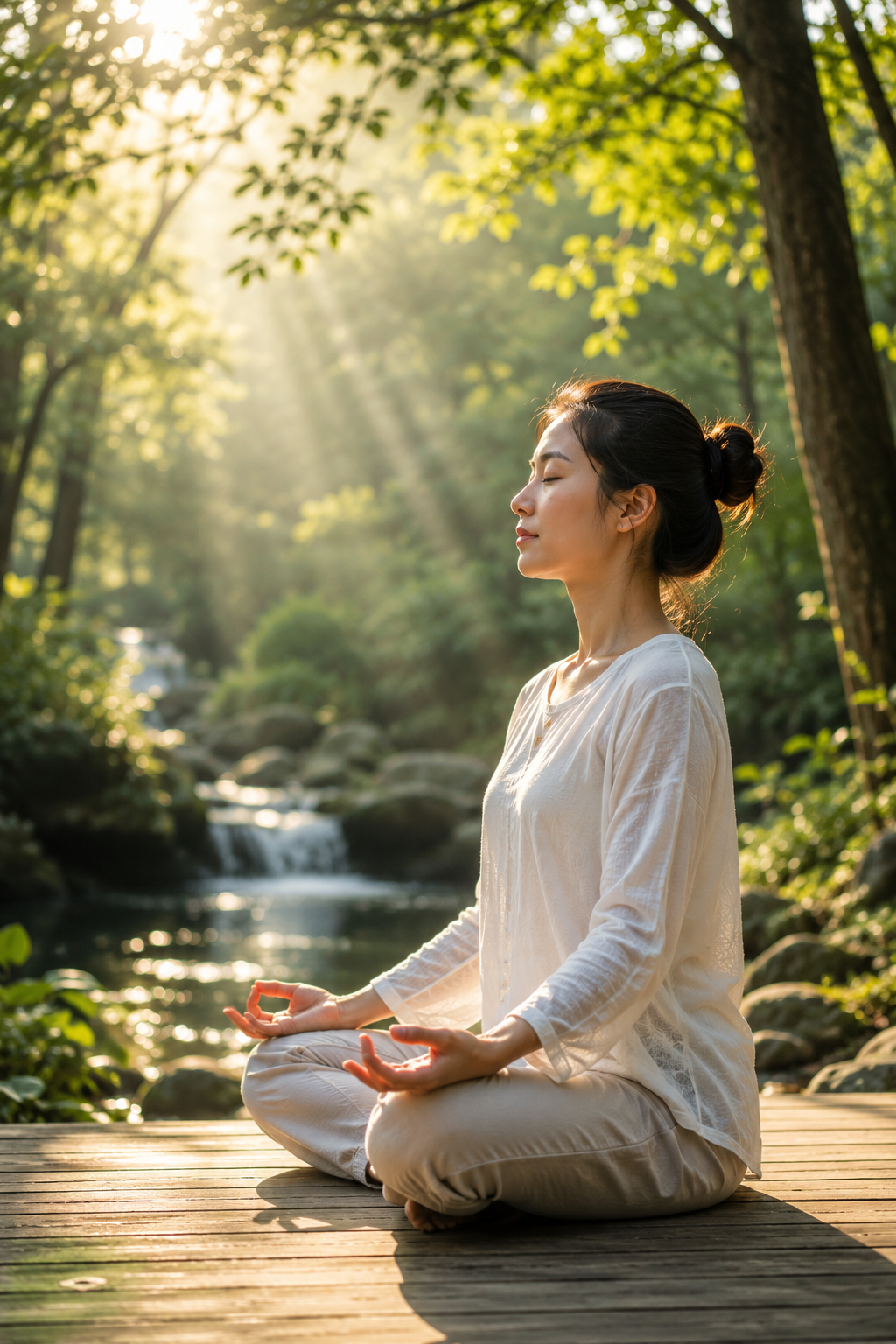

Meditation walking sounds peaceful, and in many ways, it is. Instead of rushing from one place to another, you slow down. You notice your breathing, your steps, the feeling of the ground under your feet, and the rhythm of your body moving through space. It can be a calming way to exercise, reset your mind, and feel more connected to the present moment.
But meditation walking is still walking in the real world.
There may be uneven pavement, bicycles, cars, dogs, other pedestrians, curbs, wet leaves, loose gravel, stairs, and people moving unpredictably around you. If you become too inward-focused, you may miss what is happening right in front of you. A mindful walk should help you feel more aware, not less aware.
That is why safety matters. Meditation walking is not about closing yourself off from the outside world. It is about paying attention more fully, including to your surroundings.
Here is how to practice meditation walking in a calm, grounded way while staying safe, balanced, and alert.
What Is Meditation Walking?
Meditation walking, sometimes called mindful walking, is a form of walking where you bring deliberate attention to the experience of moving. Instead of walking on autopilot, you notice details: the lifting of each foot, the contact with the ground, the pace of your breath, the movement of your arms, the sounds around you, and the space you are moving through.
It can be done slowly in a quiet garden, at a normal pace in a park, or even during a short walk around the block. You do not need special clothing, spiritual language, or a perfect natural setting.
The main idea is simple: walk with awareness.
That awareness should include both your inner experience and the environment around you. If you focus only on your breathing and forget the curb in front of you, the practice becomes less safe. If you focus only on avoiding obstacles and never notice your body or breath, it becomes just another walk.
A safe meditation walk balances both.
Choose the Right Place
The location you choose has a big impact on how safe and relaxing your meditation walk feels.
A quiet, predictable route is usually best, especially if you are new to the practice. Parks, walking paths, gardens, quiet neighborhoods, school tracks, and wide sidewalks can work well. These places give you enough space to move without constantly dodging people or traffic.
Try to avoid starting in places that require constant alertness, such as busy intersections, crowded downtown sidewalks, narrow roads without sidewalks, dark trails, or areas with heavy bicycle traffic.
This does not mean meditation walking must happen only in perfect silence. Real life has sound and movement. But the environment should not be so chaotic that you cannot walk safely.
A good route should have:
| Feature | Why It Helps |
|---|---|
| Even surface | Reduces tripping risk |
| Enough space | Lets you walk without crowding others |
| Low traffic | Helps you stay calmer and safer |
| Good lighting | Makes obstacles easier to see |
| Familiar layout | Reduces uncertainty |
| Safe stopping spots | Lets you pause when needed |
If you are walking outdoors, choose a route that feels comfortable and predictable before adding deeper meditation focus.
Keep Your Eyes Open and Active
Meditation walking is not the same as seated meditation with closed eyes. When you are moving, your vision is part of your safety system.
Keep your eyes open. Let your gaze stay soft, but do not blur out the world completely. You can look a few steps ahead instead of staring intensely at the ground or far into the distance.
A helpful habit is to scan gently. Notice the path, the surface, other people, curbs, bikes, dogs, cars, and anything that could affect your movement.
You do not need to turn the walk into a tense inspection. The goal is relaxed awareness. Think of it as seeing clearly without rushing.
Be especially aware of:
- Cracks in pavement
- Wet leaves
- Uneven stones
- Tree roots
- Curbs
- Steps
- Cyclists
- Vehicles backing out of driveways
- Dogs on long leashes
- Other pedestrians changing direction suddenly
Mindfulness should make your attention wider, not narrower.
Avoid Walking with Your Head Down

Many people naturally look down when they are trying to focus on their steps. That makes sense, but looking down for too long can affect posture and awareness.
If your head stays dropped, your neck may tighten and your shoulders may round forward. You may also miss what is happening ahead, especially cyclists, cars, signs, low branches, or people approaching.
Instead, let your gaze rest several feet in front of you. You can glance down when needed, especially on uneven ground, but return your head to a more neutral position.
A good cue is: soft eyes, long neck, relaxed shoulders.
You can still notice each step without staring at your shoes. Feel the ground through your feet while keeping your vision open to the space around you.
Be Careful Near Traffic
Meditation walking near traffic requires extra caution. Even if you feel calm and focused, drivers may be distracted, impatient, or unable to see you clearly.
If your route includes roads, crosswalks, driveways, or parking lots, shift into a more practical awareness mode. This is not the time to deeply focus on your breath or count every step. Watch the environment first.
Before crossing a road:
- Stop fully.
- Look both ways.
- Make eye contact with drivers when possible.
- Watch for turning vehicles.
- Do not assume a car will stop.
- Avoid crossing while looking at your phone.
- Remove headphones or lower the volume if needed.
Parking lots also deserve attention. Cars may reverse suddenly, and drivers may not expect slow walkers to be moving through the area. Stay visible and avoid lingering behind vehicles.
A calm mind is helpful, but traffic safety always comes first.
Keep the Volume Low if You Use Audio
Some people like guided walking meditations, calming music, or nature sounds during meditation walking. That can work, but audio can also reduce awareness.
If you use headphones, keep the volume low enough that you can still hear your surroundings. You should be able to notice approaching bicycles, cars, dogs, people calling out, or sudden changes around you.
Open-ear headphones can be safer than noise-canceling headphones for outdoor walking. One earbud instead of two may also help in some situations.
Avoid using noise-canceling mode near traffic, on shared paths, or anywhere cyclists and vehicles may pass. Meditation walking should not disconnect you from the environment.
If you find that audio makes you zone out too much, try walking without it. The natural sounds around you can become part of the practice.
Watch the Surface Under Your Feet
Surface awareness is one of the most important meditation walking precautions. Slow walking may seem safe, but people still trip when they stop paying attention.
Different surfaces affect balance in different ways. Smooth pavement is usually predictable. Grass can hide holes. Gravel can shift. Wet leaves can be slippery. Sand can tire the feet. Wooden paths can become slick after rain.
Before you settle into a steady rhythm, notice the ground. Is it dry? Is it even? Are there cracks, roots, mud, or slopes?
On uneven surfaces, shorten your steps slightly. Place each foot with more care. If the path becomes difficult, pause the meditation technique and focus fully on walking safely.
This is especially important for older adults, anyone recovering from injury, or people who have balance concerns. Mindful walking can support balance awareness, but only if you respect the surface.
Do Not Go Too Slow in Crowded Areas
Very slow walking can be part of meditation practice, especially in quiet spaces. But in public areas, moving too slowly can create awkward or unsafe situations.
On a busy sidewalk, people may not expect someone to stop or slow dramatically. Cyclists and runners on shared paths may have to swerve. Other pedestrians may crowd behind you.
If you want to practice very slow walking, choose a quiet place with plenty of space. A garden, open park area, empty hallway, or quiet path is better than a narrow sidewalk.
In shared spaces, use a natural walking pace. You can still be mindful without moving extremely slowly. Awareness is not measured by how slow you go.
A safe pace is one that allows you to stay present without becoming an obstacle to others.
Keep Your Balance in Mind
Meditation walking often emphasizes gentle, deliberate steps. That can be calming, but over-controlling each movement may make some people feel stiff or unsteady.
Try not to walk like a robot. Let the movement stay natural. Your steps can be slower and more intentional, but your body should still feel relaxed.
If you practice lifting the foot very slowly, do it in a safe area. Slow-motion walking can challenge balance more than normal walking because you spend more time on one leg. That is useful for some people, but it can also increase wobbling.
To support balance:
- Keep your steps comfortable, not exaggerated.
- Let your arms move naturally.
- Avoid locking your knees.
- Keep your gaze forward.
- Use flat, supportive shoes.
- Practice near a wall, railing, or bench if needed.
If you feel dizzy, lightheaded, or unstable, stop and sit down. Meditation walking should feel grounding, not disorienting.
Wear Comfortable, Stable Footwear
Because meditation walking can be slow and gentle, people sometimes underestimate footwear. But your shoes still matter, especially outdoors.
Choose shoes that feel stable and secure. The soles should have enough grip for the surface. The heel should not slip. The toe box should allow your toes to relax naturally.
Avoid flip-flops, loose sandals, high heels, or shoes that make you change your walking pattern. If your shoes are too soft and unstable, your feet may work harder to balance. If they are too stiff or tight, your steps may feel awkward.
For indoor meditation walking, barefoot walking may feel natural for some people, but only on a clean, safe surface. Watch for slippery floors, rugs that bunch up, or small objects underfoot.
The goal is to feel connected to the ground without sacrificing safety.
Stay Visible
If you are walking outdoors, visibility matters. This is especially true in early morning, evening, cloudy weather, or shaded paths.
Wear clothing that makes you easy to see. Bright or reflective details can help if you are near roads or shared paths. If you walk in low light, carry a small light or use a reflective vest.
Do not assume others can see you just because you can see them. Drivers, cyclists, and even other pedestrians may be distracted.
Good visibility is not only for intense exercise. A slow, mindful walker still needs to be noticed.
Be Mindful of Weather
Weather can change a safe route into a tricky one.
Rain can make sidewalks slippery. Wind can distract you or blow debris across the path. Heat can make you lightheaded. Cold weather can stiffen muscles and reduce comfort. Snow and ice create obvious slipping risks.
Before heading out, consider whether the weather supports the kind of walk you want to do. If conditions are poor, choose an indoor option such as a hallway, gym track, covered walkway, or spacious room.
For warm weather, bring water if you will be out for a while. Walk in shaded areas when possible. For cold weather, dress in layers so you are not distracted by discomfort.
Meditation walking works best when your body feels safe enough to settle.
Keep Your Phone Away, But Accessible
A phone can be useful for safety, directions, or emergency contact. But it can also pull you out of awareness.
Try not to scroll, text, or check notifications while meditation walking. Looking down at your phone reduces awareness of the surface and people around you.
Keep your phone in a pocket or small bag where you can reach it if needed. If you are using a guided meditation, start it before you begin walking, then put the phone away.
If you need to check a map or message, stop in a safe place first. Do not drift across a path while looking at the screen.
The point is not to reject technology completely. It is to avoid letting it divide your attention at the wrong moment.
Respect Other People’s Space
Meditation walking can feel deeply personal, but it often happens in shared spaces. Be mindful of the people around you.
Avoid blocking narrow paths, stopping suddenly in the middle of a walkway, or walking in unpredictable patterns. If you are moving slowly, stay to one side where others can pass. On shared paths, follow local etiquette.
If you are walking with a group, avoid spreading across the entire path. Keep enough space for cyclists, runners, parents with strollers, and other walkers.
Awareness includes social awareness. A mindful walk should feel calm for you without creating stress for others.
Do a Simple Safety Check Before You Begin
Before starting your meditation walk, take a few seconds to check your body and environment.
Ask yourself:
| Question | Why It Matters |
|---|---|
| Is the surface safe? | Helps prevent slips and trips |
| Is visibility good? | Helps you see and be seen |
| Is traffic nearby? | Helps you adjust awareness |
| Are my shoes secure? | Supports balance and comfort |
| Do I feel dizzy or tired? | Helps prevent unsafe walking |
| Is this route too crowded? | Helps avoid collisions |
| Can I stop safely if needed? | Gives you more control |
This quick check does not ruin the mindfulness. It creates the conditions for it.
A Simple Safe Meditation Walking Practice
Here is a beginner-friendly way to practice meditation walking without losing awareness of your surroundings.
Start by standing still in a safe spot. Notice your feet on the ground. Let your shoulders relax. Take one or two natural breaths.
Begin walking at a comfortable pace. Feel your feet lifting and landing. Notice the rhythm of your steps. Let your arms move naturally.
Every few moments, widen your awareness. Notice the space in front of you, the sounds around you, the surface under your feet, and any people nearby.
You can silently use simple cues:
- “Step.”
- “Ground.”
- “Breath.”
- “Listen.”
- “Look.”
- “Here.”
If you approach a crossing, crowded area, uneven path, or vehicle, let go of the meditation cue and focus on safety. After the area is clear, return to your walking awareness.
This flexible approach is often safer than trying to stay locked into one technique the entire time.
When to Pause or Stop
Meditation walking should feel steady and calming. It does not have to feel perfect, but it should not feel unsafe.
Pause or stop if:
- You feel dizzy or lightheaded.
- You become too distracted.
- The path becomes slippery or uneven.
- Traffic requires full attention.
- You feel unsteady.
- You are getting too tired to walk safely.
- The area feels unsafe.
- Your shoes or clothing are causing discomfort.
Stopping is not failure. It is awareness in action.
Sometimes the most mindful choice is to pause, breathe, look around, and decide what to do next.
Final Thoughts
Meditation walking can be a beautiful way to combine movement, calm, and everyday awareness. It helps you slow down without becoming inactive. It gives your mind something simple to return to: the step, the breath, the ground, the present moment.
But mindful walking should never mean ignoring the world around you. The surface, traffic, weather, people, visibility, and your own balance all matter. A safe meditation walk keeps your attention open, not closed.
Choose a calm route. Keep your eyes active. Stay aware near traffic. Watch the ground. Use headphones carefully. Wear stable shoes. Move at a pace that fits the place you are in.
The goal is not to disappear into your thoughts. The goal is to arrive more fully in your body and your surroundings.
When done with care, meditation walking can leave you feeling calm, clear, and steady—not because you escaped the world, but because you paid attention to it.

Hi, I’m the creator and editor behind ZestyHabit. I research everyday safety, first aid, and practical wellness topics using official guidance and reliable public sources, then turn that information into clear, realistic steps for daily life.
My goal is to help readers make safer, better-informed choices at home and beyond.


