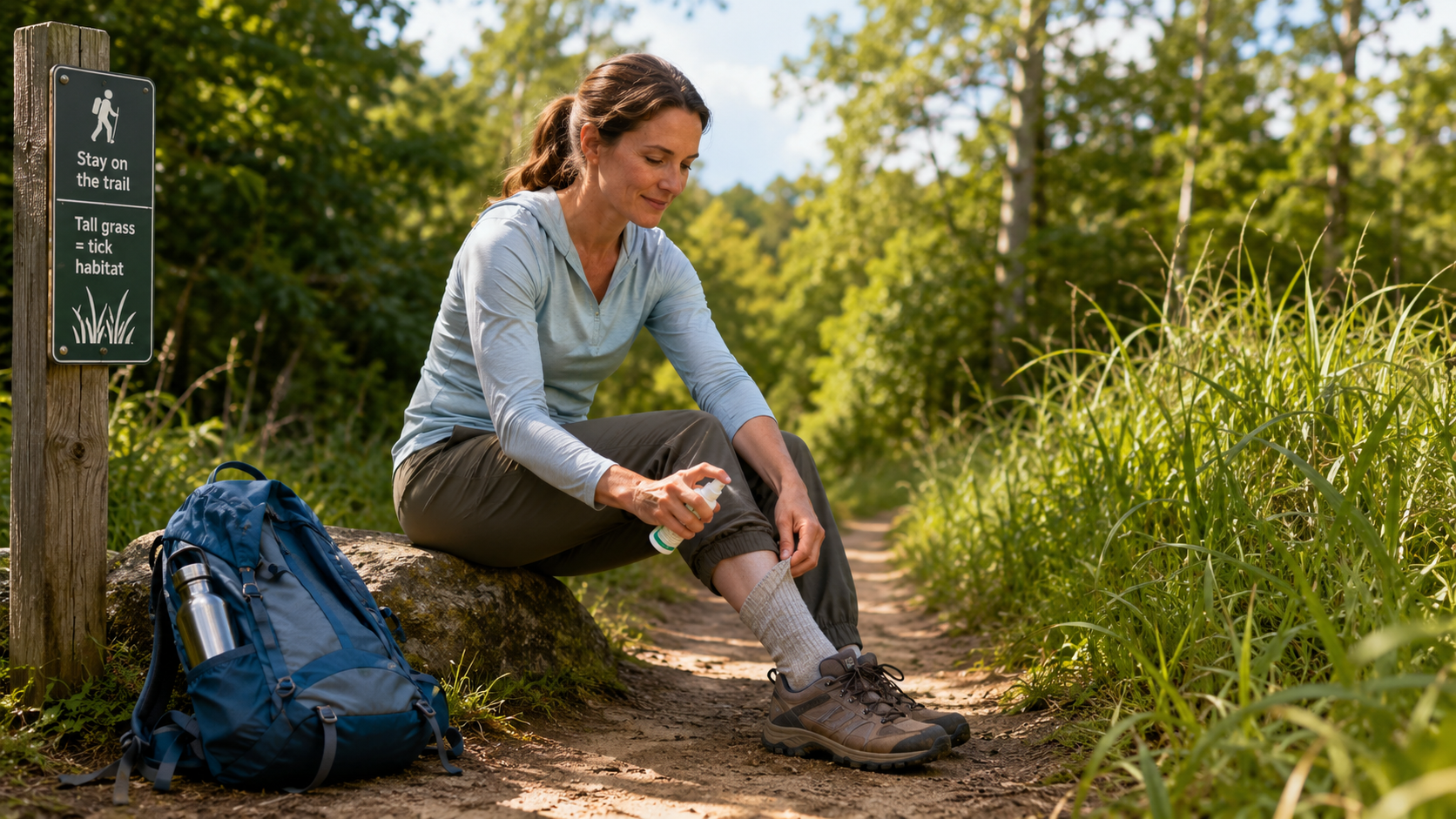
How to Prevent Wild Tick Bites Without Turning Every Walk Into a Panic Event
Minjin Park
·
Wild ticks can be picked up during hiking, gardening, camping, and even ordinary yard work. Here’s how to prevent tick bites with practical clothing choices, repellents, tick checks, laundry habits, and pet care.
Ticks are one of those outdoor risks people remember only after they get home.
You go for a hike, pull weeds in the yard, sit on a blanket at the park, or let the dog wander through tall grass. Nothing feels dramatic. The weather is nice. Maybe you are more worried about sunburn or mosquitoes.
Then later, while changing clothes or taking a shower, you notice a tiny dark speck attached to your skin.
That is usually when the mood changes.
The good news is that tick prevention does not have to be complicated. You do not need to live in fear of grass or give up hiking. Most prevention comes down to a few repeatable habits: know where ticks hang out, dress with a little strategy, use the right repellent, check your body afterward, and deal with clothes and pets before ticks get comfortable.
It is not glamorous. It is just practical.
And honestly, that is the kind of prevention people are more likely to keep doing.
Where Ticks Usually Wait
Ticks do not jump from trees like tiny villains. That idea has somehow survived, but it is not really how they operate.
They tend to wait in grassy, brushy, or wooded areas, often on vegetation where they can latch onto a person or animal passing by. The CDC recommends avoiding wooded and brushy areas with high grass and leaf litter when possible, and walking in the center of trails outdoors.
This matters because tick exposure is not limited to deep forest hikes. You can pick up ticks while gardening, camping, mowing near tall grass, walking the dog, sitting near the edge of a trail, or helping kids play in a leafy backyard.
That is the slightly unfair thing about ticks. You do not have to be doing an “outdoorsy” activity to meet one.
A simple mental note helps: if your legs, shoes, socks, or pets are brushing against grass, weeds, shrubs, or leaf litter, tick prevention is worth thinking about.
Dress Like You Know Ticks Exist
You do not need to dress like you are going on a jungle expedition every time you step outside. But for hiking, camping, yard work, or spending time in tall grass, clothing can make a real difference.
Long pants and long sleeves give ticks less direct skin to grab onto. Light-colored clothing can make it easier to spot a crawling tick before it reaches skin. Tucking pants into socks is not exactly a fashion moment, but it works better than pretending ticks respect personal boundaries.
If you are going somewhere tick-heavy, consider closed-toe shoes instead of sandals. Ticks love low contact points: shoes, ankles, socks, pant cuffs. That is usually where they first get a ride.
For quick yard work, you might not want to change your whole outfit. Fair enough. But at least think about shoes and socks. Walking through overgrown grass in flip-flops is basically giving ticks a welcome mat.
Use Repellent That Is Made for Ticks
This is one place where “natural” does not automatically mean better.
The CDC recommends using EPA-registered insect repellents with ingredients such as DEET, picaridin, IR3535, oil of lemon eucalyptus, PMD, or 2-undecanone. The EPA also lists these active ingredients for skin-applied repellents and provides guidance for choosing registered products.
The key phrase is “EPA-registered.” That means the product has been reviewed for safety and effectiveness when used as directed. Homemade sprays and random essential oil mixtures may smell nice, but they are not something I would rely on in a tick-heavy area.
Read the label before applying. I know, nobody loves reading tiny print on a bottle while mosquitoes are already forming a committee around your ankles. But labels tell you where to apply it, how often to reapply, whether it is suitable for children, and whether it can go on skin or only clothing.
A few practical notes:
Do not spray repellent under clothing. Do not apply it to cuts or irritated skin. Use hands to apply it carefully around the face instead of spraying directly into eyes or mouth. Wash it off later when you are done outdoors. Keep products away from young children’s hands.
For kids, adults should apply the repellent. Children are not famous for careful spray technique.
Consider Permethrin for Clothing and Gear
Permethrin is different from regular skin repellent. You do not put it directly on your skin. It is used on clothing and gear, or you can buy clothing that has already been treated.
The CDC notes that clothing and gear can be treated with products containing 0.5% permethrin, and that pre-treated clothing and gear are also available.
This can be especially useful for hikers, campers, field workers, gardeners, hunters, or anyone who spends a lot of time in tick habitats. Treating shoes, socks, pants, and outdoor gear can add a layer of protection where ticks are most likely to climb on.
Again, follow the product label. Let treated items dry fully before wearing them. Do not spray permethrin onto skin. And be careful around cats during application and drying, since cats can be sensitive to permethrin exposure.
If that sounds like a lot, pre-treated clothing may be easier. Not necessary for everyone, but helpful for frequent outdoor exposure.
Stay in the Middle of the Trail
This is one of the simplest hiking habits: walk in the center of the trail.
Ticks are more likely to be picked up when your body brushes against grass, weeds, shrubs, and leaf litter along the edge. Trail edges are where your ankles and legs often make contact with vegetation.
Of course, nature does not always provide neat sidewalks. Sometimes trails are narrow. Sometimes your dog pulls you into the brush because a smell apparently changed his entire worldview. Sometimes kids wander toward interesting sticks.
Still, when you can, stay centered.
Avoid sitting directly in tall grass or leaf litter. If you stop for a snack, choose a clear area, rock, bench, or picnic table. If you are spreading a blanket, try to avoid the overgrown edge of a field.
Small choices like this reduce exposure without making the outing feel stressful.
Do a Tick Check Before You Fully Relax
The most useful tick check is the one you actually do.
After being outdoors, especially in tick-prone areas, check your body. The CDC recommends checking for ticks after outdoor exposure and showering soon after coming indoors.
Ticks like hidden places. They are not polite enough to stay on your forearm where you can easily see them.
Check:
Behind the knees Around the waistband Under arms Inside and around ears Along the hairline On the scalp Between legs Around socks and ankles Inside the belly button Under bra bands or tight clothing areas
For children, check carefully around the hairline, ears, neck, waist, and behind knees. For pets, check around ears, collar area, between toes, under legs, and around the tail.
A shower can help you notice ticks more easily, and it gives you a natural moment to check skin. It is also a good excuse to stop bringing the outdoors into your bed. Ticks are bad roommates.
Handle Clothes Before Ticks Wander Off
Clothes can carry ticks indoors. This is especially common after hiking, yard work, camping, or walking through tall grass.
The CDC recommends tumble drying clothes on high heat for 10 minutes to kill ticks on dry clothing after coming indoors. If the clothes are damp, they may need more time; if they need washing first, hot water is recommended because cold and medium-temperature water may not kill ticks.
This is one of those habits that feels slightly fussy until it becomes automatic.
When you get home:
Take outdoor clothes off. Put them in the dryer on high heat if they are dry. Wash dirty clothes when needed. Do not toss hiking pants onto the bedroom chair and forget them for three days.
We all have that chair. The chair is not your friend in tick season.
Shoes and bags deserve a quick look too. Ticks can hitchhike on gear, especially if it sat in grass or brush.
Keep Your Yard Less Tick-Friendly
If you have a yard, prevention does not stop at your clothes.
Ticks like shade, moisture, tall grass, leaf litter, and brushy edges. Keeping grass mowed, clearing leaf piles, trimming brush, and creating a tidy border between lawn and wooded areas can make your yard less inviting.
You do not need to turn your yard into a sterile square of sadness. But a few changes can help:
Clear leaves from places where people sit or walk. Keep grass short, especially around play areas. Move wood piles away from the house and keep them dry. Place play equipment away from wooded edges. Use mulch or gravel as a barrier between lawns and brushy areas.
If deer are common in your area, they can bring ticks into yards. Rodents can also play a role. Yard management is not perfect protection, but it reduces the chances that every trip to the garden becomes a tick lottery.
Protect Pets, Too
Dogs are tick magnets with legs.
They run through grass, sniff under shrubs, roll in mysterious places, and then come back inside like nothing happened. Ticks can attach to pets, but they can also crawl from pets onto furniture, bedding, or people.
If your dog spends time outdoors, ask your veterinarian about tick prevention products. The CDC’s Lyme disease prevention guidance also recommends talking with a veterinarian about the best tick prevention product for your dog and checking pets daily if they go outdoors.
Do not use dog tick products on cats unless your vet specifically says it is safe. Some products that are fine for dogs can be dangerous for cats.
After walks or outdoor play, run your hands through your pet’s fur and check common hiding spots: ears, collar, between toes, under legs, around the tail, and near the eyelids. Yes, eyelids. Ticks are rude like that.
Remove a Tick the Right Way
Even with good prevention, ticks can still happen. The goal is to find and remove them as soon as possible.
Use fine-tipped tweezers. Grasp the tick as close to the skin’s surface as you can. Pull upward with steady, even pressure. Do not twist, crush, burn, smother with petroleum jelly, or try dramatic internet tricks. After removal, clean the bite area and your hands with rubbing alcohol or soap and water. CDC guidance says that if mouthparts remain and cannot be removed easily, leave them alone and let the skin heal.
If you want to save the tick for identification, place it in a sealed bag or container. Some people take a clear photo first. This can help if symptoms develop later or if a healthcare professional asks what kind of tick it may have been.
Do not panic if you find one. Remove it carefully, note the date, and keep an eye on how you feel.
Know When to Call a Healthcare Professional
Most tick bites do not turn into serious illness. Still, it is worth knowing what to watch for.
Call a healthcare professional if you develop a rash, fever, chills, headache, muscle aches, joint pain, unusual fatigue, swollen lymph nodes, or symptoms that feel flu-like after a tick bite. Also call if the bite area becomes very red, painful, swollen, or concerning.
A bull’s-eye rash is often talked about with Lyme disease, but not every Lyme rash looks exactly like the textbook picture, and not every tick-borne illness causes the same symptoms. That is why it is better to pay attention to your overall symptoms, not just wait for one specific rash shape.
The CDC notes that people can ask a healthcare provider whether antibiotics after a tick bite are appropriate. This is not something to decide on your own from a comment thread or a blurry photo. The recommendation can depend on the tick type, location, attachment time, local disease risk, and your health history.
If you feel unsure, ask. That is a very reasonable use of a clinic call.
Make Prevention Part of the Outdoor Routine
Tick prevention works best when it becomes boring.
Before going out, use repellent if you are heading into tick habitat. Dress with ankles and legs in mind. Stay on trails when possible. Afterward, check your body, check kids and pets, shower, and deal with clothes.
That might sound like a lot written out, but in real life it can be quick.
Spray. Walk. Check. Shower. Dryer.
The trick is to make it part of the routine instead of a special event you only remember after finding a tick.
For example, after hiking, everyone changes clothes before sitting on the couch. After yard work, shoes stay near the door and clothes go straight to the laundry area. After the dog’s evening walk, you check ears and paws while giving attention anyway.
It does not have to feel like a medical inspection. It can just be what you do.
Don’t Let Ticks Steal the Outdoors
Ticks are unpleasant. No argument there.
But prevention should help you enjoy being outside, not make every patch of grass feel like a threat. A little preparation goes a long way: use a real repellent, dress smartly when the setting calls for it, avoid brushing through tall grass when you can, and check yourself afterward.
Most of the habits are small. Almost boring.
That is the point.
The best tick prevention is not fear. It is a few practical steps repeated often enough that they become normal. Then you can hike, garden, camp, walk the dog, or sit in the park with a bit more confidence—and a lot less itching in your imagination.
Hi, I’m the creator and editor behind ZestyHabit. I research everyday safety, first aid, and practical wellness topics using official guidance and reliable public sources, then turn that information into clear, realistic steps for daily life.
My goal is to help readers make safer, better-informed choices at home and beyond.