14 Everyday Substances That Can Be Dangerous for Young Children to Swallow
Minjin Park
·
Learn which medicines, chemicals, household products, and small objects can seriously poison young children—and what to do after a suspected ingestion.
Toddlers explore the world with their mouths. A colorful detergent pod can look like candy, a nicotine pouch can resemble a mint, and a dropped tablet may be mistaken for a tiny snack. Because children have smaller bodies and developing organs, an amount that causes little harm to an adult may produce severe poisoning in a child.
Dangerous products are not limited to bottles marked with a skull and crossbones. Many serious childhood poisonings involve ordinary items found in purses, bathrooms, kitchens, garages, and guest rooms. Even products described as “natural,” “child-resistant,” or available without a prescription can be harmful when swallowed incorrectly.
If you think your child may have swallowed something dangerous, do not wait for symptoms. In the United States, call Poison Control at 1-800-222-1222 or use the webPOISONCONTROL tool. Call 911 immediately if the child collapses, has a seizure, cannot breathe normally, or cannot be awakened. Outside the United States, contact your local poison center or emergency service.
Two products that look similar may have very different ingredients. One household cleaner may cause mild irritation, while another can burn the mouth and esophagus. A single tablet may be harmless in one situation but life-threatening in another.
Symptoms can also be delayed. A child who appears completely normal immediately after an ingestion may still need urgent evaluation. Never use the absence of symptoms as proof that nothing dangerous happened.
1. Prescription and Over-the-Counter Medicines
Medication is one of the most important poisoning hazards in any home. Young children may find pills on the floor, open a visitor’s purse, climb onto a counter, or drink flavored liquid medicine.
Some medicines can slow breathing, disrupt heart rhythm, lower blood sugar, cause seizures, or damage internal organs. Even a used fentanyl patch may contain enough medicine to cause a fatal overdose if a child places it in the mouth or sticks it to the skin.
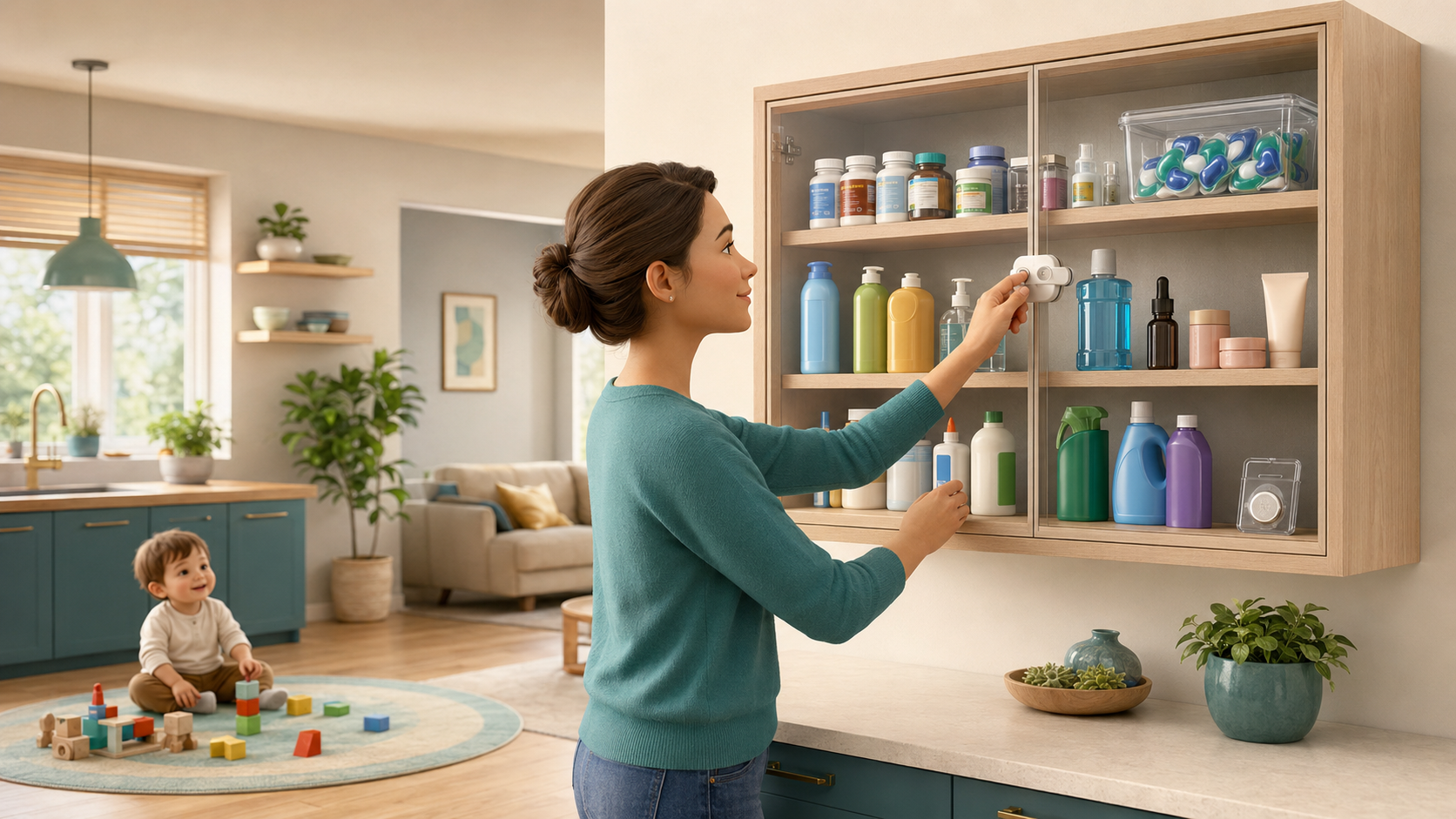
Store every medicine in a locked location, not simply on a high counter. Keep it in its original labeled container and close the child-resistant cap completely. Remember that child-resistant packaging is designed to slow children down; it is not childproof.
Do not refer to medicine as candy when encouraging a child to take a prescribed dose. That comparison may make unsupervised medicine more appealing later.
2. Vitamins, Iron, and Dietary Supplements
Many adults treat vitamins and supplements as harmless health products. However, concentrated ingredients can be toxic to young children.
Iron-containing prenatal vitamins are a particular concern. Excess iron can cause severe vomiting, abdominal injury, shock, and liver damage. Calcium, vitamin D, and other supplements may also cause problems in excessive doses.
Gummy vitamins are especially tempting because they look and taste like candy. Store them with the same precautions used for prescription medicine. Do not leave a weekly pill organizer on a nightstand or kitchen table, since these containers are usually easy to open.
If a child eats an unknown number of vitamins, call Poison Control rather than assuming the product is safe.
3. Liquid Nicotine, Cigarettes, and Nicotine Pouches
Nicotine can seriously poison a child. E-cigarette refill liquids may contain concentrated nicotine and often come in sweet flavors or colorful packaging.
Exposure can occur through swallowing, skin contact, or inhalation. Possible effects include vomiting, confusion, abnormal heart rate, seizures, loss of consciousness, breathing failure, and death. The FDA warns that young children can be severely injured after drinking e-liquids.
Nicotine pouches, chewing tobacco, cigarettes, cigarette butts, and vape cartridges are also dangerous. Pouches may resemble candy or breath mints and can still contain nicotine after an adult has used them.
Keep all nicotine products locked away in their original containers. Clean spills immediately while preventing skin contact, and dispose of used products where children cannot retrieve them.
4. Cannabis Edibles
Cannabis gummies, chocolates, cookies, and baked goods can be nearly indistinguishable from ordinary treats. A young child may eat several pieces before an adult notices.
Children can develop severe drowsiness, confusion, poor coordination, vomiting, abnormal breathing, or loss of consciousness after consuming THC. The effects may take time to appear and can last much longer than adults expect.
Keep cannabis products locked in their original child-resistant packaging and separate from regular food. Do not store them in a candy jar, unlabeled bag, or refrigerator container that children can access.
Call Poison Control after any suspected childhood cannabis ingestion, even if the child is awake and currently has no symptoms.
5. Household Cleaners and Disinfectants
Bleach, toilet bowl cleaner, drain opener, oven cleaner, dishwasher liquid, rust remover, and concentrated disinfectants may burn or irritate the mouth, throat, esophagus, stomach, skin, and eyes.
Cleaning products should never be transferred into water bottles, cups, food jars, or soft-drink containers. A child—or even an adult—may mistake the chemical for a beverage.
Do not leave an open cleaner on the floor while answering the phone or moving to another room. Return it to a locked cabinet immediately after use. Under-sink cabinets require a reliable child-resistant lock rather than a simple push latch.
Never mix cleaning chemicals. For example, combining bleach with certain acids or ammonia-containing products can release dangerous gases.
6. Laundry and Dishwasher Detergent Pods
Detergent packets are brightly colored, soft, and small enough for a toddler to hold. Their thin outer film can dissolve when exposed to wet hands or saliva.
When bitten, a packet may burst and spray concentrated detergent into the mouth, throat, eyes, or lungs. Affected children may experience coughing, choking, vomiting, breathing difficulty, drowsiness, or eye injury.
The American Academy of Pediatrics’ home poison-proofing guidance advises keeping packets in their original closed container inside a locked cabinet. Never give a child a pod to carry to the washing machine or allow one to be used as a sensory toy.
7. Gasoline, Lamp Oil, and Lighter Fluid
Hydrocarbons such as gasoline, kerosene, lamp oil, lighter fluid, paint thinner, and some furniture polishes are dangerous partly because they can enter the lungs when swallowed or vomited.
A small amount in the lungs may cause coughing, breathing difficulty, inflammation, or chemical pneumonia. This is one reason inducing vomiting after a poisoning can make the situation worse.
Store fuels only in their original approved containers, preferably in a locked outdoor storage area. Never use a drink bottle to hold gasoline or another chemical, even temporarily.
If a child swallows a hydrocarbon product, keep the child calm and contact Poison Control immediately. Do not make the child vomit.
8. Alcohol-Containing Products
Alcoholic drinks are not the only sources of alcohol in a home. Mouthwash, hand sanitizer, perfume, aftershave, rubbing alcohol, and some flavoring extracts can contain significant concentrations.
Children who swallow alcohol may develop vomiting, dangerously low blood sugar, poor coordination, slowed breathing, seizures, coma, or other serious complications. Sweet-smelling hand sanitizer may be especially attractive to young children.
Clean up drinks after gatherings instead of leaving partially filled cups where a child can reach them. Store mouthwash and sanitizer securely, and supervise children when they use hand sanitizer.
9. Automotive and Garage Chemicals
Antifreeze, windshield washer fluid, brake fluid, and other automotive products may cause severe poisoning. Some can damage the brain, kidneys, eyes, or other organs, and early symptoms may resemble ordinary tiredness or intoxication.
Garages are often overlooked during childproofing. A product placed on a low shelf beside a car may be just as accessible as a cleaner under the kitchen sink.
Keep automotive chemicals in original containers with intact labels and locked caps. Clean leaks promptly and do not leave a drain pan or bucket of fluid unattended.
10. Pesticides and Rodent Poisons
Insect sprays, mosquito products, garden chemicals, slug bait, rodenticides, flea treatments, and moth-control products can be toxic when swallowed.
Different pesticides work in different ways. Depending on the product, poisoning may affect breathing, the nervous system, blood clotting, the heart, or other organs. Do not rely on color or odor to estimate danger.
Store pesticides away from food, medicine, and animal feed. Keep them in their original containers and follow the label’s disposal instructions. Never place rodent poison where a child or pet can reach it.
If exposure occurs, take the product label or photograph it when seeking help. The exact active ingredient is essential for determining treatment.
11. Essential Oils, Camphor, and Wintergreen Products
“Natural” does not mean safe to swallow. Essential oils are concentrated substances, and some can cause serious poisoning in children.
Camphor, eucalyptus oil, tea tree oil, pennyroyal oil, and oil of wintergreen are examples that require careful storage. Depending on the oil and amount, ingestion may cause vomiting, drowsiness, seizures, liver injury, or breathing problems. Oils can also enter the lungs if a child chokes while swallowing them.
Poison Control notes that certain essential oils can be poisonous when swallowed or absorbed through the skin. Store bottles in a locked location and use only according to the product instructions. Never add essential oil to a child’s drink or give it orally without qualified medical guidance.
12. Cosmetics and Personal-Care Products
Nail polish remover, artificial nail products, hair dye, hair relaxer, perfume, denture cleaner, acne treatments, and concentrated mouth products may contain harmful chemicals.
Not every taste of ordinary soap or shampoo causes severe poisoning, but caregivers should not guess based on the product category. Concentration and ingredients vary widely.
Keep cosmetics in a closed cabinet rather than an open bathroom organizer. Check purses, suitcases, and guest bathrooms as well. Visitors may carry medicine, perfume, or cosmetics without realizing that a toddler can reach them.
13. Wild Mushrooms, Berries, and Houseplants
Young children may taste leaves, flowers, mushrooms, or berries because they are colorful and easy to reach. Some plants cause only mouth irritation, while others can affect the heart, liver, nervous system, or digestive tract.
It is difficult to identify a wild mushroom accurately from appearance alone. Cooking does not make every toxic mushroom safe.
Teach children never to eat plants or berries without adult permission. Identify the plants in your home and yard, and remove highly toxic species from areas children use.
If a child eats an unknown plant or mushroom, remove any remaining pieces from the mouth, save a sample or take clear photographs, and call Poison Control. Do not wait for vomiting or other symptoms.
14. Button Batteries and High-Powered Magnets
Button batteries and magnets are not traditional poisons, but swallowing them can create life-threatening internal injuries.
A button or lithium coin battery lodged in the esophagus can generate an electrical reaction that burns tissue. Serious injury may begin within about two hours, and the child may initially appear well. Call the National Battery Ingestion Hotline at 800-498-8666 and go for emergency evaluation immediately.
According to the National Capital Poison Center’s battery guideline, a child 12 months or older who may have swallowed a lithium coin battery within the previous 12 hours and can swallow may be given two teaspoons of commercial honey every 10 minutes, for up to six doses, while traveling to the emergency department. Do not give honey to a baby younger than 12 months, do not give anything to a child who cannot swallow, and never let honey delay emergency care.
Multiple high-powered magnets—or one magnet swallowed with another metal object—can attract through intestinal walls. This may cause tissue death, holes, blockage, infection, or death. Any suspected magnet ingestion requires urgent medical assessment and imaging, even if the child has no pain.
What to Do After a Suspected Poisoning
Stay calm, but act immediately. Remove the product from the child’s reach and check the mouth for easily visible material. Do not perform a blind finger sweep, which could push an object farther into the throat.
Call Poison Control and be ready to provide:
The child’s age and approximate weight
The product name and ingredients
The estimated amount swallowed
The time of exposure
Current symptoms
Relevant medical conditions or medications
Keep the container, label, remaining pills, battery package, plant sample, or photographs available. However, do not delay calling while searching for perfect information.
Do not induce vomiting or use ipecac. Do not give activated charcoal, salt water, vinegar, lemon juice, or another home remedy unless a medical professional specifically instructs you to do so. Poison Control’s first-aid guidance may recommend a small amount of water or milk after certain burning or caustic products if the person is conscious and able to swallow, but the correct response depends on the substance.
Preventing Childhood Poisoning at Home
Store medicines and hazardous products locked, high, and out of sight. Keep everything in its original container, close packages immediately, and never describe medicine as candy.
Childproof the homes of grandparents and other caregivers, not only the child’s primary home. Check purses, bedside tables, refrigerator doors, garages, laundry rooms, and products brought home by visitors.
Regularly inspect toys, remote controls, bathroom scales, hearing aids, key fobs, and greeting cards for accessible button batteries. Remove damaged toys and products with loose magnets.
The most effective poison response begins before an accident: secure hazardous products and save Poison Control’s number where every caregiver can find it. Which household substance surprised you most, and what storage change could make your home safer for children? Share your thoughts and child-poisoning prevention tips in the comments below.
Hi, I’m the creator and editor behind ZestyHabit. I research everyday safety, first aid, and practical wellness topics using official guidance and reliable public sources, then turn that information into clear, realistic steps for daily life.
My goal is to help readers make safer, better-informed choices at home and beyond.