
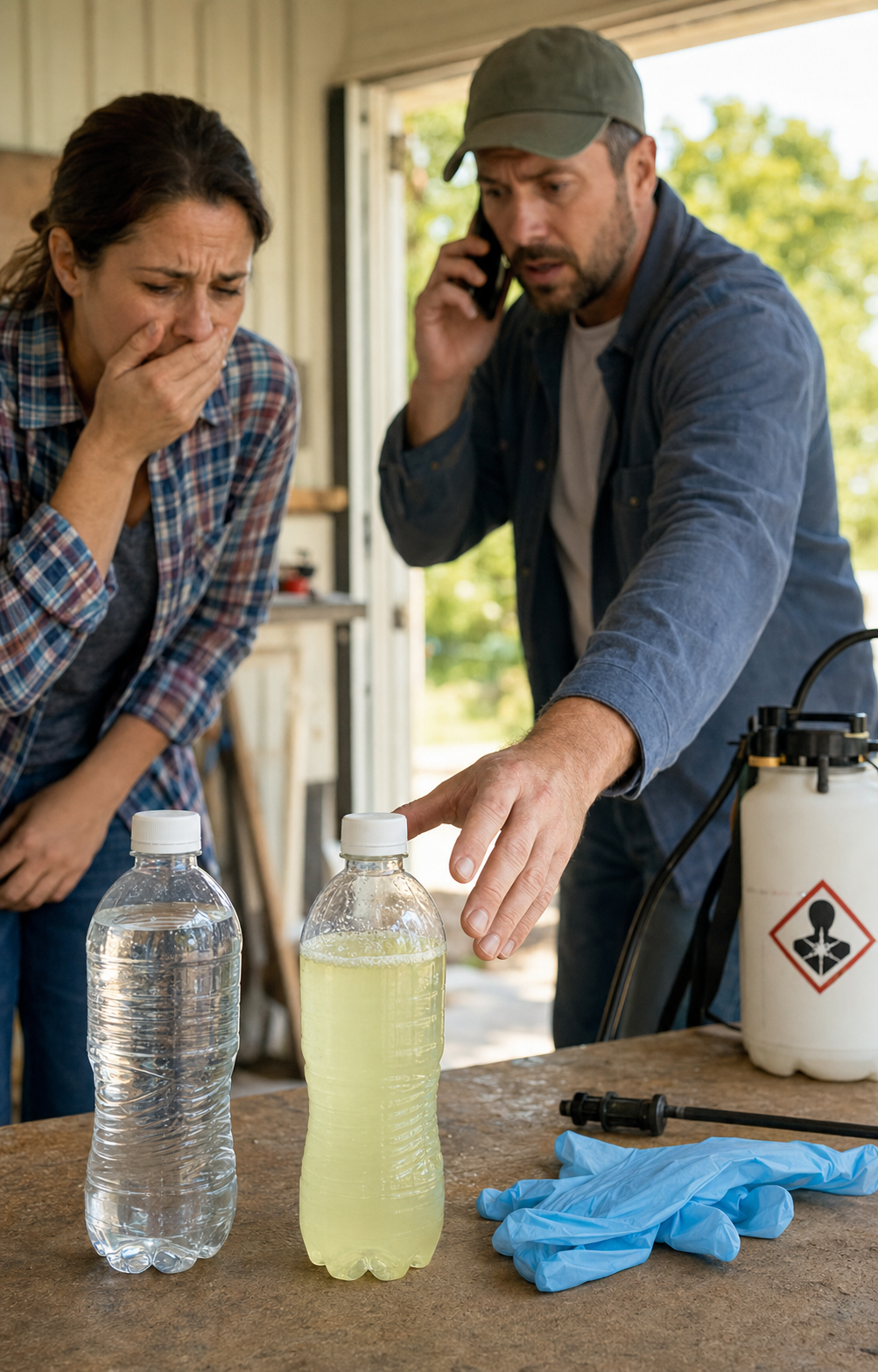

Accidentally drinking pesticide is one of those emergencies that can begin with an ordinary-looking bottle. Someone feels thirsty, reaches for a water or soda container, takes a swallow, and only then notices an unusual smell or taste. In many cases, the pesticide was transferred from its original packaging into a beverage bottle and left without a clear warning label.
This type of accident can happen on farms, in garages, around gardens, at landscaping sites, and anywhere pest-control products are stored or mixed. Children are especially vulnerable, but adults can make the same mistake when a chemical is kept in a familiar container.
Every suspected pesticide ingestion should be treated seriously. The danger depends on the product, concentration, amount swallowed, and person exposed, but it is impossible to judge the risk by taste, color, or immediate symptoms. Some severe effects do not appear right away.
What to Do Immediately After Someone Drinks Pesticide
The first few minutes matter, but panic can lead to harmful decisions. Focus on getting professional help and preventing further exposure.
1. Stop the person from drinking more
Take the container away and ask the person to spit out anything that remains in the mouth. Do not place your fingers in the person’s mouth, particularly if they are confused, drowsy, or having a seizure.
Move other people, especially children, away from the contaminated bottle and any spilled liquid.
2. Call emergency services for life-threatening symptoms
Call 911 immediately if the person:
- Has collapsed or cannot be awakened
- Is having a seizure
- Has severe difficulty breathing
- Is choking or gasping
- Is becoming rapidly confused or unresponsive
Do not attempt to drive a severely ill person to the hospital by yourself. Their condition could worsen during the journey, and emergency responders can begin supporting breathing and circulation before arrival.
3. Contact Poison Control without waiting for symptoms
In the United States, call Poison Control at 1-800-222-1222. The service is free, confidential, and available 24 hours a day. Poison specialists can provide instructions based on the exact product, amount, age, weight, symptoms, and time of exposure. Online guidance is also available through webPOISONCONTROL.
Call even if the person appears completely well. A lack of symptoms during the first few minutes does not prove that the exposure was harmless. If you are outside the United States, contact your local poison center or emergency medical service.
4. Find the original pesticide label
The product label is one of the most useful sources of information during a poisoning emergency. Look for:
- The complete product name
- Active ingredients and concentration
- The EPA registration number
- First-aid instructions
- The approximate amount swallowed
- The time the accident occurred
Tell Poison Control whether the pesticide was diluted, mixed with another chemical, or stored in a different container. If it is safe, take clear photographs of the front and back of the label. Keep the original container available, but do not carry an open or leaking bottle into a vehicle or medical facility unless emergency professionals tell you how to transport it safely.
The Environmental Protection Agency’s pesticide first-aid guidance also recommends checking the label and contacting Poison Control promptly.
Never Make the Person Vomit
A common reaction is to try to remove the poison by causing vomiting. This can make the situation more dangerous.
Some pesticide formulations contain petroleum-based solvents that can enter the lungs during vomiting. Even a small amount in the airway may cause serious lung inflammation. Corrosive ingredients can also burn the mouth, throat, and esophagus a second time as they come back up.
Do not use salt water, mustard, fingers in the throat, syrup of ipecac, or any other method to trigger vomiting. Poison Control states that people should never be made to vomit after swallowing a suspected poison.
Do not give milk, water, food, oil, alcohol, activated charcoal, lemon juice, or another home remedy unless the pesticide label or a poison specialist specifically directs you to do so. Treatment varies among products, and a person who is drowsy or having difficulty swallowing could inhale liquids into the lungs. Activated charcoal should not be used at home to treat a poisoning.
Why Pesticides Are Mistaken for Beverages
Most of these accidents are preventable. They often occur because someone pours pesticide into a soft-drink, juice, sports-drink, or water bottle for convenience. The transfer may be intended to last only a few minutes, but the person walks away, forgets about it, or fails to tell someone else.
Several conditions increase the risk:
- A reused bottle still has its original beverage label
- The pesticide is clear or resembles juice
- Chemicals and drinks are kept in the same refrigerator or storage area
- The container is left near a workbench, vehicle, field, or garden
- The area has poor lighting
- Workers do not share a common language
- Children or visitors do not know a chemical is present
- An older adult has impaired vision, memory, or sense of smell
Writing “poison” on a beverage bottle does not make the practice safe. Labels can fall off, handwriting can fade, and people often recognize the shape of a familiar bottle before reading its contents.
How Dangerous Is Accidentally Drinking Pesticide?
“Pesticide” is a broad term that includes insecticides, herbicides, fungicides, rodenticides, and other pest-control products. Their toxic effects vary widely. The active ingredient matters, but solvents, surfactants, and other formulation ingredients can also contribute to poisoning.
Some exposures produce temporary irritation, while others can damage the nervous system, lungs, liver, kidneys, or heart. A small child may become seriously ill after swallowing an amount that would affect an adult differently. Concentrated agricultural products generally present different risks from ready-to-use household sprays, but no unknown ingestion should be dismissed.
Paraquat provides an especially sobering example. The EPA warns that one small accidental sip of paraquat can be fatal, and there is no antidote. EPA reviews have documented fatal paraquat poisonings in which the herbicide was transferred into beverage containers. Paraquat is a restricted-use pesticide in the United States and is not approved for residential use, but these incidents demonstrate why no pesticide should ever be stored in a drink bottle.
Not every pesticide is as acutely toxic as paraquat. Nevertheless, an untrained observer cannot safely identify the danger from appearance or early symptoms alone.
Symptoms of Pesticide Poisoning
Symptoms may begin quickly or develop over several hours. They can differ significantly depending on the chemical involved.
Possible warning signs include:
- Burning or pain in the mouth and throat
- Excessive saliva, tearing, or sweating
- Nausea, vomiting, stomach cramps, or diarrhea
- Headache, dizziness, weakness, or unusual fatigue
- Confusion, agitation, or extreme sleepiness
- Blurred vision or unusually small pupils
- Muscle twitching, tremors, or poor coordination
- Coughing, wheezing, or shortness of breath
- Slow, fast, or irregular heartbeat
- Seizures or loss of consciousness
A pesticide with a strong odor or unpleasant taste is not necessarily more dangerous than one with little smell. Likewise, the absence of vomiting or pain does not mean that no injury is occurring.
Do not try to identify the pesticide class by matching symptoms to an online list. Different poisonings can look similar, and treatment delays may have serious consequences.
What If Pesticide Is Also on the Skin or in the Eyes?
A drinking accident may involve a spill as well as ingestion.
For skin exposure, remove contaminated clothing and rinse the skin and hair thoroughly with running water. Then wash gently with soap and water. Avoid touching contaminated material with bare hands. Clothing should be kept separate from ordinary laundry until professionals or label directions explain how it should be handled.
For eye exposure, hold the eyelids open and rinse gently with clean running water for at least 15 minutes. Remove contact lenses if this can be done easily, but do not delay rinsing. Do not add eye drops, neutralizing chemicals, or medication to the water.
If fumes were inhaled, move the person into fresh air without entering a contaminated space yourself. Rescuers can become victims when they enter an enclosed chemical area without proper protective equipment.
What Happens at the Hospital?
Medical treatment depends on the pesticide and the patient’s condition. The healthcare team may monitor breathing, oxygen levels, heart rhythm, blood pressure, temperature, and neurological function. Blood and urine tests can help identify organ injury or the severity of certain exposures.
Some pesticide classes have specific antidotes, but there is no universal pesticide antidote. Treatment may include oxygen, airway support, intravenous fluids, seizure medication, careful decontamination, or observation for delayed complications.
This is why the product label and exposure details are so valuable. Knowing exactly what was swallowed allows poison specialists and clinicians to make faster, more appropriate decisions.
Common Mistakes After Accidental Pesticide Ingestion
Several well-intentioned responses can increase the danger:
- Waiting to see whether symptoms develop
- Making the person vomit
- Giving a home remedy without professional instructions
- Assuming a small swallow cannot cause serious harm
- Throwing away the container before identifying the product
- Allowing the exposed person to remain alone
- Driving while the person is becoming confused or drowsy
- Hiding the accident because of embarrassment or workplace concerns
Medical professionals need accurate information, not blame. Be honest about what happened, including whether the product was concentrated, illegally transferred, or mixed with another substance.
How to Prevent Pesticide-from-Beverage-Bottle Accidents
Prevention begins with one absolute rule: Never put pesticide into a food or beverage container—not even temporarily.
Keep pesticides in their original containers with the complete label attached. Close caps securely after every use and store products in a locked, ventilated location separate from food, animal feed, medicine, and drinking water.
Additional precautions include:
- Keep children and unauthorized people out of pesticide storage and mixing areas.
- Never store pesticides in a kitchen refrigerator.
- Use dedicated measuring equipment that cannot be confused with kitchen utensils.
- Clearly mark pesticide equipment and keep it away from food-preparation areas.
- Prepare only the amount needed for the immediate job.
- Never leave a mixed product unattended.
- Maintain an up-to-date inventory of stored chemicals.
- Keep labels and safety information readable.
- Train every worker who handles or works near pesticides.
- Use understandable warnings for people who speak different languages.
- Create a separate, clearly designated area for drinking water.
- Dispose of unwanted pesticide according to its label and local hazardous-waste rules.
Families should also explain pesticide safety to children without relying on “Do not touch” warnings alone. Locked storage provides much stronger protection than instructions, especially for young children who are naturally curious.
If You Find Pesticide in a Drink Bottle
Do not taste or sniff the contents to identify them. Keep people away, isolate the container, and notify the responsible property owner, supervisor, or licensed applicator. If the bottle is leaking or the contents are unknown, contact local emergency or hazardous-waste authorities for instructions.
Do not casually pour the chemical into another bottle, down a drain, onto the ground, or back into an original container. Safe handling and disposal depend on knowing the product and using appropriate protective equipment.
Accidentally drinking pesticide can become a life-threatening emergency, but quick contact with Poison Control and careful storage practices can prevent the worst outcomes. Have you ever discovered a chemical stored in a food or beverage container, and what safety rule did the experience teach you? Share your thoughts or prevention tips in the comments—they may help another family or workplace avoid a serious accident.

Hi, I’m the creator and editor behind ZestyHabit. I research everyday safety, first aid, and practical wellness topics using official guidance and reliable public sources, then turn that information into clear, realistic steps for daily life.
My goal is to help readers make safer, better-informed choices at home and beyond.


