How to Avoid Road Rage and Escape an Aggressive Driver Safely
Minjin Park
·
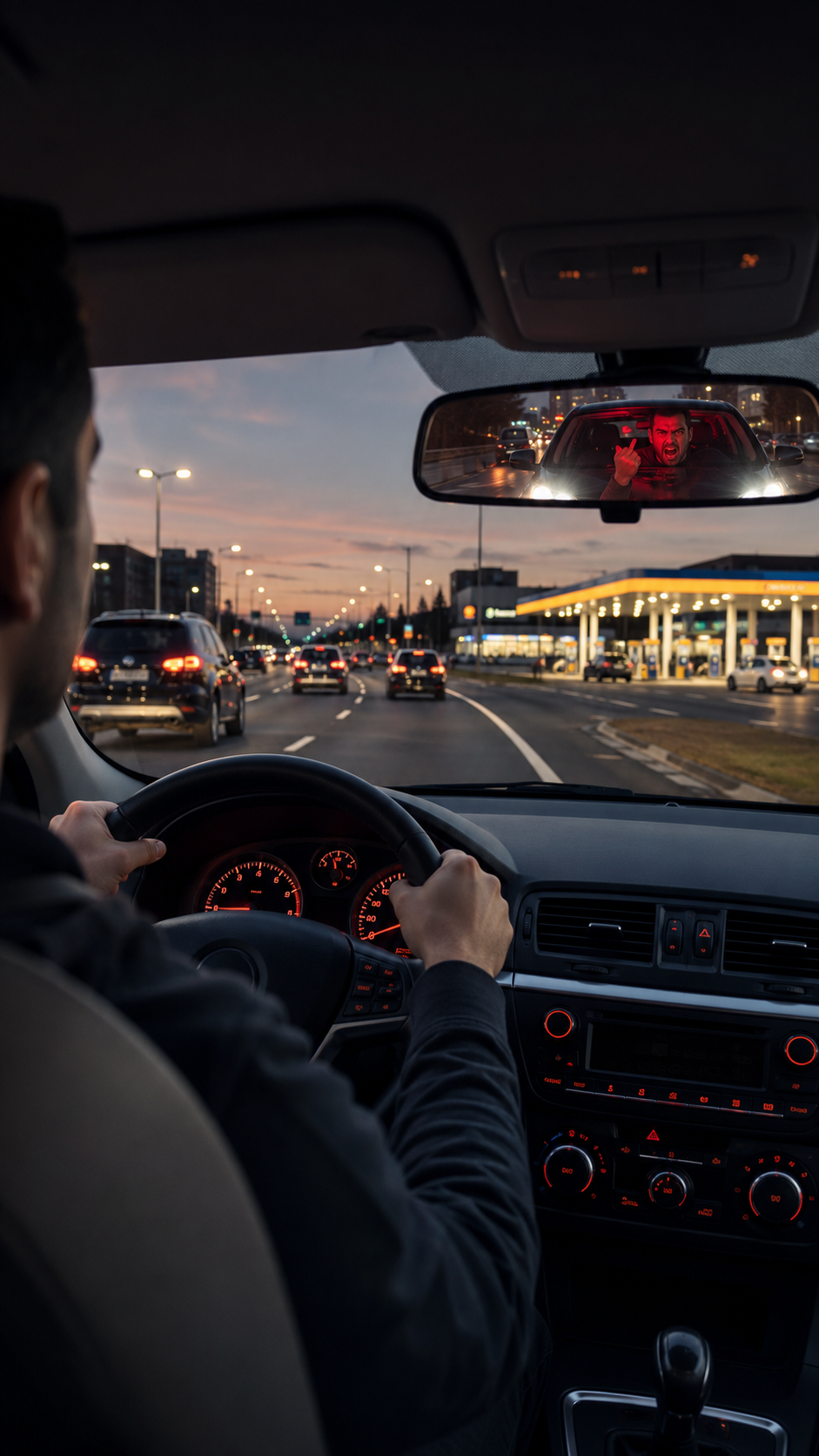
A driver cuts into your lane without signaling. Someone behind you begins tailgating and flashing their headlights. At the next intersection, the same person pulls alongside your car, shouts through the window, and follows you when you turn.
These situations can feel insulting, frightening, and deeply personal. Yet the safest response is usually the opposite of what anger tells us to do. Your goal is not to correct the other driver, prove that you had the right of way, or “win” the encounter. Your goal is to break contact and arrive somewhere safe.
Most discourteous driving does not turn into violence. However, a confrontation can escalate rapidly when drivers exchange gestures, intentionally block one another, brake-check, chase, or get out of their vehicles. A minor traffic mistake that should have lasted five seconds can become a dangerous event involving several miles of roadway.
Knowing how to avoid road rage—and how to respond when another person targets you—can prevent a bad moment from becoming a life-changing emergency.
Aggressive Driving and Road Rage Are Not Exactly the Same
People often use “aggressive driving” and “road rage” as if they mean the same thing, but safety agencies make an important distinction.
Aggressive driving usually involves multiple unsafe traffic behaviors, such as:
Excessive speeding
Tailgating
Weaving through traffic
Unsafe or repeated lane changes
Running traffic signals
Refusing to yield
Cutting off other vehicles
Using the shoulder to pass
Road rage goes further. The National Highway Traffic Safety Administration describes it as an intentional assault by a driver or passenger using a vehicle or weapon, occurring on the roadway or arising from a roadway incident.
Warning signs of escalation may include a driver deliberately following you, repeatedly blocking your path, ramming your car, attempting to force you off the road, displaying a weapon, or getting out of the vehicle to confront you.
You do not need to wait for physical violence before taking the situation seriously. If someone’s behavior appears intentionally threatening, begin creating distance and contact law enforcement.
The First Rule: Do Not Engage
Road rage often grows through a cycle of reactions. One driver tailgates, the other taps the brakes. One shouts, the other responds with a gesture. Each person sees the other’s behavior as justification for escalating.
Breaking that cycle is one of the most effective things you can do.
Do not:
Make angry hand gestures
Shout through the window
Stare at the other driver
Follow the driver to confront them
Deliberately slow down
Brake-check the vehicle behind you
Block the driver from passing
Race the other vehicle
Use your horn to express anger
Photograph or record the driver while holding your phone
Avoiding eye contact does not mean ignoring traffic. Continue watching the vehicle through your mirrors and peripheral vision, but do not communicate hostility.
Minnesota’s Department of Transportation advises drivers to get out of an aggressive motorist’s way when it is safe, avoid eye contact, ignore gestures, and never challenge the person. That advice may feel unfair, especially when you did nothing wrong, but safety is more important than proving a point.
Let the Aggressive Driver Pass
If someone is tailgating or aggressively trying to overtake you, look for a safe opportunity to let that driver pass.
Signal normally, change lanes when there is enough space, and maintain a predictable speed. If you are on a two-lane road, use a designated turnout or pull-off area when one becomes available. Do not stop suddenly on a narrow shoulder simply to get away from the driver.
NHTSA recommends moving over when another driver wants to pass and giving speeding vehicles plenty of room. A speeding driver has less time to react and may lose control more easily, so increasing the distance between your vehicles protects everyone nearby.
Once the vehicle passes, slow slightly to create a larger gap. Do not speed up, follow closely, or attempt to pass the driver again.
Drive Predictably—Not Competitively
When you feel threatened, your instinct may be to escape as fast as possible. Excessive speed, abrupt lane changes, and running red lights can create a crash involving people who have nothing to do with the confrontation.
Instead:
Keep both hands available for driving.
Wear your seat belt and make sure passengers remain buckled.
Maintain a controlled, legal speed.
Signal before changing lanes or turning.
Leave extra space around your vehicle.
Avoid dead-end streets and isolated areas.
Do not stop where the other vehicle can easily block you.
Follow instructions from a 911 dispatcher or police officer.
At traffic lights, stop far enough behind the vehicle ahead that you can see its rear tires touching the pavement. This generally leaves room to move around it if a threatening person approaches, provided another lane or safe route is available.
Avoid pulling beside the aggressive vehicle. Whenever possible, keep it ahead of you where its movements are easier to observe from a distance.
What to Do If the Driver Follows You
One angry gesture or brief period of tailgating does not necessarily mean someone is following you. But if the vehicle copies several turns, follows you off the highway, circles with you, or remains behind you after you change your route, treat the situation as a potential threat.
Do not drive home. You do not want to reveal where you or your family lives.
Another crowded location with witnesses and security cameras
Official guidance from the Utah Highway Safety Office specifically recommends going to a police station, fire station, or busy public place when an aggressive driver follows you. Local police agencies offer similar advice.
Call 911 and explain that another vehicle is following or threatening you. If you have a passenger, ask that person to make the call. If you are alone, use hands-free calling if available. Otherwise, pull over only when you can do so safely, or follow the dispatcher’s directions.
Tell the dispatcher:
Your current road and direction of travel
The threatening behavior you observed
The vehicle’s color, make, model, and body style
The full or partial license plate
The number and descriptions of occupants
Whether you saw a weapon
Where you are planning to drive
Continue updating your location because the situation is moving. Do not take unnecessary risks to read the license plate.
Stay Inside Your Vehicle
If the aggressive driver stops, gets out, or approaches your vehicle, keep your doors locked and windows closed. Do not step outside to argue, film, inspect damage, or exchange information.
Your vehicle provides a physical barrier and gives you the ability to move away if there is a clear, safe route. Sound the horn continuously if you need to attract attention. Call 911 and describe exactly what is happening.
If possible, drive toward a staffed location without striking the person or another vehicle. Do not attempt dangerous maneuvers unless they are necessary to escape an immediate threat. A dispatcher can provide instructions based on the circumstances and local law.
If the person displays a weapon, say so immediately. Do not display or reach for a weapon of your own as a warning. That can intensify the confrontation and may cause police or witnesses to mistake you for the aggressor.
If your car is damaged but still operational, prioritize reaching safety. Property can be repaired; a roadside confrontation can become irreversible.
If a Collision Has Occurred
Drivers are normally required to stop after a collision. However, stopping beside a threatening person in an isolated place may be unsafe.
Call 911 immediately. Tell the dispatcher that a collision occurred, that you feel threatened, and that you are moving to a nearby police station or well-lit public location. Follow the dispatcher’s instructions and do not simply leave without reporting what happened.
Keep your doors locked when you arrive. Wait for police if the other driver remains hostile. Exchange insurance and contact information only when the scene is secure.
If the collision caused injuries or made a vehicle unsafe to move, turn on the hazard lights, stay buckled when appropriate, and tell the dispatcher about the danger. Avoid standing in an active traffic lane.
A Documented Example of How Quickly Road Rage Can Escalate
Real cases show why drivers should never assume that a stranger’s anger will remain verbal.
According to the U.S. Attorney’s Office for the Western District of Oklahoma, a driver was cut off on a highway in May 2024. He chased the other vehicle and shot its driver. The victim survived, and the attacker was later sentenced to 92 months in federal prison for illegally possessing firearms.
This case does not suggest that every person who honks or tailgates is armed. It demonstrates something more practical: you cannot know who is in the other vehicle, what emotional state that person is in, or how far they may be willing to go.
A driving error—whether intentional or accidental—is never worth pursuing another vehicle, and it is never worth accepting an invitation to fight.
How to Report Road Rage Safely
Call 911 when the behavior presents an immediate danger, such as:
A driver is following or threatening you.
A vehicle is trying to force someone off the road.
The driver is ramming another vehicle.
Someone displays or uses a weapon.
Extremely reckless driving creates an immediate crash risk.
A physical confrontation is taking place.
For behavior that is no longer happening and does not present an immediate emergency, contact the appropriate state police, highway patrol, or local police non-emergency number.
Useful details include:
Time and location
Direction of travel
Vehicle color, make, model, and type
License plate or partial plate
Driver and passenger descriptions
Specific actions you witnessed
Any collision, injury, or weapon
Dashcam footage or witness information
A passenger can write down details or record video from inside the car. The driver should keep their hands off the phone and concentrate on the road.
Preserve original dashcam files instead of editing them. Record a brief account while your memory is fresh, and provide the evidence directly to police. Avoid posting the other driver’s personal information online or using social media to continue the conflict.
Preventing Your Own Anger from Taking Over
Avoiding road rage also means recognizing when you are becoming the aggressive driver.
Anger narrows attention. You may focus so heavily on the other vehicle that you stop noticing pedestrians, changing traffic lights, or cars braking ahead.
Remind yourself that you do not know why they made the mistake.
Let the vehicle move away.
Pull into a safe public place if you need time to calm down.
Do not continue driving if you feel unable to make controlled decisions.
Leave earlier when possible so that minor delays feel less threatening. Use navigation to avoid heavily congested routes, and do not drive when exhaustion, alcohol, drugs, or overwhelming emotional stress could impair your judgment.
A useful question is: “Will responding help me reach my destination safely?” If the answer is no, let the incident end.
Everyday Habits That Reduce Road Rage Encounters
Courtesy cannot control every aggressive driver, but it can reduce misunderstandings.
Use your turn signals, maintain a safe following distance, check blind spots, allow others to merge, and stay out of passing lanes when you are not passing. Avoid unnecessary horn use and high beams. If you accidentally cut someone off, focus on correcting your position safely instead of beginning a roadside argument.
The California DMV recommends scanning well ahead and using at least a three-second following distance under normal conditions. More space gives you time to react without sudden braking, which can otherwise be misinterpreted as intentional.
Most importantly, do not treat traffic as a contest. The extra car length, a few seconds at a light, or the satisfaction of retaliating is not worth a crash or violent confrontation.
The Bottom Line
The safest way to survive a road rage encounter is to disengage early. Do not gesture, brake-check, race, follow, or stop to confront the other driver. Let the vehicle pass, keep your movements predictable, and create distance. If the driver continues following or threatening you, lock the doors, call 911, and drive to a police station or another busy public location—never to your home. Remember that yielding space does not mean the other driver was right; it means you made the decision that best protected yourself and everyone in your vehicle.
Have you ever encountered a driver who followed, threatened, or aggressively tailgated you, and how did you respond? Share your experience or your most useful road rage safety tip in the comments so other drivers can learn from it too.
Hi, I’m the creator and editor behind ZestyHabit. I research everyday safety, first aid, and practical wellness topics using official guidance and reliable public sources, then turn that information into clear, realistic steps for daily life.
My goal is to help readers make safer, better-informed choices at home and beyond.