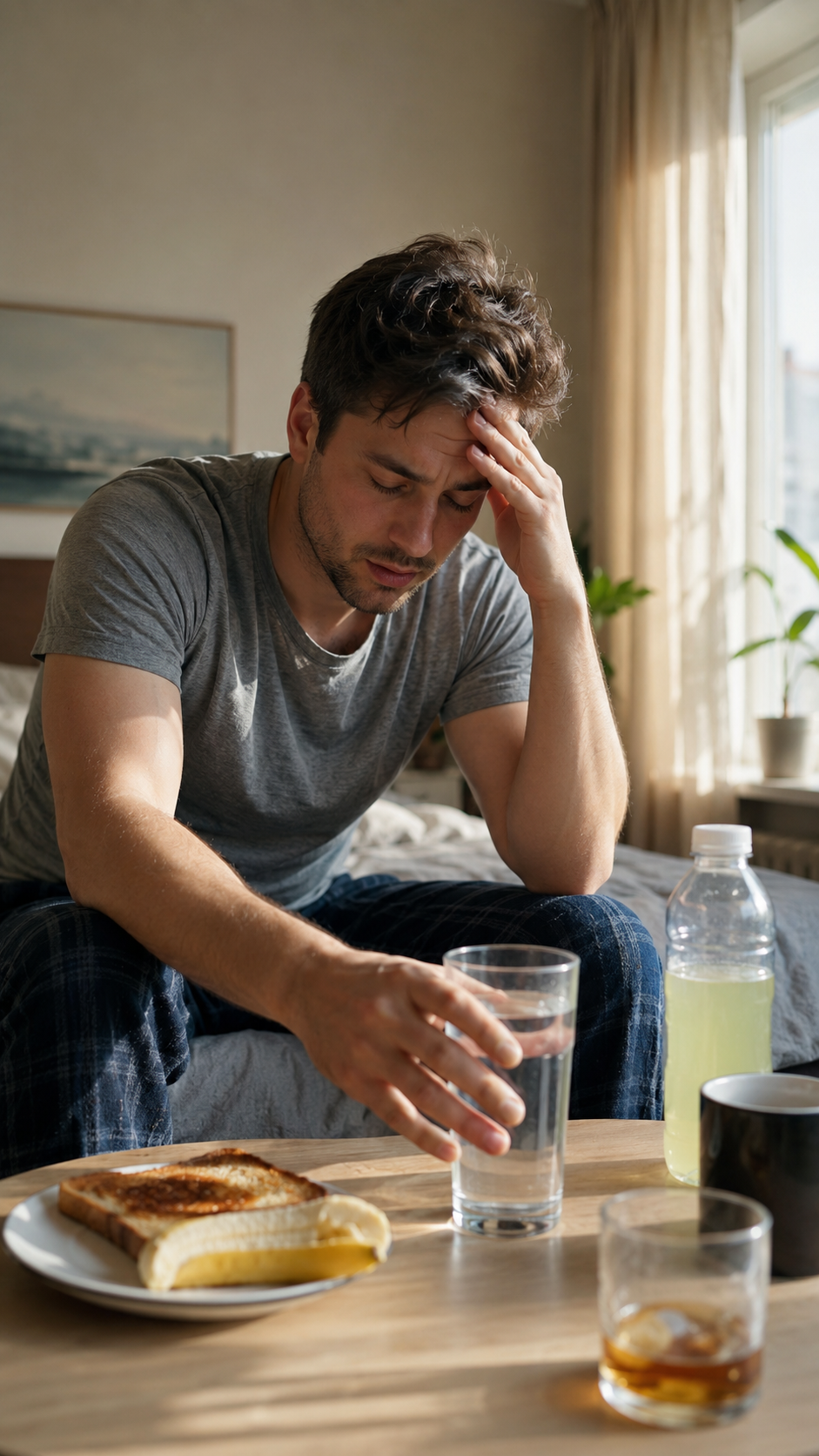
How to Recover From a Hangover Safely: What Actually Helps and What Doesn’t
Minjin Park
·
Learn how to recover from a hangover safely with hydration, food, rest, and careful symptom relief—plus remedies to avoid and alcohol-poisoning warning signs.
After a night of drinking, it is tempting to search for a fast hangover cure. You may hear that strong coffee, a cold shower, greasy food, electrolyte drinks, or another alcoholic beverage will make you feel normal again. Unfortunately, none of these methods can rapidly remove alcohol or reverse its effects.
The uncomfortable truth is that time is the only proven cure for a hangover. Your body needs time to metabolize alcohol, restore fluids, settle an irritated stomach, and recover from disrupted sleep. However, sensible self-care can make the process safer and more comfortable.
The right approach includes gradual hydration, gentle food, rest, caution with medication, and attention to warning signs that could indicate alcohol poisoning rather than an ordinary hangover.
Medical note: This article provides general educational information. Contact a healthcare professional for advice tailored to your health, medications, and drinking history.
The Short Answer: What Should You Do for a Hangover?
If you are experiencing a typical hangover:
Stop drinking alcohol completely.
Sip water or another nonalcoholic drink gradually.
Eat a small, gentle meal if you can tolerate food.
Rest and allow yourself time to recover.
Avoid driving, operating machinery, swimming, or doing risky activities.
Use pain medication only after checking that it is safe with alcohol and your health conditions.
Seek urgent help if there is confusion, loss of consciousness, slow or irregular breathing, a seizure, repeated vomiting, or difficulty waking the person.
According to the National Institute on Alcohol Abuse and Alcoholism, hangover symptoms can last 24 hours or longer, and no scientifically proven remedy can make the brain and body recover immediately.
What Causes a Hangover?
A hangover is not simply dehydration. Several changes happen at the same time after excessive alcohol consumption.
Mild dehydration
Alcohol suppresses vasopressin, a hormone that normally signals the kidneys to retain fluid. This increases urination and may contribute to thirst, fatigue, and headaches.
Disrupted sleep
Alcohol may make you fall asleep quickly, but the resulting sleep is often fragmented and less restorative. You may wake earlier than usual and feel exhausted even after spending several hours in bed.
Stomach irritation
Alcohol irritates the stomach lining and increases acid production. This can cause nausea, stomach pain, loss of appetite, heartburn, or vomiting.
Inflammation
Alcohol can promote inflammation throughout the body. This may contribute to muscle aches, headaches, weakness, and the general feeling of being unwell.
Alcohol metabolism
As the liver processes alcohol, it produces acetaldehyde, a toxic but relatively short-lived byproduct. Alcohol metabolism and the body’s response to it can affect several organs and contribute to hangover symptoms.
Changes in brain activity
As alcohol’s sedating effects wear off, some people feel restless, irritable, shaky, or anxious. This is sometimes informally called “hangxiety.” It does not necessarily mean that something terrible happened the night before; alcohol itself can temporarily affect mood and stress responses.
Hangovers often feel worst when blood alcohol concentration returns to approximately zero. Symptoms vary considerably, so two people who consume the same amount may have very different experiences.
Step 1: Give Your Body Time
There is no safe method that instantly “sobers you up.” Coffee may make you feel more awake, but it does not meaningfully accelerate alcohol metabolism. A cold shower may briefly increase alertness, but it cannot lower blood alcohol concentration.
The safest plan is to cancel unnecessary activities, rest somewhere secure, and let your body recover. Do not assume that sleeping for a few hours means all the alcohol has left your system. Depending on how much you drank and when you stopped, alcohol may still be present the following morning.
If you are still dizzy, unusually sleepy, nauseated, mentally foggy, or poorly coordinated, do not drive. A hangover itself can impair attention, judgment, reaction time, and coordination even after blood alcohol levels have fallen.
Step 2: Rehydrate Gradually
Water can help relieve thirst and replace some of the fluid lost through increased urination. However, drinking an enormous amount at once is unnecessary and may worsen nausea.
Try taking small, frequent sips of:
Water
Diluted fruit juice
Broth
An oral rehydration drink
A noncaffeinated beverage
An electrolyte drink, if it is easier for you to tolerate
Electrolyte drinks are often marketed as hangover cures. They may help you consume fluid, especially if you have been vomiting, but research has not shown that added electrolytes reliably reduce overall hangover severity. For most otherwise healthy adults with a mild hangover, ordinary water and food are often sufficient.
If you cannot keep fluids down, have signs of significant dehydration, or continue vomiting, seek medical advice. Signs of dehydration may include very dark urine, urinating much less than usual, severe dizziness when standing, a dry mouth, or a rapid heartbeat.
Step 3: Eat Something Gentle
You do not have to force down a large breakfast. If your stomach feels unsettled, start with a small portion of easy-to-digest food.
Options may include:
Toast or plain crackers
Oatmeal
Rice
Bananas
Soup or broth
Applesauce
Eggs
Yogurt, if dairy does not bother your stomach
Foods containing carbohydrates may be easier to tolerate when you feel weak or nauseated. A modest meal can also provide energy after a night when you may not have eaten enough.
Greasy food is not a proven hangover treatment. A heavy, oily breakfast may make nausea, reflux, or stomach pain worse. Eating before or while drinking can slow alcohol absorption, but consuming greasy food the next morning cannot remove alcohol that has already entered the bloodstream.
Eat slowly and stop if your nausea becomes worse.
Step 4: Get Restful Sleep
Because alcohol disrupts normal sleep, additional rest may be one of the most helpful parts of recovery. Keep the room quiet and dim, and avoid scheduling demanding work or exercise if possible.
If nausea or reflux is present, rest with your head and upper body slightly elevated. If there is a possibility that someone is still intoxicated rather than merely hungover, do not leave that person alone to “sleep it off.” An unconscious or barely responsive person can vomit and choke.
Avoid using sleeping pills, anti-anxiety medications, sedating antihistamines, opioids, or other sedatives after drinking unless a healthcare professional has specifically told you it is safe. Combining alcohol with sedating medication can suppress breathing and significantly increase the risk of overdose. The NIAAA’s alcohol-medication guidance explains that these interactions can lead to falls, accidents, respiratory suppression, and fatal overdoses.
Step 5: Be Careful With Pain Relievers
A headache is one of the most common hangover symptoms, but pain medication is not automatically safe after drinking.
Acetaminophen
Acetaminophen, also called paracetamol or sold under brand names such as Tylenol, is processed by the liver. Alcohol and acetaminophen can interact in potentially harmful ways, particularly in people who drink heavily, have liver disease, take other acetaminophen-containing products, or exceed the recommended dose.
Do not take acetaminophen while continuing to drink. If you are unsure whether enough time has passed or whether it is safe for you, ask a pharmacist or healthcare professional.
Ibuprofen, naproxen, and aspirin
Nonsteroidal anti-inflammatory drugs, or NSAIDs, may reduce headache and muscle pain, but they can irritate the stomach and increase the risk of gastrointestinal bleeding. Alcohol can raise that risk further.
NSAIDs may be especially unsuitable if you:
Have stomach pain, reflux, an ulcer, or vomiting
Are dehydrated
Have kidney disease
Take blood thinners
Have previously experienced gastrointestinal bleeding
Have been told to avoid NSAIDs
Never combine several pain relievers without checking their ingredients. Cold, flu, migraine, and combination products may already contain acetaminophen, aspirin, or another pain medicine.
Step 6: Treat Nausea Gently
For mild nausea, try resting, taking small sips of fluid, and eating plain food. Avoid very spicy, fatty, or acidic meals until your stomach settles.
Do not immediately take leftover prescription anti-nausea medication, especially if you do not know whether it interacts with alcohol or causes drowsiness. Ask a pharmacist before combining alcohol with any over-the-counter or prescription product.
If vomiting continues, contains blood, resembles coffee grounds, or is accompanied by severe abdominal pain, confusion, fainting, or difficulty staying awake, seek urgent medical care.
Hangover Remedies That Do Not Work
“Hair of the dog”
Drinking more alcohol the next morning may temporarily delay some symptoms, but it does not cure the hangover. It prolongs alcohol exposure and may encourage a harmful cycle of drinking to avoid feeling unwell.
Strong coffee
Coffee may reduce sleepiness, but it does not sober you up. Too much caffeine may worsen anxiety, shakiness, stomach irritation, or a racing heart. If you normally drink coffee, a small amount may help prevent a caffeine-withdrawal headache, but it should not replace water, food, or rest.
A cold shower
A shower may help you feel refreshed, but it cannot speed alcohol metabolism. A very cold shower can also be risky if you are dizzy, poorly coordinated, or alone because you could fall or become dangerously chilled.
Sweating it out
Hard exercise, saunas, and steam rooms do not remove a meaningful amount of alcohol. They may worsen dehydration, dizziness, and cardiovascular strain. Gentle movement is reasonable only after you are fully sober, hydrated, steady on your feet, and otherwise feeling well.
Hangover pills and detox supplements
Herbal products, vitamin mixtures, and “liver detox” supplements often make strong claims without reliable evidence. Some supplements can interact with medication or cause liver injury themselves. “Natural” does not automatically mean safe.
Expensive IV hydration
An IV may be medically necessary for severe dehydration or persistent vomiting, but routine commercial IV treatment is not a proven cure for an uncomplicated hangover. It also does not instantly reverse the effects of alcohol on sleep, inflammation, the stomach, or the brain.
Hangover or Alcohol Poisoning?
A severe hangover can feel awful, but alcohol poisoning is a medical emergency. Do not wait for every symptom to appear.
Call 911 or your local emergency number if someone:
Cannot be awakened or remain conscious
Is confused, unresponsive, or in a stupor
Has a seizure
Is vomiting while unconscious or barely responsive
Breathes fewer than eight times per minute
Has pauses of 10 seconds or longer between breaths
May have combined alcohol with opioids, sleeping pills, anti-anxiety medication, or other drugs
Blood alcohol concentration can continue rising after a person stops drinking because alcohol in the stomach and intestines is still being absorbed. Never assume an unconscious person can safely sleep it off, warns the NIAAA’s alcohol-overdose guidance.
Stay with the person while waiting for emergency services. If they are unconscious but breathing, place them on their side in the recovery position to reduce choking risk. Do not give coffee, food, medicine, or water to someone who cannot swallow safely. Follow the emergency dispatcher’s instructions and begin CPR if the person is not breathing and you are instructed or trained to do so.
How to Reduce the Risk of Your Next Hangover
The only guaranteed way to prevent a hangover is not to drink alcohol. If you choose to drink, these steps may reduce risk:
Decide on a limit before you begin.
Drink slowly rather than consuming several drinks close together.
Eat before and while drinking.
Alternate alcoholic drinks with water.
Keep track of serving sizes and alcohol strength.
Avoid drinking games and shots taken in rapid succession.
Never mix alcohol with opioids, sedatives, or other interacting medication.
Arrange transportation before drinking.
Stop if you begin feeling dizzy, nauseated, confused, or poorly coordinated.
Include alcohol-free days in your routine.
The order in which you drink beer, wine, or spirits does not protect you. Total alcohol consumption and the speed of drinking matter much more than whether you had “beer before liquor.”
A hangover is your body’s signal that it was exposed to more alcohol than it could comfortably manage. Hydration, light food, and rest can support recovery, but they cannot replace time—and they cannot make impaired driving safe. Which hangover myth have you heard most often, and what practical recovery method has helped you feel better? Share your experience in the comments below.
Hi, I’m the creator and editor behind ZestyHabit. I research everyday safety, first aid, and practical wellness topics using official guidance and reliable public sources, then turn that information into clear, realistic steps for daily life.
My goal is to help readers make safer, better-informed choices at home and beyond.