
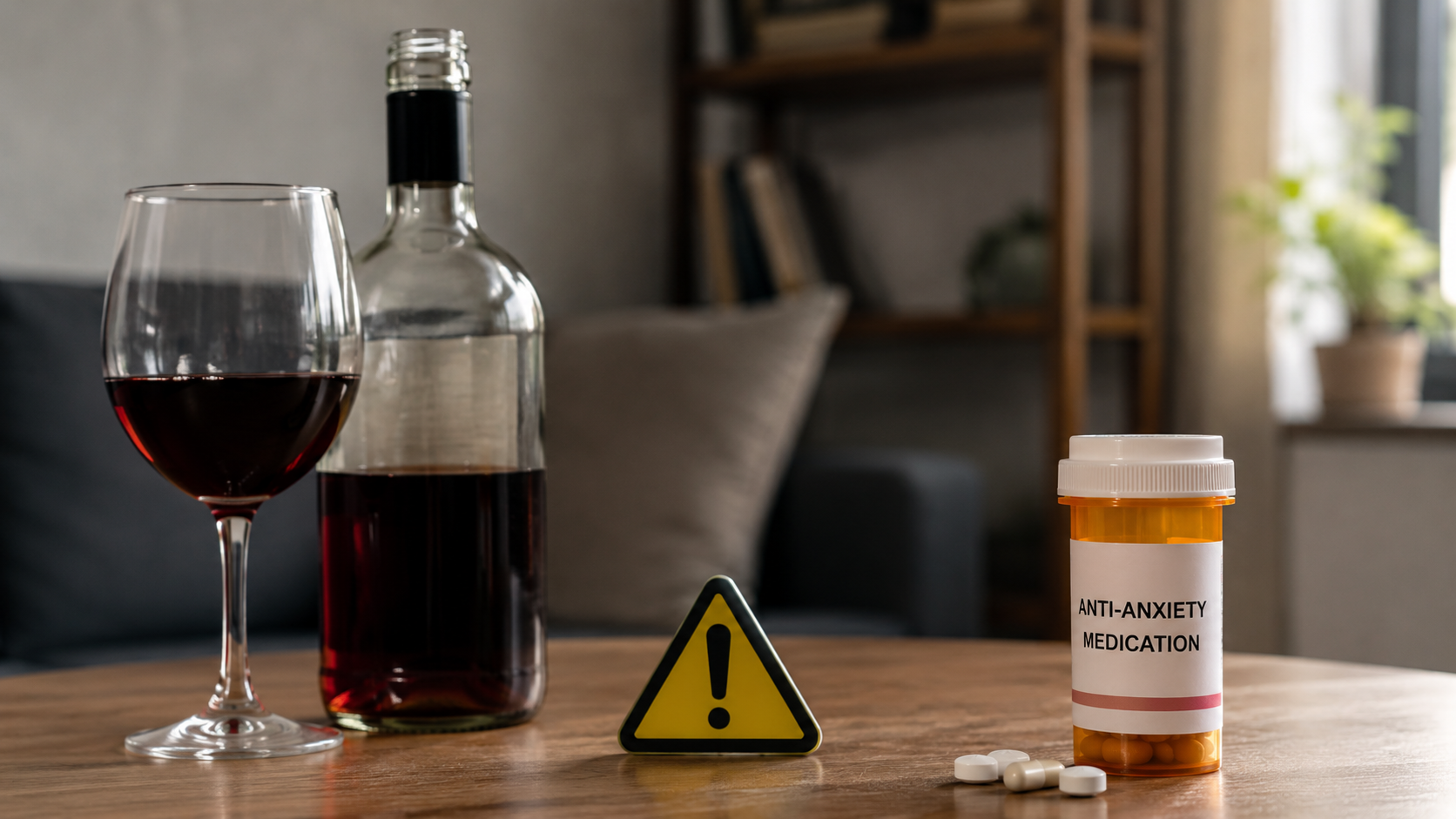

Alcohol and anti-anxiety medication can both slow the body down. When taken together, the effects can become stronger and less predictable, raising the risk of extreme drowsiness, poor judgment, blackouts, breathing problems, and accidental overdose.
The “Just One Drink” Problem
A lot of people do not mix alcohol and anti-anxiety medication because they are trying to be reckless.
It is usually more ordinary than that.
Someone takes a prescribed anxiety pill in the afternoon, then has wine with dinner. Someone uses a medication “as needed” after a stressful day, then goes to a birthday party. Someone thinks, “It’s been a few hours, so it’s probably fine.” Or they have taken the medication for years and assume they know how their body reacts.
That is what makes this combination easy to underestimate.
Alcohol already has a way of making people feel more confident about decisions they would question while sober. Add a sedating medication into the picture, and the line between “I feel relaxed” and “I am not fully in control” can move faster than expected.
Many anti-anxiety medications, especially benzodiazepines such as alprazolam, lorazepam, diazepam, and clonazepam, affect the central nervous system. Alcohol does too. The concern is not just that both can make you sleepy. The bigger issue is that their effects can stack, sometimes in a way that feels stronger than either one alone. The FDA warns that benzodiazepine misuse can lead to overdose or death, especially when combined with alcohol, opioids, or other drugs.
This is not meant to scare people who take anxiety medication responsibly. It is about understanding why the warning label is not just legal fine print.
Alcohol and Anxiety Medication Can Pull the Same Lever
Alcohol is often described casually as something that “takes the edge off.” Anti-anxiety medication may also reduce tension, panic, or agitation, depending on the medication and why it was prescribed.
That overlap is part of the risk.
Benzodiazepines work by calming activity in the brain and nervous system. Alcohol also depresses the central nervous system. When both are present, the body may slow down more than intended. The National Institute on Alcohol Abuse and Alcoholism lists benzodiazepines, including alprazolam, diazepam, clonazepam, and lorazepam, among medications that can have dangerous interactions with alcohol.
The result can feel like heavy sleepiness, poor coordination, slowed reaction time, slurred speech, confusion, or memory gaps. It may become harder to judge how impaired you are.
That last part matters. People often rely on how they feel to decide whether they are okay.
But with alcohol and sedating medication, self-assessment becomes less trustworthy. You may think you are only a little relaxed while your balance, breathing, memory, and judgment are more affected than you realize.
“I Didn’t Drink That Much” May Not Mean Much Here
One frustrating thing about this combination is that the amount of alcohol may not look dramatic.
It might be one cocktail. Two glasses of wine. A beer at dinner.
For some people, that may be enough to cause stronger-than-expected sedation when medication is involved. The risk can depend on the specific medication, dose, timing, age, body size, liver function, other prescriptions, sleep deprivation, and whether food was eaten.
That is a long list, which is exactly the point.
The body is not a clean math equation. You cannot always say, “One pill plus one drink equals this exact effect.”
Some medications stay in the body longer than people think. Diazepam, for example, can have longer-lasting effects than a person may feel at the moment. Other medications may be taken at night, but still influence alertness the next day. MedlinePlus warns people taking alprazolam not to drink alcohol during treatment because alcohol can make side effects worse.
So the question is not only, “Did I take it right now?”
It is also, “Is the medication still active in my body?”
That is a harder question to answer casually, especially at a restaurant, party, or stressful family gathering where nobody is thinking like a pharmacist.
The Risk Is Not Only Feeling Sleepy
Drowsiness is the obvious concern, but it is not the only one.
Alcohol and anti-anxiety medication can affect judgment. You may be more likely to send messages you would not send sober, agree to things you do not actually want, drive when you should not, take another dose by mistake, or drink more because your sense of “enough” is dulled.
Memory can also get patchy. Some people describe blackouts or missing pieces of the night. That is frightening enough on its own, but it also creates practical danger. You may not remember how much you drank, whether you took another pill, how you got home, or what happened during an argument.
Coordination is another issue. Falls, trips, and injuries become more likely when the body is sedated. This is especially important for older adults, but younger people are not immune. A bathroom floor, a staircase, a curb, a rideshare pickup spot in the rain — real life offers plenty of ways to get hurt when balance and reaction time are off.
Then there is breathing.
This is the part people do not always connect with anxiety medication. Strong central nervous system depression can slow breathing, especially when sedatives are combined. The FDA has specifically highlighted serious risks, including severe respiratory depression and death, when benzodiazepines are combined with other central nervous system depressants. Alcohol is one of the substances that raises concern.
That does not mean every person who has a drink while taking medication will stop breathing. But it does mean the combination deserves more respect than “I’ll probably be fine.”
Anti-Anxiety Medication Is Not All One Thing
When people say “anti-anxiety medication,” they may mean very different drugs.
Benzodiazepines are the group most strongly associated with dangerous sedation when mixed with alcohol. Common examples include Xanax, Ativan, Valium, and Klonopin, though brand names vary and many people take generics.
But anxiety may also be treated with SSRIs, SNRIs, buspirone, beta blockers, hydroxyzine, sleep medications, or other prescriptions depending on the person. Some of these do not work like benzodiazepines, but alcohol can still complicate side effects, mood, sleep, coordination, and treatment progress.
That is why it is risky to take advice from a friend who says, “I drink on my anxiety meds and I’m fine.”
They may be taking a completely different medication. They may be on a lower dose. They may not be noticing the effects. Or they may simply have been lucky so far.
The safest answer comes from your own prescriber or pharmacist, using your exact medication list. The NIAAA advises asking a pharmacist or health care provider about alcohol interactions with medications, because the risk can differ from drug to drug.
Not very glamorous advice, I know. But it is useful.
Alcohol Can Make Anxiety Worse Later
There is another layer here that people often learn the hard way.
Alcohol may temporarily make anxiety feel quieter. It can loosen the body, soften social fear, or make worries feel farther away. That short-term relief is part of why it is tempting.
But later, anxiety can rebound.
Sleep quality may be worse. Heart rate may feel strange. Blood sugar may dip. Dehydration may kick in. You may wake up at 3 a.m. with that awful mental slideshow of everything you said, did, or might have done.
Some people call it “hangxiety.” The name is almost cute. The experience is not.
For someone already taking medication for anxiety, this cycle can become messy. Alcohol may seem to help in the moment while making the next day harder. Then the harder next day can make medication feel more necessary. If this pattern repeats, it can blur the line between occasional drinking and using alcohol as part of anxiety management.
That is worth noticing gently, without shame.
A bad week does not mean you have failed. But if alcohol is becoming your backup anxiety treatment, it is time to talk with a professional who can help you find a safer plan.
The Timing Trap
Many people think the risk disappears if they separate the medication and alcohol by a few hours.
Sometimes timing matters. But it is not always enough.
Some medications have longer half-lives, meaning they stay active in the body beyond the moment you “feel” them. Others may cause lingering drowsiness or interact differently depending on your metabolism. Taking a pill at noon and drinking at dinner may still matter for some drugs. Taking medication at bedtime after drinking can also be risky because sleep may hide signs of excessive sedation.
This is one of those areas where guessing is not ideal.
The medication label, pharmacist, or prescriber can tell you whether alcohol should be avoided entirely, limited, or separated by a certain amount of time. For benzodiazepines, the usual warning is much stricter because alcohol can worsen sedation and increase danger.
A good rule for real life: do not assume “I waited a while” makes it safe.
That sentence has gotten many people into trouble.
Risk Goes Up When Other Substances Are Involved
Alcohol plus anxiety medication is already concerning.
Alcohol plus anxiety medication plus something else can be worse.
That “something else” could be an opioid pain medication, sleep aid, muscle relaxer, antihistamine, cannabis product, or another sedating prescription. Even some over-the-counter cold or allergy medicines can add drowsiness.
People do not always count these as part of the equation. They think of the anxiety pill and the drink, but forget the nighttime sleep aid, the pain pill from dental work, or the allergy medicine they took earlier.
This matters because the central nervous system can only take so much slowing.
If you take multiple medications, it is worth keeping an updated list and asking a pharmacist to check it. Pharmacists do this kind of thing all day. You do not need to feel awkward about it. A thirty-second question at the pharmacy can prevent a very bad night.
When the Situation Is More Urgent
There are times when this combination moves beyond “wait and monitor.”
Get urgent medical help if someone who mixed alcohol with anxiety medication is hard to wake, breathing slowly or irregularly, confused, vomiting while very drowsy, unable to stand, turning pale or bluish, or acting unusually unresponsive.
Do not let someone “sleep it off” if they seem dangerously sedated.
That phrase sounds comforting, but it can be the wrong call when breathing and consciousness are affected. If you are unsure, it is safer to contact emergency services or poison control in your area.
For people in the U.S., Poison Control can be reached at 1-800-222-1222. Emergency symptoms should be handled through 911.
It is also a good idea not to leave the person alone. Keep them on their side if they are very drowsy or vomiting, and do not give more alcohol, sedatives, or “home remedies” to try to balance things out.
What to Do Before a Social Event
The hardest moments are often predictable.
A wedding. A holiday dinner. A work party. A first date. A vacation. A stressful family visit where someone always pours drinks before anyone has taken off their coat.
If you take anti-anxiety medication, plan ahead before you are already in the situation.
Ask your prescriber or pharmacist what the rule is for your specific medication. Not in a vague “Is alcohol bad?” way, but directly: “Can I drink at all while taking this? What about one drink? What if I take it only as needed? How long should I avoid alcohol after a dose?”
Then decide what you will do before people start offering refills.
You might choose a nonalcoholic drink that looks festive enough to avoid repeated questions. Sparkling water with lime does more social work than it gets credit for. You might tell one trusted person, “I’m not drinking with my medication tonight.” You might drive yourself so you can leave when you need to. Or you might skip the event if the whole thing feels too loaded.
None of this makes you boring.
It makes you someone who understands that your brain and body are not party props.
What If You Already Mixed Them?
First, do not panic.
Panic does not help, and shame really does not help.
Stop drinking. Do not take another dose unless a medical professional specifically tells you to. Avoid driving, cooking, using tools, climbing stairs unnecessarily, or making important decisions. Stay with someone you trust if you feel very sleepy, confused, unsteady, or unlike yourself.
If you are worried about the amount you took, the amount you drank, or how you feel, call a pharmacist, your prescriber’s after-hours line, Poison Control, or emergency services depending on the symptoms.
Be honest about what you took.
Medical professionals need the real information, not the cleaned-up version. They are not there to scold you. They are trying to keep you alive and safe.
The Bigger Habit to Watch
There is one quiet habit behind many risky medication-and-alcohol moments: treating medication as separate from normal life.
People take the pill, then go back to life as usual. Dinner, drinks, errands, work, dating, travel, stress, family. The medication becomes background.
But anxiety medication is part of the body’s chemistry for a while. It deserves to be included in decisions.
That does not mean your life has to become small or joyless. It means you build routines that respect the medication you are taking.
Read the label. Ask questions. Keep alcohol out of the picture if your medication requires that. Tell close friends enough so they are not pressuring you to drink. Notice if you are using alcohol to manage anxiety that your treatment plan is not fully addressing.
And if the current plan makes social life, sleep, or stress hard to manage, bring that up with your clinician. Medication decisions should fit real life, not some imaginary perfect patient who never has a wedding toast, panic flare, or rough Tuesday.
A Calm Way to Think About It
Alcohol and anti-anxiety medication can both lower the volume on the nervous system. That may sound appealing when anxiety is loud.
But lowering the volume too much can become dangerous.
The risk is not only about feeling sleepy. It can involve memory, judgment, coordination, breathing, and the chance of accidental overdose. With benzodiazepines in particular, alcohol is not something to casually experiment with.
The kindest approach is simple: check your specific medication, avoid guessing, and treat warnings seriously even if you feel fine most of the time.
Anxiety is hard enough without adding a preventable emergency on top of it. Taking care of yourself may look like skipping the drink, asking the pharmacist, or telling a friend, “Not tonight — it doesn’t mix well with my meds.”
That is not overreacting.
That is being on your own side.

Hi, I’m the creator and editor behind ZestyHabit. I research everyday safety, first aid, and practical wellness topics using official guidance and reliable public sources, then turn that information into clear, realistic steps for daily life.
My goal is to help readers make safer, better-informed choices at home and beyond.


