Why Falling Asleep With a Scented Candle Burning Is Riskier Than It Seems
Minjin Park
·
Scented candles can make a room feel calm and cozy, but sleeping with one still burning can create fire, smoke, and air-quality risks. Learn safer habits for using candles at home.
There is something comforting about lighting a scented candle at night.
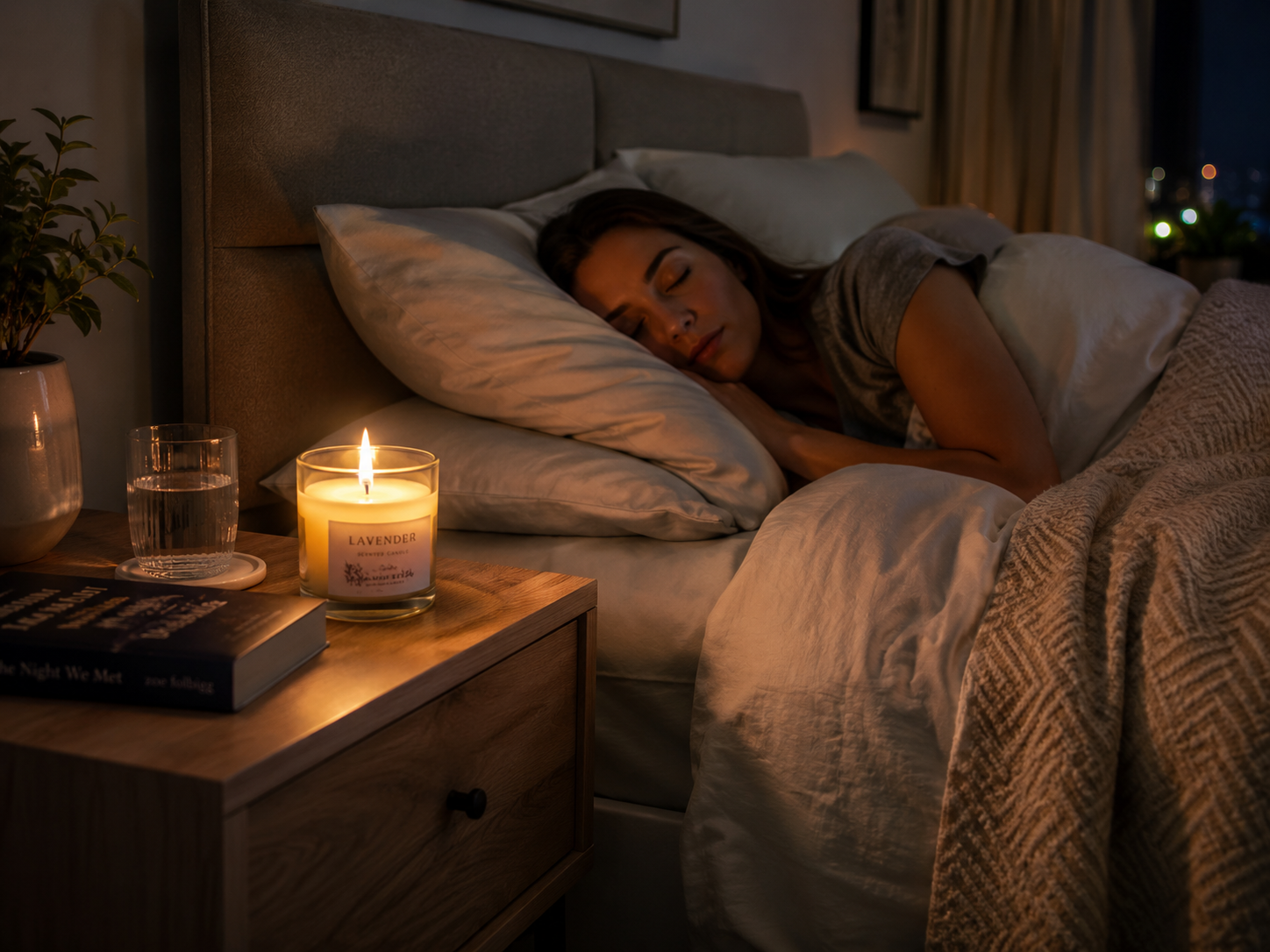
Maybe it is part of your wind-down routine. You clean up the room, dim the lights, turn on a show, read a few pages, or get ready for bed while a soft vanilla, lavender, sandalwood, or citrus scent fills the space. The flame is small. The jar looks sturdy. The room feels peaceful.
So it can feel harmless to leave it burning for “just a little longer.”
The problem is that bedtime changes the risk completely.
When you are awake, you can notice things. You can see if the flame gets too high, if the wick starts smoking, if the jar gets too hot, if the candle is too close to a curtain, or if a pet jumps near the table. When you fall asleep, all of that supervision disappears.
A candle may look calm, but it is still an open flame. If something shifts, melts, tips, overheats, or catches nearby material, you may not notice until the situation has already become serious.
This does not mean scented candles are bad. Many people use them safely. The key is treating them like any other flame in the home: enjoyable when supervised, risky when forgotten.
Why Sleeping With a Candle Burning Is Different From Simply Using One
Lighting a candle while you are awake is one thing. Sleeping while it burns is another.
When you are awake, your senses are working as a safety system. You might smell smoke, hear glass crack, notice a flickering flame, or remember to move a paper bag away from the table. Even if you are distracted, you can still respond.
During sleep, you lose that ability.
You also lose track of time. A candle that was meant to burn for 20 more minutes may burn for hours. The wax level drops. The container heats. The wick changes shape. The flame may move closer to the bottom of the jar. If the candle was placed near bedding, curtains, books, tissues, or clothing, the risk grows quietly.
That is why the safest rule is simple: blow out every candle before you feel sleepy enough to drift off.
Not after one more episode. Not after the room smells “just right.” Before sleep.
A Candle Flame Is Small, But It Is Still Fire
A candle flame can make a room feel soft and gentle, which is part of the appeal. But the flame itself is hot enough to ignite nearby materials.
Common bedroom items are often easy to burn:
Curtains
Blankets
Sheets
Throw pillows
Books
Paper tissues
Gift bags
Clothing
Hair accessories
Dried flowers
Decorative fabric
Lampshades
Cardboard packaging
Many of these items do not need to fall directly into the flame to become a problem. Heat can affect nearby materials, especially if the candle burns for a long time or the flame becomes larger than usual.
Bedrooms and living rooms also tend to have softer materials than kitchens. A candle on a nightstand may be close to fabric, cords, paper, skincare products, or loose items that were never meant to sit near heat.
The Most Common Problem: Forgetting It Is Still Burning
Most candle accidents do not start because someone intentionally ignores safety. They start because the candle becomes part of the background.
You light it while cleaning. Then you answer a message. Then you lie down. Then you get comfortable. The room smells nice. The flame is quiet. You forget it is there.
This is especially easy with scented candles because they are often used for relaxation. The whole point is to feel calm and sleepy. That makes them more likely to be left burning at the exact time you are least alert.
If your candle is part of your bedtime routine, it needs a built-in ending point. For example, blow it out before getting into bed, before turning off the lights, or before starting a movie.
Do not make “remember later” the safety plan.
Candle Containers Can Get Hot
Many scented candles come in glass jars, ceramic cups, tins, or decorative containers. These containers can make candles feel safer because the flame is enclosed.
But enclosed does not mean risk-free.
As a candle burns, the container can become hot. The heat may be stronger near the top, sides, or bottom depending on the design and wax level. If the candle burns too long, the jar may overheat. In some cases, glass can crack, especially if the candle has burned unevenly, the wick is off-center, or the jar has hidden damage.
A hot container can also damage the surface underneath. It may leave marks on wood, soften plastic, or heat nearby objects.
This is why candles should be placed on a stable, heat-resistant surface, not directly on bedding, carpet, a plastic tray, a stack of books, or a narrow shelf.
Why the Last Inch of Wax Matters
Many people try to use a candle until the very bottom.
It feels wasteful to throw away wax, especially if the candle was expensive. But burning a candle too low can be unsafe. As the flame gets closer to the bottom of the container, more heat can transfer directly to the jar or surface beneath it.
This is one reason many candle labels tell users to stop burning the candle when a certain amount of wax remains at the bottom.
That little layer of leftover wax is not just wasted fragrance. It helps keep the flame from sitting too close to the container base.
If your candle is nearly empty, do not let it burn unattended. Better yet, retire it before it reaches the point where the wick is almost touching the bottom.
Pets Can Make Candle Safety Less Predictable
Pets make candle use more complicated.
A cat may jump onto a table without warning. A dog may wag its tail near a low shelf. A curious pet may sniff the flame, bump the surface, or knock over nearby items.
Even if your pet usually ignores candles, nighttime changes things. You may fall asleep, but your pet may still move around the room. A candle on a nightstand, coffee table, dresser, or bathroom counter can become reachable in ways you did not expect.
Pet fur, tails, and whiskers can also get too close to flames.
If you have pets, place candles where they cannot reach them at all, and never leave them burning while you sleep or leave the room.
Children and Candles Are a Risky Combination
Children are naturally curious, and candles can be fascinating. The flame moves. The jar glows. The scent may smell like dessert, fruit, candy, or flowers.
A child may not understand how quickly a candle can burn skin or ignite nearby material. They may also try to move it, blow it out, touch the wax, or place something near it.
Even older children who know candles are hot may forget in the moment.
If children are in the home, candles should be kept out of reach and used only with adult supervision. A candle burning while adults sleep removes that supervision.
Scented Candles Can Affect Air Quality Too
The fire risk is the main reason not to sleep with a candle burning, but air quality is worth mentioning as well.
Any burning candle releases some particles and combustion byproducts into the air. Scented candles may also release fragrance compounds. For many people, occasional candle use in a ventilated space may not cause noticeable issues, but a small bedroom with the door closed can feel stuffy if a candle burns for hours.
Some people are more sensitive to fragrance or smoke than others. They may notice:
Headache
Throat irritation
Watery eyes
Coughing
Stuffy nose
Nausea
Lightheadedness
This does not mean every scented candle is harmful in normal use. It does mean you should pay attention to how your body reacts, especially in small rooms.
If a candle gives you a headache or makes the air feel heavy, it may not be the right scent, wick, burn time, or room setup for you.
The Wick Can Create More Smoke Than Expected
A candle wick that is too long can create a taller flame, extra flickering, and more soot. You may notice black smoke, a mushroom-shaped wick, or dark marks inside the jar.
This is common when people burn candles for long stretches without trimming the wick.
A smoky candle is not something to ignore. It can leave residue on walls, ceilings, furniture, and the jar itself. It may also make the room smell burnt instead of pleasant.
Trim the wick according to the candle’s instructions before lighting. If a candle starts smoking heavily, extinguish it, let it cool, trim the wick, and check whether it is still safe to use.
Common Mistakes People Make With Scented Candles
Placing Candles Too Close to Bedding
A candle on a nightstand may be closer to bedding than it looks. Blankets shift. Pillows move. A sleeve or book can slide near the edge.
If a candle is near a bed, it should be far from anything that can move into the flame. Realistically, candles and sleep spaces are not a great match unless the candle is blown out before lying down.
Burning a Candle While Watching TV in Bed
This is one of the easiest ways to fall asleep with a candle still lit. You plan to blow it out after the episode, but you get comfortable and drift off.
Make it a rule: no burning candle once you are under the covers.
Putting Candles on Unstable Surfaces
A candle should not sit on a wobbly table, a stack of books, a soft surface, a windowsill with curtains, or a crowded shelf.
Choose a flat, stable, heat-resistant surface with open space around it.
Letting Candles Burn Too Long
Many candles are not meant to burn all day or all night. Long burn times can make containers hot, create uneven wax pools, and increase soot.
Follow the candle label’s recommended burn time. If there is no label, use shorter burn sessions and monitor the candle carefully.
Forgetting About Drafts
Air movement can make a candle flame flicker or lean. A fan, open window, heating vent, or air purifier can push the flame toward one side of the container or toward nearby objects.
If the flame is dancing wildly, the candle is not in a good spot.
Warning Signs a Candle Should Be Extinguished
Blow out the candle if you notice:
The flame is unusually tall
The flame flickers heavily
The wick is smoking
The jar feels extremely hot
The wax pool looks uneven or too deep
The candle smells burnt
Soot is forming on the jar
The wick has shifted off-center
The glass is cracked or damaged
Anything nearby is getting warm
You are getting sleepy
That last one is important. Sleepiness itself is a warning sign when an open flame is involved.
A Safer Candle Routine for Evenings
You do not have to give up scented candles. You just need a routine that ends before sleep.
Try this:
Light the candle earlier in the evening, not right before bed.
Place it on a stable, heat-resistant surface.
Keep it away from curtains, bedding, paper, and clutter.
Trim the wick before use if the label recommends it.
Stay in the same general area while it burns.
Set a timer as a backup reminder.
Blow it out before you feel drowsy.
Let the wax cool before moving the candle.
Check that the wick is no longer glowing.
The timer is helpful, but do not rely on it completely. A timer can remind you, but it cannot supervise the flame.
Better Alternatives for a Sleepy Bedroom
If you love a scented bedroom at night, consider flame-free options.
Candle Warmer Lamps
Candle warmers melt the wax from above or below without an open flame. They still use heat, so they should be used according to the manufacturer’s instructions and turned off before sleep, but they remove the open flame risk.
Reed Diffusers
Reed diffusers provide scent without flame or electricity. Keep them away from children, pets, and surfaces that could be damaged by oils.
Essential Oil Diffusers
Electric diffusers can scent a room without a flame. Use them carefully, especially around pets, children, or anyone sensitive to fragrance. Some essential oils are not appropriate for pets, so check reliable pet safety guidance if animals live in the home.
Room Sprays
A light spray before bedtime can provide fragrance without leaving something burning. Avoid spraying directly onto skin, pets, bedding, or surfaces that may stain.
Fresh Air and Clean Bedding
Sometimes the best “scent” for sleep is simply a clean room, fresh sheets, and a little ventilation. It may not be as dramatic as a candle, but it is calm and safe.
What to Do Before Leaving a Room
Before walking away from a candle, ask yourself:
Is the flame completely out?
Is the wick still glowing?
Is smoke still rising?
Is the container too hot to move?
Is the candle away from children and pets?
Is anything nearby warm or damaged?
Did I leave matches or a lighter nearby?
A candle is not fully “done” the moment you blow it out. The wax and container may still be hot, and the wick may glow briefly. Give it a moment before moving it or placing anything near it.
Why “Just This Once” Is Not a Great Plan
Many unsafe habits survive because nothing bad happens the first few times.
You may have fallen asleep with a candle burning before and woken up to find everything fine. That can make the habit feel less risky. But safety is not only about what happened last time. It is about reducing the chance that one unlucky night lines up with the wrong conditions.
Maybe the candle burns lower than usual. Maybe the jar overheats. Maybe the cat jumps up. Maybe a curtain shifts. Maybe a tissue falls near the flame. Maybe you sleep longer than expected.
The safer habit is easy enough that it is not worth gambling on memory or luck.
This checklist only takes a few seconds, but it can prevent a very avoidable problem.
Final Thoughts: Enjoy the Scent, Not the Risk
Scented candles can make a home feel warm, calm, and personal. They are lovely for a quiet evening, a bath, a clean room, or a relaxing routine.
But they should not be part of sleep itself.
Once you are drowsy, a candle stops being a cozy detail and becomes an unattended flame. You cannot watch the wick, notice smoke, move a blanket, stop a pet, or respond if the jar gets too hot.
The safest habit is simple: enjoy your candle while you are awake, then blow it out before getting into bed or closing your eyes.
If you want scent while you sleep, choose a flame-free option instead. A calm room should help you rest, not leave one more risk burning quietly in the background.
Hi, I’m the creator and editor behind ZestyHabit. I research everyday safety, first aid, and practical wellness topics using official guidance and reliable public sources, then turn that information into clear, realistic steps for daily life.
My goal is to help readers make safer, better-informed choices at home and beyond.
[…] Falling asleep in contact lenses may seem like a small shortcut, especially after a long day. However, it can substantially increase the risk of a serious corneal infection. […]
Loading…
Discover more from
Subscribe now to keep reading and get access to the full archive.



[…] Falling asleep in contact lenses may seem like a small shortcut, especially after a long day. However, it can substantially increase the risk of a serious corneal infection. […]