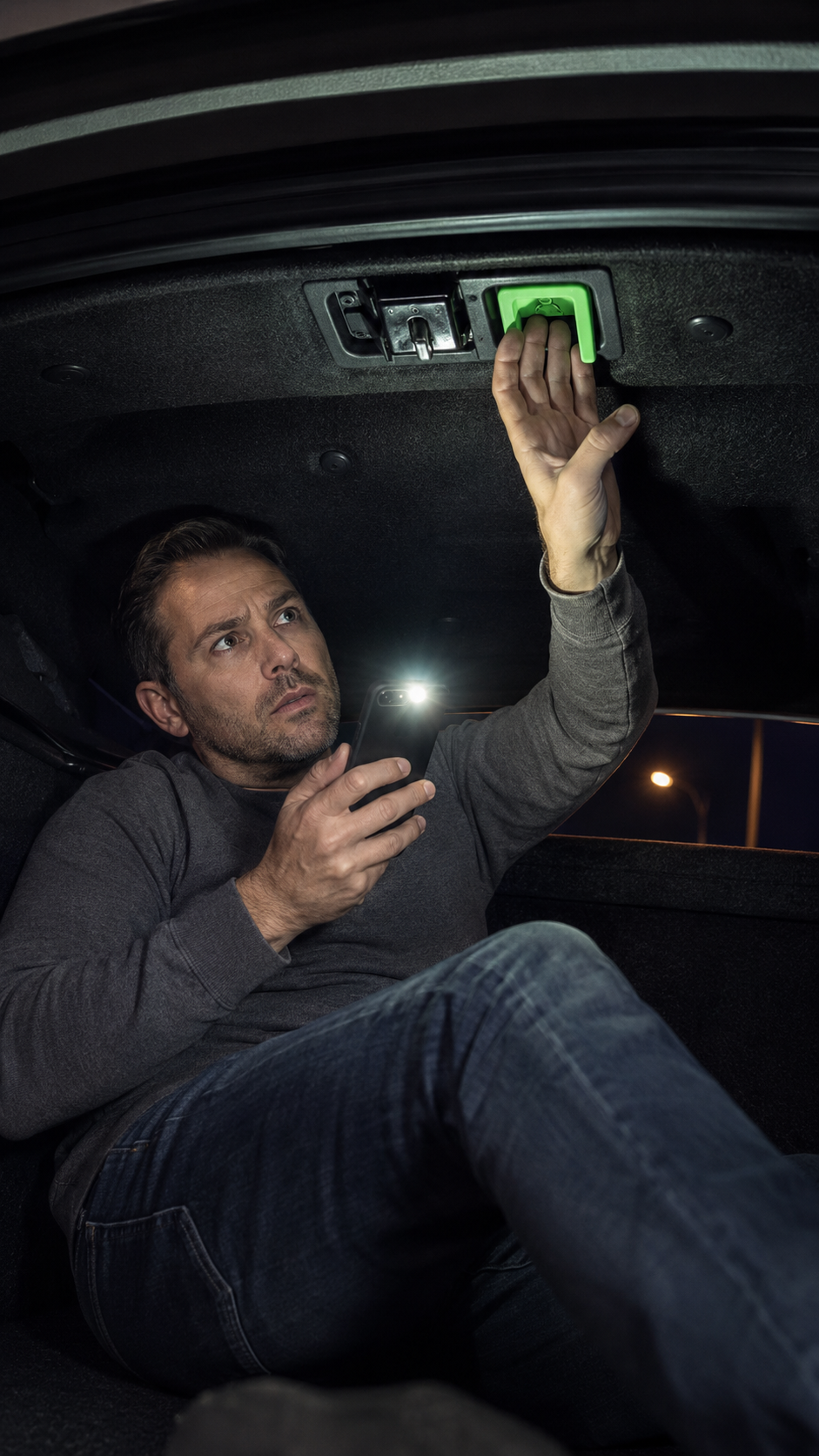
Trapped in a Car Trunk? How to Escape and Get Help Quickly
Learn how to escape from a locked car trunk using the emergency release, rear-seat access, a phone, or other signaling methods—and how to prevent trunk entrapment.
Being trapped inside a car trunk is a frightening and potentially life-threatening emergency. The danger is not limited to intentional confinement. A child may climb inside while playing, an adult may fall into a trunk while loading cargo, or a malfunctioning latch may close unexpectedly.
Once the lid shuts, darkness and panic can make the space feel smaller than it is. Heat can also build quickly, particularly in warm weather. A trunk has poor ventilation, and a person may develop dehydration, heat exhaustion, heatstroke, or breathing problems before anyone realizes what has happened.
The most important thing to remember is that most newer passenger cars in the United States have an interior emergency trunk release. Locating and operating that release should be your first priority.
Important: Car designs vary. Always become familiar with the emergency features in your own vehicle before an emergency occurs.
Quick Answer: What Should You Do If You Are Trapped in a Car Trunk?
Follow these steps in order:
Stay as calm as possible.
Look and feel for the glow-in-the-dark emergency release.
Pull or operate the release and push the trunk lid upward.
If you have a phone, call 911 and share your location.
Use a key fob’s trunk or panic button if available.
Look for a rear-seat release that provides access to the passenger compartment.
Make repeated noise to attract attention.
Conserve phone battery and physical energy if immediate escape is not possible.
If the vehicle is moving, do not jump out at speed.
Watch for symptoms of heatstroke or exhaust exposure.
1. Look for the Interior Emergency Trunk Release
In the United States, passenger cars with a separate trunk compartment are required to have an automatic or manual interior release capable of unlatching the trunk lid. This requirement is established by Federal Motor Vehicle Safety Standard No. 401. Electronic Code of Federal Regulations
NHTSA states that manufacturers have been required to equip new vehicle trunks with a glow-in-the-dark interior release since September 1, 2001. Vehicles sold as model year 2002 or newer will therefore generally have one, although imported, modified, or unusual vehicles may differ. National Highway Traffic Safety Administration
The release is usually mounted:
On the inside of the trunk lid
Near the trunk-latch mechanism
Along the center or lower edge of the lid
Behind or beside a small piece of trim
On a short cable connected to the latch
It may look like a glowing handle, lever, tab, button, or small image of a car with an open trunk.
Because the glow may be faint, allow your eyes a few seconds to adjust to the darkness. Feel along the inside of the trunk lid, especially near the latch. Move clothing, bags, or other cargo that may be covering the mechanism.
Pull the handle firmly in the direction shown. Some designs require a push or sideways motion instead. Once the latch releases, press upward on the trunk lid.
2. Do Not Assume the First Pull Failed
The trunk may be under pressure from luggage, a damaged lid, or the car’s position. If you hear the latch move but the lid does not rise, push upward while operating the release again.
Clear away any object pressing against the lid. Use both hands or a shoulder if necessary, but avoid placing your face directly below loose or heavy cargo.
A damaged vehicle may have a bent latch that does not release normally. Try pulling the emergency handle while applying pressure in different directions to the lid, but do not repeatedly exhaust yourself if it is clearly jammed. Move quickly to contacting emergency services and finding another exit.
3. Call 911 If You Have a Phone
If the emergency release is not immediately visible or does not work, call 911.
Tell the dispatcher:
That you are locked inside a car trunk
Whether the vehicle is parked or moving
Your name and phone number
Your approximate location
The direction of travel, if moving
The vehicle’s make, model, color, and license plate if known
Whether a child or injured person is with you
Whether you feel overheated, dizzy, weak, or short of breath
Whether you believe the confinement was intentional
Use your phone’s location-sharing feature to send your live location to a trusted person if possible. If you cannot safely speak, use text-to-911 where available or place the call and leave the line open. Text-to-911 is not supported everywhere, so a voice call remains the best first choice when possible.
Lower the screen brightness and close unnecessary apps to preserve battery power. Do not use most of your battery searching the internet for model-specific instructions before calling for help.
4. Try the Key Fob or Remote
If you have the vehicle’s key fob, press and hold the trunk-release button. Some vehicles require the button to be held for a few seconds or pressed twice.
The panic button can activate the horn and lights, drawing attention even if the trunk does not open. Use it repeatedly if people may be nearby.
A remote may not function if:
The vehicle’s battery is dead
The key-fob battery is weak
The car is in motion
The vehicle’s security settings disable the trunk button
The trunk latch is physically damaged
Try it, but do not rely on it as your only escape method.
5. Look for a Way Into the Passenger Compartment
Many sedans have fold-down rear seats. Release controls may be located inside the trunk so that long cargo can be loaded from the rear.
Feel along:
The upper edge of the rear seatbacks
The sides of the trunk near the wheel wells
The underside of the rear parcel shelf
The backs of the rear seats
Any marked pull handles or straps
Pull the release and push the seatback toward the passenger compartment. Once inside the cabin, try the side doors, unlock button, horn, hazard lights, or another phone.
Some cars have a small center pass-through rather than fully folding seats. It may provide enough room to reach a door-unlock control or attract attention, but it may be too narrow for an adult to crawl through.
Rear seats may also be locked from the passenger compartment, so this option will not work in every vehicle. Avoid blindly pulling electrical wiring or damaging safety components.
What About SUVs, Hatchbacks, and Station Wagons?
Vehicles with an open cargo area connected to the passenger compartment may not have the same type of trunk-release handle required for a traditional enclosed trunk.
If trapped behind the rear seats of an SUV or hatchback:
Look for an interior hatch-release control.
Try the key fob.
Fold or climb over the rear seats.
Remove a cargo cover if it blocks access.
Reach a door handle, window control, horn, or unlock button.
Call 911 if the hatch does not open.
Some power liftgates have a small manual release hidden behind an access panel. The exact location and method vary by model, so check the owner’s manual before an emergency rather than attempting to dismantle random panels under stress.
Electric vehicles may also have a front trunk, often called a frunk. Release requirements and designs can differ. Owners should locate both the front and rear cargo-compartment releases and review the manufacturer’s emergency instructions.
6. Make a Recognizable Distress Signal
If you cannot open the trunk and do not have a working phone, make enough noise to attract attention without immediately exhausting yourself.
Use a hard object to strike the metal trunk lid or an interior structural surface. Three strikes followed by a pause can sound more intentional than continuous vibration from the vehicle.
You can also:
Shout “Help! I’m trapped in the trunk!”
Kick upward against the trunk lid
Trigger the car alarm
Strike near the rear corners where people outside may hear you
Repeat the noise whenever the vehicle stops
Listen for voices before using your energy to shout
Do not repeatedly hit sharp tools against areas containing fuel-system components, batteries, or electrical wiring. Avoid swinging objects near your face in the confined space.
Online advice sometimes recommends kicking out a taillight. This is not a reliable first choice. Modern light assemblies can be difficult to reach, securely mounted, and surrounded by sharp plastic or metal. Attempting to dismantle them may cause cuts while wasting valuable energy.
Prioritize the emergency release, phone, key fob, rear-seat access, and clear signaling.
7. If the Vehicle Is Moving
A moving vehicle creates additional risks. Opening the trunk may help other drivers or pedestrians see you, but jumping onto the roadway at speed can cause fatal injuries.
Call 911 discreetly and give the dispatcher every location detail you can identify, such as:
Road signs
Highway numbers
Turns
Stops
Bridges
Railroad crossings
Nearby sounds
Estimated speed
Travel time since the vehicle started moving
Share live location data if possible. If you operate the emergency release, hold onto a secure part of the vehicle and avoid falling out. Do not jump from the trunk unless remaining inside presents an immediate greater danger and there is no safer option. Follow the emergency dispatcher’s instructions whenever possible.
If the vehicle stops in a populated or otherwise safe area, open the trunk, exit quickly, move away from traffic, and seek help.
8. Manage Heat While Waiting for Rescue
Heat can build rapidly inside a closed vehicle. NHTSA warns that a vehicle’s interior temperature can rise almost 20°F during the first 10 minutes. Even when the outdoor temperature is in the mid-60s, the interior may eventually exceed 110°F. A closed trunk can be especially dangerous because it has little ventilation. NHTSA Child Safety
If immediate escape is not possible:
Remove unnecessary outer clothing.
Avoid frantic, continuous movement.
Lie or sit in the position that allows the easiest breathing.
Use your voice and physical energy strategically.
Keep your phone available for emergency communication.
Drink water only if it is safely available.
Reassure any child with you and monitor their responsiveness.
Heatstroke warning signs include confusion, unusual behavior, slurred speech, loss of consciousness, seizures, very hot skin, and severe weakness. Tell 911 immediately if any of these symptoms appear.
A trunk is not airtight, but poor ventilation and possible exhaust leakage can also cause breathing problems. Headache, dizziness, nausea, weakness, confusion, or unusual sleepiness while the engine is running may indicate dangerous exposure. Treat these symptoms as an emergency.
9. What to Do After Escaping
Move away from traffic and into a cool, safe place. Call 911 if emergency services are not already on the way.
Seek immediate medical care if anyone has:
Confusion or altered behavior
Fainted or lost consciousness
Difficulty breathing
Chest pain
A seizure
Hot skin and severe weakness
Persistent vomiting
A significant head or neck injury
Possible exhaust exposure
Injuries from escaping the moving vehicle
For suspected heatstroke, call 911, move the person to a cooler area, remove excess clothing, and begin rapid cooling with wet cloths, misting, fanning, or cool water. Do not give fluids to someone who is confused, unconscious, vomiting repeatedly, or unable to swallow safely. CDC Heat-Related Illness Guidance
If the entrapment was intentional, move to a secure public place and wait for police. Do not return to confront the person responsible. Preserve messages, location history, photographs, and other potential evidence.
How to Prevent Trunk Entrapment
Children are naturally curious and may treat a parked car as a hiding place. Prevention requires keeping unused vehicles inaccessible.
NHTSA recommends:
Locking vehicle doors and trunks when not in use
Keeping keys and remote openers away from children
Teaching children that trunks are not play areas
Checking vehicles immediately when a child is missing
Keeping fold-down rear seats closed or locked
Teaching children how the emergency trunk release works
Very young children may see the glowing handle but lack the strength or understanding to operate it. Adult supervision and locked vehicles remain the most important protections.
If your older vehicle does not have an interior trunk release, contact the manufacturer or a qualified dealership about installing an appropriate retrofit.
Practice Without Closing Anyone Inside
Families should identify the emergency release together, but never practice by closing a child or adult inside the trunk.
Leave the trunk fully open, point out the glowing handle, and let the child pull it while an adult supports the lid. Explain that it is only for emergencies and that vehicle trunks are never safe places to hide or play.
Adults should also inspect the trunk after buying a vehicle. Make sure the release is visible, unobstructed, and functional. Do not cover it with cargo liners, organizers, or luggage.
Remember the Escape Order
If you become trapped in a car trunk, look for the glowing interior release first. If it fails, call 911, use the key fob, search for a rear-seat release, and create a clear distress signal. Avoid unreliable tricks that waste energy or cause injury.
Knowing where the emergency release is before a crisis can turn a terrifying situation into a quick escape. Have you ever checked the glow-in-the-dark release inside your car’s trunk, and would everyone in your family know how to use it? Take a look with the trunk open, then share your vehicle-safety tip in the comments.