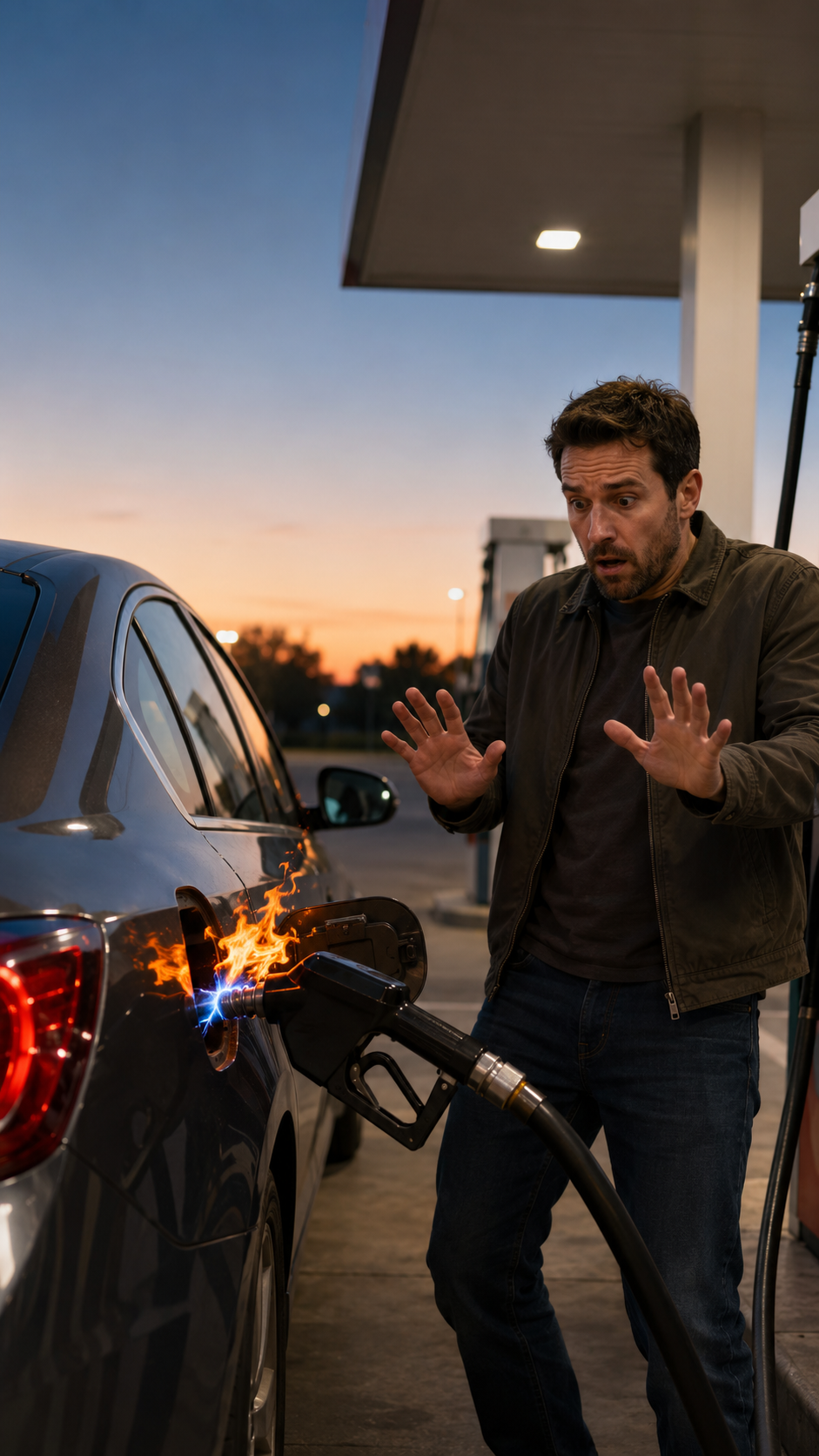
Static Electricity Fires at Gas Stations: How They Start and How to Prevent Them
Minjin Park
·
Learn how static electricity can ignite gasoline vapors at the pump, how to refuel safely, and what to do if a fire starts at a gas station.
Filling a vehicle with gasoline is such an ordinary activity that it is easy to forget what is happening only inches from your hand. A highly flammable liquid is flowing through a hose while invisible fuel vapors collect around the vehicle’s filler opening. Under the wrong conditions, one small spark may be enough to ignite those vapors.
Smoking and open flames are obvious hazards at gas stations, but static electricity is less noticeable. A driver may create a static charge simply by sliding across the vehicle’s seat. If that person returns to the fuel nozzle without discharging the charge, a spark could occur near gasoline vapor.
Static-related gas station fires are uncommon, but they are real and preventable. The most important habits are simple: turn off the engine, remain outside the vehicle while fueling, touch a metal surface away from the filler opening before handling the nozzle, and never pull the nozzle out if a fire begins.
How Can Static Electricity Start a Gas Station Fire?
Static electricity is an imbalance of electrical charge on the surface of an object or person. You have probably experienced it after walking across carpet and touching a metal doorknob. The small shock may be harmless in your home, but a similar discharge can be dangerous near flammable vapor.
Static charge can develop when two materials touch and separate. At a gas station, this may happen when clothing slides across a fabric or synthetic vehicle seat.
A typical sequence looks like this:
A driver begins pumping gasoline.
The driver gets back inside the vehicle.
Clothing rubs against the seat, creating a static charge.
The driver exits and immediately reaches for the nozzle.
A spark jumps between the person’s hand and the nozzle or metal filler area.
The spark ignites gasoline vapor near the tank opening.
The liquid gasoline does not necessarily need to be touched by the spark. Gasoline vapor mixed with air is the immediate ignition concern. That is why even a very small spark near the filler opening can be dangerous.
Static electricity is often more noticeable during cool, dry weather because low humidity allows charge to accumulate more easily. However, a static discharge can happen during any season, so safe fueling habits should be followed year-round.
Why Gasoline Vapors Are So Dangerous
Gasoline gives off vapors that can ignite when they reach a flame, spark, or another ignition source. These vapors may be present around the nozzle, tank opening, spilled fuel, or an open portable fuel container.
Gasoline vapors are also heavier than air. They can remain near the ground or travel to a nearby ignition source. This is one reason cigarettes, lighters, matches, pilot lights, and operating equipment must be kept away from gasoline.
A gas station is designed with safety systems such as automatic nozzle shutoffs, emergency pump controls, warning labels, and protective barriers. However, these systems cannot replace careful behavior by the person using the pump.
What to Do Before You Start Fueling
A safe refueling routine begins before the nozzle enters the vehicle.
Park correctly
Position the vehicle close enough to the pump that the hose reaches comfortably without being stretched tightly. Place the transmission in Park and engage the parking brake when appropriate.
Turn off the engine
Always shut down the vehicle before refueling. Do not restart it until the nozzle has been returned to the pump, the fuel cap has been secured, and any spill has been reported and handled.
Turn off auxiliary equipment that could create an ignition source. This may include portable heaters, cooking appliances, generators, or pilot lights in a camper or recreational vehicle.
Extinguish all smoking materials
Never smoke, vape, light a match, or use a lighter near a pump. A cigarette or open flame presents a much more obvious ignition source than static electricity, but both risks deserve attention.
Keep children and pets inside the vehicle
Children should not operate the pump or play near the fueling area. Pets should also remain safely secured. Movement around the hose and nozzle creates additional risks, including tripping, spills, distraction, and accidental contact with fuel.
Discharge existing static electricity
Before opening the fuel cap or touching the nozzle, touch an unpainted or conductive metal part of the vehicle away from the filler opening. A metal door frame or another suitable exterior metal surface can allow an accumulated charge to discharge away from the gasoline vapors.
You may occasionally feel a small shock. It is far better for that discharge to occur away from the nozzle and open tank.
Stay Outside the Vehicle While Fueling
Once fueling begins, remain outside the vehicle and stay near the nozzle.
Getting back inside may seem harmless, especially in cold, hot, rainy, or windy weather. However, sliding into and out of the seat is one of the primary ways a new static charge can form during refueling.
Do not sit in the driver’s seat, reach across the interior, or repeatedly enter and exit while the pump is running. Plan ahead by getting your payment card, wallet, jacket, or other necessary items before you begin.
Staying at the pump also allows you to notice:
Fuel splashing or leaking
A nozzle that has shifted position
A tank that has reached capacity
Smoke, flames, or unusual odors
Someone approaching the moving hose
A vehicle or child entering the fueling area
Never walk into the convenience store while the nozzle is operating. Even where an automatic hold-open latch is permitted, the person fueling should remain nearby and attentive.
What If You Must Get Back Into the Vehicle?
Sometimes re-entering the vehicle is unavoidable. You may need to help a child, retrieve medication, or respond to another immediate need.
If you get back inside:
Finish what you need to do without rushing.
Exit the vehicle carefully.
Before reaching for the nozzle, touch a metal part of the vehicle away from the fuel opening with your bare hand.
Only after discharging the static charge should you handle the nozzle.
Do this every time you re-enter the vehicle. Do not assume that touching the metal once at the beginning will protect you after you have sat down again.
The safest option remains staying outside until fueling is complete.
Do Not Top Off the Fuel Tank
Stop when the pump automatically clicks off. Do not repeatedly squeeze the handle to force more gasoline into the tank.
Topping off may cause fuel to spill, interfere with the vehicle’s vapor-recovery system, or leave insufficient room for fuel expansion. Spilled gasoline also creates more vapor near potential ignition sources.
After the automatic shutoff:
Release the handle.
Wait a few seconds for fuel in the nozzle to drain.
Remove the nozzle carefully without shaking it.
Return it securely to the pump.
Replace and tighten the vehicle’s fuel cap.
Close the fuel door.
If gasoline spills, do not ignore it. Tell the station attendant immediately and keep other people away from the affected area.
What to Do If a Fire Starts While Fueling
A flash fire at the filler opening can cause people to panic. The instinctive reaction is often to grab the burning nozzle and pull it out. That can spread burning gasoline across the vehicle, pavement, clothing, or nearby people.
If a fire starts:
Do not remove the nozzle from the vehicle.
Do not attempt to drive away.
Release the nozzle handle if you can do so without approaching the flames.
Back away immediately.
Warn other people to leave the pump area.
Notify the station attendant.
Use the emergency shutdown button only if it is clearly accessible without moving toward the fire.
Call 911 or the local emergency number from a safe location.
Maryland’s official gas pump safety guidance specifically warns drivers not to remove the nozzle if a fire begins. Leaving the nozzle in place helps avoid spreading fuel and flames.
Do not return for a wallet, phone, or other belongings. Do not open the hood or attempt to inspect the fire. Fire can spread rapidly, and heat may damage fuel lines, tires, nearby vehicles, and station equipment.
A portable fire extinguisher should be used only by someone trained, when the fire is very small, the correct extinguisher is available, emergency services have been called, and there is a clear escape route. Evacuation should always take priority over protecting the vehicle.
If a person’s clothing catches fire, they should stop, drop, and roll. Call emergency services and begin appropriate burn first aid once the flames are extinguished and the area is safe.
How to Fill a Portable Gasoline Container Safely
Portable fuel containers create a separate static electricity hazard. A container placed inside a vehicle or on a truck bed may be electrically insulated from the ground, particularly when it rests on carpeting, plastic, or a bed liner. Static charge can then build and discharge near the container opening.
Use only an approved container designed for gasoline.
Remove the container from the vehicle.
Place it directly on level ground.
Do not fill it in a trunk, passenger compartment, truck bed, trailer, or cargo area.
Keep the nozzle in contact with the container’s opening throughout the filling process.
Control the nozzle manually rather than relying on the automatic latch.
Fill slowly to reduce splashing and static buildup.
Leave space for expansion—generally at least 5 percent of the container.
Replace the cap tightly.
Report spills to the station attendant.
Wait until any fuel on the outside has evaporated before placing the container in a vehicle.
Secure the container upright so it cannot tip or slide during transportation.
Never use a glass jar, bucket, drink bottle, plastic bag, or another improvised container. Gasoline can damage unsuitable materials, leak, release vapor, or be mistaken for a beverage.
Do not leave a gasoline container in a hot vehicle or transport it longer than necessary. Store fuel only in an approved container in a cool, well-ventilated location away from living areas, children, flames, pilot lights, heaters, and electrical equipment.
What to Do About Gasoline Spills
If fuel spills on the ground, stop pumping and alert the station attendant. Do not start the vehicle or create an ignition source near the spill. Follow the attendant’s instructions and keep other people from walking or driving through it.
If gasoline gets on your skin, move away from the pump and wash the affected area thoroughly with soap and water. Remove fuel-soaked clothing as soon as it is safe to do so. Keep contaminated clothes away from dryers, heaters, cigarettes, and other ignition sources.
Seek medical advice if gasoline enters the eyes, is swallowed, causes breathing problems, or produces persistent skin irritation. Never intentionally induce vomiting after gasoline ingestion because fuel can enter the lungs and cause serious injury.
Common Gas Station Safety Mistakes
Several ordinary actions can increase risk:
Getting back into the car while gasoline is flowing
Pinning the nozzle handle open with an object
Topping off after automatic shutoff
Leaving the pump unattended
Smoking or vaping near the pumps
Allowing children to handle the nozzle
Filling a portable container inside a vehicle
Removing a burning nozzle
Driving away with the nozzle still attached
Ignoring a fuel spill
Restarting the engine before fueling is completely finished
Phone restrictions can vary by station. Regardless of whether a phone is considered an ignition concern, using one can distract you from the nozzle, surrounding traffic, spills, and emergency warnings. Follow posted station rules and keep your attention on fueling.
A Simple Static-Fire Prevention Checklist
Before fueling:
Park securely.
Turn off the engine.
Extinguish smoking materials.
Touch metal away from the fuel opening.
Gather anything you need from inside the vehicle.
While fueling:
Remain outside.
Stay beside the nozzle.
Keep children and pets away.
Stop at the first automatic click.
Watch for spills or unusual conditions.
If you re-enter the vehicle:
Touch exterior metal away from the nozzle before returning to it.
If fire appears:
Leave the nozzle in place.
Back away.
Warn others.
Notify the attendant.
Activate the emergency shutoff only if safely accessible.
Call emergency services.
Gas station static fires are unusual, but preventing them requires only a few deliberate habits. The most important rule is easy to remember: once gasoline begins flowing, remain outside the vehicle and keep your attention on the pump. Have you ever felt a static shock while getting out of your car at a gas station, and did you know to touch a metal surface before handling the nozzle? Share your experience or your own fueling safety tip in the comments below.
Hi, I’m the creator and editor behind ZestyHabit. I research everyday safety, first aid, and practical wellness topics using official guidance and reliable public sources, then turn that information into clear, realistic steps for daily life.
My goal is to help readers make safer, better-informed choices at home and beyond.