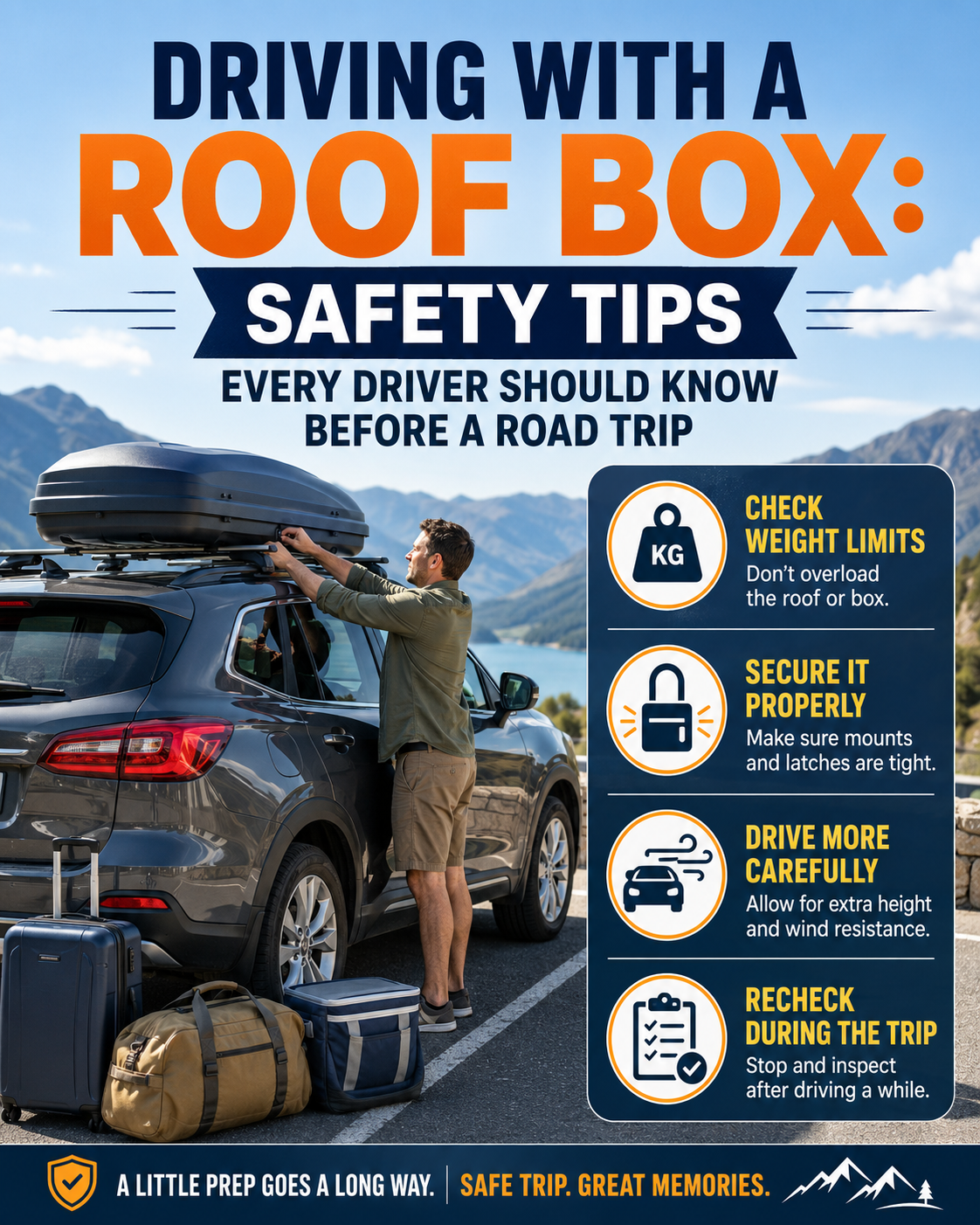
Driving With a Roof Box: Safety Tips Every Driver Should Know Before a Road Trip
Minjin Park
·
Driving with a roof box changes how your vehicle handles, stops, and fits under low spaces. Learn practical roof box safety tips for packing, driving, parking, and avoiding common mistakes.
A roof box can make a road trip feel so much easier. Suddenly, the trunk is not overflowing. The kids have more legroom. Camping gear, beach chairs, ski equipment, strollers, and extra bags can ride up top instead of being squeezed around passengers.
But once you add a roof box, your vehicle is no longer driving exactly the way it did before.
The added height, weight, and wind resistance can affect how your car handles, how much fuel it uses, how it reacts in crosswinds, and whether it can safely clear garages, drive-thrus, parking decks, and low tree branches.
That does not mean roof boxes are unsafe. Used correctly, they are very practical. The key is remembering that a roof box is not just extra storage. It becomes part of the vehicle. Before you load it up and hit the highway, it is worth taking a few minutes to understand what changes and how to avoid the most common mistakes.
Check Your Vehicle and Roof Box Weight Limits First
One of the biggest mistakes people make is treating a roof box like a second trunk. It may look spacious, but it cannot be loaded without limits.
Know the Roof Load Limit
Every vehicle has a maximum roof load limit. This is the total weight your roof can safely carry. It usually includes the roof rack, crossbars, mounting hardware, the empty roof box itself, and everything you pack inside it.
For example, if your vehicle’s roof load limit is 150 pounds, and your roof box plus rack system weighs 50 pounds, you may only have about 100 pounds left for cargo.
That number can disappear quickly. A few suitcases, tools, bottled drinks, or dense camping gear may weigh more than expected.
Do Not Guess by Space Alone
A roof box can be large enough to hold many items, but volume is not the same as safe weight. Soft clothing and sleeping bags may fill the box without adding much weight. Heavy items like canned food, tools, books, coolers, or water jugs can overload it fast.
A helpful rule is to put lighter, bulky items in the roof box and keep heavier cargo lower in the vehicle.
Good roof box items may include:
Jackets and coats
Sleeping bags
Pillows and blankets
Beach towels
Folding camp chairs, if they are light
Ski gear or snow gear
Lightweight sports equipment
Soft duffel bags
Heavier items are usually better in the trunk, cargo area, or floor space, where the weight stays lower and more stable.
Pack the Roof Box Carefully
Packing a roof box is not just about making everything fit. It is also about keeping weight balanced and preventing items from shifting while you drive.
Keep the Weight Even
Try to spread weight evenly from side to side. If the box is much heavier on one side, it can affect how the vehicle feels, especially during turns, lane changes, or windy conditions.
You do not need to be perfect, but avoid putting all the weight on one corner or one side.
Place Heavier Roof Box Items Near the Center
If you must put a moderately heavy item in the roof box, place it close to the center of the box and as low as possible. This helps reduce shifting and keeps the load more balanced.
Avoid placing heavy items at the very front or back of the box. Sudden stops, bumps, or quick turns can make poorly placed cargo move around more than you expect.
Secure Loose Items Inside
Even if the roof box lid locks, items inside can slide, bounce, or shift. Many roof boxes come with internal straps. Use them.
A shifting load can make noise, damage items, stress the box, and create an uneven feel while driving.
Make Sure the Roof Box Is Installed Correctly
Before any trip, the roof box should be firmly attached to the crossbars according to the manufacturer’s instructions. A loose roof box is not something to take chances with.
Check the Crossbars
Roof boxes need a proper rack system. Factory rails, aftermarket crossbars, and mounting hardware all need to be compatible with your vehicle and the roof box.
Before loading anything, check that the crossbars are tight and properly positioned. They should not slide, wobble, or shift when you push on them.
Tighten the Mounts
Most roof boxes attach with clamps or mounting brackets. These should be snug, secure, and evenly tightened.
Do not overtighten to the point of damaging parts, but do not leave anything loose. Follow the roof box manual, especially if this is your first time installing it.
Do a Short Test Drive
Before a long highway trip, take a short drive around the neighborhood or nearby roads. Listen for rattling, whistling, clunking, or movement.
After the test drive, stop and recheck the mounts. This small step can catch problems before you are driving at highway speed with a fully loaded vehicle.
Remember Your Vehicle Is Taller Now
This may be the most common everyday mistake with roof boxes: forgetting they are there.
You may be used to pulling into your garage, entering parking decks, using drive-thrus, or parking under trees without thinking. With a roof box installed, that familiar routine can become risky.
Measure Your New Total Height
Before driving anywhere, measure the total height of your vehicle with the roof box installed. Write it down or save it in your phone.
Measure from the ground to the highest point of the roof box. Do this on level ground if possible.
This number matters when you see height clearance signs at:
Parking garages
Hotel entrances
Apartment parking areas
Drive-thrus
Car washes
Ferry ramps
Covered drop-off areas
Low bridges or older structures
Knowing the number prevents guessing.
Be Careful With Garages and Drive-Thrus
Many roof box accidents happen at low speeds, not on highways. A driver comes home tired from a trip, forgets the roof box, and pulls into the garage. Or they enter a fast-food drive-thru without checking the clearance sign.
The result can be a cracked roof box, bent crossbars, damaged vehicle roof, or worse.
A simple reminder helps. Put a sticky note on the dashboard, hang a tag from the rearview mirror, or place a reminder on your garage door opener that says “ROOF BOX.”
It may feel silly, but it works.
Avoid Automatic Car Washes
Most automatic car washes are not designed for vehicles with roof boxes. Brushes, rails, dryers, and low equipment can hit the box or rack.
Remove the roof box before using an automatic car wash, or choose a hand wash option where you can control the clearance.
Expect More Wind Noise and Drag
Roof boxes change airflow over the vehicle. That usually means more wind noise and lower fuel efficiency.
Wind Noise Is Common
A little extra wind noise is normal, especially at highway speeds. You may hear a hum, whistle, or rushing sound from the roof area.
However, loud rattling, banging, or sudden new noises should not be ignored. That may mean the box is not mounted securely, the lid is not fully closed, or something inside is shifting.
Fuel Economy May Drop
A roof box adds aerodynamic drag. Your vehicle has to work harder to move through the air, especially at higher speeds. This can reduce gas mileage.
The effect depends on the size and shape of the box, driving speed, vehicle type, and weather conditions. But it is reasonable to expect that a roof box may make your trip use more fuel than usual.
For long trips, plan fuel stops with that in mind. Do not wait until the last possible mile if you are driving through rural areas or unfamiliar routes.
Remove the Box When You Do Not Need It
If you only use the roof box for trips, take it off when the trip is over. Leaving it on for weeks or months can reduce fuel economy, add wind noise, expose the box to weather, and increase the chance you forget about height clearance.
Removing it may feel like a chore, but it can save money and reduce wear over time.
Drive More Smoothly Than Usual
With a roof box, your vehicle carries weight higher than normal. This can slightly raise the center of gravity, especially if the box is heavily loaded.
That means smooth driving matters.
Take Turns Gently
Avoid sharp, fast turns. Slow down more than usual for curves, freeway ramps, parking lot turns, and mountain roads.
You do not need to crawl, but you should avoid sudden steering inputs. A loaded roof box can make the vehicle feel less planted than normal.
Leave More Following Distance
Extra weight and wind resistance can affect stopping distance. Even if the difference feels small, it is smart to leave more space between you and the vehicle ahead.
This is especially important on highways, in rain, in traffic, or when driving downhill.
Avoid Sudden Lane Changes
Quick lane changes can feel different with cargo on the roof. Use signals early, check blind spots carefully, and move smoothly.
A roof box may also make your vehicle more sensitive to wind when passing large trucks or driving across open bridges.
Be Careful in Windy Weather
Wind is one of the most noticeable changes when driving with a roof box. The box gives the wind more surface area to push against.
Watch for Crosswinds
Crosswinds can make the vehicle feel like it is being nudged sideways. This may happen on open highways, bridges, mountain passes, desert roads, coastal roads, or anywhere weather changes quickly.
If the vehicle feels unstable, slow down and keep both hands on the wheel. Do not make sudden corrections unless necessary. Smooth steering is safer than overreacting.
Be Extra Cautious Around Trucks
Large trucks can create air turbulence. As you pass or get passed by a semi-truck, you may feel the vehicle pull or sway slightly.
This is normal, but it is a reminder to keep a steady grip, maintain lane position, and avoid lingering beside large vehicles longer than necessary.
Consider Delaying Travel in Severe Weather
A roof box is useful, but it is not worth pushing through extreme wind if driving feels uncomfortable or unsafe. If there are high wind warnings or severe storms, consider adjusting your travel timing when possible.
This is not about fear. It is about respecting the fact that roof-mounted cargo changes how your vehicle responds.
Check the Roof Box During Long Trips
A roof box can loosen slightly from vibration, temperature changes, road bumps, or shifting cargo. Regular checks are a smart habit.
Inspect at Fuel Stops
Whenever you stop for gas, food, or a rest break, take a quick look at the roof box.
Check that:
The lid is fully closed
The lock is secure
The mounts still look tight
Nothing is sticking out
The box has not shifted position
The crossbars still look stable
You do not need to unpack everything. Just do a visual and physical check.
Listen While Driving
Unusual sounds can be early warning signs. A steady wind hum is normal. Repeated thumping, sharp rattling, flapping, or clunking is not something to ignore.
If something sounds wrong, pull over safely and check the setup.
Check After Rough Roads
If you drive over gravel roads, potholes, construction zones, snowy roads, or rough campground paths, recheck the roof box afterward. Bumps can stress mounts and shift cargo.
This is especially important if the box is fully loaded.
Lock the Box, But Do Not Rely on the Lock Alone
Many roof boxes have locks, which are helpful for keeping the lid closed and discouraging casual theft. But the lock is not a substitute for proper packing or safe storage.
Make Sure the Lid Is Fully Seated
Some roof boxes will lock even if the lid is not perfectly aligned. Others may not. Either way, make sure the lid sits evenly and closes fully before turning the key.
Walk around the vehicle and look at both sides. A slightly open lid can catch wind at highway speeds.
Do Not Overstuff the Box
If you have to force the lid down, the box is too full. Overstuffing can strain hinges, locks, and the shell of the box. It can also prevent the lid from sealing properly.
Soft items compress, but they still create pressure. Give the lid room to close naturally.
Keep Valuables Out of Sight
A roof box is not the best place for high-value items. It can be locked, but it is still outside the vehicle and visible. Keep passports, electronics, jewelry, wallets, and important documents with you or securely inside the vehicle when appropriate.
Watch for Weather and Water
Roof boxes are designed for travel, but not all boxes are perfectly waterproof in every condition. Heavy rain, snow, high-pressure water, and long highway drives can test seals.
Pack Important Items in Bags
If you are carrying clothing, bedding, or anything that should stay dry, put it in waterproof bags, plastic bins, or sealed packing cubes.
This is especially useful for ski trips, camping trips, and long road trips where weather may change.
Dry the Box After Wet Trips
After driving in rain or snow, open the roof box when you get home and let it dry. Moisture trapped inside can lead to musty smells or damp gear.
Also check the mounting hardware for dirt, salt, or debris, especially after winter driving.
Common Roof Box Mistakes to Avoid
A few simple mistakes cause many roof box problems. Knowing them ahead of time can save you stress.
Loading Too Much Weight
The roof box may close, but that does not mean the load is safe. Respect weight limits for the vehicle, rack, and roof box.
Forgetting the Added Height
Garages, car washes, and low clearance signs matter. Measure the height and keep a reminder visible.
Driving Too Fast
Higher speeds increase wind resistance and stress on the box. Follow the manufacturer’s guidance and drive at a reasonable speed for conditions.
Ignoring New Noises
A new noise is your vehicle asking for attention. Stop and check before it becomes a bigger issue.
Leaving the Box on All Year
If you do not need it, remove it. This improves fuel economy, reduces noise, and lowers the chance of clearance mistakes.
A Simple Pre-Trip Roof Box Checklist
Before heading out, run through this quick checklist:
Roof box is compatible with the rack and vehicle
Crossbars are tight and correctly positioned
Mounting hardware is secure
Cargo weight is within the limit
Heavy items are kept low inside the vehicle
Roof box load is balanced
Items inside are strapped or packed snugly
Lid is fully closed and locked
Total vehicle height is measured
Driver remembers to avoid low-clearance areas
Roof box will be checked during stops
This may seem like a lot the first time, but it quickly becomes routine.
The Main Point : Roof Boxes Are Useful, but They Change the Drive
A roof box can make travel easier, especially for families, outdoor trips, camping, skiing, college moves, and long vacations. It gives you extra room and helps keep the inside of the vehicle more comfortable.
But it also changes a few important things. Your vehicle becomes taller. It may handle differently. It may catch more wind. It may use more fuel. And it needs a little extra attention before and during the trip.
The safest approach is simple: pack light, balance the load, secure the box properly, measure your total height, drive smoothly, and check the box at stops.
You do not need to be nervous about using a roof box. Just treat it like an important part of your vehicle, not an afterthought. A few practical habits can make the whole trip calmer, safer, and much more enjoyable.
Hi, I’m the creator and editor behind ZestyHabit. I research everyday safety, first aid, and practical wellness topics using official guidance and reliable public sources, then turn that information into clear, realistic steps for daily life.
My goal is to help readers make safer, better-informed choices at home and beyond.