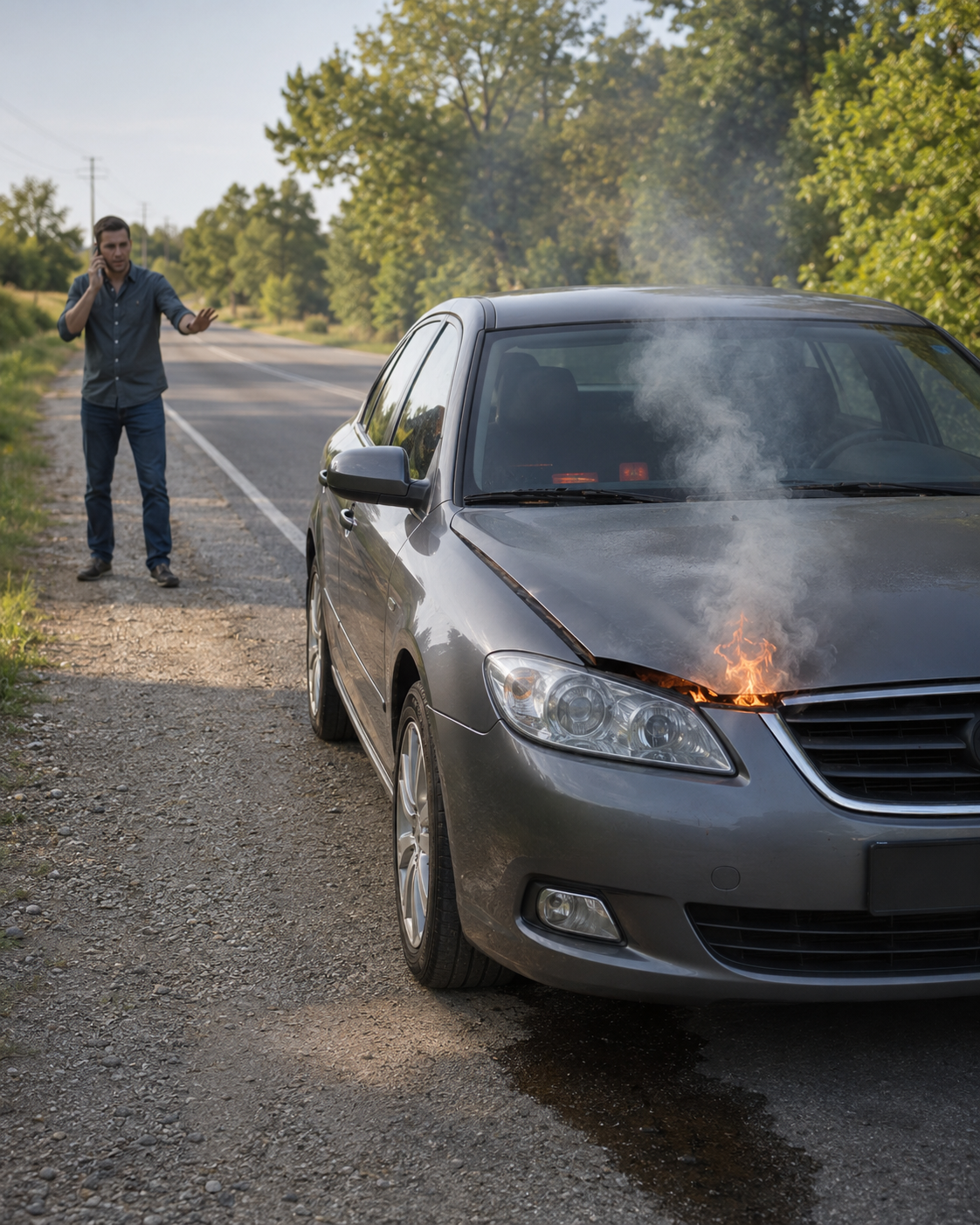
What Causes Car Fires? 7 Major Causes and Warning Signs Drivers Should Know
Minjin Park
·
A car fire can begin with something as small as a damaged wire, a cracked fuel hose, or oil dripping onto a hot engine component. At first, there may be only a strange smell or a thin trail of smoke. Within minutes, however, the fire can spread through plastic, upholstery, wiring, fuel, and other combustible materials.
Vehicle fires are more common than many drivers realize. The U.S. Fire Administration reported an estimated 211,500 vehicle fires in 2024, although the category includes more than passenger cars. The agency identifies mechanical problems, electrical failures, and crashes as common causes. Its national data also show that many incidents are classified as unintentional rather than deliberately set fires. U.S. Fire Administration
Understanding what causes car fires can help drivers recognize trouble before a small defect becomes an emergency. It can also prevent two dangerous reactions: ignoring warning signs and trying to investigate a burning vehicle at close range.
Here are seven major causes of car fires, the symptoms that may appear beforehand, and the steps every driver should know.
A vehicle contains several fluids that can burn when they reach a sufficiently hot surface or encounter a spark. Gasoline is the most obvious concern, but engine oil, transmission fluid, power-steering fluid, and brake fluid can also contribute to a fire.
These fluids normally remain inside sealed lines, reservoirs, and engine components. Trouble begins when a hose becomes brittle, a connection loosens, a seal fails, or a component is damaged during a crash or repair. A leaking fluid may drip or spray onto the exhaust manifold, catalytic converter, electrical components, or other high-temperature areas.
Possible warning signs include:
A gasoline or chemical odor inside or around the vehicle
Rainbow-colored, brown, red, or oily spots beneath the car
A sudden drop in a fluid level
Smoke coming from under the hood
Unexplained increases in fuel consumption
A burning-oil smell after driving
Visible wetness around hoses or engine components
Never use a lighter, match, or other flame to inspect a suspected leak. If you smell gasoline strongly, turn off the engine when it is safe, keep ignition sources away, exit the vehicle, and arrange for professional inspection or towing.
A leak does not have to be large to be dangerous. Fluid sprayed as a fine mist can spread across hot components, while a slow leak may accumulate unnoticed until driving conditions create enough heat for ignition.
2. Electrical Short Circuits and Damaged Wiring
Modern vehicles contain extensive wiring, computers, sensors, motors, entertainment systems, and charging ports. Electricity is present even when the engine is not running because the battery continues to supply certain circuits.
Damaged insulation can allow a wire to contact metal or another conductor. The resulting short circuit may generate intense heat or sparks that ignite wire insulation, carpet, plastic trim, leaked fluid, or nearby debris.
A fuse is a safety device designed to interrupt excessive electrical current. Replacing a repeatedly blown fuse with one rated for a higher current does not repair the underlying problem. It can allow the wiring to overheat before the circuit is interrupted.
Watch for flickering lights, electrical accessories that operate unpredictably, repeated fuse failures, a hot-plastic odor, sparks, or smoke near the dashboard or battery. These symptoms require prompt attention from a qualified technician.
Some electrical defects can cause a fire while a vehicle is parked and turned off. For example, NHTSA has issued “park outside” recall warnings involving electrical connections, starter relays, power-seat motors, and other components that could overheat. That is one reason recall notices should never be treated as ordinary advertising mail.
3. Mechanical Failures and Overheated Components
Mechanical problems are among the leading factors in highway vehicle fires. According to a National Fire Protection Association vehicle-fire report, vehicle fires most commonly begin in the engine, running gear, or wheel area.
An overheated engine does not automatically mean the car will catch fire. However, excessive heat can damage seals, hoses, wiring, and surrounding parts. If combustible fluid then escapes onto a hot component, the risk becomes much more serious.
Other mechanical problems can create fire-producing heat through friction. Examples include a seized bearing, dragging brake, underinflated tire, damaged wheel assembly, or failing belt. On larger vehicles and trailers, overheated wheel hubs and brakes can be particularly dangerous.
A catalytic converter and other exhaust components can also become extremely hot. Parking over dry grass, leaves, paper, or other combustible material may allow heat from the exhaust system to ignite the material beneath the vehicle.
If the temperature warning appears, stop driving as soon as you can do so safely. Continuing to drive an overheating vehicle may turn a repairable mechanical problem into severe engine damage or a fire hazard.
4. Crashes and Damage to Fuel or Electrical Systems
Most collisions do not result in fires, but a severe impact can damage several protective systems at once. Fuel lines may rupture, a gasoline tank may be punctured, wiring can be crushed, and batteries may be physically damaged. Hot engine components, electrical sparks, and leaking fluids can then exist in the same area.
Fire after a crash can be especially dangerous because occupants may be injured, disoriented, unconscious, or unable to open a door. The vehicle may also be resting against a barrier or another car, making escape more difficult.
Older U.S. Fire Administration data found that collisions were involved in a relatively small portion of all highway vehicle fires but accounted for a much larger share of fatal fires. This does not mean every crash will cause a fire. It shows why rapidly leaving a damaged vehicle is important when there is smoke, flame, a strong fuel odor, or fluid pouring onto the road. U.S. Fire Administration report
After a collision, do not touch exposed wiring or damaged battery components. If the vehicle is electric or hybrid, assume high-voltage parts remain energized. Move to a safe location and tell emergency dispatchers what type of vehicle is involved.
5. Poor Maintenance and Aging Parts
A car rarely catches fire simply because it is old. The problem is that rubber hoses, plastic connectors, seals, insulation, and wiring can deteriorate with age, heat cycles, vibration, corrosion, and mileage.
An older vehicle that receives regular inspections may be safer than a newer one with damaged wiring or neglected leaks. Still, aging vehicles deserve extra attention because small failures are more likely to develop in multiple systems.
Routine maintenance can uncover:
Cracked or swollen fuel hoses
Oil leaking from worn gaskets
Loose electrical connections
Corroded battery terminals
Damaged exhaust heat shields
Debris trapped in the engine compartment
Worn belts and pulleys
Dragging brakes or overheated wheel components
Maintenance quality matters as well. A missing fastener, poorly routed hose, loose oil cap, spilled fluid, or incorrect electrical modification can introduce a new hazard. After repairs, investigate any new odor, smoke, fluid spot, or warning light rather than assuming it is normal.
The NFPA notes that older vehicles account for a substantial share of fires caused by mechanical or electrical failures, reinforcing the importance of maintenance throughout a vehicle’s service life.
6. Unrepaired Safety Recalls and Manufacturing Defects
Some vehicle fires are connected to design or manufacturing defects that an individual owner could not reasonably detect. A defective relay may overheat, a brake-fluid leak may reach an electrical circuit, or a battery component may fail internally.
Manufacturers and NHTSA issue recalls when a vehicle or component presents an unreasonable safety risk. The repair is normally performed without charge, even when the vehicle has been sold to another owner.
Drivers can enter their 17-character Vehicle Identification Number at the NHTSA recall website or use the SaferCar app to check for open safety recalls. This is especially important after buying a used vehicle because recall notices may have gone to the previous owner.
Take instructions such as “park outside,” “do not charge,” or “do not drive” literally. These warnings are reserved for defects with potentially serious consequences. Do not wait for smoke or a warning light if the manufacturer has already identified a fire risk.
7. High-Voltage Battery Damage in Electric and Hybrid Vehicles
Electric vehicles do not carry gasoline, but they contain many of the same combustible interior materials and low-voltage electrical parts found in conventional cars. They also have a high-voltage battery system that can present different hazards if severely damaged, overheated, improperly manufactured, or affected by an internal failure.
A damaged lithium-ion cell may enter thermal runaway, a self-heating process that can spread from one cell to another. Battery problems can release heat and flammable or toxic gases. In some circumstances, smoke or fire may appear after a delay rather than immediately after a collision.
This does not mean every damaged EV will catch fire or that EVs should automatically be considered more fire-prone than gasoline vehicles. The important difference is how a compromised high-voltage battery behaves and how emergency responders manage it.
NHTSA’s electric and hybrid vehicle guidance advises drivers to assume high-voltage batteries and related components are energized. Physical battery damage may result in an immediate or delayed release of flammable gases or fire.
After a serious crash, flooding, underbody impact, or suspected battery damage:
Do not touch exposed cables or battery components.
Do not attempt to disconnect the high-voltage system yourself.
Move away if you notice hissing, popping, unusual heat, smoke, sparks, or a sweet or chemical odor.
Call 911 if there is smoke or fire.
Follow the manufacturer’s instructions regarding towing, storage, inspection, and charging.
Warning Signs You Should Never Ignore
A car fire may occur without much warning, but many incidents are preceded by signs that something is wrong. Stop in a safe location and investigate through a professional when you notice:
Smoke from the hood, dashboard, wheels, or underbody
A strong gasoline smell
Burning plastic, rubber, or oil odors
Fluid leaking beneath the vehicle
Repeatedly blown fuses
Flickering electrical equipment
Sudden engine overheating
Sparks or melted wiring
Flames, even if they appear small
Unusual heat around a wheel or charging connection
Do not open the hood if you believe a fire has already started underneath it. Lifting the hood can introduce additional oxygen and cause the fire to grow rapidly.
How to Reduce the Risk of a Car Fire
No maintenance plan can prevent every fire, but several habits can reduce avoidable risks:
Repair fluid leaks promptly.
Investigate warning lights and overheating instead of continuing to drive.
Have electrical accessories installed correctly with suitable fuses.
Never replace a fuse with one of a higher rating unless the manufacturer specifies it.
Keep the engine compartment free of leaves, nesting material, and oily rags.
Avoid parking over dry vegetation.
Inspect an older vehicle regularly.
Check for safety recalls using the VIN.
Follow manufacturer instructions for EV charging equipment.
Have a vehicle inspected after a major collision, flood, or underbody impact.
Store gasoline and other flammable liquids in approved containers, not routinely inside the passenger compartment.
A small automotive-rated fire extinguisher may be useful in limited situations, but it should never encourage someone to remain near a spreading vehicle fire. Escape comes first.
What to Do If Your Car Catches Fire
If you see flames or smoke suggesting an active fire, pull over as quickly as traffic conditions safely allow. Turn off the engine, get every occupant out, and move well away from the car and passing traffic.
The U.S. Fire Administration recommends moving everyone at least 100 feet from the burning vehicle, calling 911, and never returning to the car. It also advises against opening the hood or trunk when a fire may be inside because doing so can make the fire grow.
Do not return for a phone, wallet, luggage, or pet carrier. Help children and anyone with limited mobility exit immediately. Once everyone is away, warn approaching people without placing yourself in traffic or near the burning vehicle.
Car fires often begin with ordinary-looking problems: a minor leak, a warning light, an unreliable electrical accessory, or a repair that keeps being postponed. Knowing the major causes of car fires helps you recognize when a vehicle needs attention—and when it is time to stop driving, get out, and call for help.
Have you ever noticed smoke, a burning smell, an overheating warning, or another possible fire sign while driving? What did you do, and what do you wish you had known at the time? Share your experience in the comments below—it may help another driver respond more safely.
Hi, I’m the creator and editor behind ZestyHabit. I research everyday safety, first aid, and practical wellness topics using official guidance and reliable public sources, then turn that information into clear, realistic steps for daily life.
My goal is to help readers make safer, better-informed choices at home and beyond.