High-Concentration Teeth Whitening Gel: Oral Burns, Irritation, and Safe Use
Minjin Park
·
High-strength teeth whitening gel can burn gums and irritate teeth. Learn warning signs, first aid, safer use, and when to call a dentist.
A brighter smile can feel like a quick confidence boost, which is why strong whitening gels are so tempting. Online listings often promise “professional” results in one session, and some users assume a higher peroxide percentage simply means faster, better whitening.
That assumption can lead to painful mistakes.
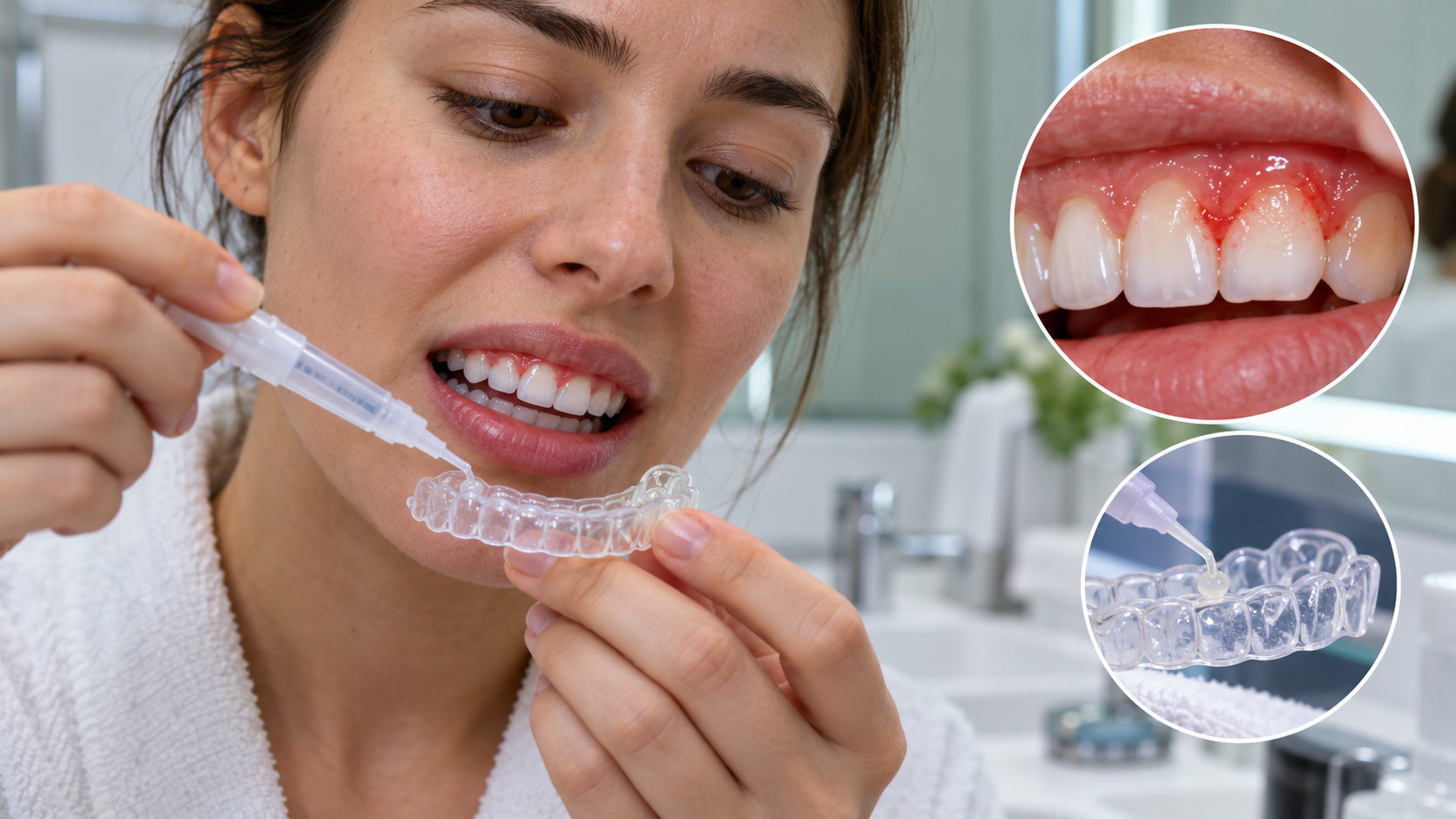
High-concentration teeth whitening gel can irritate the gums, lips, tongue, throat, and sensitive tissue under the tongue. If gel leaks from an ill-fitting tray, is applied too generously, or remains in place too long, it may cause a chemical burn. It can also trigger sharp tooth sensitivity that makes cold air, water, or food uncomfortable.
Peroxide whitening is not automatically dangerous. It has been used successfully in dentistry for years. The risk rises when a strong product is used without an oral examination, proper gum protection, accurate dosing, or professional instructions. The American Dental Association identifies temporary tooth sensitivity and gum inflammation as the most common adverse effects of vital tooth whitening.
This guide explains how whitening gels work, what a mouth burn may look and feel like, what to do after accidental exposure, and how to whiten more safely.
Most chemical whitening products use hydrogen peroxide or carbamide peroxide. These ingredients are related, but their percentages are not directly interchangeable. Carbamide peroxide releases roughly one-third of its content as hydrogen peroxide, so a product labeled 30% carbamide peroxide is not the same as 30% hydrogen peroxide.
Over-the-counter strips and gels generally contain lower concentrations than dentist-prescribed or in-office systems. Dentist-supervised home trays may use about 10% to 38% carbamide peroxide, while in-office “power bleaching” can use concentrated hydrogen peroxide for a shorter, controlled application. Strength, contact time, delivery method, and gum protection all matter—not just the number on the syringe.
A gel is especially risky for unsupervised home use when it is intended for professional application, comes with vague directions, is transferred into an unmarked syringe, or does not clearly identify its active ingredient and concentration.
Never assume that a short treatment makes a strong gel harmless. Applying extra product, repeating sessions too closely, sleeping in a gel meant for brief use, or combining several whitening products can increase exposure and irritation.
How Whitening Gel Can Burn the Mouth
Peroxide whitening works through oxidation: reactive oxygen molecules interact with colored compounds in enamel and dentin. Peroxide can pass through dental hard tissues, which helps explain both its whitening effect and its ability to trigger sensitivity.
The gums and inner lips are much more vulnerable than enamel. When concentrated gel sits against soft tissue, the area may turn white or pale, sting, feel rough, or later peel. This temporary whitening is often called blanching.
A small white patch that appears after brief contact and fades after the gel is removed may be mild irritation. Intense pain, blistering, persistent discoloration, ulceration, swelling, bleeding, or trouble swallowing suggests a more significant injury.
Gel commonly reaches the gums because too much was placed in the tray, a one-size-fits-all tray does not fit properly, overflow was not wiped away, or the product was worn longer than directed. The ADA notes that gum irritation is commonly linked to gel contact, poorly fitting trays, or improper application of the gel or protective barrier.
Oral Burn or Normal Whitening Sensitivity?
Tooth sensitivity and a soft-tissue burn are different problems, although they may occur together.
Whitening-related sensitivity often feels like a quick electric “zing” inside one or more teeth. Cold drinks, sweets, or breathing through the mouth may trigger it. Stronger concentrations and greater exposure can raise the risk, and sensitivity often develops early in a whitening program. It is usually temporary, but severe or localized pain needs dental evaluation because decay, cracks, exposed roots, leaking fillings, or pulp irritation may be involved.
A chemical burn affects the gums or other soft tissue. Warning signs include burning where the gel touched, white or gray gum tissue, redness after the white patch fades, peeling, swelling, blistering, or pain while eating and brushing.
Mild irritation often improves after whitening is stopped. A painful lesion that is worsening, spreading, or not clearly improving should not be dismissed as a normal cosmetic side effect.
What to Do If Whitening Gel Burns Your Gums
Stop the session as soon as burning begins. Do not “push through” the discomfort to complete the recommended time.
Remove the tray, strips, or applicator. Spit out the remaining gel, then rinse your mouth repeatedly with plenty of room-temperature water. Gently remove visible gel from the lips or surrounding skin and rinse that area too. Do not scrub damaged gum tissue.
Do not try to neutralize peroxide with vinegar, lemon juice, baking soda, alcohol, mouthwash, or another chemical. These products may cause additional irritation. Never place aspirin directly on the gums.
For the rest of the day, choose cool or lukewarm drinks and soft, bland foods. Avoid spicy, acidic, salty, very hot, or crunchy foods. Pause all whitening until the tissue has healed.
Contact a dentist promptly for significant pain, blistering, an open sore, bleeding, marked swelling, or symptoms that do not begin improving. Urgent assessment is also appropriate when severe pain seems to come from inside a tooth or is concentrated in one tooth.
If a child is exposed, a large amount is swallowed, the product is highly concentrated, or the concentration is unknown, contact a poison center for individualized advice. In the United States, Poison Control is available at 1-800-222-1222. Do not induce vomiting. High concentrations or large swallowed amounts can cause burns to the mouth, esophagus, or stomach; rare oxygen-related complications can be life-threatening.
Call emergency services immediately for trouble breathing, chest pain, confusion, collapse, seizure, severe throat swelling, or inability to wake the person.
What If Gel Gets in the Eyes?
Remove contact lenses and rinse the eye continuously with plenty of room-temperature running water for 15 to 20 minutes. Encourage blinking, but do not rub the eye.
After rinsing, contact Poison Control or seek urgent medical advice. Persistent pain, redness, tearing, blurred vision, swelling, or sensitivity to light requires an urgent eye examination. With a high-concentration product or severe symptoms, seek emergency care after irrigation.
Who Should Talk to a Dentist First?
A dental examination matters because not every dark tooth is a cosmetic stain. A single tooth that has turned gray or brown may reflect trauma, decay, nerve damage, or another condition that ordinary whitening cannot safely correct.
Professional advice is especially important if you have cavities, cracked teeth, gum disease, receding gums, exposed roots, mouth sores, recent oral surgery, existing sensitivity, braces, or a history of reactions to whitening products.
You should also ask a dentist about whitening if you have crowns, veneers, bonding, fillings, dentures, or implants. Whitening affects natural teeth but does not lighten tooth-colored restorations, which can leave an uneven result. The NHS also advises against whitening when teeth or gums are unhealthy and notes that it is not recommended during pregnancy or breastfeeding.
How to Use Whitening Gel More Safely
The safest way to use strong whitening gel is under a dentist’s supervision. A dentist can identify decay, gum inflammation, cracks, exposed dentin, and restorations before treatment. Custom trays fit closely and help limit contact between gel and the gums. Both the ADA and NHS emphasize professional assessment and properly fitted delivery systems as important safety measures.
Follow the instructions for the exact product and concentration. Do not borrow a wearing time from another brand or copy a social media routine.
Use only the recommended amount. More gel does not guarantee better whitening; it mainly increases overflow. After inserting a tray, wipe away any gel that reaches the gums as directed. A hospital patient guide notes that correct dosing and removing excess gel can reduce gum irritation.
Do not exceed the stated application time or frequency. Never sleep in a product unless it was specifically prescribed and labeled for overnight use. Do not add extra sessions before an event.
Avoid stacking treatments. Combining a strong gel with strips, bleaching pens, abrasive charcoal, acidic DIY mixtures, and aggressive whitening toothpaste can increase irritation without providing a controlled result. The ADA reports insufficient evidence that charcoal-based products safely and effectively whiten teeth and describes concerns with abrasive or acidic DIY methods.
Stop if you develop more than mild, brief sensitivity or gum irritation. Store the gel as labeled, keep it in its original container, and keep it away from children and pets. Do not use expired gel, a leaking syringe, or a product with unclear labeling.
Reducing Tooth Sensitivity
For mild sensitivity, a break of a day or longer may help. Dentist-supervised plans may shorten sessions, lower the concentration, or switch to alternate-day use. A Leeds Teaching Hospitals guide advises reducing frequency when teeth become very sensitive and notes that sensitivity commonly improves after whitening stops.
A toothpaste for sensitive teeth may be useful, particularly one containing potassium nitrate or fluoride. Brush gently with a soft toothbrush and lukewarm water, and avoid very cold drinks during an active episode.
Do not place pain medicine directly on a tooth or the gums. Ask a dentist before putting desensitizing gel in a whitening tray.
Strong, prolonged, throbbing, or one-tooth pain should be examined. Whitening may have exposed an underlying dental problem rather than caused ordinary temporary sensitivity.
When Can You Start Again?
Do not restart while the gums are white, red, sore, peeling, swollen, or ulcerated. Wait until the mouth looks and feels normal, then discuss the reaction with a dentist—especially when a high-strength product caused it.
A safer restart may require a lower concentration, less gel, shorter contact, longer breaks, or a better-fitting tray. Sometimes whitening should wait until cavities, gum disease, cracks, or exposed roots are treated.
A previous burn is evidence that the delivery method, dose, or treatment time was not safe for you. Repeating the same routine is likely to cause another injury.
The Bottom Line
High-concentration teeth whitening gel can produce noticeable results, but it leaves less room for error. Gum blanching, burning, peeling, and sharp sensitivity are signs that exposure may be excessive or poorly controlled. Stop treatment, remove the product, rinse thoroughly with water, and seek professional advice when pain or tissue injury is significant.
The goal is not to use the strongest gel you can find. It is to improve tooth color without damaging the teeth or delicate tissues around them. A dental examination, a clearly labeled product, a well-fitting tray, a measured dose, and strict adherence to the recommended contact time are far safer than improvising with professional-strength chemicals at home.
Have you ever experienced gum whitening, burning, or severe sensitivity after using a bleaching gel? Share the type of product you used, how long the symptoms lasted, and what helped in the comments. Your experience may help another reader recognize a problem early and whiten more safely.
Hi, I’m the creator and editor behind ZestyHabit. I research everyday safety, first aid, and practical wellness topics using official guidance and reliable public sources, then turn that information into clear, realistic steps for daily life.
My goal is to help readers make safer, better-informed choices at home and beyond.