Bleach Spilled on Skin: Immediate First Aid, Chemical Burn Signs, and Mistakes to Avoid
Minjin Park
·
Learn what to do when bleach spills on your skin, how long to rinse, when to seek medical help, and which dangerous first-aid mistakes to avoid.
Bleach is so common in laundry rooms, kitchens, and bathrooms that it is easy to forget it is a reactive chemical. A small splash of diluted household bleach may cause only temporary dryness or irritation, but concentrated bleach or prolonged contact can result in a chemical burn.
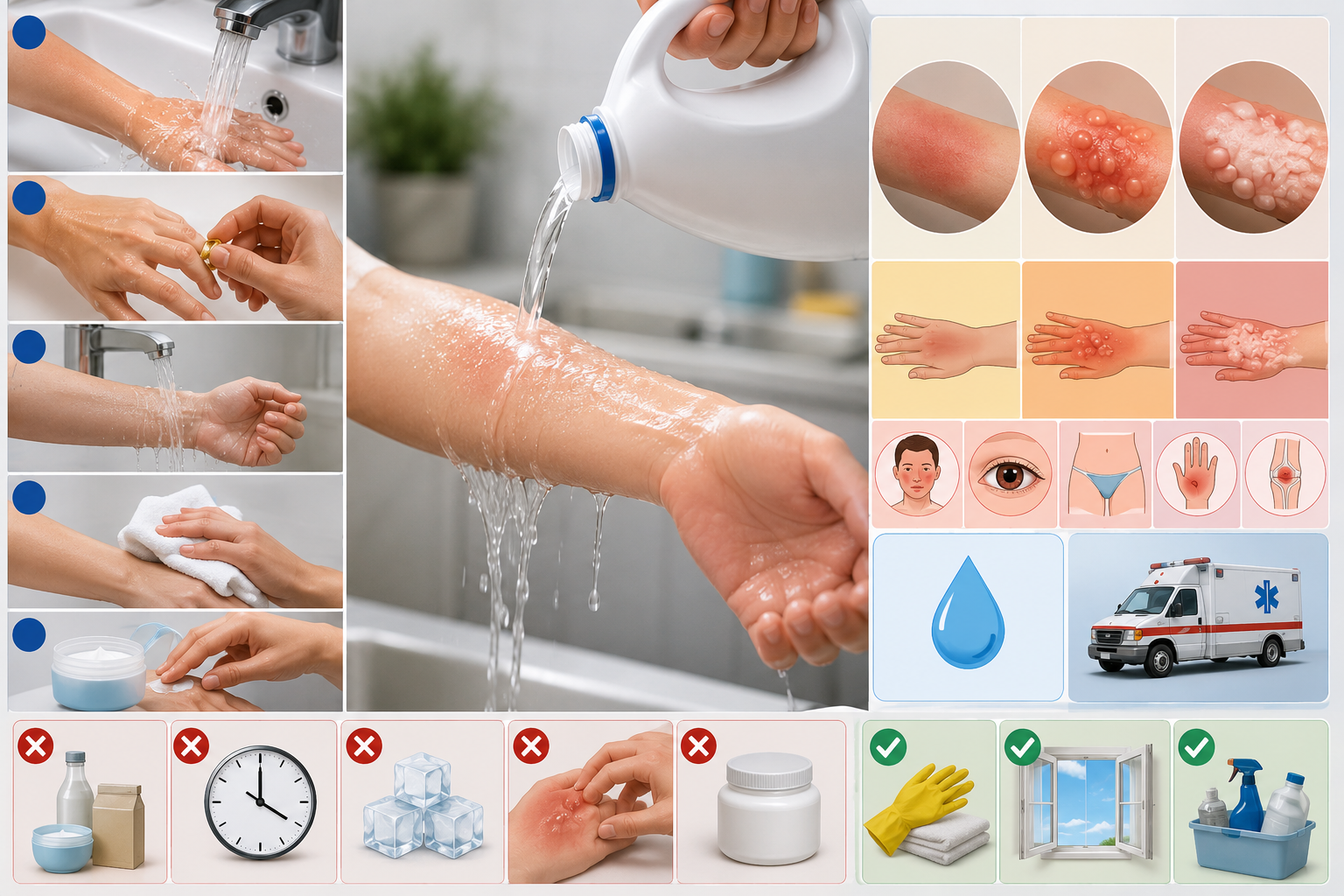
If bleach spills on your skin, act immediately. Remove contaminated clothing and rinse the affected area under plenty of room-temperature or lukewarm running water for at least 15 minutes. Mild soap can help remove material that remains on the skin, but do not scrub. Never try to neutralize bleach with vinegar, lemon juice, ammonia, or another cleaner.
Seek urgent medical care if you develop severe or increasing pain, blistering, significant swelling, numbness, skin discoloration, breathing difficulty, or an injury involving the eyes, face, genitals, hands, or a large area of the body.
This guide explains the correct first-aid steps, the symptoms of a bleach burn, and the common mistakes that can make an exposure more dangerous.
Most household chlorine bleach contains sodium hypochlorite. Its concentration varies by product, while industrial, commercial, and pool products may be much stronger than ordinary laundry bleach.
Sodium hypochlorite can damage the skin by disrupting proteins and natural oils. The severity of an injury depends on several factors:
The bleach concentration
The amount spilled
How long it remained on the skin
Whether it became trapped beneath clothing, gloves, jewelry, or a watch
The size and location of the exposed area
Whether the skin was already cut, irritated, or affected by dermatitis
Whether bleach was mixed with another chemical
The person’s age and overall health
Household bleach at typical concentrations is often described as a mild-to-moderate irritant, but it can still cause inflammation or a chemical burn with prolonged exposure. Industrial bleach may contain far higher concentrations of sodium hypochlorite and should be treated more seriously.
The UK Health Security Agency advises removing contaminated clothing and washing affected skin with lukewarm water and soap for at least 10 to 15 minutes following sodium hypochlorite exposure. (UKHSA sodium hypochlorite guidance)
What to Do Immediately When Bleach Spills on Your Skin
1. Stop the exposure
Move away from the container or spill. If fumes are present, especially after bleach has been mixed with another cleaner, get to fresh air immediately.
Do not remain in an enclosed bathroom or laundry room while trying to clean the spill if the air is irritating your eyes, nose, throat, or lungs. Avoid reentering until the area is safe and well ventilated.
2. Remove contaminated clothing and accessories
Take off any clothing, shoes, gloves, watch, rings, or jewelry that may hold bleach against the skin. The longer the chemical remains trapped, the more tissue damage it can cause.
If a soaked shirt would need to be pulled over the face, cut it away when this can be done safely. This reduces the risk of transferring bleach to the eyes, mouth, and hair.
Protect your own hands if you are assisting someone else. Avoid touching the wet portions of contaminated clothing with bare skin.
3. Rinse immediately with running water
Place the exposed skin beneath plenty of room-temperature or lukewarm running water. Continue rinsing for at least 15 minutes.
For a large spill, use a shower. Make sure water flows away from unaffected areas rather than carrying the bleach across more of the body.
Do not postpone rinsing while looking for a special antidote. Water is the most important immediate treatment. MedlinePlus recommends flushing skin or eyes exposed to sodium hypochlorite with large amounts of water for at least 15 minutes. (MedlinePlus sodium hypochlorite guidance)
If pain or a slippery chemical feeling remains after 15 minutes, continue rinsing while obtaining professional advice.
4. Use mild soap if needed
After the initial water rinse has begun, mild hand or body soap can help remove bleach that remains on the skin. Apply it gently and rinse thoroughly.
Do not scrub with a rough washcloth, sponge, brush, or exfoliating product. Friction can further damage irritated tissue and increase chemical penetration through broken skin.
5. Dry the area gently
After rinsing, pat the skin dry with a clean, soft towel. Do not rub.
If the skin is only mildly dry or irritated, leave it uncovered and observe it. If there is blistering, broken skin, or a more serious burn, cover the area loosely with clean, nonstick material while seeking medical care.
Do not apply medication, burn cream, oil, butter, or an occlusive ointment unless a healthcare professional advises it.
6. Check the product label
Keep the bleach container or take a clear photograph of the label. Useful information includes:
Product name
Active ingredients
Sodium hypochlorite concentration
Time of exposure
Approximate amount spilled
Body area involved
Whether another chemical was mixed with it
Symptoms that have developed
Contact your local poison center or healthcare professional for product-specific advice, particularly after exposure to concentrated bleach, pool chemicals, industrial products, or multiple cleaning agents.
How Long Should You Rinse Bleach Off the Skin?
Rinse for at least 15 minutes with plenty of running water. The product label or a poison specialist may recommend a longer rinse for concentrated products or continuing symptoms.
Do not count the time spent wiping the skin with a wet cloth as part of the rinse. Running water is more effective because it continuously carries the chemical away.
For a very small splash that is removed immediately, symptoms may resolve quickly. Even so, a complete rinse is safer than assuming the exposure was too minor to matter.
If bleach remains trapped under a ring, glove, shoe, or tight garment, remove the item while rinsing. Swelling can later make jewelry difficult to remove.
What Does a Bleach Burn Look and Feel Like?
Mild exposure may cause:
Dryness
Tight-feeling skin
Mild redness
Itching
Temporary stinging
A slippery sensation before rinsing
A more significant chemical injury may cause:
Persistent or increasing pain
Intense burning
Marked redness
Swelling
Blisters
Peeling
White, gray, brown, or darkened skin
Numbness or reduced sensation
Open sores
Tissue damage extending beyond the surface
Chemical burns do not always look severe immediately. Damage can continue after the initial splash if bleach remains on the skin or soaked clothing is not removed.
Numbness is not reassuring. A deep burn may damage nerve endings, making the area feel less painful than expected.
When to Seek Emergency Medical Care
Obtain emergency help after rinsing if the person:
Has trouble breathing
Develops chest tightness, wheezing, or severe coughing
Collapses, has a seizure, or cannot be awakened
Has severe or rapidly worsening pain
Has a large or deep burn
Develops extensive blistering
Has black, gray, or white skin discoloration
Has bleach in the eyes
Was exposed to concentrated industrial or pool bleach
Was exposed to bleach mixed with ammonia, acid, or another cleaner
Has burns covering a large portion of the body
Shows confusion, weakness, or fainting
Prompt medical evaluation is also important when the burn affects the:
Face
Eyes
Mouth
Genitals
Hands
Feet
Major joints
Broken or diseased skin
Children, older adults, pregnant people, and individuals with significant skin or respiratory conditions may need a lower threshold for professional assessment.
What to Do If Bleach Gets in the Eyes
Eye exposure is more urgent than a small skin splash because sodium hypochlorite can injure the cornea and other delicate tissues.
Immediately:
Begin rinsing with clean lukewarm water.
Hold the eyelids open.
Let water flow gently across the eye rather than directly blasting it.
Remove contact lenses if they come out easily after rinsing has started.
Continue irrigation for at least 15 minutes.
Do not rub the eye.
Do not use redness-relief drops or chemical neutralizers.
Seek urgent medical advice after flushing.
Do not delay rinsing to remove contact lenses. Start with water first, then remove the lenses when possible.
Persistent pain, blurred vision, light sensitivity, redness, or tearing requires urgent professional evaluation. NIOSH advises immediate irrigation with large amounts of water after chemical eye contact. (NIOSH chemical first-aid procedures)
What If Bleach Fumes Were Inhaled?
Bleach itself has an irritating odor, but the inhalation risk becomes much greater when it is mixed with another cleaner.
Bleach mixed with acids—including vinegar and some toilet-bowl or rust-removal products—can release chlorine gas. Mixing bleach with ammonia can create chloramine gases. Both can injure the respiratory tract.
Possible symptoms include:
Burning eyes or nose
Sore throat
Coughing
Chest tightness
Wheezing
Shortness of breath
Nausea
Headache
Dizziness
Move to fresh air immediately. Do not reenter the contaminated space to retrieve objects or continue cleaning. Ventilate the area only if this can be done without additional exposure.
Call emergency services for difficulty breathing, severe coughing, chest pain, confusion, fainting, or blue-gray lips. Respiratory symptoms can occasionally worsen after the initial exposure, so persistent symptoms require medical assessment.
The CDC warns that household bleach can release dangerous vapors when mixed with other cleaning products. (CDC bleach-safety guidance)
What If Bleach Was Swallowed?
Do not induce vomiting. Vomiting can expose the throat and mouth to the chemical a second time and may allow bleach to enter the lungs.
Do not automatically give vinegar, lemon juice, baking soda, activated charcoal, food, or large amounts of liquid. Obtain immediate instructions from a poison center or healthcare professional because recommendations depend on the product, concentration, amount, age, and symptoms.
Call emergency services immediately if the person has:
Difficulty breathing or swallowing
Repeated vomiting
Severe mouth, throat, chest, or abdominal pain
Drooling
Confusion
A seizure
Reduced alertness
Never give anything by mouth to someone who is unconscious, seizing, vomiting repeatedly, or unable to swallow safely.
Dangerous Mistakes to Avoid
Do not neutralize bleach with vinegar
Vinegar is acidic. Mixing it with chlorine bleach can release chlorine gas, creating an inhalation emergency in addition to the skin exposure.
The same warning applies to lemon juice, toilet-bowl cleaner, rust remover, and other acidic products.
Do not use ammonia
Bleach and ammonia can produce toxic chloramine gases. Ammonia may be present in glass cleaners, multipurpose cleaners, urine, and some other household products.
Scrubbing can worsen tissue damage. Use gentle soap and plenty of flowing water.
Do not apply ice directly
Ice can damage already injured skin and reduce local blood flow. Use room-temperature or lukewarm water, not ice water.
Do not cover the chemical before rinsing
Ointments, oils, creams, and tight bandages can trap bleach against the skin. Remove the chemical with water first.
Do not delay for photographs or online research
Documenting the product may be useful, but rinsing comes first. Take photographs only after decontamination has begun or ask someone else to photograph the label.
Do not assume gloves guarantee protection
Bleach can enter through torn gloves or spill inside a cuff. Remove contaminated gloves carefully and rinse the hands.
Do not judge severity by smell
A weak odor does not prove that the product is dilute, and strong fumes do not tell you exactly how much contacted the skin. Use the label and exposure history.
How to Handle Contaminated Clothing
Remove contaminated clothing promptly and keep it away from children and pets.
For a small household splash, rinse the clothing separately and wash it according to the product and garment instructions. Do not combine it with other cleaning chemicals.
If clothing is heavily soaked with concentrated, industrial, or unknown bleach, place it in a secure container and obtain disposal instructions from the product manufacturer, workplace safety officer, or local hazardous-waste authority.
Shoes, watchbands, gloves, and jewelry may retain liquid in seams or beneath tight surfaces. Clean them according to their material and the chemical label before wearing them again.
Caring for the Skin After a Mild Exposure
If redness and discomfort resolve after thorough rinsing, monitor the area over the next 24 to 48 hours.
Use a gentle, fragrance-free cleanser and avoid:
Exfoliation
Hot showers
Hair-removal products
Retinoids or acids
Alcohol-based products
Strong fragrances
Sun exposure on irritated skin
Once the bleach has been completely removed and the skin is intact, a plain fragrance-free moisturizer may help with dryness. Do not apply moisturizer over blisters, open wounds, or a suspected deep chemical burn without medical advice.
Seek care if symptoms return, worsen, or fail to improve.
Preventing Future Bleach Exposures
Bleach injuries are often preventable.
Read the entire label before use.
Wear chemical-resistant gloves when directed.
Use eye protection when splashing is possible.
Keep the room well ventilated.
Use only the recommended dilution.
Pour slowly and below eye level.
Never transfer bleach into a beverage container.
Keep it in its original labeled bottle.
Store it away from children and pets.
Keep bleach separate from acids and ammonia.
Do not combine leftover cleaning solutions.
Wash your hands after removing gloves.
Follow workplace safety data sheets for concentrated products.
If a spill occurs, block access to the area and clean it only after the exposed person has been decontaminated and the room is safe to enter.
Frequently Asked Questions
Will a small splash of household bleach permanently damage skin?
A small splash removed immediately often causes only mild dryness or irritation. Prolonged contact, concentrated products, or bleach trapped under clothing can cause a more serious burn.
Can I put aloe vera on a bleach burn?
Rinse first. Do not apply aloe, oil, or burn cream until the chemical has been completely removed. For blistered or broken skin, ask a healthcare professional before applying topical products.
Why does bleach make the skin feel slippery?
Bleach can react with oils and proteins on the skin, creating a slippery sensation. Do not keep rubbing to remove it; continue rinsing with water and use mild soap gently.
Should I go to the hospital if the redness disappears?
Not necessarily after a minor exposure that fully resolves, but continue monitoring the skin. Seek medical advice for persistent pain, blistering, discoloration, numbness, concentrated bleach exposure, or injury to a sensitive body area.
Is splashless bleach safer for skin?
No bleach product should be considered safe for skin contact. Splashless products may contain additional ingredients and still require immediate rinsing. Follow the specific product label.
Final Thoughts
When bleach lands on the skin, speed matters more than finding a special remedy. Remove contaminated clothing, rinse with plenty of running water for at least 15 minutes, wash gently with mild soap, and never attempt chemical neutralization. Persistent pain, blistering, discoloration, eye involvement, breathing symptoms, or exposure to concentrated bleach requires professional help. Have you ever dealt with an accidental bleach splash, and which first-aid step surprised you most? Share your experience or safety tip in the comments below.
Hi, I’m the creator and editor behind ZestyHabit. I research everyday safety, first aid, and practical wellness topics using official guidance and reliable public sources, then turn that information into clear, realistic steps for daily life.
My goal is to help readers make safer, better-informed choices at home and beyond.