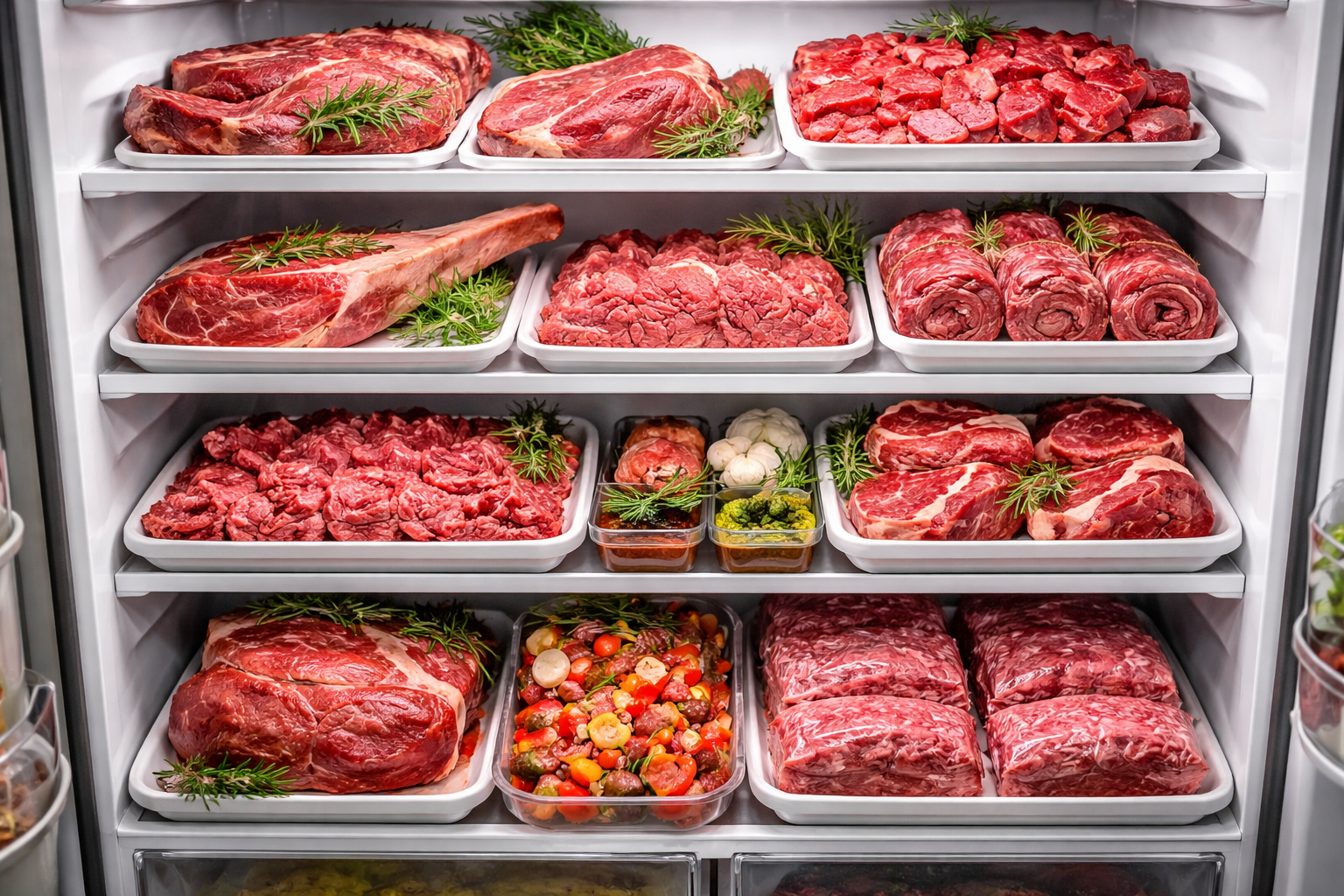
Beef has a way of feeling like the most satisfying thing on the table.
A steak dinner feels substantial. A beef bowl is quick and comforting. Burgers are convenient, familiar, and hard to resist. For many people, beef is not just another protein. It is the default choice when they want something filling, flavorful, and easy to build a meal around. That is exactly why it can quietly become a habit rather than an occasional preference.
Most people do not sit down and decide, I am going to eat too much beef. It usually happens gradually. A breakfast sandwich with sausage or beef topping, a lunch burger, a beef stir-fry at dinner, then maybe a late-night snack built around processed meat. Add in restaurant meals, delivery, social gatherings, and convenience foods, and beef can start showing up far more often than people realize.
The issue is not that beef is automatically “bad.” It is more complicated than that. Beef can provide protein, iron, vitamin B12, zinc, and other nutrients. For some people, it can absolutely fit into a balanced diet. The real question is what happens when it shifts from being one food among many to being something you rely on almost every day, sometimes more than once a day.
That is when it becomes worth stepping back and asking a few honest questions.
A lot of conversations about food get stuck in extremes. People want to know whether something is healthy or unhealthy, good or bad, safe or dangerous. But nutrition rarely works that way in real life. Much of the impact of a food depends on how often you eat it, how much of it you eat, how it is prepared, and what it replaces in your diet.
Eating beef sometimes is not the same as eating it constantly.
When beef appears too often, one concern is not just what you are consuming, but what you may be crowding out. If beef is your regular go-to, are you eating fewer beans, lentils, fish, eggs, tofu, chicken, or plant-based meals? Are you getting enough fiber-rich foods, or is your plate built mostly around meat and refined carbs? Are vegetables becoming side decoration rather than a real part of the meal?
This is where people can miss the bigger picture. The problem may not start with beef alone. It may start with dietary imbalance.
Saturated fat adds up quietly
One of the first things to consider when eating beef frequently is saturated fat.
Not every cut of beef contains the same amount, of course. Lean beef is different from highly marbled ribeye, fatty short ribs, or processed beef products. But if a person regularly chooses richer cuts, larger portions, or heavily processed versions, saturated fat can accumulate quickly.
This matters because a diet consistently high in saturated fat may not be ideal for long-term heart health, especially when paired with a sedentary lifestyle, low fiber intake, smoking, stress, or an already elevated cholesterol level. Many people do not notice this happening because there is no immediate warning sign. You do not feel your cholesterol rising after a week of burgers. These effects are often quiet, gradual, and easy to ignore until a routine health check reveals the pattern.
The tricky part is that beef meals often come packaged with other heavy foods. Think cheeseburgers with fries, creamy sauces, buttery mashed potatoes, or late-night barbecue with alcohol and salty sides. So even when beef is not the only issue, it can be part of a broader eating pattern that is harder on the body than people realize.
Processed beef is a separate conversation
It is also important to distinguish fresh beef from processed beef.
When people say they eat a lot of beef, they may not just mean steaks or home-cooked dishes. They may mean deli meats, jerky, bacon-beef combos, sausages, hot dogs, meatballs, frozen convenience meals, fast food patties, or instant foods with beef flavoring and preserved meat content. These products often bring extra sodium, preservatives, additives, and more hidden calories than people expect.
That changes the conversation.
A homemade lean beef dish with vegetables is not nutritionally identical to a processed beef-heavy fast food routine. Yet in everyday life, people sometimes lump them together as simply “protein.” The body does not experience them the same way.
If you find yourself eating beef often, it is worth asking not only how much, but what kind. Fresh and minimally processed choices are one thing. Highly processed meat-centered meals every week are another.
Digestive comfort can change over time
Another point people sometimes overlook is how their body actually feels after frequent beef consumption.
Some people digest beef easily. Others notice that large or frequent beef meals leave them feeling heavy, sluggish, bloated, or unusually thirsty. Rich cuts, greasy preparation methods, or oversized portions can sit in the stomach longer and make meals feel harder to recover from, especially at night.
This is not necessarily a sign that beef is harmful in itself. But it can be a useful clue about portion size, meal balance, and frequency. If you regularly feel weighed down after beef-heavy meals, that may be your body’s way of telling you the pattern is not working as well as you think.
The same applies to bowel habits. Diets that rely heavily on meat while neglecting vegetables, whole grains, fruit, legumes, and water can contribute to constipation or general digestive discomfort. In that case, the issue is not just beef. It is the lack of balance surrounding it.
Iron is beneficial, but more is not always better thinking
Beef is often praised for its iron content, especially heme iron, which the body absorbs efficiently. That can be a real benefit for people who struggle with low iron levels. But like many nutrition topics, more is not always automatically better.
If someone eats beef very often under the assumption that more iron must mean more health, they may be oversimplifying things. Nutrition is not a race to maximize one nutrient at all costs. The body needs variety. Over-focusing on one “good” feature of a food can make people blind to the bigger dietary picture.
It is also common for people to use health justifications selectively. Someone might say, “I eat a lot of beef because I need the protein and iron,” while ignoring the fact that the same pattern also comes with too much sodium, too few vegetables, too little fiber, and excessive calories overall.
A food can contain valuable nutrients and still become excessive when eaten too often.
Portion size can distort everything
One of the biggest reasons beef becomes a problem is portion creep.
Restaurant servings are often much larger than what people would serve themselves at home. Even home portions can drift upward over time. What starts as a reasonable serving can become a large steak, double patties, extra meat in soups, extra meat in rice bowls, and “protein-heavy” meals that are actually oversized.
Because beef is dense and satisfying, it can easily dominate the plate. Once that becomes normal, vegetables shrink, grains expand in the least helpful ways, and the meal stops being balanced. People may still think they are eating “a normal dinner,” but their idea of normal may have shifted.
This is one reason food habits are worth revisiting once in a while. You may not need to eliminate anything. You may simply need to recognize that your default serving sizes have changed without you noticing.
Cost is part of the health conversation too
People do not always think of cost as a nutrition issue, but it matters more than it seems.
Frequent beef consumption can raise grocery and dining expenses significantly, especially if a person prefers premium cuts, eats out often, or orders beef-based dishes by default. That financial pressure can indirectly affect the rest of the diet. Someone may spend heavily on meat, then cut corners on produce, quality snacks, seafood, nuts, or better ingredients elsewhere.
This creates a strange imbalance where the most expensive item on the plate gets prioritized, but the overall quality of eating does not necessarily improve.
Health is not only about nutrients on paper. It is also about whether your eating pattern is sustainable in real life, financially and practically.
Environmental and ethical questions may come up
For some people, eating beef frequently also brings environmental or ethical concerns into the picture.
Not everyone prioritizes these issues in the same way, but it is fair to acknowledge that food choices can carry broader implications beyond personal nutrition. Some people start rethinking their beef intake not because of immediate health fears, but because they are trying to reduce environmental impact, diversify food sources, or make choices that feel more aligned with their values.
This does not mean a person has to become vegetarian overnight. It simply means frequency matters here too. Reducing beef from “all the time” to “sometimes” can feel more realistic and still meaningful.
Often, the most sustainable food changes are not dramatic ones. They are the ones people can actually live with.
Convenience can disguise routine overuse
Another thing worth considering is how convenience shapes habit.
Beef is heavily built into fast food menus, ready-made meals, restaurant dishes, and comfort foods. That makes it easy to choose without much thought. And when something is easy, tasty, and familiar, repetition starts to feel normal.
This is where people can confuse preference with dependence. You may think you simply enjoy beef, when in reality you may have stopped exploring other satisfying protein options because beef is the easiest answer. Habit has a powerful way of disguising itself as genuine desire.
One helpful question is this: If beef were less available for a week, what would I eat instead? If you cannot easily answer that, your diet may be less flexible than you think.
Dietary flexibility matters. It makes healthier choices easier, reduces boredom, broadens nutrient intake, and keeps any one food from taking over your routine.
Eating too much beef can dull awareness of meal quality
When beef becomes the centerpiece too often, people can start evaluating meals by one standard only: Was it satisfying?
But satisfaction is only part of the equation.
A meal can be filling and still be too salty, too fatty, too low in fiber, too low in plant foods, and too repetitive over time. Many beef-centered meals are designed to feel indulgent and comforting, which is part of their appeal. But that same appeal can make people less critical of the overall quality of what they are eating.
A double cheeseburger may feel like a “real meal,” while a grain bowl with beans, vegetables, avocado, and a lighter protein may be unfairly seen as less substantial. That perception can keep people locked into patterns that are emotionally satisfying in the moment but less balanced in the long run.
Sometimes the issue is not hunger. It is expectation.
What balance might actually look like
For many people, the answer is not cutting out beef entirely. It is reducing automatic reliance on it.
That might mean rotating proteins throughout the week instead of defaulting to beef every time. It might mean choosing leaner cuts more often, reducing portion size, or saving richer beef meals for occasions when you will really enjoy them instead of treating them like a daily baseline. It might mean pairing beef with more vegetables, beans, or whole grains so the meal is not built around meat alone.
Balance can also mean paying attention to how you feel after eating. Are you energized, comfortably full, and satisfied? Or heavy, thirsty, sluggish, and still craving more? Those responses matter.
People sometimes assume healthy eating requires strict rules, but often it begins with more honest observation. Noticing frequency. Noticing portion size. Noticing what your habits are replacing.
Questions worth asking yourself
If you suspect beef has become too frequent in your routine, a few simple questions can be surprisingly revealing:
Do I eat beef because I truly want it, or because it is my default? Am I eating fresh beef, processed beef, or both? How often does it show up in a typical week? What foods am I eating less of because beef takes the lead? How do I feel physically after beef-heavy meals? Would my overall diet improve if I replaced even a few of those meals?
These questions are not meant to create guilt. They are meant to restore awareness.
That is often the first thing routine takes away.
Final thoughts
Eating beef too often is rarely about one dramatic mistake. It is usually about accumulation. A little too much, a little too often, for a little too long.
The concern is not that beef has no place in a healthy diet. It is that any food, when repeated without much thought, can start to narrow the diet, distort portions, and push balance out of view. With beef, the things to think about include saturated fat, processed meat intake, meal quality, digestion, cost, variety, and the quiet way habits shape health over time.
The goal is not fear. It is perspective.
A diet does not become healthier because one food is labeled good or bad. It becomes healthier when it is varied, intentional, and sustainable. So if beef has become your everyday answer, it may be worth stepping back and asking whether it still serves you as well as you assume.
Sometimes the healthiest shift is not a dramatic cut. It is simply making room on the plate for more than one kind of answer.
Hi, I’m the creator and editor behind ZestyHabit. I research everyday safety, first aid, and practical wellness topics using official guidance and reliable public sources, then turn that information into clear, realistic steps for daily life.
My goal is to help readers make safer, better-informed choices at home and beyond.