Why Brain Damage Can Begin Just 4 Minutes After Cardiac Arrest
Minjin Park
·
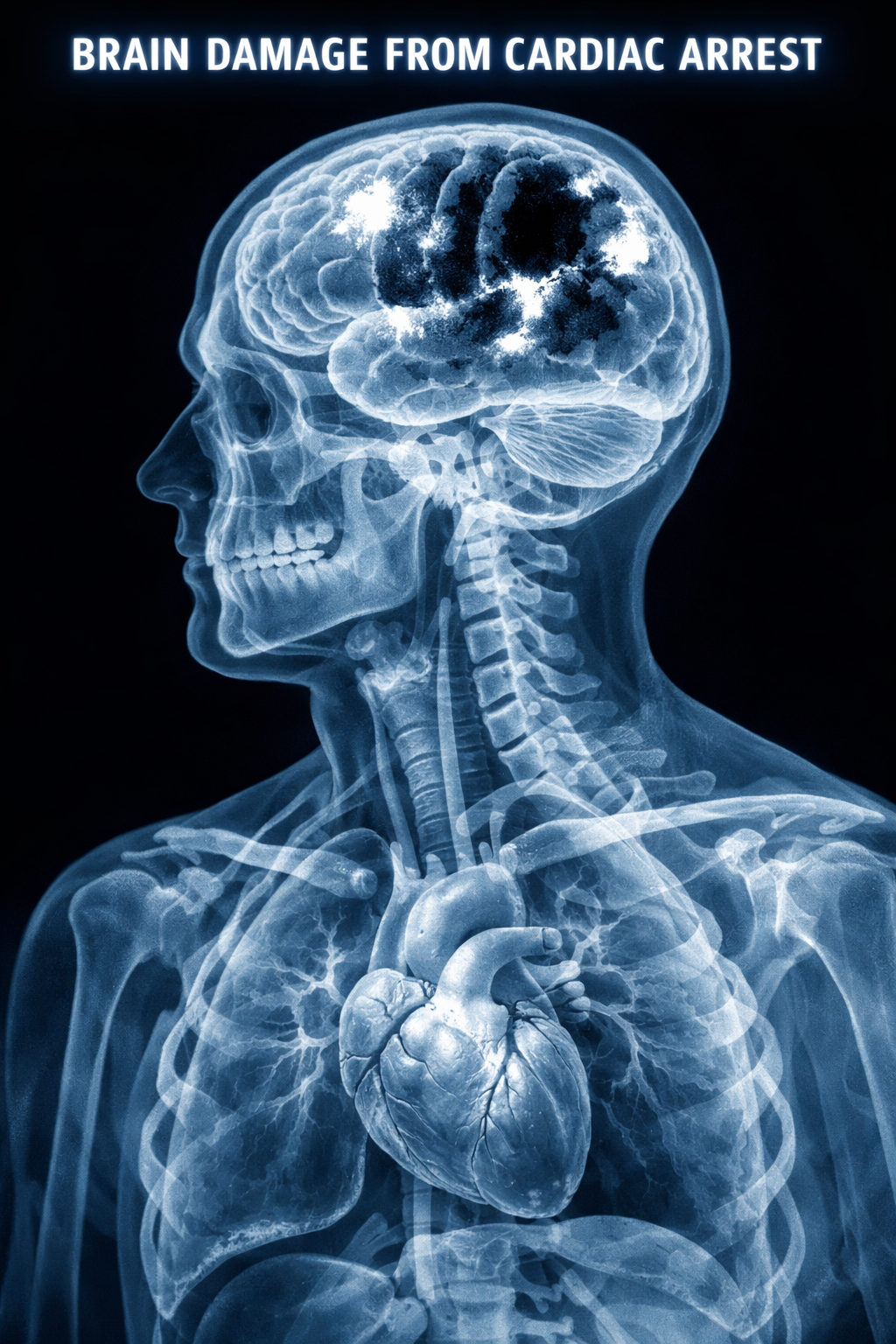
Most people have heard some version of this warning: if the heart stops, brain damage can begin in about four minutes. It sounds dramatic, almost like one of those oversimplified medical facts that gets repeated so often it starts to feel like folklore. But in this case, there is a very real physiological reason behind it.
The human brain is astonishingly powerful, but it is also fragile. It runs constantly, every second of the day, and it depends on a continuous supply of oxygen and glucose delivered by the bloodstream. Unlike some other tissues in the body, the brain has almost no meaningful reserve. It cannot store much oxygen. It cannot afford long pauses. So when the heart suddenly stops pumping, the brain is one of the first organs to feel the consequences.
That is why the first few minutes after cardiac arrest matter so much.
In this post, let’s break down what really happens inside the body after cardiac arrest, why the “4-minute rule” is such an important benchmark, and why immediate CPR and defibrillation can make the difference between recovery and permanent injury.
Cardiac arrest is not the same thing as a heart attack, even though the two are often confused.
A heart attack happens when blood flow to part of the heart muscle is blocked. The heart may still be beating during a heart attack, even if the person is in serious danger.
Cardiac arrest is different. It means the heart suddenly stops pumping blood effectively. This can happen because of a dangerous arrhythmia such as ventricular fibrillation, or because the heart simply stops functioning in a coordinated way. When that happens, blood flow to the brain, lungs, and the rest of the body drops to almost zero.
A person in cardiac arrest will usually collapse, become unresponsive, and stop breathing normally. From that moment on, the body is in a race against time.
Why the brain is so vulnerable
The brain only makes up a small percentage of total body weight, but it consumes a huge share of the body’s energy. Even at rest, it uses roughly 20% of the body’s oxygen supply. That is an enormous demand for an organ that cannot “power down” the way muscles or other tissues can.
Neurons, the specialized cells that make up the brain and nervous system, are highly active. They rely on a steady supply of oxygen to produce ATP, the molecule that powers cellular processes. ATP is essential for maintaining ion gradients across cell membranes, transmitting nerve signals, and keeping cells alive.
The moment circulation stops, that energy system starts to fail.
The brain does not have a backup tank of oxygen sitting in reserve. It depends almost entirely on the blood that is moving through it right now. So when the heart stops, oxygen delivery stops too. Within seconds, brain function begins to change. Within minutes, brain cells begin to suffer injury.
This is the core reason behind the 4-minute warning: the brain’s dependence on uninterrupted blood flow leaves almost no margin for error.
What happens in the first few minutes after the heart stops?
To understand why brain damage can begin so quickly, it helps to look at the timeline.
Within seconds: consciousness is lost
When the heart stops pumping, blood pressure crashes. The brain is suddenly deprived of oxygen and glucose. Because brain activity is so energy-intensive, this drop is felt almost immediately.
Within about 5 to 10 seconds, most people lose consciousness. That is why sudden collapse is such a classic sign of cardiac arrest.
This is not because the brain is already permanently damaged. It is because the brain can no longer sustain normal function without circulation.
Within 1 minute: electrical failure begins
Even if the person appears still, there is a great deal happening at the cellular level.
Neurons rely on ion pumps to maintain the delicate balance of sodium, potassium, and calcium across their membranes. These pumps require ATP. When oxygen stops arriving, ATP production falls sharply. Without enough energy, the ion pumps begin to fail.
As a result, cells lose their electrical stability. Communication between neurons breaks down. Membranes depolarize abnormally. Calcium begins to accumulate inside cells, which is a major problem because excess intracellular calcium can activate destructive enzymes and trigger cell death pathways.
This is the beginning of a biochemical cascade that gets worse the longer the brain is deprived of blood flow.
Around 3 to 4 minutes: injury risk rises sharply
This is the point most often referenced in emergency medicine.
By around four minutes without effective circulation, brain cells are under extreme stress. Oxygen deprivation has lasted long enough that cellular structures begin to fail more seriously. The toxic cascade accelerates. Swelling can begin. Glutamate, an excitatory neurotransmitter, may be released in excessive amounts, causing what is known as excitotoxicity. In simple terms, neurons become overstimulated in a way that damages or kills them.
Not every brain cell dies at exactly four minutes. That is not how biology works. The human body is more variable than a stopwatch. Factors like body temperature, the person’s overall health, whether any CPR is being performed, and the underlying cause of arrest all affect the outcome.
But four minutes is an important threshold because after that point, the likelihood of meaningful brain injury rises significantly.
After 6 to 10 minutes: severe injury becomes much more likely
If no CPR or defibrillation occurs, the odds worsen rapidly. More neurons begin to die. The longer the brain remains without oxygen-rich blood, the harder it becomes to restore normal function, even if the heart is restarted later.
This is why emergency responders and bystanders focus so intensely on immediate action. It is not just about restarting the heart. It is about preserving the brain before irreversible injury sets in.
Why oxygen deprivation harms the brain so fast
The phrase most people hear is “the brain needs oxygen,” but that explanation is only part of the story.
The real problem is that when blood flow stops, the brain loses multiple life-support systems at once:
oxygen delivery stops
glucose delivery stops
waste removal stops
acid balance is disrupted
temperature and metabolic regulation become abnormal
This creates a hostile environment inside the brain very quickly.
Without oxygen, cells switch to anaerobic metabolism, which is much less efficient and leads to lactic acid buildup. As acidity rises, cellular machinery works less effectively. Mitochondria begin to fail. Membranes become unstable. Swelling increases. Free radicals may form. The blood-brain barrier can also become compromised, allowing further damage.
In other words, brain injury after cardiac arrest is not caused by a single event. It is a cascading systems failure.
The “4 minutes” is a guideline, not a magical cutoff
One of the biggest misconceptions is that nothing bad happens for four minutes, and then suddenly brain damage starts all at once.
That is not true.
Brain injury is a process, not a switch flipping on. Damage begins developing almost immediately after circulation stops, but the four-minute mark is used because it represents a clinically meaningful point where the risk starts becoming much more serious.
Some people may have signs of injury earlier. Others may do slightly better, especially if they receive fast CPR. There are rare cases in which people survive longer low-flow states, especially in cold environments where metabolism slows down. Hypothermia, for example, can sometimes buy the brain more time because cooler temperatures reduce oxygen demand.
But in normal circumstances, at normal body temperature, the brain is in real danger within minutes.
So it is best to think of four minutes as an urgent warning, not a guarantee.
Why CPR matters so much
If the heart has stopped, how can CPR help?
CPR does not fully replace the heart’s function, but it can provide a small yet critically important amount of blood flow to the brain and heart. Chest compressions manually squeeze the heart between the sternum and spine and help generate circulation. That circulation is far from normal, but it can be enough to slow brain injury and improve the chance that defibrillation or advanced care will succeed.
This is why immediate bystander CPR is such a major factor in survival outcomes.
Without CPR, the brain may receive almost no blood at all. With good chest compressions, some oxygenated blood continues to move. That can buy time. It can preserve brain tissue. It can keep the heart muscle in a better state for successful resuscitation.
In practical terms, CPR helps stretch the window before irreversible damage becomes overwhelming.
It does not stop time, but it slows the disaster.
Why defibrillation is often the real turning point
In many cases of sudden cardiac arrest, the heart is not simply “stopped” in the way people imagine. Instead, it may be in ventricular fibrillation, where the electrical activity is chaotic and the heart quivers rather than pumps.
That is where an AED, or automated external defibrillator, comes in.
A defibrillator delivers a controlled shock to reset the heart’s electrical system. If used quickly, it can restore an effective rhythm before prolonged oxygen deprivation injures the brain.
This is why public AED access is so important in airports, gyms, schools, office buildings, and other crowded places. Every minute that passes without defibrillation reduces the chance of survival in many shockable rhythms. And even when survival is possible, neurological recovery becomes less likely with delay.
The goal is not merely to get a pulse back. The goal is to get it back soon enough that the brain remains intact.
What happens if the heart is restarted later?
Sometimes people assume that once the heart starts beating again, the crisis is over. Unfortunately, that is not always the case.
Even after circulation returns, the brain may continue to suffer from what is called reperfusion injury. This happens when blood flow is restored to tissue that has been deprived of oxygen. While restoring circulation is absolutely necessary, the sudden return of oxygen and inflammatory activity can paradoxically contribute to further cellular damage.
Doctors managing post-cardiac arrest patients often have to think not only about restarting the heart, but also about protecting the brain afterward. This may involve careful control of oxygen levels, blood pressure, temperature, and other critical factors in the intensive care unit.
That is why some patients regain a heartbeat but still face serious neurological complications.
Can the brain ever recover after longer periods?
Sometimes, yes.
Human outcomes are not perfectly predictable. There are cases where people recover better than expected after prolonged resuscitation, especially when high-quality CPR began early or when special circumstances such as cold-water drowning reduced metabolic demand.
But these are exceptions, not reasons for complacency.
The general rule still holds: the sooner circulation is restored, the better the chance of survival and the better the chance of preserving brain function. Time matters because biology matters.
The real takeaway
The reason brain damage can begin just four minutes after cardiac arrest is simple in principle, even if the underlying biology is complex: the brain is one of the body’s most oxygen-hungry and least forgiving organs.
When the heart stops, blood flow to the brain drops almost instantly. Within seconds, consciousness is lost. Within minutes, energy failure, ion imbalance, excitotoxicity, acidosis, and swelling begin to damage neurons. Around the four-minute mark, the risk of serious brain injury rises sharply. And with every additional minute without intervention, the danger grows.
That is why immediate action is everything.
Call emergency services. Start CPR. Use an AED if one is available. Do not wait for certainty or perfect technique. In cardiac arrest, doing something quickly is almost always better than doing nothing while precious minutes disappear.
People often think of cardiac arrest as a heart problem. In one sense, it is. But it is also a brain emergency. The clock starts the moment circulation stops, and the brain is the organ least able to wait.
That is the real meaning behind the four-minute warning.
It is not just a number.
It is the difference between rescue and irreversible loss.
Hi, I’m the creator and editor behind ZestyHabit. I research everyday safety, first aid, and practical wellness topics using official guidance and reliable public sources, then turn that information into clear, realistic steps for daily life.
My goal is to help readers make safer, better-informed choices at home and beyond.
[…] extreme, harmful response to an infection. Instead of containing the infection, the immune response begins damaging organs and tissues throughout the […]
Loading...
Discover more from
Subscribe now to keep reading and get access to the full archive.



[…] extreme, harmful response to an infection. Instead of containing the infection, the immune response begins damaging organs and tissues throughout the […]