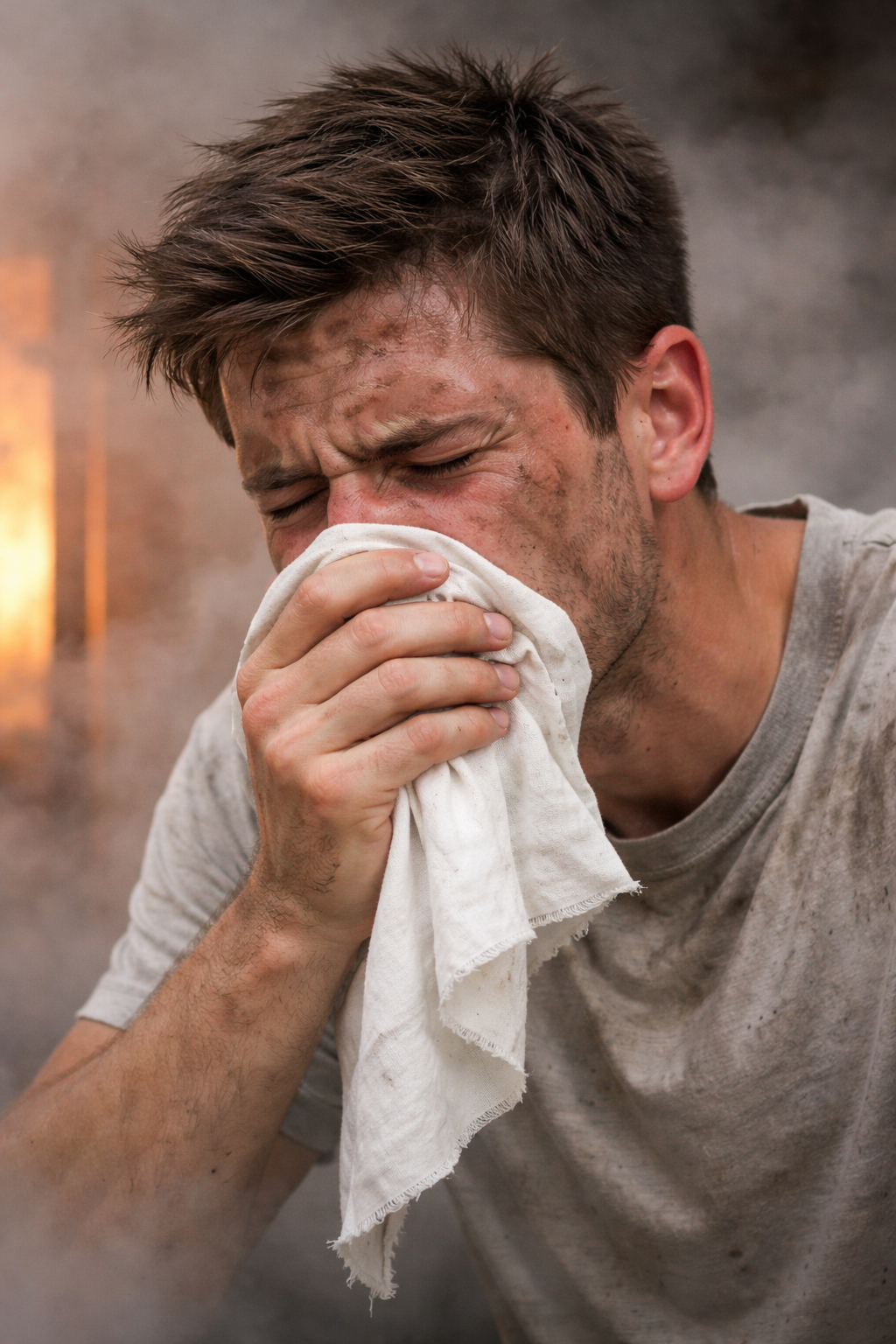
Why Smoke Inhalation Can Be More Dangerous Than Burns
Minjin Park
·
When people think about fire-related injuries, they usually picture flames, scorched skin, and severe external burns. That instinct makes sense. Burns are visible, dramatic, and often devastating. But in many real fire emergencies, the injury that proves deadlier is not what happens on the outside of the body. It is what happens inside the lungs, the airways, and the bloodstream.
That is why smoke inhalation is often more dangerous than burns.
A person can survive serious skin burns with rapid medical treatment, fluid replacement, infection control, and long-term wound care. But smoke inhalation can kill quickly, sometimes before major burns even appear. It can quietly cut off oxygen, damage the airway, poison the blood, and trigger complications that continue long after the fire is out. In other words, burns may be the injury people notice first, but smoke inhalation is often the threat that turns a survivable fire into a fatal one.
Understanding why this happens matters, especially because many people underestimate smoke. They assume that if they are not badly burned, they are relatively safe. In reality, someone exposed to heavy smoke in an enclosed space may be in greater danger than someone with visible burns but less inhalation injury.
Let’s take a closer look at why smoke inhalation is so dangerous, how it harms the body, and why it can be more life-threatening than burns in many fire situations.
One of the main reasons smoke inhalation is so dangerous is that it does not harm the body in just one way. It creates a layered, fast-moving medical crisis.
Burns usually affect tissue at the point of contact. Smoke inhalation, by contrast, can damage the airway, lungs, and oxygen delivery system all at once. It may also expose a person to toxic gases that interfere with breathing at the cellular level.
This means a person is not simply “breathing in dirty air.” They may be suffering from:
heat injury to the airway
irritation and inflammation of the respiratory tract
poisoning from cyanide or other toxic combustion products
reduced oxygen exchange in the lungs
delayed respiratory failure hours after exposure
That combination is what makes smoke inhalation so deceptive. A person may still be talking, walking, or conscious shortly after escaping a fire, yet their airway may be swelling and their blood may already be carrying far less usable oxygen than normal.
Burns are visible. Smoke inhalation often is not.
Another reason smoke inhalation can be more dangerous than burns is that it is easier to miss.
Severe burns demand immediate attention because they are obvious. Skin damage is visible. Pain is immediate. The injury is hard to ignore. Smoke inhalation is different. Some of its most serious effects are internal and initially subtle.
A person may have soot around the nose or mouth, a cough, a hoarse voice, or mild shortness of breath. At first glance, these signs may not seem catastrophic. But inside the airway, heat and toxic particles may already be triggering inflammation. The lining of the throat and bronchi may begin to swell. Chemical irritation may be setting off a chain reaction that gets worse over time.
This is one of the most dangerous things about smoke inhalation: the condition can look manageable before it becomes critical.
A burned arm is painful and alarming. A slowly closing airway is quieter, but far more immediately lethal.
The airway can swell shut
One of the most feared complications of smoke inhalation is airway injury. Hot gases, superheated air, and chemical irritants can damage the mouth, throat, and upper airway. Even if the lungs themselves are not severely burned by heat, the upper airway may become inflamed and swollen.
That swelling can progress quickly.
The problem is that the airway is already a narrow passage. It does not take much swelling to significantly reduce airflow. A person who seems stable at first may develop increasing hoarseness, noisy breathing, or respiratory distress as the airway narrows. In serious cases, the airway can become so compromised that emergency intubation is needed before it closes further.
This is very different from many burn injuries. A burn to the skin may be severe, but it usually does not block the body’s ability to breathe within minutes. Airway swelling can.
That is why fire victims with facial burns, singed nasal hairs, soot in the mouth, or voice changes are treated very seriously. These are warning signs that inhalation injury may be developing even if the external burns appear limited.
Smoke can suffocate without flames ever touching the body
Many people who die in fires are not killed by direct burns at all. They are overcome by smoke before the flames reach them.
This often happens in enclosed spaces such as homes, apartments, hotel rooms, warehouses, and vehicles. As smoke fills the area, visibility drops, breathing becomes difficult, and toxic gases accumulate. A person may become disoriented, weak, confused, or unconscious before they can escape.
This matters because it changes the common image of fire danger. Fire is not only about being burned by flame. It is also about losing breathable air. In many indoor fires, smoke is the first and most immediate killer.
A person trapped in a room may inhale a deadly mix of particles and gases long before direct thermal burns occur. That is one major reason smoke inhalation is often more dangerous than burns: it can incapacitate and kill earlier in the timeline of a fire.
Carbon monoxide turns oxygen into a lie
One of the most dangerous parts of smoke inhalation is carbon monoxide, a colorless, odorless gas produced by incomplete combustion. It is especially dangerous because it interferes with the blood’s ability to carry oxygen.
Hemoglobin, the protein in red blood cells that normally carries oxygen, binds to carbon monoxide much more strongly than it binds to oxygen. When carbon monoxide is present, it effectively crowds oxygen out. Even if a person is breathing, their blood may not be delivering enough oxygen to the brain, heart, and other organs.
This creates a terrifying situation. A person may still be inhaling air, but their body is being starved of oxygen at the tissue level.
Carbon monoxide poisoning can cause headache, dizziness, confusion, weakness, chest pain, loss of consciousness, and death. In a fire setting, it can make escape harder because it impairs judgment and coordination. Someone may not even fully realize how compromised they are until it is too late.
That is one reason smoke inhalation can be more dangerous than burns. A burn injures tissue where it occurs. Carbon monoxide poisoning can quietly compromise the entire body at once.
Cyanide and toxic combustion products make it worse
Modern fires often involve synthetic materials such as plastics, foams, insulation, adhesives, treated fabrics, and household chemicals. When these materials burn, they may release highly toxic compounds, including cyanide.
Cyanide is especially dangerous because it interferes with the body’s ability to use oxygen at the cellular level. In other words, even if oxygen reaches the tissues, cells may not be able to use it properly to generate energy.
Combined with carbon monoxide exposure, this can create a profound oxygen crisis. The body may be getting hit from two directions at once: less oxygen delivery and less ability to use the oxygen that does arrive.
This is why smoke from modern structural fires can be far more dangerous than many people assume. It is not just “smoke.” It is a toxic chemical environment.
Burns are destructive, of course. But toxic inhalation injuries can destabilize the brain, heart, and lungs with shocking speed.
The lungs can keep worsening after the fire
Burn injuries are often most dramatic at the time they happen. Smoke inhalation is dangerous partly because the damage may continue to evolve after the person has already escaped.
The lungs and lower airways can become inflamed over hours. Soot particles and toxins can irritate the bronchial passages and damage the delicate structures responsible for gas exchange. Fluid may begin to accumulate. The small air sacs in the lungs can become less effective at moving oxygen into the bloodstream.
A person who initially seems relatively stable may later develop worsening cough, wheezing, hypoxia, or respiratory failure. Some patients require oxygen, bronchoscopy, mechanical ventilation, or intensive care support.
This delayed deterioration is one of the reasons smoke inhalation must never be brushed off just because the victim looks “mostly okay” at first.
A burn is painful and visible immediately. Smoke inhalation can unfold like a hidden second wave.
Oxygen deprivation injures the most vital organs first
Smoke inhalation becomes deadly so quickly because it disrupts oxygen delivery, and oxygen is the body’s most immediate requirement for survival.
The brain cannot tolerate oxygen deprivation for long. The heart is also extremely sensitive. When smoke inhalation leads to carbon monoxide exposure, airway obstruction, or severe lung dysfunction, the body’s highest-priority organs are among the first to suffer.
This can lead to confusion, collapse, irregular heart rhythms, and cardiac arrest in severe cases. Even survivors may face complications depending on how long oxygen delivery was impaired.
Burns can absolutely be fatal, especially when they are extensive or associated with shock and infection. But smoke inhalation often targets the systems that fail fastest: breathing and oxygenation. That is why it can become lethal before burn-related complications even have time to develop.
Burns can be survivable. An obstructed airway may not be.
This is really the heart of the issue.
With modern medicine, many people survive significant burns. They may need surgery, grafting, rehabilitation, and months of recovery, but survival is often possible, especially when treatment begins early.
An airway that swells shut or lungs that can no longer oxygenate the blood create a much more immediate emergency. Without oxygen, there is only a small window before the brain and heart begin to fail. That timeline is brutally short.
So while burns are undeniably serious, smoke inhalation often becomes the more urgent threat because it attacks the most essential function of all: breathing.
You can live with damaged skin long enough to receive treatment. You cannot live long without usable oxygen.
Smoke inhalation also increases the danger of burns
In many cases, it is not really smoke inhalation versus burns. The two occur together, and smoke inhalation makes burn injuries harder to survive.
A patient with both burns and inhalation injury may be more likely to need intensive care, mechanical ventilation, and advanced airway management. Healing may be more complicated because the body is already under enormous stress. Oxygen delivery issues can worsen tissue injury overall. Infection risk and systemic complications may also rise.
In burn medicine, inhalation injury is often treated as a major marker of severity because it can dramatically worsen the prognosis.
So even when burns are present, smoke inhalation may be the factor that tips the balance from severe injury to critical illness.
Why children, older adults, and trapped victims are at even greater risk
Some people are especially vulnerable to smoke inhalation.
Children have smaller airways, which means swelling can obstruct breathing more quickly. Older adults may have reduced respiratory reserve or underlying heart and lung disease. People with asthma, COPD, or cardiovascular disease may deteriorate faster under smoke exposure. Victims trapped in enclosed spaces often receive higher doses of toxic gases for longer periods.
This is another reason smoke inhalation deserves so much respect. It does not affect every person equally, and vulnerable individuals may look stable until they suddenly are not.
The biggest mistake is underestimating smoke
Perhaps the most dangerous misconception is that smoke is mainly an annoyance unless someone is badly burned.
That is simply not true.
Smoke can disable vision, reduce oxygen, poison the bloodstream, inflame the airway, damage the lungs, and cause delayed collapse. It can kill people who have no major external burns. It can also turn survivable burn injuries into much more dangerous medical emergencies.
This is why firefighters, emergency physicians, and burn specialists pay such close attention to inhalation exposure. They know that what cannot be seen on the skin may be the most life-threatening part of the injury.
The real takeaway
Smoke inhalation can be more dangerous than burns because it attacks the body’s most essential survival systems from the inside out. It can block the airway, poison oxygen transport, damage the lungs, and starve the brain and heart before external burns even become the main issue.
Burns are visible, painful, and often severe. But smoke inhalation is frequently faster, quieter, and more deadly. It can progress even after escape. It can look mild before turning critical. And in many fires, it is the true reason victims do not survive.
That is why, in any fire emergency, the absence of major burns should never be mistaken for safety. Breathing smoke is not a minor side effect of fire exposure. It is one of the most dangerous medical threats the body can face.
In the end, flames are terrifying because we can see them. Smoke is often more dangerous because we cannot fully see what it is doing until the damage is already underway.
Hi, I’m the creator and editor behind ZestyHabit. I research everyday safety, first aid, and practical wellness topics using official guidance and reliable public sources, then turn that information into clear, realistic steps for daily life.
My goal is to help readers make safer, better-informed choices at home and beyond.