Contaminated Seawater and Vibrio Sepsis: Symptoms, Risk Factors, and Prevention
Minjin Park
·
Learn how Vibrio vulnificus in warm coastal water can infect open wounds, cause sepsis, and become life-threatening. Discover warning signs, risk factors, and practical prevention tips.
A day at the beach usually brings to mind sunshine, swimming, and fresh seafood—not a medical emergency. Yet warm coastal water can contain bacteria capable of causing serious illness, especially when they enter the body through an open wound.
One of the most concerning is Vibrio vulnificus. This bacterium can cause rapidly progressing wound infections, bloodstream infections, and sepsis. Although severe infections are uncommon, they can become life-threatening in a remarkably short time. People with liver disease, diabetes, weakened immune systems, and certain other health conditions face the greatest risk.
The phrase “contaminated seawater” can also be misleading. Water does not have to look polluted, smell unpleasant, or contain visible waste to carry Vibrio. These bacteria naturally live in many coastal environments. Understanding where exposure happens, who is most vulnerable, and which symptoms require emergency care can make a critical difference.
Vibrio vulnificus is one of several Vibrio species that can cause illness in humans. According to the Centers for Disease Control and Prevention, Vibrio bacteria naturally live in coastal waters and are generally more abundant from May through October, when water temperatures are warmer.
They can be present in both salt water and brackish water. Brackish water is a mixture of fresh water and salt water, commonly found where rivers meet the sea, in estuaries, and around coastal wetlands.
Most people exposed to Vibrio do not develop a severe infection. However, V. vulnificus is particularly dangerous because it can enter the bloodstream, damage tissue, and trigger sepsis. The CDC reports that approximately one in five people with a serious V. vulnificus infection dies, sometimes within a day or two of becoming ill.
This does not mean families should panic whenever they visit the coast. It means people should treat open wounds, raw shellfish, and rapidly worsening symptoms with appropriate caution.
Clear Seawater Is Not Necessarily Bacteria-Free
Many people decide whether water is safe by looking at its color or clarity. Unfortunately, Vibrio bacteria cannot be seen with the naked eye. A clean-looking beach may still have naturally occurring bacteria in the water.
Warm temperature is an important factor. Vibrio bacteria multiply more readily in warm coastal environments, which is why infections are reported more often during the summer and early fall. Exposure may occur while swimming, fishing, wading, walking along the shore, handling shellfish, or cleaning a catch.
Heavy rain, flooding, hurricanes, and storm surges may also expose people to mixtures of coastal water and floodwater. Any such water should be treated cautiously, particularly when a person has damaged skin.
The most useful question is therefore not simply, “Does the water look dirty?” A better question is, “Do I have an open wound, and do I have a medical condition that increases my risk?”
How Does Vibrio Infection Occur?
There are two primary routes of V. vulnificus infection.
1. Coastal Water Enters an Open Wound
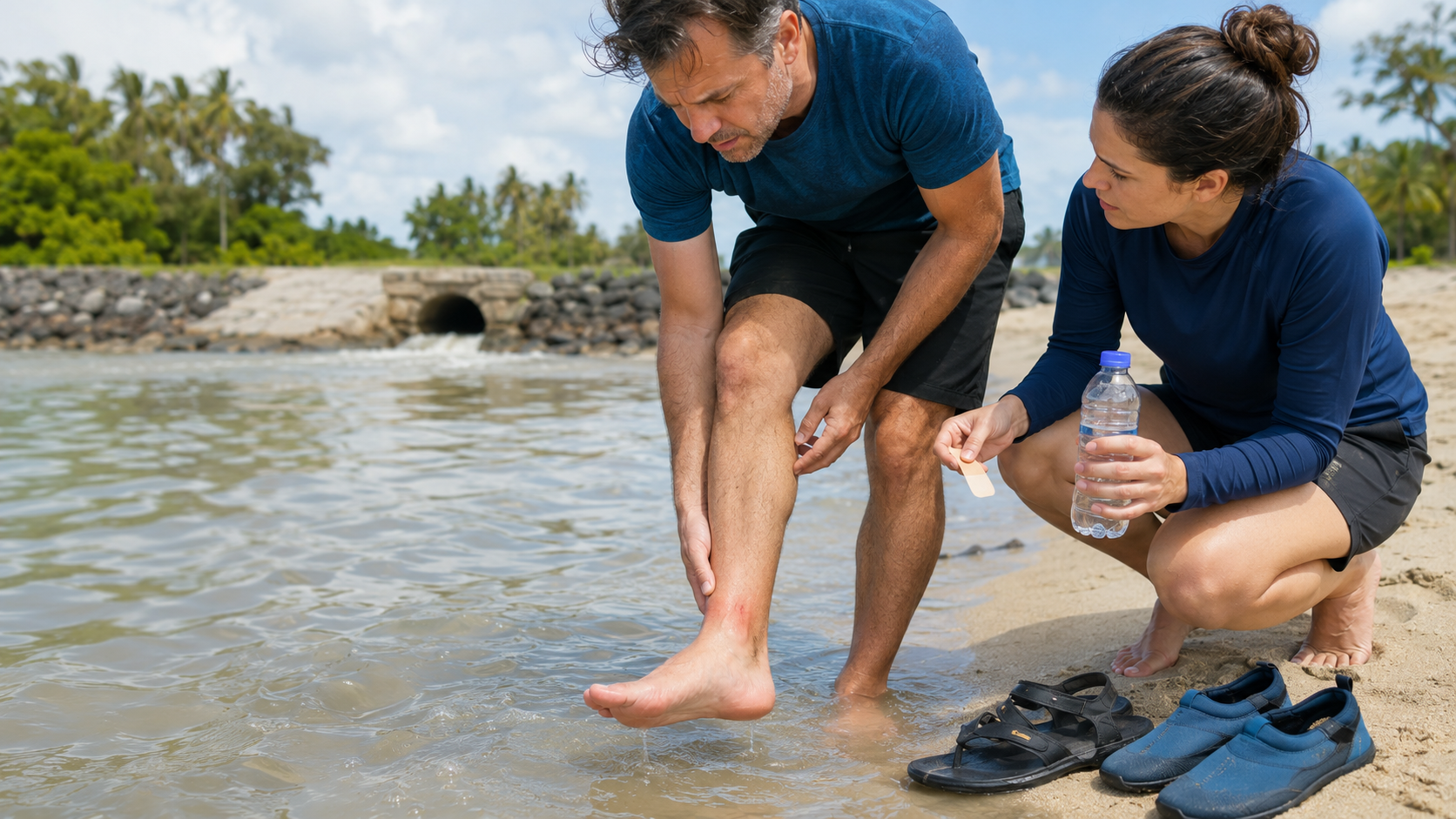
The bacterium can enter through broken skin when a wound comes into contact with salt or brackish water. The injury does not have to be large. A tiny cut on the foot, a scraped knee, a cracked area of skin, or a puncture from a fishhook may provide an entry point.
Open wounds can include:
Recent cuts, scratches, and abrasions
Fresh surgical incisions
New tattoos or body piercings
Blisters that have opened
Cracked or bleeding skin
Burns and ulcers
Injuries caused by shells, rocks, fish fins, or fishing equipment
A person might enter the water with an existing wound or become injured while already in it. Stepping on a sharp shell, for example, can create a wound and expose it to bacteria at the same moment.
Raw seafood can also be a source of wound exposure. Juices or drippings from uncooked shellfish may contaminate a cut on the hand while someone is preparing food.
2. A Person Eats Raw or Undercooked Shellfish
Eating raw or insufficiently cooked seafood—especially oysters—is another major route of infection. Oysters filter large amounts of water as they feed, which can allow bacteria to become concentrated inside them.
An oyster containing V. vulnificus may look, smell, and taste normal. There is no reliable way for a consumer to identify contaminated shellfish through appearance alone. Proper cooking is the safest way to kill harmful bacteria.
In some people, an infection that begins in the digestive system can spread to the bloodstream and cause primary septicemia. This is especially dangerous for people with underlying liver disease or weakened immune defenses.
Blisters, including fluid-filled or blood-filled blisters
Redness or swelling that spreads beyond the original injury
Some infections can develop into necrotizing fasciitis, sometimes described as a “flesh-eating” infection. This condition destroys tissue around muscles, nerves, blood vessels, and fat. It requires immediate hospital treatment and may require surgery.
Do not wait to see whether severe wound symptoms improve overnight. Rapidly increasing pain, spreading discoloration, blistering, or fever after coastal-water exposure should be treated as an emergency.
When Vibrio Infection Leads to Sepsis
Sepsis occurs when the body has an extreme, harmful response to an infection. Instead of containing the infection, the immune response begins damaging organs and tissues throughout the body.
Signs that a Vibrio infection may have entered the bloodstream include:
Call emergency services or go to an emergency department immediately if these symptoms appear after eating raw seafood or exposing a wound to coastal water. Tell the medical team about the possible exposure. A specific statement such as “I had an open cut in warm seawater yesterday” may help clinicians recognize the risk sooner.
The CDC’s clinical guidance emphasizes that suspected severe wound infections should be treated promptly. Medical professionals should not delay necessary treatment while waiting for laboratory confirmation.
Who Is at Higher Risk?
Anyone can develop a wound or gastrointestinal infection, but life-threatening illness is much more likely in people with certain medical conditions.
Higher-risk groups include people with:
Chronic liver disease, including cirrhosis
Diabetes
Cancer
HIV or another condition that weakens immunity
Blood disorders such as thalassemia
A history of stomach surgery
Reduced stomach acid
Treatment with immune-suppressing medication
Chronic alcohol misuse may also be associated with liver damage, even when a person has not yet been diagnosed with liver disease.
People in these groups should be especially careful around raw shellfish and coastal water. If you are unsure whether a medication or health condition raises your risk, ask your doctor before swimming, fishing, or eating raw seafood.
What to Do After a Wound Is Exposed to Seawater
If a cut or scrape comes into contact with salt or brackish water, leave the water and clean the area as soon as possible.
Wash the wound thoroughly with soap and clean running water. Remove visible sand, dirt, or debris without aggressively scrubbing damaged tissue. Cover the area with a clean dressing and monitor it closely.
Seek medical advice promptly if the wound is deep, caused by a fishhook or marine animal, contains material that cannot be removed, or begins showing signs of infection. People in a high-risk medical group should have a lower threshold for contacting a healthcare professional.
A waterproof bandage can reduce exposure, but it is not a perfect guarantee. Bandages may loosen, develop small gaps, or trap water underneath. The safest choice is to stay out of salt and brackish water until an open wound has healed.
Before going to the beach or fishing, check your hands, feet, and legs for cuts, blisters, or cracked skin. Small foot wounds are particularly easy to overlook.
Additional precautions include:
Stay out of salt and brackish water when you have an open wound.
Cover minor wounds with a secure waterproof bandage if exposure might occur accidentally.
Wear protective footwear when walking on rocky shores or near sharp shells.
Use gloves when handling raw seafood, particularly if you have a high-risk condition.
Clean cuts immediately with soap and running water after accidental exposure.
Avoid handling raw seafood with cracked skin or uncovered wounds.
Keep children from entering coastal water with fresh scrapes or open blisters.
Treat storm-surge and coastal floodwater as potentially hazardous.
Fishing enthusiasts should keep a basic first-aid kit nearby. Fish spines, hooks, knives, and shells can all cause punctures or cuts that may be exposed to seawater or raw seafood juices.
Preventing Vibrio Infection From Seafood
Never assume raw oysters are safe because they came from a reputable restaurant or because they smell fresh. Harvesting controls can reduce risk, but raw shellfish cannot be made completely risk-free for vulnerable consumers.
Cook seafood thoroughly and prevent raw juices from touching cooked food, utensils, or preparation surfaces. Wash your hands with soap after handling uncooked shellfish.
The CDC advises boiling shellfish in their shells until the shells open and continuing to boil them for another three to five minutes. When steaming, cook for an additional four to nine minutes after the shells open. Discard shellfish that fail to open during cooking.
Shucked oysters should also be thoroughly cooked. Fish should generally reach an internal temperature of 145°F, or be cooked until the flesh is opaque and separates easily with a fork.
People with liver disease, diabetes, immune suppression, or another major risk factor should avoid raw or undercooked oysters entirely. “Just one” raw oyster can still contain harmful bacteria.
Common Misconceptions About Vibrio
One misconception is that Vibrio infections only happen in obviously polluted water. In reality, the bacteria occur naturally in coastal environments.
Another is that only large wounds are dangerous. Small punctures, scratches, and cracked skin may also allow bacteria to enter.
Some people believe that a healthy-looking oyster must be safe. However, bacterial contamination cannot be reliably detected by looking at or smelling shellfish. Cooking—not visual inspection—is the essential protective step.
Finally, V. vulnificus is not generally spread through ordinary contact with an infected person. The main concerns are direct exposure to coastal water, raw seafood juices, and consumption of undercooked shellfish.
How Doctors Treat Severe Vibrio Infections
Healthcare professionals may collect samples from the wound, blood, or stool to identify the bacterium. However, when a rapidly progressing wound infection is suspected, treatment may begin before test results return.
Serious cases usually require intravenous antibiotics and close hospital monitoring. Surgeons may need to remove dead or infected tissue to stop the infection from spreading. In the most severe cases, amputation may be necessary to save the patient’s life.
Early treatment offers the best chance of recovery. This is why mentioning recent seawater contact or raw shellfish consumption is so important when seeking care.
A Simple Coastal Safety Checklist
Before swimming, fishing, or preparing seafood, remember these four points:
Check your skin. Look for cuts, scrapes, blisters, piercings, or recent surgical wounds.
Avoid unnecessary exposure. Stay out of coastal water until open wounds have healed.
Cook shellfish completely. Do not depend on appearance, smell, or taste.
Act quickly. Seek emergency care for rapidly worsening pain, redness, swelling, blistering, fever, chills, weakness, or confusion.
Severe Vibrio vulnificus infections are rare, but their speed makes awareness essential. A small amount of prevention—checking for wounds, wearing protective gear, and cooking seafood properly—can help keep an enjoyable coastal outing from becoming a medical emergency.
Have you ever entered the ocean with a small cut or received a fishing injury that seemed harmless at first? What precautions do you take around coastal water and raw seafood? Share your experience or your best seaside safety tip in the comments so other readers can learn from it too.
Hi, I’m the creator and editor behind ZestyHabit. I research everyday safety, first aid, and practical wellness topics using official guidance and reliable public sources, then turn that information into clear, realistic steps for daily life.
My goal is to help readers make safer, better-informed choices at home and beyond.