What Really Happens When You Put Metal Containers in the Microwave?
Minjin Park
·
Putting metal containers in the microwave can cause sparks, uneven heating, appliance damage, and fire risk. Learn why metal reacts this way, what types of metal are especially risky, and how to microwave food more safely.
Almost everyone has heard the warning: do not put metal in the microwave.
But in real life, the rule can feel a little confusing.
Some frozen meals come with shiny-looking trays. Some microwave popcorn bags have a thin metallic-looking layer inside. Some people use mugs with gold trim for years without noticing a problem, while others see sparks the first time they accidentally leave a fork on a plate.
So what actually happens when you put a metal container in the microwave?
The simple answer is that metal can reflect microwave energy, create sparks, heat unevenly, damage the appliance, or increase fire risk depending on the shape, size, type, and placement of the metal. A large smooth piece of metal may behave differently from a crumpled foil wrapper or a fork with sharp points. But for everyday home use, the safest habit is clear: unless the container is specifically labeled microwave-safe and the instructions say it is okay, keep metal out of the microwave.
This is not about being dramatic. It is about preventing a common kitchen accident that can happen quickly, especially when people are reheating leftovers, rushing through lunch, or using takeout containers without checking them.
How a Microwave Heats Food
Microwaves Heat Water Molecules in Food
A microwave oven uses electromagnetic waves to heat food. These waves pass into many foods and cause water molecules, and some other molecules, to move rapidly. That movement creates heat.
This is why foods with moisture tend to heat well in the microwave. Soup, rice, vegetables, leftovers, sauces, and drinks usually warm up because they contain water.
The microwave does not heat food the same way a stove or oven does. A regular oven heats the air and the outside of the food first. A microwave sends energy into the food more directly, although not always perfectly evenly.
That is why some parts of a dish may be hot while other parts are still cool.
Metal Behaves Differently
Metal does not absorb microwave energy the same way food does. Instead, it tends to reflect microwaves.
This can interfere with how the oven works. The microwaves may bounce around in unusual ways, preventing food from heating properly or concentrating energy in certain spots.
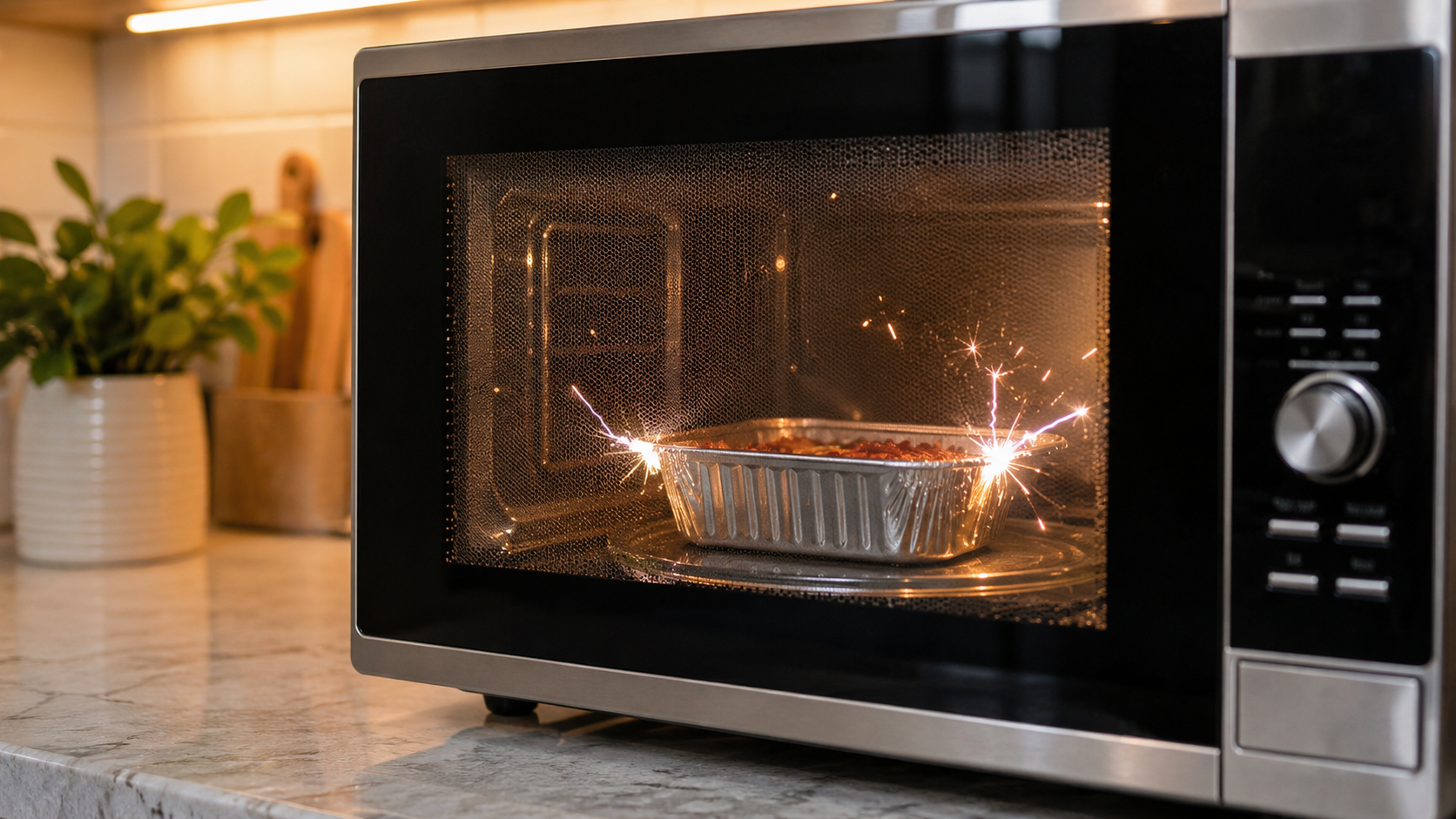
In some cases, metal can also create electrical arcing. That is the bright sparking or flashing people sometimes see inside the microwave.
A little spark may last only a second, but it is still a warning sign. It means the microwave energy is interacting with the metal in a way that is not safe or controlled.
Why Metal Can Spark in the Microwave
Sharp Edges and Points Are a Big Problem
Metal becomes especially risky when it has sharp points, thin edges, or irregular shapes.
Think about:
Fork tines
Crumpled aluminum foil
Twist ties
Metal handles
Thin decorative trim
Wrinkled takeout foil
Broken metal coating
Metal staples
Small metal clips
Sharp points can concentrate electrical energy. When the energy builds up enough, it can jump through the air as a spark. This is called arcing.
That spark can damage the inside of the microwave. It can also ignite paper, grease, food residue, or packaging.
This is why a smooth metal spoon may not behave exactly like a fork, and why a flat, smooth piece of foil may behave differently from crumpled foil. But that does not mean experimenting is safe. The results are unpredictable enough that metal should generally stay out.
Thin Metal Heats and Sparks More Easily
Thin metal pieces are often more troublesome than thick, smooth metal.
Aluminum foil, metallic food wrappers, gold trim, foil-lined paper, and twist ties can heat quickly or spark because they are thin and often have edges or wrinkles.
This is one reason takeout containers can be risky. A container may look like paper or cardboard on the outside, but it may include a thin foil lining, metal handle, or metallic coating.
If you are not sure what the container is made of, transfer the food to a microwave-safe plate or bowl.
What Can Happen If You Microwave a Metal Container?
You May See Sparks
The most obvious sign is sparking.
You might see flashes near the metal, especially around corners, folds, handles, or decorative edges. You may hear popping, crackling, or buzzing.
If this happens, stop the microwave right away. Do not wait to see whether it gets better. Turn it off, let things settle, and carefully remove the item once it is safe to do so.
A single spark does not always mean the microwave is ruined, but repeated sparking can damage the appliance and create a fire risk.
The Food May Heat Unevenly
Because metal reflects microwaves, it can block energy from reaching the food.
If food is inside a metal container, the microwave energy may not penetrate properly. The top might warm slightly while the sides and bottom stay cool. Or one area may become very hot while another remains cold.
This is not just annoying. Uneven heating can be a food safety concern when reheating leftovers, especially meat, poultry, seafood, rice, sauces, and casseroles. Food should be heated thoroughly and stirred or rotated when needed.
Microwaving food in the wrong container makes that harder.
The Container Can Get Hot
Metal can become hot in the microwave, especially if it is thin, small, or near food and steam. A metal container may be much hotter than expected even if the food is not fully heated.
That can lead to burns when someone grabs it quickly.
This is especially common when people reheat takeout containers, foil trays, or metal bowls and assume the container will behave like a microwave-safe dish.
The Microwave Interior Can Be Damaged
Sparks can leave burn marks on the inside walls, door, or waveguide cover of the microwave. The waveguide cover is the small panel inside many microwaves that helps direct microwave energy into the cooking chamber.
If that area gets damaged, the microwave may spark again later even when no metal is inside.
Food splatters, grease buildup, and damaged interior surfaces can also make future problems more likely.
Packaging or Food Residue Can Catch Fire
The metal itself may not always catch fire, but sparks can ignite nearby materials.
Possible fuel sources include:
Paper takeout containers
Napkins
Paper towels
Grease
Food crumbs
Cardboard packaging
Plastic coatings
Wax paper
Dried food splatter
This is why microwave cleanliness matters too. A dirty microwave with grease and old food residue is less forgiving if something sparks.
Common Metal Items People Accidentally Microwave
Aluminum Foil
Foil is one of the most common microwave mistakes.
People may cover leftovers with foil and forget to remove it. Or they may reheat food still wrapped in foil from a restaurant or oven.
Crumpled foil is especially risky because it has many sharp folds and edges. Even a small piece can spark.
If food is wrapped in foil, remove it completely and transfer the food to a microwave-safe dish.
Takeout Containers
Some takeout containers are microwave-safe, and some are not. The problem is that they can look similar.
Be cautious with:
Aluminum trays
Foil-lined cardboard boxes
Containers with metal handles
Containers with shiny metallic interiors
Paper bowls with metallic coating
Lids with foil seals
Sauce cups with foil tops
When in doubt, do not microwave the container. Transfer the food first.
Travel Mugs and Metal Cups
Many travel mugs are made of stainless steel or have metal layers for insulation. These should not go in the microwave.
Even if the outside looks like plastic, the inside may contain metal. Insulated cups, tumblers, thermoses, and metal-lined mugs are not microwave-safe unless clearly labeled otherwise.
Plates and Mugs With Metallic Trim
A ceramic plate may seem safe, but gold or silver trim can be a problem. Decorative metallic paint around the rim can spark, especially if it is worn, cracked, or thin.
This includes some vintage dishes, holiday plates, fancy teacups, and decorative mugs.
If a dish has shiny metallic decoration, avoid microwaving it.
Twist Ties and Metal Clips
Those little twist ties used on bread bags or produce bags often contain a thin metal wire inside.
They can spark quickly in the microwave.
Remove twist ties, clips, staples, and metal fasteners from any packaging before heating.
Utensils Left on a Plate
A spoon, fork, or knife left on a plate is an easy accident. You may place leftovers in the microwave and forget a fork is still there.
Forks are especially risky because the tines create sharp points where sparks can form.
Before pressing start, take one second to check the dish.
Are There Any Times Metal Is Allowed in a Microwave?
This is where people get confused.
Some microwave instructions allow certain types of metal in very specific ways. For example, some microwave-safe packaged foods use susceptor materials that help crisp food. Some microwave ovens may allow a metal rack that came with the appliance. Some frozen meals may include trays designed for microwave use.
But these are controlled designs, not random metal containers.
The important difference is that the manufacturer has tested that specific item for that specific use.
Do not assume a random metal bowl, foil tray, or takeout container is okay just because another product used a metallic-looking piece safely.
What About Microwave Racks?
Some microwaves come with metal racks. That surprises people because they have been told never to use metal.
The key is that those racks are designed for that specific microwave. They usually sit in a certain position, have smooth edges, and are meant to be used according to the manual.
A microwave rack that came with the appliance is not the same as placing a random metal cooling rack, pan, or bowl inside.
If you have a microwave rack, read the manual. Use it only as directed. Remove it if the manual says not to use it for certain functions.
What to Do If Metal Sparks in the Microwave
If you accidentally microwave metal and see sparks, stay calm.
First, stop the microwave. Press cancel or open the door if it is safe to do so. Opening the door usually stops the microwave immediately.
Do not keep running it.
Wait a moment before touching anything, especially if the container or food may be hot.
Carefully remove the metal item. Use oven mitts if needed. Check the inside of the microwave for burn marks, smoke, melted packaging, or damage.
If there was only brief sparking and no visible damage, the microwave may still work normally. But if you see burn marks, smell burning, notice repeated sparking later, or the appliance behaves strangely, stop using it and have it checked or replaced.
Do not ignore a microwave that sparks repeatedly even with safe dishes inside.
How to Choose Microwave-Safe Containers
Look for a Microwave-Safe Label
The easiest step is to use containers labeled microwave-safe.
Plain paper plates for short reheating, if appropriate
Microwave-safe silicone products
Even with microwave-safe materials, follow the instructions. Some lids should be vented. Some containers are safe for reheating but not long cooking. Some plastics may warp if overheated.
Avoid Containers With Unknown Materials
If you do not know what a container is made of, do not microwave it.
This is especially true for takeout packaging. Many containers are designed for transport, not reheating.
A container can look sturdy and still be unsafe for microwaving.
Watch Out for Hidden Metal
Hidden metal is common in:
Foil seals under lids
Metallic labels
Gold or silver decorations
Staples in packaging
Wire handles
Foil-lined bags
Insulated containers
Decorative mugs
Restaurant containers
Before microwaving, check the whole container, not just the part holding the food.
Safer Reheating Habits
Transfer Food to a Safe Dish
This is the simplest fix.
Instead of trying to figure out whether a takeout container is safe, move the food to a microwave-safe plate or bowl.
It may create one extra dish to wash, but it removes a lot of uncertainty.
Cover Food the Right Way
Covering food helps reduce splatter and improve heating, but do not use foil.
Use a microwave-safe lid, microwave-safe splatter cover, or a paper towel when appropriate. Leave a small vent so steam can escape.
A tightly sealed container can build pressure and make a mess or cause burns when opened.
Stir and Rotate Food
Microwaves can heat unevenly even with the right container. Stirring and rotating help distribute heat.
This is especially useful for soups, sauces, rice, pasta, casseroles, and dense leftovers.
Let food stand for a short time after heating so the temperature can even out.
Keep the Microwave Clean
Food splatter and grease can burn, smell, or contribute to sparking if there is another problem.
Wipe spills when the microwave is cool. Clean the ceiling, walls, turntable, and door area regularly.
A clean microwave is not only nicer to use. It is safer and more reliable.
Warning Signs Your Microwave Needs Attention
Stop using the microwave and check the situation if you notice:
Sparking when no metal is inside
Burning smells
Smoke
Melted or damaged interior parts
Peeling interior coating
A damaged door seal
The turntable no longer rotates
Unusual buzzing or popping
Repeated tripping of a breaker
Burn marks near the waveguide cover
Food heating very unevenly all the time
Some issues are simple, like food residue causing smells. Others may mean the appliance is damaged.
If the microwave sparks repeatedly with microwave-safe dishes, it should not be treated as normal.
Special Reminder for Kids, Teens, and Shared Kitchens
Microwave mistakes are common in dorm rooms, offices, break rooms, and shared apartments.
People may reheat food in whatever container they brought it in. They may not notice foil lining, metal handles, or twist ties. They may leave a fork on a plate because they are rushing between classes or meetings.
A simple shared-kitchen rule helps:
When in doubt, use a microwave-safe plate.
For kids and teens, make the rules clear and practical:
No foil
No forks or spoons
No metal bowls
No travel mugs
No containers with shiny metal trim
Ask before microwaving unfamiliar packaging
These rules are easy to remember and prevent most common problems.
What About “Microwave-Safe Metal” Claims?
Some newer products may claim to be safe for microwave use even though they contain metal-like materials. There are also microwave cooking accessories designed with special materials.
The key is not to rely on guesswork.
Only use products that clearly state they are microwave-safe and include instructions for microwave use. Follow those instructions closely. Do not use damaged, bent, peeling, or modified items.
A product designed for microwave use is different from a random stainless-steel bowl or aluminum takeout tray.
The Main Idea: Metal Changes How Microwaves Behave
Microwaves are designed to heat food, not random metal objects.
Metal can reflect microwave energy, block food from heating properly, create sparks, damage the oven, or ignite nearby materials. Sharp, thin, crumpled, or decorative metal is especially risky.
The easiest safe habit is simple: remove metal before microwaving.
Check for foil, utensils, twist ties, metal trim, foil seals, metal handles, and hidden metallic packaging. Transfer food to a microwave-safe dish when you are not sure.
Final Thoughts
Putting a metal container in the microwave can lead to sparks, uneven heating, burns, appliance damage, and in some cases, fire risk. It may not happen every single time, which is exactly why the habit can feel confusing. But the risk is unpredictable enough that it is better not to test it.
Before you press start, take a quick look at what is inside the microwave. Is there foil? A fork? A metal handle? Gold trim? A shiny takeout tray? If so, stop and switch to a microwave-safe dish.
Microwave safety does not have to be complicated. Most problems can be avoided with one simple rule: when you are not completely sure a container is microwave-safe, do not put it in the microwave.
Hi, I’m the creator and editor behind ZestyHabit. I research everyday safety, first aid, and practical wellness topics using official guidance and reliable public sources, then turn that information into clear, realistic steps for daily life.
My goal is to help readers make safer, better-informed choices at home and beyond.
[…] possessions should be evaluated individually. Sealed plastic or metal containers may be cleanable, while contaminated cardboard boxes, loose papers, and soft materials may be […]
Loading…
Discover more from
Subscribe now to keep reading and get access to the full archive.



[…] possessions should be evaluated individually. Sealed plastic or metal containers may be cleanable, while contaminated cardboard boxes, loose papers, and soft materials may be […]