
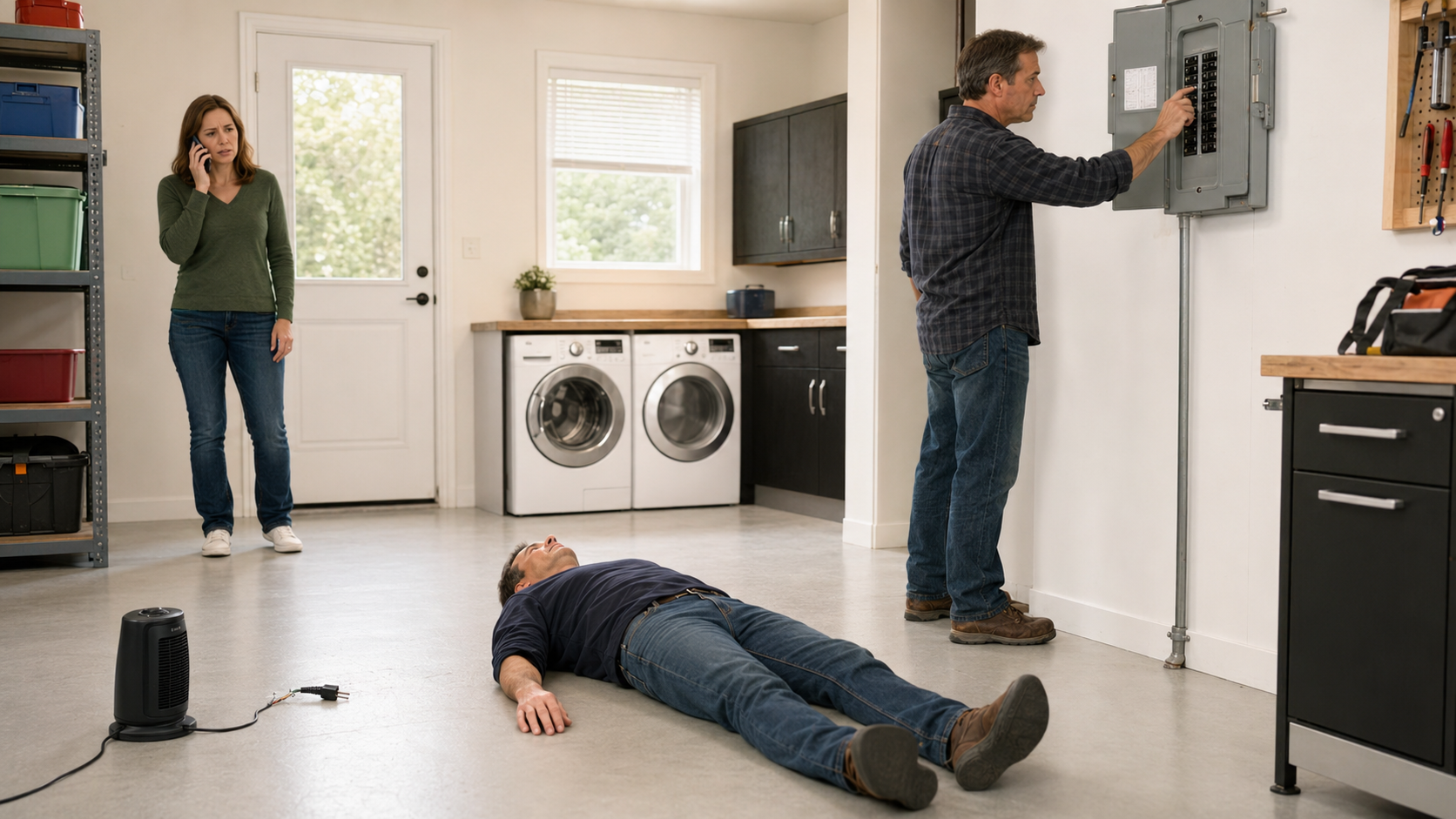

Learn the essential first aid steps for an electric shock, including how to stop the current safely, call for help, perform CPR, use an AED, and care for electrical burns.
Electric shock accidents can happen in seconds. A damaged power cord, a wet appliance, an exposed outlet, faulty wiring, or a fallen power line may be all it takes to create a life-threatening emergency.
The natural reaction is to rush toward the injured person and pull them away. Unfortunately, that instinct can place the rescuer in the path of the same electrical current. The first rule of electric shock first aid is simple but critical: make sure the electricity is no longer reaching the person before touching them.
Once the area is safe, quick action can make an enormous difference. Electrical current can interfere with breathing, disrupt the heart’s rhythm, cause deep internal burns, and trigger sudden cardiac arrest. This guide explains what to do after an electric shock, what mistakes to avoid, and when emergency medical care is necessary.
This article provides general safety information and does not replace professional medical advice or certified first aid training. In an emergency, call 911 or your local emergency number.
Why Electric Shock Injuries Can Be Deceptive
An electrical injury may look minor from the outside. The person might have only a small mark on the hand or no visible burn at all. However, electricity does not necessarily travel only along the surface of the skin.
As current passes through the body, it can damage muscles, nerves, blood vessels, and internal organs. It may also produce an abnormal heart rhythm or cardiac arrest. According to MedlinePlus, electrical injuries can cause both external burns and internal damage to organs, bones, muscles, and nerves.
The seriousness of an electric shock depends on several factors, including:
- The strength and type of the electrical current
- How long the person remained in contact with it
- The path the current traveled through the body
- Whether the skin or surrounding area was wet
- Whether the person fell or was thrown by the shock
- The person’s age and existing health conditions
A brief household shock may cause only tingling, but it should not automatically be dismissed. Symptoms of heart, nerve, or muscle damage can sometimes appear after the initial accident.
Electric Shock First Aid at a Glance
If you witness an electrical accident, remember this basic order:
- Do not touch the person while they are connected to the electrical source.
- Turn off the electricity if you can do so safely.
- Call 911 for a serious injury or any high-voltage accident.
- Check whether the person responds and is breathing normally.
- Begin CPR and use an AED if needed.
- Cover visible burns with a clean, dry dressing.
- Keep the person still, warm, and monitored until help arrives.
The order matters. Attempting first aid before the electrical hazard has been controlled can turn one injured person into two.
Step 1: Make Sure the Scene Is Safe
Before approaching, stop and look for the source of electricity. The person may still be holding a live wire, touching an appliance, standing in electrified water, or lying near a fallen power line.
For an ordinary household incident, shut off the power at the circuit breaker if it can be reached safely. Unplugging an appliance may also stop the current, but only if the plug and surrounding area are dry and you can reach them without crossing an unsafe space. Simply switching off the appliance may not always disconnect the electrical supply.
Never touch the person directly until you are certain the power is off.
If the electricity cannot be shut off immediately and the incident involves a low-voltage household source, official first aid guidance may recommend using a dry, nonconductive object—such as an object made from dry wood, plastic, or cardboard—to move the source away. Do not use anything wet or made of metal. Do not attempt this around high-voltage equipment, downed power lines, standing water, or an unknown electrical source. Call 911 and follow the dispatcher’s directions instead.
High-voltage electricity can arc through the air or travel through the ground. The Mayo Clinic’s electrical shock guidance advises staying at least 20 feet, or about 6 meters, away from high-voltage wires—and even farther away if they are sparking or moving.
Step 2: Call for Emergency Help
Call 911 immediately if the accident involves a high-voltage wire, power line, lightning strike, significant burn, loss of consciousness, breathing difficulty, seizure, confusion, chest pain, irregular heartbeat, severe muscle pain, or a fall.
If another person is present, ask them to call while you remain near the injured person. Have them bring an automated external defibrillator, or AED, if one is available.
Tell the dispatcher:
- Your exact location
- Whether the power has been turned off
- What electrical source was involved
- Whether the person is conscious
- Whether the person is breathing normally
- Whether there are burns, bleeding, or injuries from a fall
Put the phone on speaker so the dispatcher can guide you without interrupting care.
Step 3: Check Responsiveness and Breathing
Once the electrical source is disconnected and the scene is safe, approach the person. Tap their shoulder and speak loudly: “Are you okay?”
Look for normal breathing. Occasional gasps are not normal breathing and may be a sign of cardiac arrest.
If the person does not respond and is not breathing normally or is only gasping, begin CPR immediately. The American Red Cross CPR guidance recommends chest compressions at a rate of 100 to 120 per minute.
Place the person on their back on a firm, flat surface. Put the heel of one hand in the center of the chest, place your other hand on top, and push hard and fast. For an adult, allow the chest to rise fully between compressions. If you are trained in conventional CPR, provide breaths according to your training. If you are not trained or are uncomfortable giving breaths, perform hands-only CPR while following the dispatcher’s instructions.
Continue until:
- The person begins breathing normally
- An AED is ready to use
- Emergency responders take over
- The scene becomes unsafe
- You are physically unable to continue
Immediate CPR can double or triple the chance of survival after cardiac arrest, according to the American Heart Association.
Step 4: Use an AED as Soon as Possible
Electrical current can cause the heart to enter a dangerous rhythm. An AED can analyze that rhythm and deliver a shock if one is needed.
Turn on the AED and follow its spoken instructions. Expose the chest and attach the pads as shown in the diagrams. Make sure no one is touching the person while the device analyzes the rhythm or delivers a shock.
If the chest is wet, dry the areas where the pads will be placed. Do not place a pad directly over a medication patch or an implanted medical device that creates a visible lump beneath the skin. After a shock—or if the AED says that no shock is advised—resume CPR immediately unless the person shows clear signs of normal breathing.
You cannot accidentally shock someone who does not need it. The AED will deliver a shock only when it detects an appropriate rhythm.
Step 5: Care for Electrical Burns
After confirming that the power is off and the person is breathing, look for burns. Electrical burns may appear where the current entered and left the body, although there may be serious internal damage between those points.
Cover burned areas loosely with sterile gauze or a clean, dry cloth. Do not use fluffy material that may stick to the wound.
Avoid the following:
- Do not apply ice directly to the burn.
- Do not use butter, oil, toothpaste, creams, or home remedies.
- Do not break blisters.
- Do not remove clothing stuck to burned skin.
- Do not apply adhesive bandages directly over the burn.
- Do not assume a small skin mark means the injury is minor.
Electrical burns should be medically evaluated because their depth can be difficult to judge from the surface.
Step 6: Keep the Person Still and Warm
An electric shock can cause powerful muscle contractions or throw someone to the ground. That means the person may also have a head, neck, spine, or bone injury.
Do not move them unless they are in immediate danger, such as from fire or continuing electrical exposure. Ask them to remain still and avoid letting them stand or walk around, even if they insist that they feel fine.
Loosen tight clothing if appropriate and cover the person with a light blanket to prevent chilling. Do not place a blanket over severe burns, and do not give food or drinks while waiting for emergency care.
Step 7: Continue Monitoring
Stay with the person and keep checking their responsiveness and breathing. Someone who was initially awake may become confused, weak, or unresponsive.
If they stop breathing normally, begin CPR and use an AED. If they vomit and there is no reason to suspect a spinal injury, place them on their side to help keep the airway clear. When a fall or spinal injury is possible, follow the dispatcher’s instructions before repositioning them.
Be ready to tell emergency responders what happened, how long the electrical contact may have lasted, and what first aid you provided.
When Medical Evaluation Is Necessary
Call 911 for severe symptoms, high-voltage exposure, cardiac arrest, loss of consciousness, lightning strikes, or accidents involving downed power lines. Prompt emergency care is also important if the person has:
- Chest pain, palpitations, or an irregular heartbeat
- Trouble breathing
- Confusion, fainting, or memory loss
- A seizure
- Weakness, numbness, or persistent tingling
- Significant burns
- Severe muscle pain or contractions
- Injuries from falling or being thrown
- Electricity that may have traveled across the chest
Even after an apparently mild household shock, contacting a healthcare professional is wise—especially when symptoms persist, a burn is present, or the person is a young child, pregnant, or has a heart condition or implanted cardiac device.
Special Electrical Emergencies
Downed power lines
Never approach a person or vehicle touching a fallen power line. Electricity can spread through the ground, and the line may still be live even if it is not moving or sparking. Keep other people away, call 911 and the utility company, and wait for trained personnel to confirm that the area is safe.
Electricity near water
Do not enter water to rescue someone until the electrical supply has been disconnected. Water and wet surfaces can conduct current and place rescuers in danger. Shut off the power from a dry, safe location and call emergency services.
Lightning strikes
Unlike someone who remains connected to an electrical source, a lightning-strike victim does not retain an electrical charge. Once you have considered the ongoing danger from the storm, it is safe to touch them and provide first aid. Call 911, check breathing, and begin CPR if necessary. The CDC’s lightning safety guidance specifically confirms that lightning victims can be handled safely.
Common Electric Shock First Aid Mistakes
Several well-intended actions can make the situation worse:
- Grabbing the person before switching off the power
- Using a metal or wet object to move a wire
- Walking toward a fallen power line
- Entering electrified water
- Assuming the person is safe because they are awake
- Focusing on a small burn while overlooking breathing problems
- Applying ice, ointment, or butter to electrical burns
- Allowing the person to walk after a possible fall
- Delaying CPR while searching for a pulse
- Leaving the person alone before help arrives
In an electrical emergency, the safest approach is to control the hazard, call for professional help, and concentrate on breathing and circulation.
How to Prepare Before an Accident Happens
Preparation makes it easier to respond calmly. Learn where your home’s main circuit breaker is located and label individual breakers clearly. Replace frayed cords, keep appliances away from water, use ground-fault circuit interrupter outlets in wet areas, and place outlet covers where young children are present.
It is also worth taking a certified first aid, CPR, and AED course. Reading about CPR is helpful, but practicing chest compressions and AED use with an instructor builds confidence that is difficult to gain from an article alone.
The Most Important Thing to Remember
Electric shock first aid begins with protecting yourself. Never touch someone who may still be connected to electricity. Turn off the power, call 911 when the injury may be serious, check breathing, begin CPR if needed, and use an AED as soon as one becomes available. Afterward, cover burns, minimize movement, and continue monitoring the person until medical help arrives.
Have you ever taken a CPR or electrical safety course, and would you feel confident responding to an electric shock emergency at home? Share your experience or your most important safety tip in the comments below.

Hi, I’m the creator and editor behind ZestyHabit. I research everyday safety, first aid, and practical wellness topics using official guidance and reliable public sources, then turn that information into clear, realistic steps for daily life.
My goal is to help readers make safer, better-informed choices at home and beyond.


