When Brushing Feels Like Enough: The Dental Habit That Leaves Too Much Behind
Minjin Park
·
Brushing your teeth matters, but brushing alone often misses the places where plaque, food, and bad breath quietly build up. Here’s how flossing and mouthwash can fit into a realistic routine.
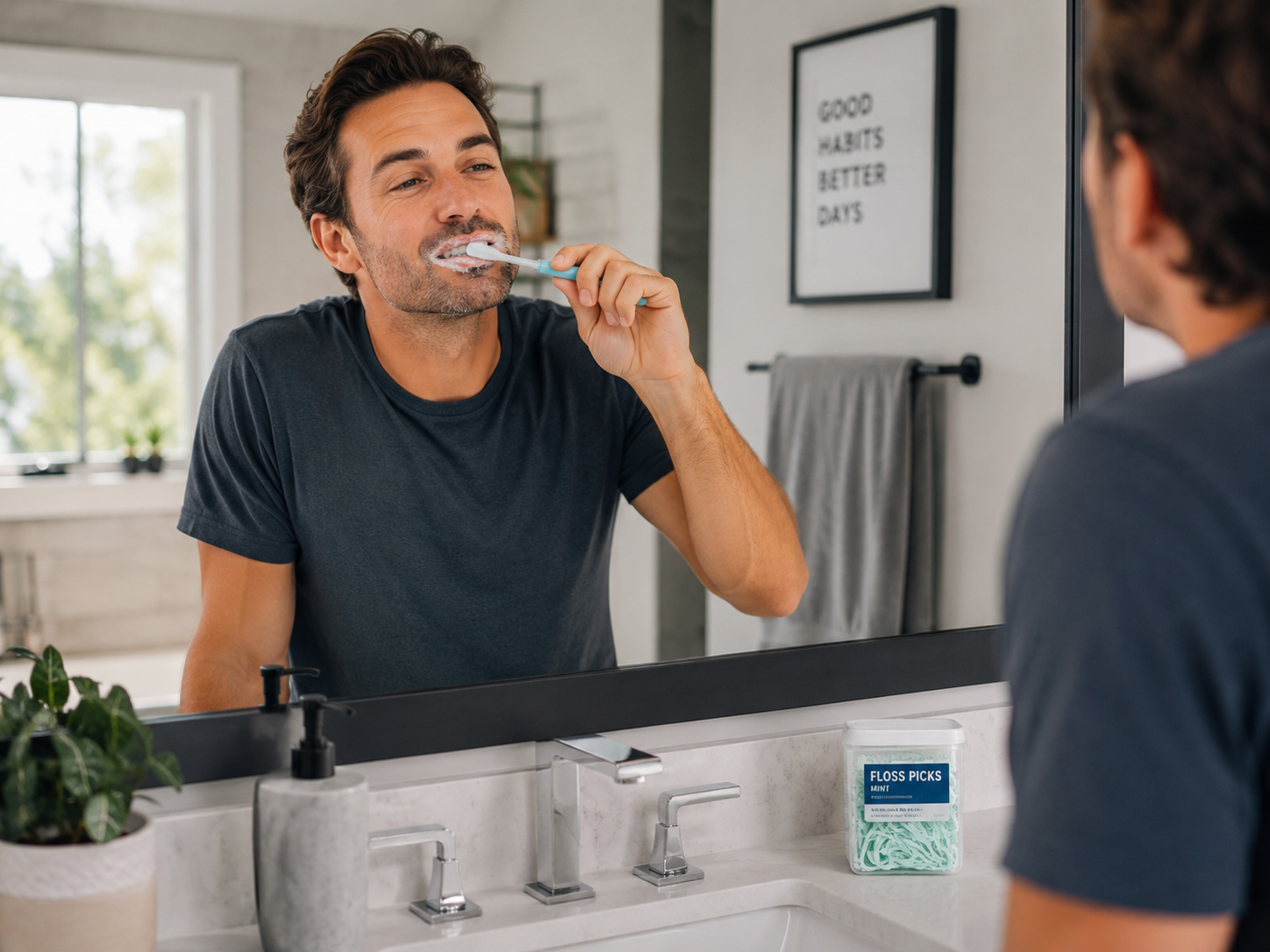
There is a certain satisfaction in brushing your teeth well.
The minty taste. The smooth front teeth. The quick look in the mirror afterward. It feels like a fresh start, even if the rest of the bathroom counter is a disaster and you are already late.
So it is easy to think, “That’s enough.”
You brushed in the morning. You brushed at night. Maybe you even used an electric toothbrush and stood there for the full two minutes instead of wandering away after forty-five seconds. Surely that should cover it.
And yes, brushing is the foundation. No one is arguing against it. If your dental routine were a house, brushing would be the walls and roof.
But it is not the whole house.
The problem is that your toothbrush, even a good one, cannot reach every small space between your teeth. It cleans the wide, visible surfaces fairly well. It can scrub the chewing surfaces, the front, the back, and along parts of the gumline. But between teeth? That narrow little space where popcorn skins, meat fibers, soft bread, and plaque like to hide?
A toothbrush is not great there.
That is why the habit of brushing and calling it done can feel cleaner than it actually is.
Your Toothbrush Has Limits
Most people do not skip flossing because they are careless. They skip it because brushing gives immediate feedback.
You see toothpaste foam. You smell mint. You feel cleaner.
Flossing is different. It feels like an extra task. Sometimes it is awkward. Sometimes the floss snaps into your gums in a way that makes you question every decision you have made that day.
But those tight spaces between teeth are not optional spaces. They are part of your mouth.
Plaque builds there too. Food gets trapped there too. Bacteria do their quiet little work there too.
And because you cannot see those areas easily, they are easy to ignore until something starts bothering you. A gum feels tender. Breath smells off even after brushing. A dentist gently says, “You’ve got some buildup between the molars,” which is somehow both polite and devastating.
Brushing alone can make the visible parts look fine while hidden areas keep collecting debris.
That is the annoying truth. Dental problems do not always begin where you can see them.
Why “I Brush Twice a Day” May Still Not Be Enough
Brushing twice a day is a good habit. It is also not a guarantee that everything is handled.
Think about how teeth are shaped. They are not smooth tiles lined up perfectly in a row. They curve, overlap, lean, crowd, and create little corners. Some teeth have tight contacts. Some have gaps. Wisdom teeth, if you still have them, can be a whole separate neighborhood.
A toothbrush cleans by bristles touching the tooth surface. If the bristles cannot fit into a place, that place does not get much cleaning.
That is where plaque can sit longer than you realize.
Plaque is not just “stuff.” It is a sticky film of bacteria. Over time, if it is not removed, it can harden into tartar. Once it becomes tartar, brushing and flossing at home cannot simply wipe it away. That is professional cleaning territory.
This is why someone can brush faithfully and still hear they have gum inflammation or cavities between teeth.
It does not mean brushing is useless. It means brushing was doing its part, not everyone else’s part.
The Flossing Problem: It Feels Like Too Much at Night
Let’s be honest. Flossing often loses at the exact moment it is supposed to happen.
Night.
You are tired. You have already done the bare minimum of washing your face, or maybe you skipped that and made peace with it. The bed is right there. Your phone is probably in your hand. Brushing your teeth already feels like the final responsible act of the day.
Then flossing appears, asking for more.
That is where many people decide, “Tomorrow.”
And tomorrow becomes a week.
Part of fixing the habit is making flossing feel less dramatic. It does not need to be a full ceremony. You do not need to light a candle, roll out a dental toolkit, and become a new person.
You just need to clean between your teeth more often than you currently do.
If nightly flossing feels impossible, start with a smaller rule. Floss only the back teeth. Floss while watching a video. Keep floss picks somewhere visible. Use interdental brushes if they feel easier. Put floss next to your toothbrush, not hidden in a drawer with expired travel toothpaste and mystery hair ties.
Convenience matters more than we pretend.
What Happens When Food Stays Between Teeth
Some foods are obvious troublemakers.
Popcorn is famous for this. So is steak. So are sesame seeds, spinach, chicken, oranges, and anything fibrous enough to wedge itself into a tiny gap and behave like it pays rent.
But even soft foods can leave residue. Bread, crackers, cookies, rice, and sticky snacks can cling around teeth and gums. You may not feel them, but bacteria can still use them.
When food and plaque sit between teeth, a few things can happen.
Your breath may not stay fresh for long after brushing.
Your gums may bleed when you finally floss.
You may notice a bad taste in your mouth.
Cavities can form between teeth, where they are harder to spot early.
Gums can become irritated or swollen.
The frustrating part is that these issues can develop quietly. Your mouth may not hurt at first. Your teeth may look normal in the mirror. You might feel like everything is fine because the front surfaces are shiny.
Dental problems are good at hiding until they are less convenient to deal with.
Bleeding Gums Are Not a Reason to Quit
A lot of people try flossing, see blood, and immediately stop.
Understandable. Blood is not exactly encouraging.
But bleeding gums often mean the area is irritated, not that flossing is harmful. If plaque has been sitting along the gumline, the gums can become inflamed and sensitive. When you start cleaning there, they may bleed for a while.
That does not mean you should attack your gums like you are sawing through rope. Gentle matters.
Slide the floss carefully between teeth. Curve it around the side of each tooth. Move it up and down rather than snapping it hard. Give your gums time to adjust.
If bleeding continues, gets worse, or comes with pain, swelling, or loose teeth, it is worth checking with a dentist. But a little bleeding when you restart flossing after a long break is common enough that it should not automatically scare you away.
The goal is not aggressive flossing. It is consistent, boring, gentle cleaning.
Boring is often where health happens, unfortunately.
Where Mouthwash Fits In
Mouthwash has a slightly confusing reputation.
Some people treat it like a magic rinse that can erase a lazy night. Others avoid it because they think it is unnecessary. The truth sits somewhere in the middle.
Mouthwash can be useful, depending on the type and why you are using it.
A fluoride mouthwash may help support cavity prevention. An antiseptic mouthwash may reduce certain bacteria. A simple alcohol-free rinse can help freshen breath and make your mouth feel cleaner. Some people use prescription rinses for gum issues or after dental procedures.
But mouthwash should not be used as a cover-up for skipped brushing and flossing.
Rinsing your mouth is not the same as physically removing plaque. Plaque is sticky. It likes to hold on. Swishing liquid around can help, but it cannot fully scrub between teeth the way floss or interdental brushes can.
Think of mouthwash as a helpful extra, not the main cleaner.
Also, not everyone needs the same mouthwash. Some alcohol-based rinses can feel drying. Some strong formulas may irritate sensitive mouths. If your mouth feels dry, burned, or uncomfortable after using a rinse, that is not a sign it is “working harder.” It may simply be too harsh for you.
Bad Breath Is Not Always About the Tongue
When breath does not feel fresh, many people brush harder.
They scrub the teeth again. They brush the tongue. They chew gum. They drink coffee, which, let’s be honest, does not always help the situation.
But bad breath can come from food and bacteria between teeth too.
That is why breath can smell stale even after brushing. The visible surfaces are cleaner, but the spaces between teeth still hold odor-causing debris.
Flossing can be humbling here. If you floss between back molars and the floss smells unpleasant, well, that is information. Not glamorous information. Useful information.
A lot of adults were taught to brush their teeth, but not really taught how to clean their whole mouth.
Maybe flossing was mentioned at dental visits, but it was not built into the routine at home. Maybe mouthwash was seen as something adults used before dates or important meetings. Maybe dental care was treated as “brush before bed and don’t eat too much candy,” which is not wrong, just incomplete.
So if you are an adult trying to add flossing now, it may feel oddly unnatural. Not because you are bad at habits, but because the routine was never installed.
That matters. A habit you have done since childhood feels automatic. A habit you add later feels like an interruption.
The trick is to attach it to something already stable.
Floss before brushing at night.
Use mouthwash after lunch.
Keep floss picks in your car, desk, or bag.
Put an interdental brush near your shower products if you always shower at night.
Make the new habit borrow the strength of an old habit.
Floss, Floss Picks, Water Flossers, and Interdental Brushes
Traditional string floss works well for many people, but it is not the only option.
Floss picks are easier for some people, especially when reaching back teeth. They are not always as flexible as string floss, but they are often better than doing nothing. And “better than nothing” is a very underrated category.
Interdental brushes can be great for wider gaps, bridges, braces, or areas where floss feels awkward. They look like tiny bottle brushes. Not elegant, but effective.
Water flossers can help flush debris and may be useful for people with braces, dental work, or difficulty using regular floss. They do not always replace string floss perfectly for everyone, but they can make the routine more realistic.
The best tool is the one you will actually use.
Dentists may have preferences based on your teeth and gums, so it is worth asking at your next visit. But do not let the search for the perfect tool delay the habit itself. Start with something.
A Realistic Routine That Does Not Feel Like a Dental Boot Camp
A full routine does not have to be complicated.
At night, floss first. Then brush for about two minutes with fluoride toothpaste. Spit out the toothpaste instead of rinsing aggressively with water right away, so the fluoride can stay on your teeth longer. If you use mouthwash, check whether it is better for your routine to use it at a different time, especially if you do not want to wash away toothpaste residue immediately.
In the morning, brush again. Clean your tongue gently if it helps your breath feel fresher.
During the day, drink water after meals. Rinse your mouth after coffee or snacks if brushing is not practical. Use sugar-free gum if you like it and it helps your mouth feel less dry.
That is not fancy. It is just practical.
And you do not need to go from “I never floss” to “I floss perfectly every single night forever.” That kind of promise usually collapses by Thursday.
Try three nights a week first. Then build.
Or floss only before bed on weekdays.
Or start with the teeth that trap food most often.
Progress does not need to be dramatic to be real.
The Small Places Matter
It is easy to focus on the parts of your smile you can see.
Front teeth get attention because they show up in photos. They are the teeth you notice when you talk, laugh, or check the mirror after lunch.
But many dental problems begin in less visible spots. Between molars. Along the gumline. Behind lower front teeth. Around old dental work. Under areas where brushing is rushed.
That is why a complete routine feels a bit less satisfying at first. You are caring for places that do not give you instant visual rewards.
No one compliments you on the cleanliness between your back molars.
Still, those quiet areas matter.
They affect comfort, breath, gum health, and the likelihood of expensive dental surprises later. And expensive dental surprises are among the least charming surprises available.
Making the Habit Stick Without Overthinking It
The easiest dental routine is the one you do before you are exhausted.
If nighttime flossing keeps failing, try moving it earlier. Floss after dinner instead of right before bed. Brush later if you want, but get the between-teeth cleaning done while you still have a little patience left.
You can also make the setup visible. Leave floss where you cannot miss it. Buy a type you do not hate. Keep extras in more than one place.
This sounds almost too simple, but friction is often the real problem.
If the floss is buried in a drawer, your tired brain will treat it like a major project. If it is sitting next to the toothpaste, it becomes harder to pretend it does not exist.
Pair it with something mildly enjoyable. Floss while listening to a podcast. Use mouthwash after putting on pajamas. Choose a toothbrush timer that does not annoy you.
Habits stick better when they fit your life instead of demanding a whole new personality.
When to Ask a Dentist for Help
If flossing is painful, your gums bleed often, your breath stays unpleasant, or food gets trapped constantly in the same spot, do not just keep guessing.
A dentist or hygienist can check for gum inflammation, cavities, tartar buildup, poorly fitting dental work, or spacing issues. Sometimes a place that “always catches food” has a specific reason behind it.
It is also worth asking them to show you the best way to clean between your teeth. Not in a vague “you should floss more” way, but with actual tools and technique.
Most people do better when they are shown what works for their specific mouth.
Teeth are personal. A crowded mouth, braces, retainers, implants, bridges, and gum recession can all change the best routine.
Brushing Is Good. It Just Needs Help.
Brushing your teeth is still important. It is not the villain here.
The habit to watch is the belief that brushing alone covers everything.
It usually does not.
A toothbrush can do a lot, but it cannot squeeze neatly into every space. Floss, interdental brushes, water flossers, and the right mouthwash can help fill the gaps, literally and practically.
You do not need to become obsessive. You do not need a ten-step dental routine that takes longer than making breakfast. You just need to stop leaving the hidden places out of the plan.
Start small tonight.
Floss a few teeth. Notice what comes out. Brush as usual. Maybe add a gentle rinse if it suits you.
It may not feel like a big lifestyle transformation. Good. It does not need to.
Most lasting health habits are quiet. They happen at the sink, half-tired, with toothpaste on your shirt and no audience at all. That still counts.
Hi, I’m the creator and editor behind ZestyHabit. I research everyday safety, first aid, and practical wellness topics using official guidance and reliable public sources, then turn that information into clear, realistic steps for daily life.
My goal is to help readers make safer, better-informed choices at home and beyond.
[…] breath, medically related to halitosis, refers to unpleasant mouth odor that occurs after waking up. During sleep, your body produces significantly less saliva. Saliva normally acts as a natural […]
Loading...
Discover more from
Subscribe now to keep reading and get access to the full archive.



[…] breath, medically related to halitosis, refers to unpleasant mouth odor that occurs after waking up. During sleep, your body produces significantly less saliva. Saliva normally acts as a natural […]