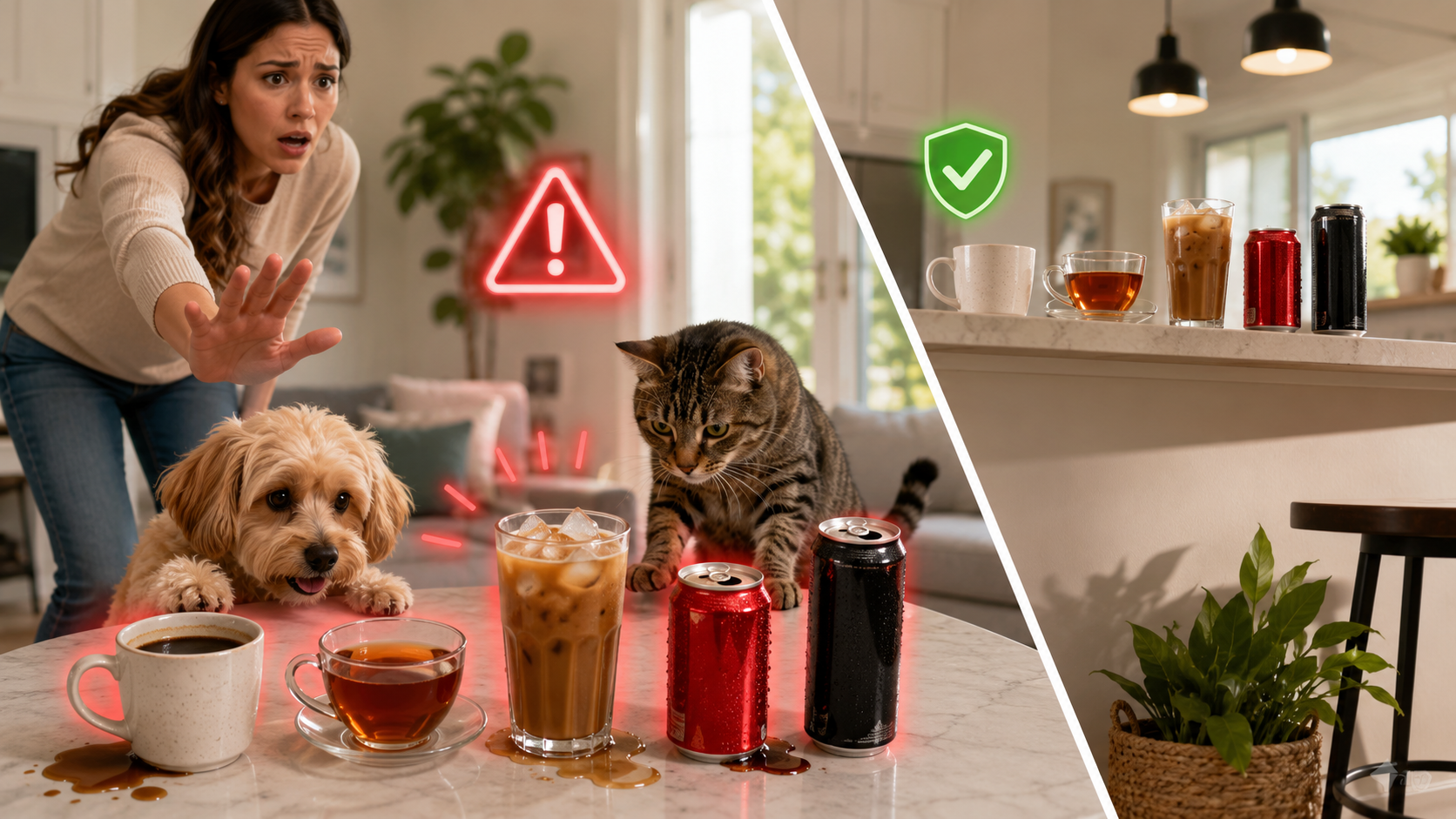
Why Caffeinated Drinks Are Dangerous for Pets: Coffee, Tea, Energy Drinks, and More
Minjin Park
·
Caffeine can overstimulate a pet’s heart and nervous system. Learn which drinks and products are risky, warning signs to watch for, and simple ways to prevent accidental exposure.
For many people, caffeine is part of an ordinary morning. We leave a mug of coffee beside the couch, carry an energy drink in a gym bag, or set a sweet iced tea on the floor while answering the door.
To a curious dog or cat, those drinks may smell interesting—especially when they contain milk, whipped cream, syrup, or other sweet ingredients. A pet may lick up a spill before anyone notices, chew a used coffee pod from the trash, or swallow caffeine pills found in a backpack.
The problem is not simply that coffee or energy drinks may upset a pet’s stomach. Caffeine is a stimulant that can affect the nervous system, heart rate, blood pressure, muscles, and body temperature. Pets can be much more sensitive to concentrated caffeine than people, and a small animal has far less body weight over which to distribute what it consumes.
Veterinary poison-control sources advise keeping coffee, tea, soda, energy drinks, caffeine tablets, and similar products away from pets.
Not every tiny lick causes severe poisoning. The actual concern depends on the pet’s species and size, the caffeine concentration, the amount swallowed, and the presence of other ingredients.
Still, suspected exposure is worth taking seriously because the caffeine content of products can vary widely.
Caffeine belongs to a group of stimulant compounds called methylxanthines. Chocolate also contains related methylxanthines, including theobromine, which is why chocolate and caffeinated products can produce some similar signs in pets.
Caffeine Stimulates the Heart and Nervous System
In people, a moderate dose of caffeine may increase alertness and make fatigue feel less noticeable. Too much can cause shakiness, restlessness, or a racing heartbeat.
Pets can experience those stimulant effects more intensely when they consume enough caffeine. Veterinary sources describe possible effects including agitation, hyperactivity, increased heart rate, abnormal heart rhythms, elevated blood pressure, tremors, seizures, vomiting, and diarrhea.
A pet cannot explain that it feels jittery or that its heart is pounding. Owners may first notice pacing, panting, vocalizing, an inability to settle, or behavior that seems unusually frantic.
Body Size Changes the Significance of a Spill
A few ounces of a drink may not seem like much to an adult. For a small dog, cat, puppy, or kitten, the same amount represents a much larger exposure relative to body weight.
That is why comparing one incident with another can be misleading. A large dog that takes one lick of weak tea is not in the same situation as a five-pound dog that drinks from a spilled energy shot.
The product matters just as much as the visible amount. A small quantity of concentrated caffeine powder or a supplement may contain more caffeine than a much larger amount of a diluted beverage.
Caffeine Content Is Not Obvious From Appearance
Two cups of coffee can contain very different amounts of caffeine depending on the beans, brewing method, serving size, and brand. Tea, soda, energy drinks, and workout supplements also vary.
You cannot reliably judge the risk by color, taste, or cup size. A half-empty travel mug might contain ordinary coffee, cold-brew concentrate, espresso, or a drink mixed with an energy supplement.
Keeping the label or package is far more useful than guessing.
Common Caffeine Sources Pets Can Reach
Coffee is the obvious example, but it is not the only household source.
Coffee, Espresso, Grounds, and Pods
Freshly brewed coffee can be accessible in open mugs, takeout cups, or tipped-over tumblers. Sweetened coffee drinks may be especially tempting because of milk, cream, or flavored syrup.
Coffee grounds and beans are more concentrated than a few diluted drops left in a cup. Used grounds still contain caffeine and may attract dogs when mixed with food scraps in the trash or compost.
Single-serve pods can also become chew toys. A pet may puncture the plastic, consume the wet grounds, and swallow pieces of packaging at the same time.
Tea and Iced Tea
Black tea, green tea, matcha, and many bottled teas contain caffeine. Tea bags may retain caffeine after brewing, and a dog may pull them from a mug, sink, countertop, or trash can.
Matcha deserves particular attention because the powdered tea leaf is consumed directly rather than removed after steeping. A spoonful of powder or a concentrated matcha drink is different from a few drops of weak tea.
Herbal tea is often caffeine-free, but “herbal” does not automatically mean pet-safe. Blends may contain other ingredients that are unsuitable for animals, so it is best not to offer any human tea as a pet drink.
Energy Drinks and Energy Shots
Energy drinks can contain substantial amounts of caffeine, sometimes combined with other stimulants. Animal poison-control guidance notes that even relatively small exposures to highly caffeinated energy drinks may be concerning, especially for small pets.
Energy shots are particularly easy to underestimate because the container is small. The same is true of concentrated drink mixes and powders.
A can left on the floor, in a cup holder, or beside exercise equipment may be accessible to a dog long after the owner has walked away.
Soda and Caffeinated Flavored Drinks
Some colas, sparkling drinks, and flavored waters contain caffeine. They may contain less than coffee or energy drinks, but they still do not belong in a pet’s bowl.
Sugar-free versions may present an additional concern if they contain xylitol, a sweetener that is highly toxic to dogs. The FDA warns that xylitol can cause a rapid drop in a dog’s blood sugar and may lead to weakness, loss of coordination, collapse, or seizures.
Supplements, Pills, and Pre-Workout Products
Caffeine tablets, weight-loss products, pre-workout powders, guarana supplements, and some “energy” gummies can contain highly concentrated caffeine.
These products may be more dangerous than a small sip of coffee because a pet can swallow a large amount quickly. Merck Veterinary Manual notes that guarana-containing supplements can cause vomiting, agitation, rapid heart rate, high blood pressure, abnormal rhythms, poor coordination, tremors, and seizures in animals.
Gym bags, purses, bedside tables, and open supplement containers are common access points.
Warning Signs After Caffeine Exposure
Signs may develop relatively quickly, although the timing varies with the product, amount, and animal.
Early Changes Owners May Notice
Possible early signs include:
Restlessness or pacing
Unusual hyperactivity
Panting
Vomiting or diarrhea
Increased thirst
Frequent urination
Excessive vocalizing
A noticeably fast heartbeat
Difficulty relaxing or sleeping
These signs can resemble excitement, anxiety, or ordinary stomach upset. The context matters.
A suddenly restless pet beside a spilled coffee drink or chewed supplement bottle deserves more attention than the behavior alone might suggest.
More Serious Warning Signs
Larger exposures can lead to muscle tremors, weakness, loss of coordination, abnormal heart rhythms, overheating, seizures, collapse, or severe agitation.
Do not wait for dramatic symptoms when you already know a pet consumed a caffeinated product. Early professional guidance is more useful than trying to decide at home whether the pet has had “enough” to be poisoned.
Cats may be less likely than dogs to gulp an entire drink, but they are still vulnerable. They can lick sweet foam, drink from an unattended cup, or walk through a spill and later groom the liquid from their paws.
What to Do if a Pet Consumes Caffeine
The goal is to act calmly and collect useful information.
Remove Access and Check the Area
Move the pet away from the drink or product. Pick up the cup, grounds, tea bags, pills, wrappers, and spilled powder.
Check whether another pet may also have had access. Look under furniture and inside bags, since a dog may carry a container away before chewing it.
Save the Label or Container
Try to identify:
The exact product and brand
The serving size
The listed caffeine amount, if available
How much appears to be missing
When the exposure may have happened
The pet’s approximate weight
Any other ingredients in the product
Whether packaging was swallowed
Taking a photograph of the label can help preserve useful information, especially if the packaging is damaged or leaking.
Contact a Veterinarian or Animal Poison Service
Call your veterinarian, an emergency veterinary clinic, or an animal poison-control service for guidance based on the specific product and pet.
The ASPCA Animal Poison Control Center is available in the United States at (888) 426-4435, 24 hours a day. A consultation fee may apply.
Do not rely only on an online calculator or a comparison with another pet. Product concentrations and individual circumstances differ.
Avoid Unsupervised Home Remedies
Do not give salt, milk, oil, charcoal, or hydrogen peroxide unless a veterinary professional specifically directs you to do so.
Trying to induce vomiting can create additional problems in a pet that is already agitated, trembling, weak, or having difficulty swallowing. It can also delay appropriate evaluation.
Common Mistakes Pet Owners Make
Assuming a Few Licks Are Always Safe
A lick from the outside of an empty mug is not the same as drinking several ounces, chewing coffee grounds, or swallowing a caffeine tablet.
Because owners often do not see the entire event, it is safer to check the container and estimate what is actually missing.
Focusing Only on Hot Coffee
People often worry about burns from a fresh drink but forget about the caffeine after it cools.
Cold brew, leftover iced coffee, used grounds, and a room-temperature energy drink can still expose a pet to caffeine. Cooling changes the temperature, not the stimulant content.
Thinking Milk or Cream Makes Coffee Harmless
A latte may smell more appealing to a pet, but milk does not neutralize caffeine.
It may also cause digestive upset in animals that do not tolerate dairy well. Sweet syrups, chocolate, alcohol flavorings, or sugar substitutes can introduce additional concerns.
Assuming “Decaf” Means Pet-Safe
Decaffeinated coffee generally contains much less caffeine than regular coffee, but it is not designed as a pet beverage.
It may still contain some caffeine, and specialty drinks may include chocolate, sweeteners, dairy, or other ingredients. Fresh water remains the safest everyday drink for dogs and cats.
Leaving Used Products Within Reach
Used pods, grounds, tea bags, and empty energy-drink cans may look like trash to a person but smell like food to a pet.
A dog may knock over an open trash can or pull a tea bag from the sink. Prevention needs to include leftovers and packaging, not just unopened products.
Simple Ways to Prevent Accidental Exposure
Use Lidded Cups and Stable Surfaces
Choose a secure travel mug when pets are active around the house. Place drinks toward the back of a counter or desk rather than on a low table, couch arm, or floor.
A lid may not make a cup completely pet-proof, but it can reduce spills caused by wagging tails, curious noses, or playful cats.
Secure Coffee Grounds and Tea Bags
Store beans, grounds, pods, matcha powder, and tea in closed cabinets or sturdy containers.
Empty used grounds directly into a lidded trash can. If you compost, use a container pets cannot open or reach.
Treat Supplements Like Medication
Keep caffeine pills, pre-workout powder, energy gummies, and weight-loss supplements in closed containers behind a cabinet door.
Do not leave single packets in gym bags on the floor. Ask visitors and teenagers to follow the same rule.
Clean Spills Immediately
Move the pet away before wiping up a spill. Check beneath appliances, cabinets, and furniture where liquid may collect.
For sticky energy drinks or sweet coffee, clean the area thoroughly so the scent does not encourage repeated licking.
Give Pets Their Own Safe Routine
A pet may become interested in a morning coffee routine because it receives attention, smells milk, or expects a taste.
Offer fresh water, a pet-safe treat, or a favorite toy instead. Consistency makes it easier to keep human drinks off-limits without turning every cup into a struggle.
A Calm, Practical Takeaway
Caffeinated drinks are unsafe for pets because caffeine can overstimulate the heart, nervous system, and muscles. Coffee, tea, soda, energy drinks, grounds, pods, supplements, and pre-workout products can all create exposure, and concentrated products may be especially concerning.
The seriousness of an incident depends on the pet’s size, the product, and the amount consumed. When an accident happens, remove access, save the packaging, estimate how much is missing, and contact a veterinarian or animal poison-control service rather than waiting for severe signs.
Prevention is usually straightforward: use lidded cups, keep drinks off low surfaces, secure grounds and supplements, close the trash, and clean spills promptly.
Your morning coffee can remain part of your routine. It simply needs to stay in your cup—and out of your pet’s reach.
Hi, I’m the creator and editor behind ZestyHabit. I research everyday safety, first aid, and practical wellness topics using official guidance and reliable public sources, then turn that information into clear, realistic steps for daily life.
My goal is to help readers make safer, better-informed choices at home and beyond.