
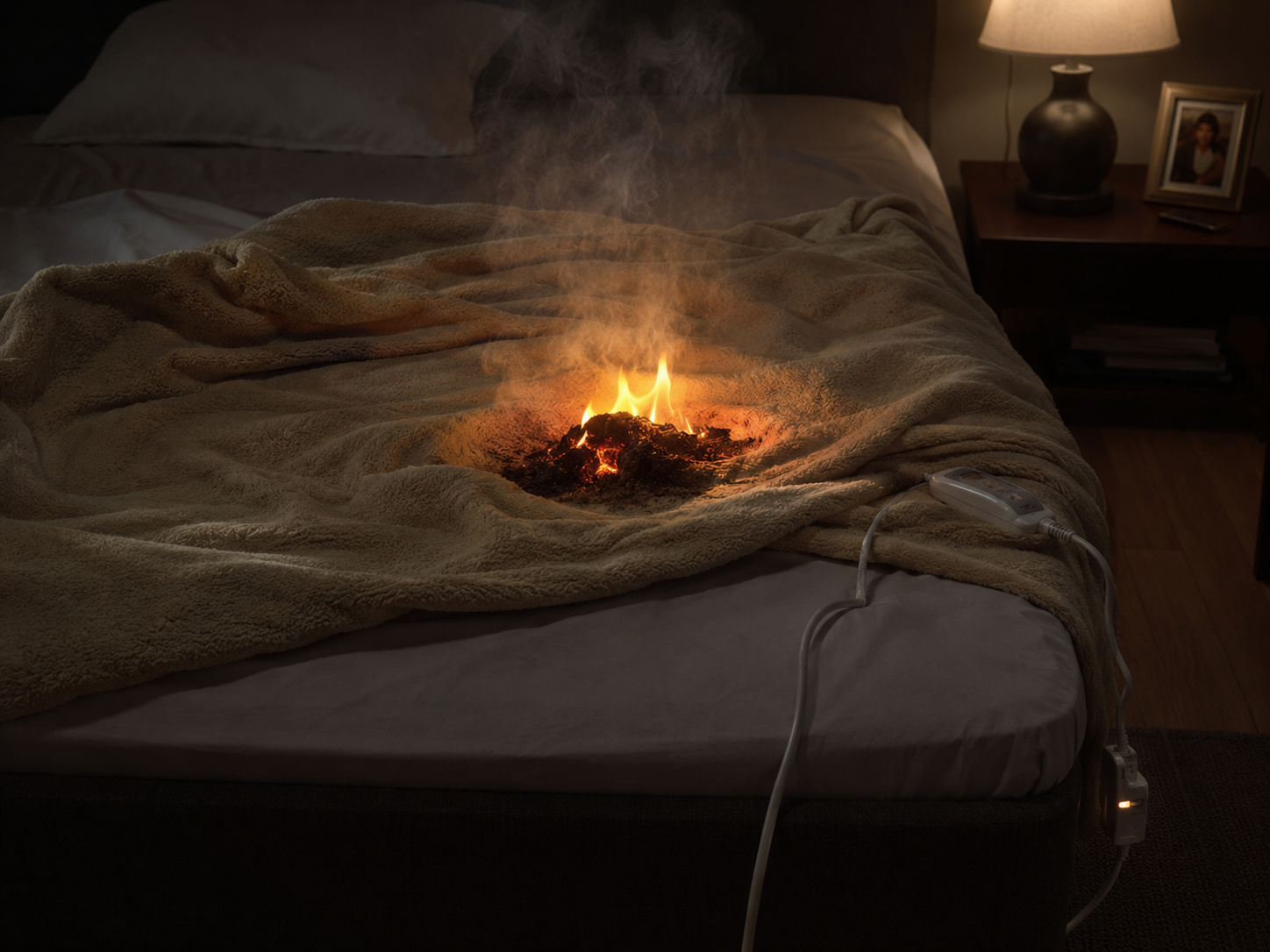

Sleeping with an electric blanket can feel cozy, but it may create safety risks if used carelessly. Learn common mistakes, warning signs, and practical prevention tips.
Why Electric Blanket Safety Matters More Than People Think
An electric blanket can feel like one of the simplest comforts in cold weather. You climb into bed, turn it on, and within minutes the sheets feel warm instead of icy. For many people, especially in drafty homes or during winter, it becomes part of the nightly routine.
But because electric blankets are so familiar, it is easy to forget that they are still electrical heating devices. They combine electricity, fabric, wiring, body heat, bedding, and long hours of use. Most modern electric blankets are designed with safety features, but accidents can still happen when a blanket is old, damaged, folded, covered incorrectly, or left on for too long.
This does not mean you need to panic or throw yours away. It simply means an electric blanket should be used with the same kind of care you would give to a space heater, heating pad, or any product that produces heat while you sleep.
The biggest issue is that sleep makes people less aware. If something overheats, smells strange, sparks, or feels too hot, you may not notice right away. That is why prevention matters before you fall asleep.
What Can Go Wrong When You Sleep With an Electric Blanket On?
The most common concerns are overheating, burns, electrical faults, and fire risk. These accidents are not usually caused by normal use of a well-maintained blanket. They are more likely to happen when several small mistakes stack up.
For example, someone may use a blanket that is ten years old, fold it under their legs, place a heavy comforter on top, plug it into a worn extension cord, and leave it on high all night. Each choice may seem harmless on its own, but together they can create a risky situation.
Electric blankets work by running electrical current through thin heating wires inside the fabric. When those wires are intact and the blanket is used flat, heat spreads evenly. When the blanket is bent sharply, trapped under weight, or damaged inside, certain areas may become hotter than they should.
That is when problems can begin.
Overheating While You Sleep

One of the simplest risks is overheating. You may turn the blanket on because the room feels cold, but your body temperature changes as you sleep. Bedding also traps warmth. What feels perfect at 10 p.m. may feel too hot at 2 a.m.
Overheating can make sleep uncomfortable and may cause sweating, restlessness, dry skin, or waking up feeling flushed. In some cases, people may not wake up quickly enough to adjust the heat.
This is especially important for people who are less sensitive to heat or who may have difficulty moving away from the warmth. Older adults, young children, people with certain health conditions, and anyone who has reduced sensation in their skin may not notice that an area is getting too hot.
A safer habit is to use the electric blanket to pre-warm the bed, then turn it off or lower it before sleeping. Many people only need 15 to 30 minutes of warmth before getting under the covers.
Low-Temperature Burns
Burns from electric blankets are not always dramatic. They may not look like a sudden burn from touching a hot pan. Sometimes they can happen gradually when skin is exposed to steady heat for a long period.
This is why sleeping with the blanket on high can be a problem. A temperature that feels “warm but fine” at first may become too much after several hours, especially if the heat is concentrated in one area.
A common example is someone sleeping with their legs pressed into one warm spot all night. If the blanket is bunched, folded, or trapped under the body, heat may not spread evenly. The skin may be exposed to more warmth than intended.
Warning signs can include redness, tenderness, unusual warmth on the skin, or a patch that feels irritated after waking. If the blanket has a noticeably hotter area than the rest, stop using it.
Fire Risk From Old or Damaged Blankets
Fire is the risk most people worry about, and while modern electric blankets are generally safer than older models, fire can still happen when a blanket is worn out or misused.
Older blankets may have weakened wiring, cracked insulation, or damaged controls. The danger is that internal damage is not always visible from the outside. A blanket may look fine but have broken or pinched wires inside.
You should be cautious if your electric blanket has any of these warning signs:
- Brown spots, scorch marks, or melted areas
- A burning smell when it is turned on
- Flickering controller lights
- Uneven heating or hot spots
- Exposed wires
- Frayed cord or loose plug
- Strange buzzing, crackling, or sparking
- A controller that feels unusually hot
If you notice any of these, do not keep using the blanket “just one more night.” Unplug it and replace it.
The Problem With Folding, Bunching, or Tucking It In
Electric blankets are usually meant to lie flat. Folding or bunching them can trap heat and stress the internal wires.
This can happen without much thought. You may tuck the blanket tightly around your feet, fold it over at the edge of the bed, or let it bunch up under your knees. Pets may also paw at it or create folds while settling in.
When heat builds up in a small folded section, that area can become hotter than intended. Repeated folding can also weaken the wiring over time.
Before turning the blanket on, smooth it out. Avoid sleeping on top of it unless the product is specifically designed as a heated mattress pad. An electric blanket and a heated mattress pad are not always used the same way, so the label matters.
Heavy Bedding Can Trap Too Much Heat
Another common mistake is piling heavy blankets, quilts, or comforters over an electric blanket. This can trap heat and prevent the blanket from releasing warmth normally.
Think of it like covering a laptop or phone while it is charging and working hard. Heat needs somewhere to go. If too much insulation is placed over a heating device, the temperature can rise.
This does not mean you can never use bedding with an electric blanket. But it does mean you should follow the manufacturer’s instructions. Some electric blankets are designed to go on top of you, while others may have specific guidance about layering.
If you use a thick comforter, it may be better to preheat the bed and turn the blanket off before you sleep.
Extension Cords and Power Strip Mistakes
Electric blankets should generally be plugged directly into a wall outlet unless the manufacturer says otherwise. Power strips, cheap extension cords, damaged outlets, or overloaded circuits can add risk.
A common winter setup is plugging in a lamp, phone charger, space heater, humidifier, and electric blanket near the bed. That may be convenient, but it is not always a good idea.
Electrical heating products draw power. If the cord, outlet, or power strip is not in good condition, it can overheat. If the plug feels hot, the outlet is loose, or the cord is squeezed behind furniture, stop and fix the setup.
Also avoid running the cord under a rug, mattress, or heavy furniture. A hidden cord is easy to damage and harder to notice if it becomes warm.
Pets and Electric Blankets
Pets love warm beds, but claws, chewing, kneading, and body weight can damage an electric blanket. A cat kneading the fabric or a dog scratching at the bed may harm the internal wires without obvious signs at first.
There is also the issue of pets not moving away from heat quickly. Some animals will stay in a warm spot even when it gets too warm.
If you have pets, inspect the blanket often. Look for punctures, pulled fabric, bite marks, or unusual heating. Do not let pets chew the cord or sleep directly on a blanket that is not meant to support weight.
A safer option may be a pet-safe heated bed made specifically for animals, used according to its instructions.
Children and Electric Blankets
Electric blankets are not always a good choice for young children. Kids may not understand temperature settings, cords, or overheating. They may spill drinks, fold the blanket, jump on it, or fall asleep without noticing discomfort.
For a child’s bed, simpler warmth may be better: warm pajamas, a safe room temperature, socks, or extra regular blankets. If an electric blanket is used for an older child, an adult should handle the settings and turn it off before sleep.
The main point is control. A child should not be left to manage an electrical heating product alone.
Older Adults and People With Reduced Sensation
Electric blanket safety is especially important for people who may not feel heat normally or may not wake easily. This can include some older adults and people with circulation issues, nerve problems, mobility limitations, or certain medications that affect alertness.
The risk is not that the blanket is automatically dangerous. The risk is delayed reaction. If the blanket gets too hot, a person may not notice or may not be able to move away quickly.
For these situations, it is usually safer to warm the bed before sleep and turn the blanket off before getting in, or use a low setting with an automatic shutoff. Checking with a qualified healthcare professional may also be wise for people with medical concerns, but for everyday safety awareness, the basic idea is simple: avoid long, direct heat exposure when someone may not sense it well.
Moisture, Spills, and Washing Mistakes
Electricity and moisture do not mix well. Spilling water, tea, or other liquids on an electric blanket can create a serious safety concern. The same goes for using it when damp.
Some electric blankets are washable, but only if the controller and cord are removed and the manufacturer’s washing instructions are followed carefully. Others should not be machine washed at all.
A common mistake is treating an electric blanket like a regular blanket. People may twist it, wring it out, dry it on high heat, or hang it in a way that bends the wires. This can damage the internal heating system.
Before washing, always check the care label. If the instructions are missing, it may be safer not to wash it and to replace the blanket if it is dirty or questionable.
Using an Electric Blanket With Adjustable Beds or Recliners
Adjustable beds and recliners can create sharp bends in bedding. If an electric blanket gets pinched in a moving bed frame or folded repeatedly in the same place, the internal wires may become damaged.
This is easy to overlook because the blanket may still turn on afterward. But repeated bending can weaken the wiring over time.
If you use an adjustable bed, check whether your electric blanket is approved for that type of setup. A heated mattress pad or another warming method may be more appropriate, depending on the product.
Warning Signs You Should Not Ignore
Electric blankets often give small clues before they become unsafe. The problem is that people get used to them and overlook changes.
Pay attention if the blanket suddenly heats unevenly, smells strange, shuts off unexpectedly, or feels hotter than usual. Also check the controller. If the controller becomes hot to the touch, acts erratically, or the display flickers, stop using it.
Another warning sign is age. If you cannot remember when you bought the blanket, or if it has been used heavily for many winters, it may be time to replace it. Technology and safety features improve over time, and old wiring does not last forever.
Safer Ways to Use an Electric Blanket
The safest approach is not complicated. Use the blanket gently, keep it flat, inspect it often, and avoid leaving it on high all night.
A good routine might look like this: spread the blanket flat on the bed, plug it directly into a wall outlet, turn it on 20 minutes before bedtime, then lower the setting or turn it off when you get in. Make sure the cord is not trapped, the controller is not under the pillow, and the blanket is not folded.
If your blanket has a timer or automatic shutoff, use it. These features are there for a reason. They reduce the chance of the blanket running for hours after you no longer need the heat.
Common Mistakes People Make Without Realizing It
One common mistake is using an electric blanket like a regular blanket. People fold it, sit on it, pin it under the mattress, or toss heavy objects on top. But the wires inside need more care than ordinary fabric.
Another mistake is ignoring small damage. A frayed cord or tiny scorch mark may not seem urgent, especially if the blanket still works. But electrical products should not be judged only by whether they turn on.
People also forget to unplug the blanket during the day. Even when turned off, unplugging it when not in use is a simple habit that reduces unnecessary risk.
Finally, many people keep electric blankets for too long. If it has been through years of washing, folding, pets, storage, and nightly use, it may not be as safe as it once was.
How to Store an Electric Blanket Safely
Storage matters because internal wires can be damaged when the blanket is crushed or sharply folded for months.
When winter ends, let the blanket cool completely. Disconnect the controller if the instructions allow it. Fold it loosely or roll it gently, and store it in a dry place where heavy items will not press on it.
Avoid vacuum-sealing it or stuffing it tightly into a crowded closet. That kind of pressure can create creases and stress points.
When you take it out again, inspect it before the first use of the season. Look at the fabric, cord, plug, and controller. Turn it on briefly while awake and check whether it heats evenly.
Alternatives for Staying Warm at Night
If you feel nervous about sleeping with an electric blanket on, there are other ways to stay warm.
You can use flannel sheets, warmer pajamas, wool socks, an extra regular blanket, or a hot water bottle with a secure cap. You can also warm the bed with an electric blanket and then unplug it before sleeping.
Small room adjustments can help too. Blocking drafts, using curtains, sealing window gaps, or adding a rug to a cold floor can make the bedroom feel warmer without relying only on heated bedding.
The goal is not to suffer through a cold night. It is to choose warmth in a way that feels comfortable and safe.
A Simple Bedtime Safety Checklist
Before sleeping with an electric blanket, ask yourself a few quick questions.
Is the blanket flat, not folded or bunched? Is the cord in good condition? Is it plugged into a safe outlet? Is the controller outside the bedding, not trapped under a pillow or blanket? Is the heat setting low enough for overnight use? Does the blanket have an automatic shutoff?
If anything smells strange, feels too hot, or looks damaged, do not use it.
This kind of check takes less than a minute, but it can prevent many common problems.
Conclusion: Warmth Is Good, but Careless Heat Can Be Risky
Electric blankets can be useful, cozy, and perfectly reasonable when they are modern, well-maintained, and used correctly. The accidents usually come from old blankets, damaged cords, trapped heat, folded fabric, high settings, or leaving the blanket running for long hours without thinking about it.
The safest habit is simple: use the blanket to warm the bed, keep it flat, avoid heavy layering, inspect it regularly, and turn it down or off before sleeping. Replace it when it shows signs of wear, and never ignore burning smells, scorch marks, hot spots, or damaged cords.
A warm bed should help you sleep better, not create one more thing to worry about. With a little attention before bedtime, you can enjoy the comfort while lowering the risks.

Hi, I’m the creator and editor behind ZestyHabit. I research everyday safety, first aid, and practical wellness topics using official guidance and reliable public sources, then turn that information into clear, realistic steps for daily life.
My goal is to help readers make safer, better-informed choices at home and beyond.


