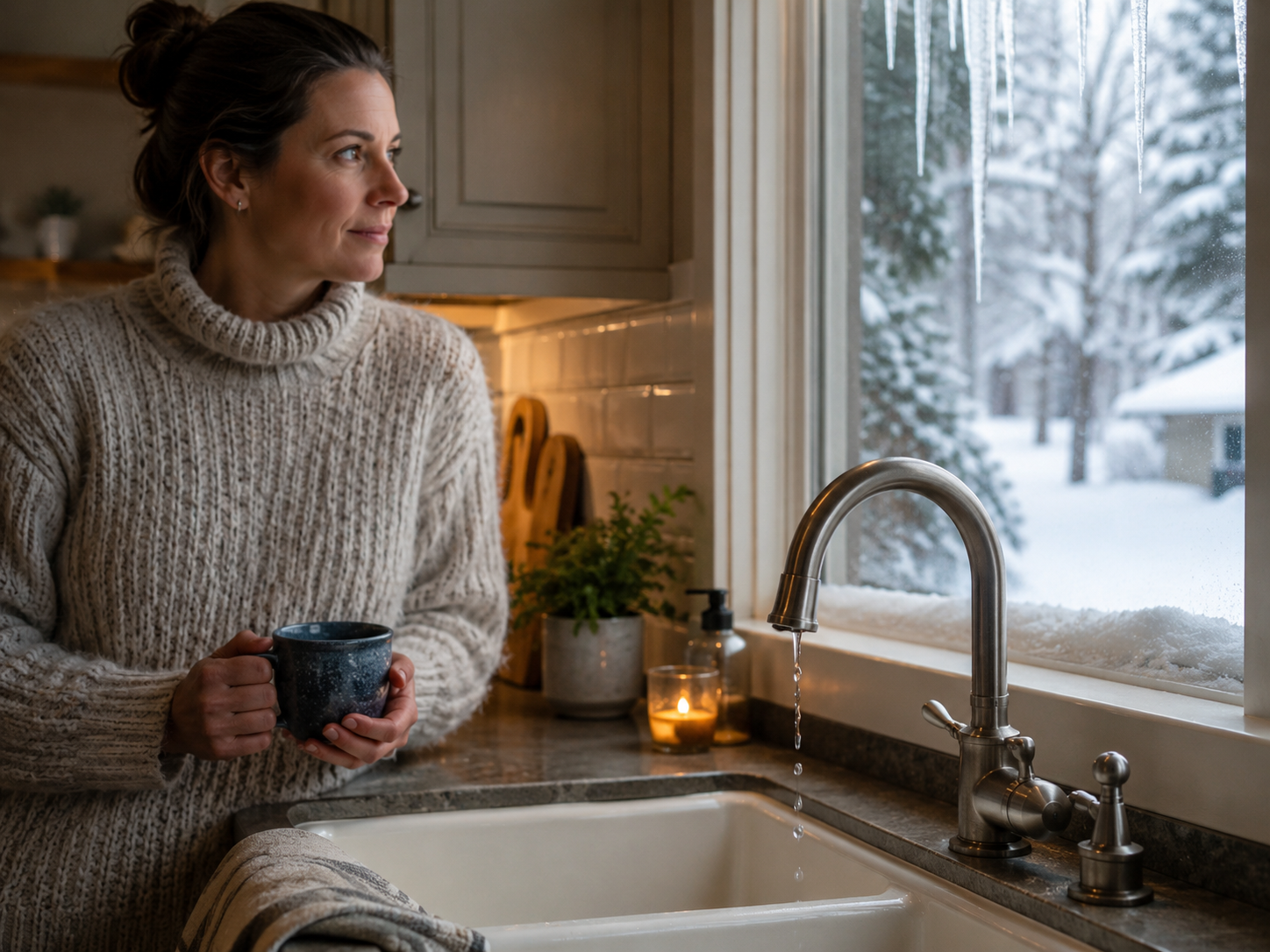
Why You Should Let Faucets Drip During Freezing Weather
Minjin Park
·
Letting a faucet drip in winter can help reduce the risk of frozen pipes. Learn when it helps, which faucets to choose, common mistakes to avoid, and simple cold-weather plumbing safety tips.
If you have ever lived through a hard freeze, you may have heard this advice: “Leave the faucet dripping overnight.”
At first, it can sound wasteful or unnecessary. After all, why would running water protect your home? But during freezing weather, a small drip from the right faucet can help reduce the chance of a pipe freezing and causing a bigger mess later.
This habit is especially common in parts of the United States where homes are not always built for long stretches of extreme cold. Places like Texas, the Southeast, and other areas with milder winters can be caught off guard when temperatures suddenly drop below freezing.
Even in colder states, certain pipes are more vulnerable than others. A bathroom sink on an outside wall, a kitchen pipe under a drafty cabinet, or plumbing in an unheated garage can all be at higher risk.
Letting a faucet drip is not a perfect solution, and it does not replace insulation or basic winter preparation. But in the right situation, it can be a simple, practical step that helps protect your home.
What Happens When Pipes Freeze?
Water expands when it freezes. That is the simple reason frozen pipes can become a problem.
When water inside a pipe turns to ice, it takes up more space. This can create pressure inside the pipe. Sometimes the pipe itself cracks. Other times, the pressure builds in a section of the plumbing system and causes damage somewhere nearby.
Many people imagine a frozen pipe bursting dramatically the moment it freezes. In real life, the problem may not show up until the pipe starts to thaw. Once the ice melts and water begins moving again, a cracked section may start leaking.
That is why frozen pipes can be so frustrating. You may go to bed with everything seeming normal, wake up with little or no water at a faucet, and later discover water dripping under a sink, inside a wall, or in a basement.
Why a Small Drip Can Help
Leaving a faucet slightly open can help in two main ways.
First, moving water is less likely to freeze than still water. A steady flow, even a slow one, can make freezing more difficult in vulnerable pipes.
Second, an open faucet can help relieve pressure in the plumbing line. If ice begins forming somewhere in the pipe, the open faucet gives pressure a place to escape. This may reduce the chance of a pipe cracking under pressure.
The faucet does not need to run full blast. A small, steady trickle is usually the idea. Some people describe it as a drip, while others use a thin stream. The goal is enough movement to help, without wasting more water than necessary.
When Should You Let Faucets Drip?
You do not need to leave faucets dripping every winter night. This habit is most useful when temperatures are expected to fall below freezing, especially for several hours.
It is even more important when temperatures are unusually low for your area, when wind chill is severe, or when parts of your home are colder than usual.
Pay Attention to Overnight Lows
Pipes often freeze overnight because temperatures drop while everyone is asleep. If the forecast shows temperatures below 32°F for several hours, it is time to think about prevention.
The risk increases during long cold snaps, especially when temperatures stay below freezing during the day and night.
Watch for Vulnerable Areas in Your Home
Some pipes are more likely to freeze than others. These include pipes located:
If you know one bathroom or sink area gets colder than the rest of the house, that is the place to watch.
Consider Your Home’s History
If a certain faucet has frozen before, take that seriously. Past problems are often the best clue for future risk.
For example, if your kitchen sink stopped working during a freeze last winter because the pipes sit against an outside wall, you should prepare that area before the next cold night.
Which Faucet Should You Leave Dripping?
This is where people sometimes get confused. You do not necessarily need to drip every faucet in the house.
The most useful faucet is usually the one connected to the pipe most likely to freeze. In many homes, that may be a kitchen sink or bathroom sink along an exterior wall.
Choose Faucets on Exterior Walls
If a sink is on an outside wall, the pipes behind or below it may be exposed to colder temperatures. That makes it a good candidate for dripping during freezing weather.
Open the cabinet doors under the sink as well, so warmer indoor air can circulate around the pipes.
Drip Both Hot and Cold When Needed
In some homes, both hot and cold water lines may run through cold areas. If you are unsure which line is vulnerable, you can let the faucet drip with a mix of warm and cold water.
For single-handle faucets, position the handle in the middle so both hot and cold lines have some movement. For two-handle faucets, you may choose a small drip from both sides.
This is especially helpful for sinks where both supply lines pass through an exterior wall or cold cabinet space.
Do Not Forget Remote Bathrooms
Guest bathrooms, laundry sinks, and rarely used bathrooms may be colder than everyday living spaces. If they sit near exterior walls or above a cold crawl space, they deserve attention too.
A pipe does not care whether a room is used every day or only during holidays. If it is cold enough, it can freeze.
How Much Should the Faucet Drip?
You do not need a strong flow.
A slow, steady drip or thin stream is usually enough for basic prevention. The water should be moving consistently rather than stopping completely between long pauses.
If the drip is so slow that it only drops once every several seconds, it may not provide much benefit. On the other hand, running the faucet heavily all night is usually unnecessary and wastes water.
Think of it as a pencil-thin stream or a steady drip that keeps the line active.
Place a bowl or cup under the faucet if you want to reuse the water for plants, flushing, or cleaning. This small habit can make the practice feel less wasteful.
Other Steps That Help Protect Pipes
Letting a faucet drip works best when it is part of a bigger winter routine. A dripping faucet alone may not protect a poorly insulated pipe in severe cold.
Here are practical steps that help.
Open Cabinet Doors
Kitchen and bathroom cabinets can trap cold air around pipes. Opening the doors lets warmer room air reach the plumbing.
This is especially useful for sinks on exterior walls.
If you have small children or pets, move cleaning supplies, chemicals, or anything unsafe out of reach before leaving cabinet doors open.
Keep the Heat On
Even if you are away from home, do not turn the heat off during freezing weather. Lowering the thermostat too much can make pipes in walls, cabinets, and crawl spaces more vulnerable.
You do not need your home to feel tropical, but keeping indoor temperatures reasonably stable matters.
Seal Drafts
Cold air blowing through cracks and gaps can freeze pipes faster than still air. Check around windows, doors, basement openings, crawl space vents, and areas where pipes enter the home.
Temporary draft blockers, weatherstripping, and insulation can make a difference.
Insulate Exposed Pipes
Pipe insulation is affordable and helpful for exposed plumbing in garages, basements, crawl spaces, and utility areas.
Foam pipe sleeves are easy to install on many accessible pipes. For more complicated areas, or if you are unsure what is safe for your home’s plumbing, it may be worth asking a qualified professional.
Disconnect Garden Hoses
Outdoor faucets are often forgotten until the first freeze. Disconnect garden hoses before freezing weather arrives. A hose full of water can freeze and create pressure back toward the faucet or pipe.
If your outdoor faucet has a shutoff valve, close it according to your home’s setup and drain the line if appropriate.
Close Garage Doors
If water lines run through the garage, keep garage doors closed during freezing weather. A garage may still be cold, but closing the door helps block wind and reduce temperature drops.
Common Mistakes People Make
Winter pipe prevention is simple, but a few mistakes show up again and again.
Waiting Until the House Is Already Cold
If temperatures are dropping quickly, do not wait until the pipes are already freezing. Start prevention before bedtime or before the coldest part of the night.
Once a pipe is frozen, a dripping faucet may not fix the problem.
Dripping the Wrong Faucet
If the vulnerable pipe is under the kitchen sink, dripping an upstairs bathroom faucet may not help that pipe much. Try to choose the faucet closest to the risky area.
If you are unsure, focus on faucets located on exterior walls or in colder rooms.
Turning the Heat Too Low While Traveling
Some people lower the heat dramatically to save money while they are away. During normal winter weather, a lower setting may be fine. But during a hard freeze, setting the thermostat too low can increase the risk of frozen pipes.
For long trips, have someone check the home if possible, especially during severe weather.
Forgetting About Vacant Rooms
A guest bathroom, closed-off laundry area, or basement sink can freeze because warm air does not circulate there. Keep interior doors open where helpful so heat can move through the house.
Assuming New Homes Are Immune
Newer homes can still have vulnerable pipes. A pipe near a draft, in an exterior wall, or in an unheated space can freeze regardless of the home’s age.
Good construction helps, but it does not make winter preparation unnecessary.
Warning Signs a Pipe May Be Freezing
Sometimes you can catch a problem early.
One of the most common signs is reduced water flow. If you turn on a faucet and only a trickle comes out during freezing weather, ice may be forming somewhere in the line.
Other warning signs include:
No water from one faucet while others still work
Frost on visible pipes
Unusual bulging on exposed plumbing
Strange smells from a drain or faucet
A sink cabinet that feels much colder than the room
Pipes located near a drafty wall or crawl space
If you suspect a pipe is frozen, avoid using open flames or unsafe heating methods. Gentle warming methods and professional guidance are safer choices. For active leaks, shut off water if you know how and get appropriate help.
What If You Are Going Away During a Freeze?
Winter travel adds another layer of planning. If you are leaving home during freezing weather, prepare before you go.
Check the Forecast
Look at the low temperatures for the entire time you will be away, not just the day you leave.
A cold front can arrive mid-trip, and you may not be home to respond.
Leave Heat Running
Keep the home heated enough to protect pipes. Open interior doors and sink cabinets where needed so warm air can circulate.
Ask Someone to Check In
For longer trips or severe weather, ask a trusted neighbor, friend, or family member to check the house. They can look for leaks, confirm the heat is working, and notice problems early.
Know Your Main Water Shutoff
Every adult in the home should know where the main water shutoff is located. This is useful not only for winter freezes, but also for everyday plumbing problems.
Take a photo of it and label it if needed.
How to Make This Habit Less Wasteful
Many people feel uncomfortable letting water run, and that is understandable. Water is valuable, and no one wants to waste it.
The key is to use this habit only when conditions call for it and only at a slow flow.
You can also collect some of the dripping water in a pitcher, bucket, or clean container. Use it later for watering plants, rinsing dishes, cleaning, or flushing a toilet.
If your area has water restrictions or specific local guidance, follow those instructions. Local utilities may provide freeze-prevention advice based on your region’s plumbing and weather patterns.
A Simple Winter Faucet Checklist
When freezing weather is in the forecast, use this quick checklist.
Before Bed
Check the forecast for overnight lows. Open cabinet doors under vulnerable sinks. Move unsafe products out of reach if children or pets are present. Let the right faucet drip slowly. Keep the heat on.
Before Leaving Home
Check the full forecast for the days you will be away. Set the thermostat to a safe temperature. Open interior doors where helpful. Ask someone to check on the home if the freeze is expected to be severe.
Around the House
Disconnect garden hoses. Close garage doors. Seal obvious drafts. Insulate exposed pipes if you can do so safely. Know where your main water shutoff is.
In the Morning
Check that faucets are still running normally. Look under sinks for moisture. Listen for unusual dripping sounds. If a faucet has weak flow, treat it as a warning sign and investigate carefully.
Why This Matters for Everyday Home Safety
A frozen pipe is not just a plumbing inconvenience. It can disrupt your day, damage cabinets or flooring, soak drywall, and create a stressful cleanup.
For families, renters, homeowners, and people traveling during the holidays, a little preparation can prevent a lot of frustration.
This is especially true because freezing weather often arrives when people are busy. You may be cooking, hosting guests, dealing with school schedules, traveling, or trying to keep kids and pets warm. Pipe prevention may not be the first thing on your mind.
That is why a simple routine helps. When the forecast says hard freeze, you know what to do: open cabinets, protect vulnerable pipes, let the right faucet drip, and keep the heat steady.
Final Thoughts: A Small Drip Can Be a Smart Winter Habit
Leaving a faucet slightly open during freezing weather may seem like a small thing, but it can be a useful part of winter home protection.
The main idea is simple: moving water is less likely to freeze, and an open faucet can help relieve pressure if ice starts forming in a pipe. This is most helpful for sinks connected to pipes on exterior walls, in cold cabinets, or in unheated spaces.
You do not need to run every faucet or waste large amounts of water. Choose the most vulnerable faucet, let it drip slowly, open the cabinet doors, and keep your home heated.
Winter safety is often about small habits done at the right time. Checking the forecast, preparing your pipes, and letting a faucet drip when needed can help you get through freezing nights with a little more peace of mind.
Hi, I’m the creator and editor behind ZestyHabit. I research everyday safety, first aid, and practical wellness topics using official guidance and reliable public sources, then turn that information into clear, realistic steps for daily life.
My goal is to help readers make safer, better-informed choices at home and beyond.