
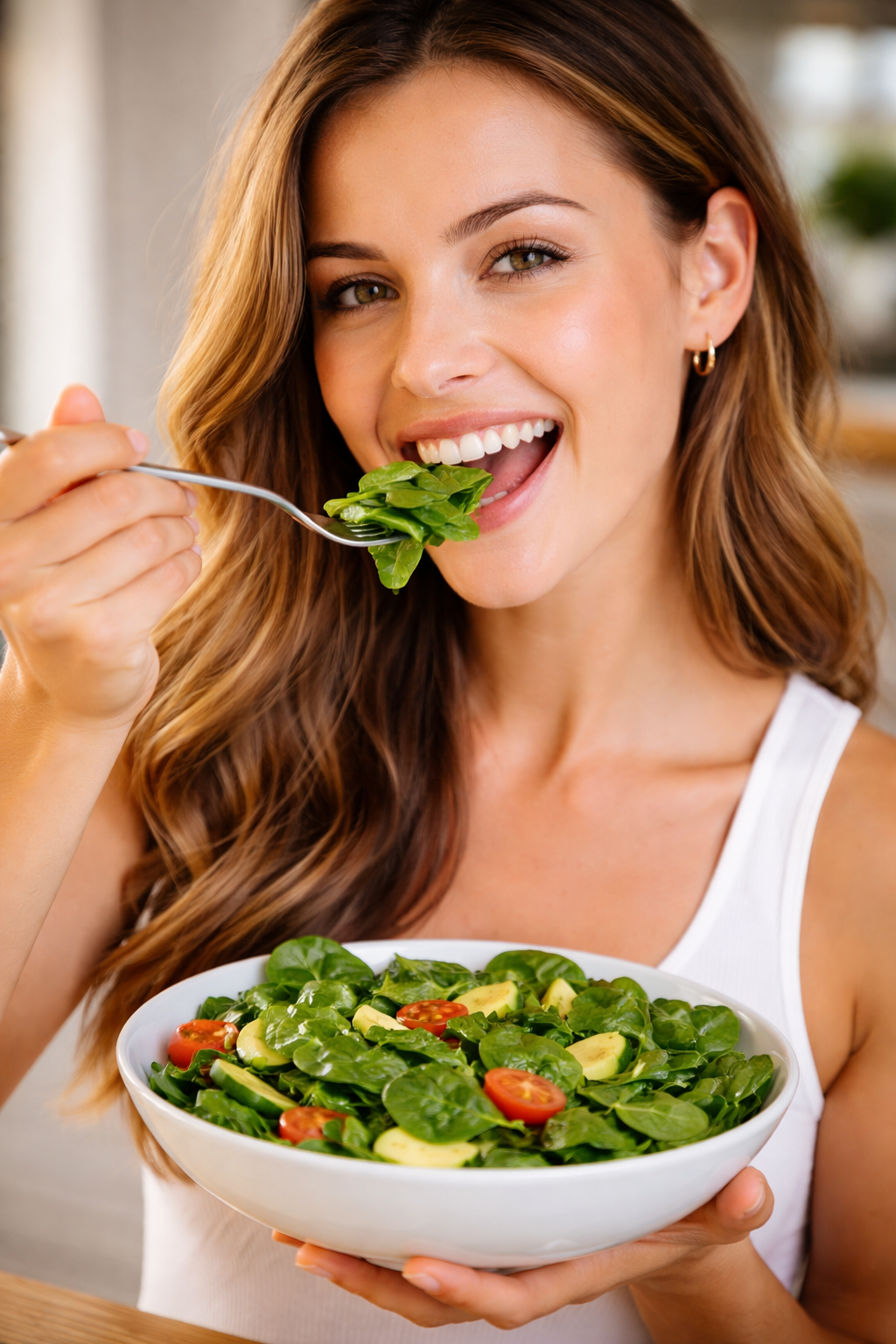

Spinach has one of the strongest health-food reputations of any vegetable. It is often described as a powerhouse leafy green, and one reason it gets so much attention is its connection to iron. Many people grow up hearing that spinach is “full of iron,” so it naturally becomes one of the first foods that comes to mind when the conversation turns to fatigue, anemia, or nutrient-dense eating.
That reputation is only partly wrong.
Spinach really is a nutritious vegetable. It is low in calories and provides several important nutrients, including vitamin K, folate, vitamin A precursors, and some iron. For example, one cup of raw spinach provides about 6.9 calories, 0.81 mg of iron, about 145 mcg of vitamin K, and 58 mcg DFE of folate. But the iron story is more nuanced than “spinach is the best iron food.” The iron in spinach is non-heme iron, the form found in plant foods, and non-heme iron is generally absorbed less efficiently than the heme iron found in meat, poultry, and seafood.
That is why spinach is worth talking about not just as an “iron food,” but as a nutrient-dense leafy green with a more complicated iron story than people often assume.
Why Spinach Is Considered a Nutrient-Dense Food
Spinach gets recommended so often because it offers a lot of nutrition for very few calories. A single raw cup is very light in energy, but it still contributes meaningful amounts of vitamins and minerals, especially vitamin K and folate. The NIH notes that spinach is one of the most common sources of vitamin K in the U.S. diet, and vitamin K is essential for normal blood clotting and also important for bone health.
Spinach is also known for folate, which matters for DNA production and red blood cell formation. MedlinePlus notes that folate works with vitamin B12 to help form red blood cells, which helps explain why spinach often shows up in discussions of healthy eating and blood health.
So even before getting into iron, spinach already earns its “healthy” reputation because it packs several useful nutrients into a very low-calorie food.
Basic Spinach Nutrition Facts
Using USDA-derived nutrition data published through the University of Rochester, one cup of raw spinach contains about:
- 6.9 calories
- 0.86 g protein
- 1.09 g carbohydrate
- 0.66 g fiber
- 0.81 mg iron
- 29.7 mg calcium
- 167.4 mg potassium
- 144.87 mcg vitamin K
- 58 mcg DFE folate
Those numbers help explain why spinach is so popular in salads, smoothies, omelets, soups, and side dishes. It adds volume and micronutrients without adding many calories. That makes it attractive to people trying to eat more vegetables, manage weight, or improve overall diet quality.
Why People Associate Spinach With Iron
Spinach really does contain iron. Harvard lists spinach among plant sources of non-heme iron, alongside foods like beans, lentils, nuts, seeds, and fortified grains.
That is the key reason spinach became so strongly linked with iron in the first place. It is a leafy green that contains measurable iron, which makes it nutritionally interesting. But the important word here is contains. Containing iron is not the same thing as being the easiest or most efficient way for the body to absorb iron. That is where the conversation becomes more realistic.
The Most Important Iron Detail: Spinach Has Non-Heme Iron
The iron in spinach is non-heme iron, the form found in plant foods. NIH’s iron fact sheet explains that dietary iron comes in two forms: heme iron and non-heme iron. Heme iron comes from animal foods such as meat, poultry, and seafood, while non-heme iron is found in plant foods and fortified foods. Harvard also notes that heme iron is better absorbed than non-heme iron.
This is the single most important fact in the spinach-and-iron discussion.
So yes, spinach contains iron. But no, it is not automatically the same as eating a heme-iron food. If someone is trying to correct low iron or iron-deficiency anemia, that distinction matters. Spinach can be part of an iron-conscious diet, but it should not be treated as a simple one-to-one substitute for more bioavailable iron sources.
Why Spinach’s Iron Reputation Can Be Misleading
The reason people sometimes get confused is that spinach is both praised and criticized in iron conversations.
The praise is easy to understand: spinach contains iron and several other nutrients. The criticism comes from the fact that non-heme iron is harder to absorb, and some plant compounds can reduce iron absorption further. NIH notes that phytate can reduce non-heme iron absorption, while Harvard notes that plant substances such as phytates and tannins can inhibit absorption.
Harvard also notes that spinach is a food high in oxalates, though its “anti-nutrients” overview discusses oxalates mainly in relation to calcium binding rather than iron specifically.
The practical takeaway is not that spinach is “bad for iron.” It is that spinach is not a magic iron fix. It is one plant-based iron source among many, and its value improves when you think about the whole meal rather than the spinach alone.
How to Improve Iron Absorption From Spinach
This is where spinach becomes more useful.
NIH and MedlinePlus both note that vitamin C improves absorption of iron from plant-based foods. NIH also notes that meat, poultry, and seafood can enhance non-heme iron absorption when eaten in the same meal.
That means spinach works better nutritionally when you pair it well.
Helpful combinations include:
- spinach with citrus dressing
- spinach with tomatoes or bell peppers
- spinach in a meal that also includes vitamin-C-rich fruit
- spinach eaten alongside meat, poultry, or seafood if that fits your diet
So the smarter message is not “spinach is the best iron food.” It is “spinach can contribute iron, and you can make that iron more useful by pairing it with foods that improve absorption.”
Spinach Is About More Than Iron
One reason spinach remains valuable even when the iron story gets more nuanced is that iron is not its only strength.
Spinach is one of the biggest dietary sources of vitamin K in the U.S. diet, according to NIH. It also provides folate, which supports cell growth and red blood cell formation, and it contributes vitamin A precursors such as beta-carotene.
That means spinach still deserves its “healthy food” reputation even if you stop treating it like an iron miracle. It is a useful leafy green because it supports overall diet quality, not because it single-handedly solves iron problems.
Is Spinach Enough if You Are Worried About Low Iron?
Not always.
If someone is concerned about low iron, fatigue, or iron-deficiency anemia, spinach alone may not be enough. The NIH fact sheet makes clear that plant iron is absorbed differently from heme iron, and absorption depends on the overall meal.
That does not mean spinach is useless. It means that if iron status is a true concern, the bigger picture matters more:
- total iron intake
- whether the iron is heme or non-heme
- whether meals include vitamin C
- whether there are inhibitors affecting absorption
- whether a person actually has diagnosed iron deficiency
So spinach is a helpful food, but it should not replace medical evaluation or targeted nutrition advice if someone has suspected or confirmed iron deficiency.
Why Spinach Still Deserves a Place in Healthy Eating
Even with all the nuance, spinach is still a very good food to include regularly.
It is low in calories, easy to add to meals, and rich in nutrients many people want more of. It can go into salads, soups, pasta, smoothies, egg dishes, grain bowls, and side dishes without much effort. From a practical point of view, that is a big reason it remains popular. A food does not have to be perfect at one nutrient to be useful overall.
Spinach is especially helpful for people trying to:
- eat more leafy greens
- add more folate and vitamin K to their diet
- improve diet quality without increasing calories much
- include more plant-based iron sources in mixed meals
A Balanced Way to Think About Spinach and Iron
The best way to think about spinach is probably this:
Spinach does contain iron.
But it contains non-heme iron, which is less efficiently absorbed than heme iron.
That means spinach is a useful part of an iron-aware diet, but not a shortcut or cure-all.
Its value increases when you pair it with vitamin C-rich foods or meals that support non-heme iron absorption.
Once you understand that, the spinach story makes much more sense. It is not that spinach was wrongly called healthy. It is that one part of its reputation got simplified too much.
Final Thoughts
Spinach is a nutrient-dense leafy green with a strong health reputation for good reason. It is very low in calories and provides useful amounts of vitamin K, folate, potassium, and some iron.
The iron part of the story, though, deserves more precision. Spinach contains plant-based non-heme iron, and that iron is not absorbed as efficiently as the heme iron found in animal foods. Vitamin C and certain meal combinations can help improve absorption, which is why spinach makes the most sense as part of a thoughtful, balanced meal rather than as a standalone “iron fix.”
So the honest summary is this: spinach is absolutely nutritious, but its real value is broader than the old “it’s all about iron” message.
FAQ
Is spinach actually high in iron?
Spinach does contain iron, and Harvard lists it among plant sources of non-heme iron. One cup of raw spinach has about 0.81 mg of iron based on USDA-derived data.
Why isn’t spinach considered the best iron food?
Because the iron in spinach is non-heme iron, which is generally absorbed less efficiently than the heme iron found in meat, poultry, and seafood.
How can I absorb more iron from spinach?
Pair it with vitamin C-rich foods such as citrus, tomatoes, strawberries, sweet peppers, or broccoli. NIH also notes that meat, poultry, and seafood can improve non-heme iron absorption when eaten in the same meal.
What nutrients is spinach especially known for?
Spinach is especially known for vitamin K and folate, and it also contributes potassium and vitamin A precursors. NIH identifies spinach as one of the most common vitamin K sources in the U.S. diet.
Is spinach enough if I have low iron?
Not necessarily. Spinach can contribute iron, but if you are worried about iron deficiency or anemia, the overall diet, iron absorption, and medical evaluation matter more than relying on spinach alone.
As an Amazon Associate I earn from qualifying purchases.

Hi, I’m the creator and editor behind ZestyHabit. I research everyday safety, first aid, and practical wellness topics using official guidance and reliable public sources, then turn that information into clear, realistic steps for daily life.
My goal is to help readers make safer, better-informed choices at home and beyond.


[…] where did that image come from? Is it based on real nutrition science, or is it mostly branding and […]