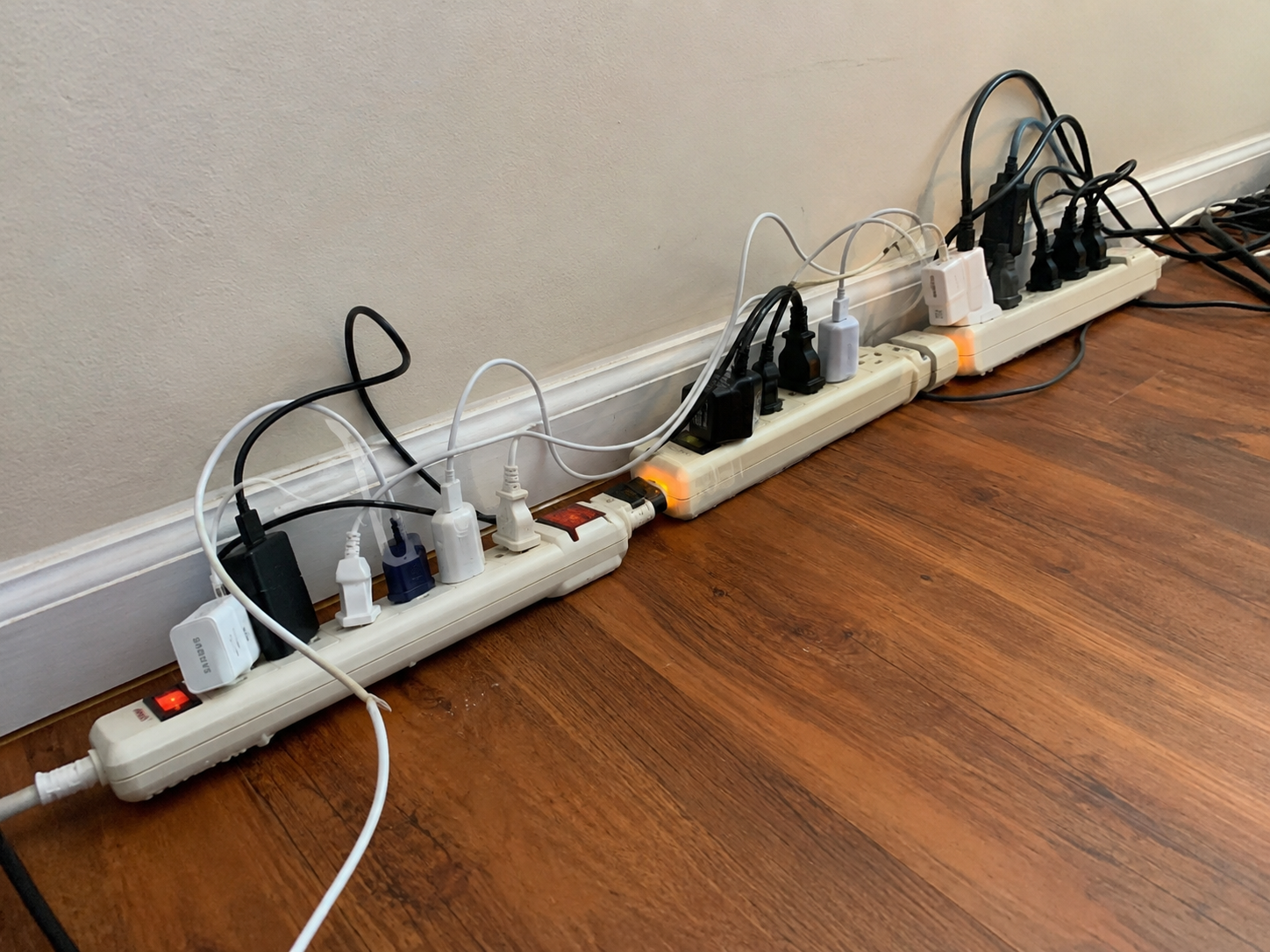
Why Plugging One Power Strip Into Another Can Be Dangerous
Minjin Park
·
Plugging one power strip into another may seem convenient, but it can increase the risk of overheating, electrical overload, and fire. Here’s why daisy-chaining power strips is unsafe and what to do instead.
The Small Electrical Habit That Can Create a Big Safety Problem
Most of us have been there. You move into a room, set up your desk, plug in a computer, monitor, lamp, phone charger, printer, speaker, and maybe a small heater or fan. Before you know it, the wall outlet is full, the power strip is full, and there is still one more device that needs power.
So you grab another power strip and plug it into the first one.
It feels like a harmless fix. After all, the plug fits. The devices turn on. Nothing sparks. Everything seems normal.
But plugging one power strip into another, often called daisy-chaining, is one of those everyday safety mistakes that can quietly create real risk. It does not always cause an immediate problem, which is part of why people underestimate it. The danger often builds slowly through heat, overload, poor connections, and misuse over time.
This is especially important in homes, apartments, dorm rooms, home offices, garages, and older houses where outlets are limited. Power strips are useful tools, but they are not designed to endlessly multiply available electricity. They are meant to distribute power safely within limits.
Understanding those limits can help you avoid overheating, damaged cords, tripped breakers, and in the worst cases, electrical fires.
What Does It Mean to Plug a Power Strip Into Another Power Strip?
Plugging one power strip into another means using the first power strip as if it were a wall outlet. Instead of plugging the second strip directly into the wall, you plug it into one of the outlets on the first strip.
For example:
You plug Power Strip A into the wall. Then you plug Power Strip B into Power Strip A. Then you plug several devices into both strips.
This is commonly called:
Daisy-chaining
Piggybacking power strips
Connecting extension devices together
Plugging a strip into a strip
At first glance, it looks like you have created more outlets. But electrically, all those devices are still drawing power through the same original wall outlet, the same first power strip, and often the same cord.
That is where the problem begins.
Why Daisy-Chaining Power Strips Is Dangerous
It Can Overload the First Power Strip
A power strip does not create more electrical capacity. It only gives you more places to plug things in.
The wall outlet, the circuit, and the power strip all have limits. When you plug one power strip into another, it becomes easier to exceed those limits without realizing it.
The first power strip may now be carrying the combined load of everything plugged into both strips. Even if the second strip looks neat and organized, the electricity still has to pass through the first strip.
That first strip may be supporting:
A computer setup
A lamp
A phone charger
A printer
A router
A speaker
A second power strip
Everything plugged into that second power strip
This can become too much for the strip’s wiring and internal components.
The risk becomes much higher when people plug in devices that draw a lot of power, such as space heaters, microwaves, air fryers, hair dryers, electric kettles, portable air conditioners, or large appliances.
More Outlets Can Make You Forget the Real Limit
Power strips can create a false sense of safety because they look organized. A strip with six outlets seems like it should be able to handle six devices. Two strips may look like they can handle twelve.
But the number of outlets is not the same as the amount of power available.
A few low-power devices, such as phone chargers and a desk lamp, may not draw much electricity. But one high-wattage device can use more power than several small electronics combined.
That is why a power strip full of tiny chargers may be less risky than a power strip with only one space heater plugged into it.
The danger of daisy-chaining is that it encourages people to think in terms of “available holes” instead of actual electrical load.
Heat Is the Real Warning Sign
Overloaded Wiring Can Get Hot
Electricity moving through wires naturally creates some heat. Properly rated cords and outlets are designed to handle that heat under normal use.
But when too much current flows through a power strip, cord, or connection point, the heat can rise beyond safe levels.
You may not notice it right away. The strip might sit behind a couch, under a desk, or behind a TV stand. Heat can build slowly, especially if the cord is covered by rugs, tangled with other cords, or pressed against furniture.
Over time, heat can damage insulation, weaken plastic parts, and increase fire risk.
A power strip should never feel hot during normal use. Slight warmth may happen with some electronics, but a strip or plug that feels hot to the touch is a warning sign.
Loose Connections Can Also Create Heat
The risk is not only about total power load. It is also about connection quality.
Every plug-and-outlet connection is a point where resistance can increase if the fit is loose, worn, dusty, damaged, or poorly made. When you add another power strip, you add more connection points.
More connection points mean more chances for:
Loose plugs
Poor contact
Arcing
Heat buildup
Damaged plastic
Unstable power flow
If a plug wiggles easily, falls out, sparks, crackles, or leaves dark marks around the outlet, stop using it. Those are not normal signs.
Power Strips Are Not Extension Cords for Other Power Strips
Many people use power strips and extension cords interchangeably, but they are not exactly the same thing.
A power strip is meant to provide multiple outlets from one wall connection. Some include surge protection, a switch, or a circuit breaker. But it is still designed to be used within its rated capacity.
It is not meant to become a permanent wiring system.
When you connect power strips together, you are basically building a temporary electrical network that may not be rated, tested, or safe for that use.
This is especially risky when the setup becomes permanent. Something that started as “just for today” often stays in place for months or years.
That is common behind entertainment centers, office desks, gaming setups, fish tanks, workshops, or holiday decoration displays.
The Problem With Hidden Power Strips
Out of Sight Often Means Out of Mind
One of the most dangerous things about daisy-chained power strips is that they often end up hidden.
People tuck them behind:
Couches
Beds
Desks
Bookcases
TV consoles
Curtains
Storage boxes
Once hidden, they are rarely checked.
Dust can gather. Cords can bend sharply. Plugs can loosen. Pets may chew cords. Furniture may press on cables. Someone may add another device without thinking about what is already connected.
Power strip cords should not be covered by rugs, blankets, piles of clothes, or furniture. Covering cords can trap heat and hide damage.
This is especially important in bedrooms, dorm rooms, and home offices where cords often run under carpets or behind furniture.
If you need power in a location far from an outlet, the safer solution is usually to have a properly installed outlet added by a qualified electrician, not to stretch power strips across the room or connect multiple strips together.
Common Everyday Situations Where This Happens
Home Office Setups
Modern home offices can use more outlets than people expect.
A typical setup might include:
Laptop charger
Desktop computer
Monitor
Desk lamp
Phone charger
Printer
Router
External hard drive
Speakers
Webcam light
Most of these are not huge power users individually, but the setup can become messy quickly. People may plug one strip into another just to keep everything close to the desk.
A safer approach is to use one properly rated power strip plugged directly into the wall, then avoid adding high-wattage devices to that same strip.
Gaming and Entertainment Centers
TV areas often have many low-to-medium power devices:
TV
Game console
Soundbar
Streaming box
Wi-Fi device
LED lights
Chargers
Speakers
Because these devices are clustered together, people often hide several strips behind the TV stand.
The biggest issue here is not only the load, but also ventilation and access. If something overheats, you may not notice. If a plug loosens, it may stay that way for a long time.
Bedrooms and Dorm Rooms
Bedrooms are full of small electronics, but they also often include risky items like space heaters, heated blankets, hair tools, or mini-fridges.
A student or renter may plug a power strip into another strip because outlets are limited. Then a heater or hair dryer gets added “just for a minute.”
That can be dangerous. Heat-producing appliances should generally be plugged directly into a wall outlet, not into a power strip.
Holiday Decorations
Holiday lights, inflatable decorations, and seasonal displays can lead to complicated chains of cords and strips.
People may connect several strips together to reach different corners of the room or yard. Outdoor use adds extra concerns, including moisture, weather exposure, and damaged cords.
For seasonal decorations, use products rated for the location, follow the manufacturer’s instructions, and avoid connecting power strips in ways they were not designed for.
Devices You Should Be Extra Careful With
Some devices draw a lot of power or produce heat. These should not be casually plugged into power strips, especially not daisy-chained strips.
Be careful with:
Space heaters
Portable air conditioners
Microwaves
Toasters
Air fryers
Electric kettles
Coffee makers
Hair dryers
Curling irons
Irons
Large printers or copiers
Power tools
Dehumidifiers
Mini-fridges
Heated blankets
A simple rule is this: if a device heats, cools, cooks, dries, or uses a motor, check its power needs carefully. Many of these appliances are better plugged directly into a wall outlet.
Warning Signs Your Power Strip Setup May Be Unsafe
You do not need to be an electrician to notice basic warning signs.
Stop using the setup and unplug devices if you notice:
The power strip feels hot
The plug feels hot
There is a burning smell
You see discoloration around outlets
You hear buzzing, crackling, or popping
Plugs fit loosely
The power strip shuts off repeatedly
Lights flicker when a device turns on
Cords are damaged, cracked, or pinched
The strip is under a rug or furniture
Multiple strips are connected together
A high-wattage appliance is plugged into a strip
Do not ignore these signs. Electrical problems often start small.
“But It Has a Surge Protector” — Does That Make It Safe?
Not necessarily.
Many people assume that a surge protector means the power strip can handle anything. That is not true.
A surge protector is designed to help protect devices from voltage spikes. It does not magically increase the amount of electrical current the strip can safely carry.
A surge protector can still be overloaded. It can still overheat. It can still be misused.
Also, not every power strip is a surge protector. Some are simply outlet strips with no surge protection at all.
Even with a good surge protector, you should still plug it directly into the wall and use it according to its rating and instructions.
Safer Alternatives to Daisy-Chaining Power Strips
Use One Properly Rated Power Strip
If you need several outlets in one area, use a single power strip that is properly rated for your devices. Choose one from a reputable brand and check for safety certification marks appropriate for your region.
Make sure it has enough spacing for larger plugs so you are not tempted to add another strip.
But remember, more outlets still do not mean unlimited power.
Plug High-Power Devices Directly Into the Wall
For appliances that draw a lot of power, use a wall outlet whenever possible.
This includes space heaters, cooking appliances, hair dryers, and similar items.
Avoid plugging these into power strips, especially if the strip is already powering other electronics.
Rearrange Your Setup
Sometimes the safest fix is not buying more electrical accessories. It is rearranging the room.
Move a desk closer to a wall outlet. Place charging devices in one area. Use a charging station for small electronics. Separate high-power devices from computer or entertainment setups.
A small layout change can reduce the need for risky cord chains.
Have More Outlets Installed
If you constantly need more outlets in one area, that may be a sign the room is not set up for your current electrical needs.
In that case, the safer long-term solution is to have additional outlets installed by a qualified electrician.
This is especially worth considering for home offices, workshops, kitchens, garages, and entertainment rooms.
Use the Right Product for the Right Job
Indoor power strips should not be used outdoors. Light-duty cords should not be used for heavy-duty appliances. Temporary cords should not become permanent wiring.
Read the label and instructions. It may feel boring, but those ratings matter.
A Simple Checklist for Safer Power Strip Use
Before using a power strip, ask yourself:
Is it plugged directly into a wall outlet?
Is only one power strip being used, not several connected together?
Are high-wattage devices plugged directly into the wall instead?
Does the strip feel cool during use?
Are the cords visible and undamaged?
Is the strip away from rugs, blankets, curtains, and furniture pressure?
Are plugs secure, not loose?
Is the strip being used indoors only, unless rated for outdoor use?
Is it from a reliable brand with proper safety certification?
Is this a temporary setup, not a permanent wiring solution?
If you answer “no” to several of these, it is worth fixing the setup.
What to Do If You Already Have Power Strips Connected Together
If you find a daisy-chained setup in your home, do not panic. Just take a careful, practical approach.
First, turn off and unplug unnecessary devices.
Then separate the power strips. Plug only one strip directly into the wall. Move some devices to another wall outlet if possible.
Next, identify high-power items. If you see a heater, air fryer, microwave, hair dryer, or similar appliance plugged into the strip, move it to a wall outlet.
Finally, check the strip and cords. Look for heat, discoloration, melted areas, cracks, or loose plugs. If a strip looks damaged or smells burnt, replace it. Do not keep using it because it “still works.”
The Main Idea: More Outlets Do Not Mean More Power
The biggest misunderstanding about power strips is that they create more electricity. They do not.
They simply divide access to the same electrical source.
When you plug one power strip into another, you make it easier to overload the first strip, hide dangerous heat buildup, and create more weak connection points.
The safest habit is simple: plug power strips directly into wall outlets, use them within their limits, and avoid connecting them together.
Final Thoughts
Plugging one power strip into another may seem like a quick solution, but it is not a safe long-term habit. The risk comes from overload, heat, loose connections, and the false sense that extra outlets mean extra capacity.
For everyday home safety, treat power strips as temporary helpers, not permanent wiring. Use one properly rated strip at a time, keep it visible, avoid high-power appliances, and check for warning signs like heat, buzzing, burning smells, or damaged cords.
A cleaner, safer electrical setup does not have to be complicated. Sometimes it is as simple as unplugging what you do not use, moving a device to a wall outlet, or replacing a risky chain of cords with one well-chosen power strip.
Hi, I’m the creator and editor behind ZestyHabit. I research everyday safety, first aid, and practical wellness topics using official guidance and reliable public sources, then turn that information into clear, realistic steps for daily life.
My goal is to help readers make safer, better-informed choices at home and beyond.