Why Using an Old Power Strip Can Be Riskier Than You Think
Minjin Park
·
Old power strips can become unsafe over time. Learn the warning signs, common mistakes, and simple ways to prevent electrical hazards at home.
Most of us have at least one old power strip hiding somewhere in the house.
It might be behind the TV stand, under a desk, next to the bed, or buried behind a pile of charging cables. Maybe it has been there for years, quietly powering a lamp, phone charger, laptop, fan, printer, or space heater. As long as everything still turns on, it is easy to assume the power strip is fine.
But old power strips are one of those household items people tend to forget about until something goes wrong.
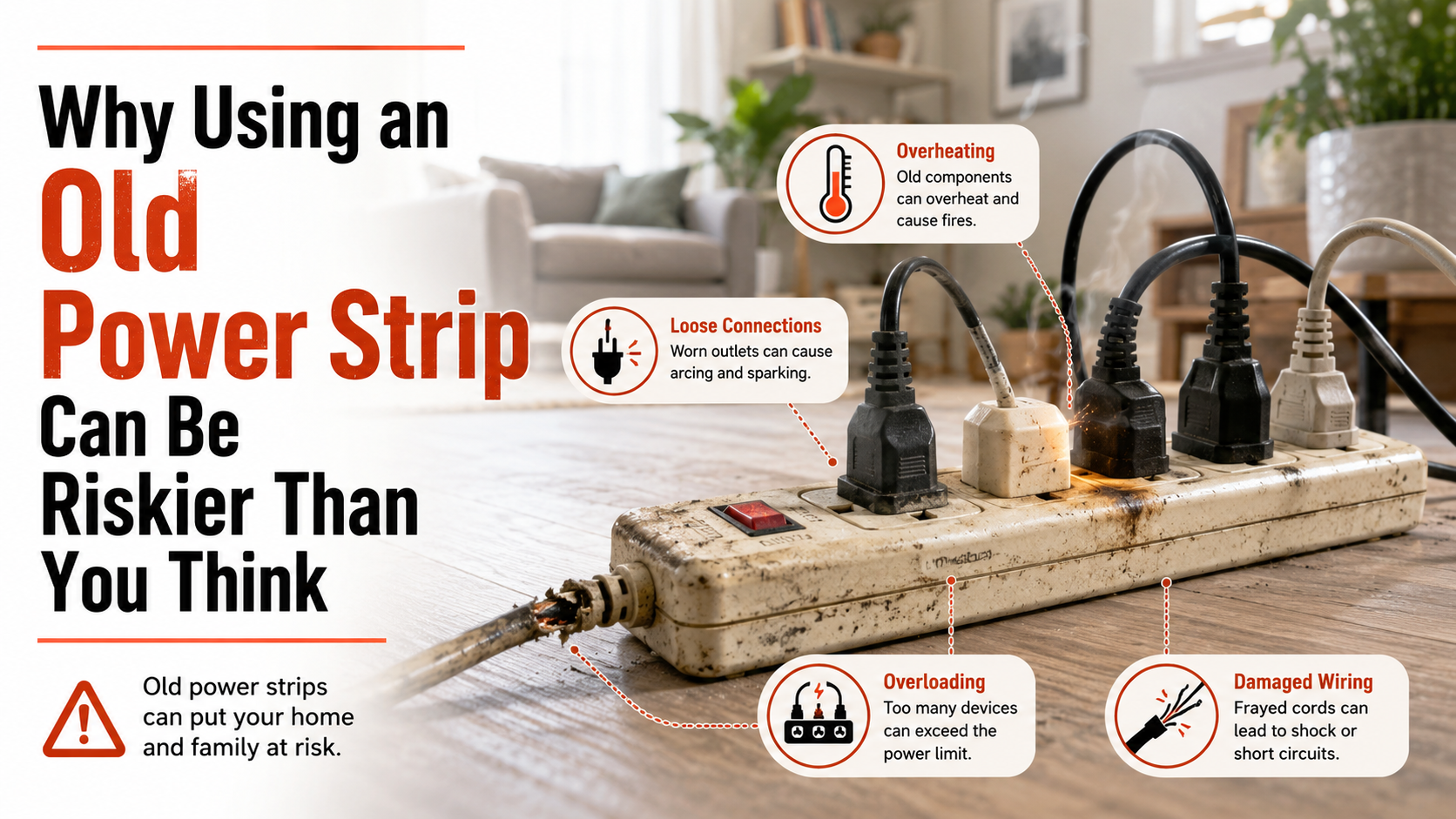
A power strip may look simple from the outside, but it still carries electricity through internal wiring, metal contacts, switches, and sometimes surge protection parts. Over time, those parts can wear down, loosen, overheat, or stop working properly. The danger is not always dramatic or obvious. Sometimes it starts with a loose plug, a faint burning smell, a warm plastic case, or a switch that does not feel right anymore.
The good news is that you do not have to panic or throw away every power strip in your house today. But it is worth knowing when an old one has become a risk and what everyday mistakes make the problem worse.
Even if they are not broken in an obvious way, they go through years of plugging, unplugging, heat exposure, dust buildup, bending cords, and electrical load. All of that wear can slowly affect how safely they work.
Internal Parts Can Wear Out
Inside a power strip, the outlets contain metal contacts that grip the prongs of your plugs. When the strip is new, those contacts usually hold plugs firmly.
Over time, they can loosen.
That means a plug may not sit tightly anymore. You may notice that a charger falls out easily, wiggles when touched, or only works when positioned a certain way. This is more than just annoying. A loose connection can create resistance, which may lead to extra heat.
Heat is one of the biggest warning signs with electrical products.
A slightly warm charger can be normal depending on the device, but the power strip itself should not feel hot. If the outlet area, cord, or switch feels unusually warm, the strip may no longer be safe to use.
Plastic Can Become Brittle or Damaged
Power strips are often made with plastic housings. Over many years, plastic can crack, discolor, warp, or become brittle, especially if it has been exposed to sunlight, heat, moisture, or pressure from furniture.
A cracked power strip should not be ignored.
Cracks can expose internal parts or allow dust and debris to get inside. Even if you cannot see metal or wires, damaged plastic means the strip is no longer providing the same protection it was designed to provide.
A common example is an old power strip behind a couch or entertainment center. It may be pressed against the wall for years, stepped on occasionally, or bent at an awkward angle. When you finally pull it out, the case may be yellowed, dusty, and cracked near the cord.
That is usually a sign to replace it, not clean it and keep using it.
The Problem With Old Surge Protectors
Many people use the words “power strip” and “surge protector” as if they mean the same thing, but they are not always identical.
A basic power strip simply gives you more outlets. A surge protector is designed to help protect devices from voltage spikes, such as those caused by certain electrical disturbances.
The tricky part is that surge protection can wear out.
Surge Protection Does Not Last Forever
If your old strip is also a surge protector, it may have internal components that absorb power surges. After enough use or after a significant surge event, those protective parts may no longer work well.
The confusing part is that the outlets may still provide power.
So your computer, TV, router, or gaming console may still turn on, but the strip may no longer be offering the protection you think it is. Some surge protectors have indicator lights that show whether protection is still active, but not everyone checks them. On older or cheaper models, the indicator may be unclear or missing.
If you are using an old surge protector for expensive electronics, it may be worth replacing it even if it appears to work.
Especially if you cannot remember when you bought it.
Old Does Not Always Mean Dangerous, But Unknown Age Matters
There is no single rule that every power strip becomes dangerous after a specific number of years. Quality, usage, environment, and electrical load all matter.
A power strip used lightly for a lamp and phone charger in a clean, dry room may last longer than one powering multiple office devices every day. A strip used near a kitchen counter, garage workbench, humid basement, or dusty area may age faster.
Still, if a power strip is old enough that you have no idea when you bought it, that is a good reason to inspect it carefully.
Common Mistakes That Make Old Power Strips More Risky
Most problems do not come from simply owning a power strip. They come from how it is used.
An older strip becomes much more concerning when it is overloaded, hidden, damaged, or used with the wrong appliances.
Plugging in High-Power Appliances
One of the biggest mistakes is plugging high-power appliances into a power strip.
Examples include:
Space heaters
Portable air conditioners
Microwaves
Toaster ovens
Hair dryers
Electric kettles
Large dehumidifiers
Irons
These appliances draw a lot of power and can produce heat quickly. They are usually better plugged directly into a proper wall outlet, following the appliance manufacturer’s instructions.
A common winter mistake is plugging a space heater into an old power strip under a desk or beside a bed. The heater may run for hours, the strip may be partly covered by a blanket or carpet, and the cord may already be worn from age.
That is a combination you want to avoid.
Daisy-Chaining Power Strips
Another risky habit is plugging one power strip into another.
This is sometimes called daisy-chaining. It happens when someone needs “just one more outlet” and connects multiple strips together. It may look convenient, but it can overload the circuit or create heat at multiple connection points.
Old power strips make this worse because the connections may already be loose or worn.
If you regularly need several power strips in one area, it may be a sign that the setup needs to be reorganized. You may need fewer plugged-in devices, a better-rated power strip, or help from a qualified electrician if the room truly lacks enough outlets.
Hiding Power Strips Under Rugs or Furniture
A power strip should not be treated like a decorative problem to hide at all costs.
When a strip is covered by a rug, buried under clothes, squeezed behind furniture, or trapped under a pile of cables, heat can build up. You also may not notice warning signs like discoloration, melting, sparking, or a burning smell.
Cords can also get pinched under furniture legs.
A cord that is crushed, sharply bent, or repeatedly stepped on may become damaged inside even if the outside looks mostly normal.
If you have an old power strip under a bed, couch, or rug, it is worth moving it to a visible, well-ventilated place or replacing the setup entirely.
Warning Signs Your Power Strip Should Be Replaced
Some signs are obvious. Others are easy to overlook.
If you notice any of the following, it is probably time to stop using the power strip.
The Strip Feels Hot
A power strip that feels hot to the touch is a warning sign.
Warmth around a charger or adapter can happen, but the strip itself should not become noticeably hot during normal use. Heat can mean the strip is overloaded, damaged, or making poor electrical contact.
Unplug it and let it cool before handling further. Do not keep using it just because the devices still work.
Plugs Fit Loosely
If plugs slide out easily or wiggle in the outlet slots, the internal contacts may be worn.
This is common with older power strips that have been used for years. A loose plug can cause inconsistent power and extra heat at the connection point.
If you have to “angle” a plug to make it work, replace the strip.
That is not a normal quirk. That is a sign the connection is no longer reliable.
You Smell Burning or See Discoloration
A burning smell is never something to ignore.
Sometimes it may smell like hot plastic, melting insulation, or a strange electrical odor. You might also see brown marks, yellowing around one outlet, melted areas, or a warped case.
Even a small mark can mean there has been overheating.
Do not test it again “just to see.” Replace it.
The Cord Is Damaged
Look at the cord carefully.
If you see fraying, cuts, exposed inner material, crushed sections, or a plug that is bent or loose, the power strip should not be used.
Electrical cords are often damaged near the plug or where the cord enters the strip. These areas take a lot of stress from pulling, bending, and being moved around.
A common mistake is pulling the strip by the cord instead of gripping the plug. Over time, that can weaken the connection.
The Switch or Indicator Light Acts Strange
If the on/off switch feels loose, flickers, crackles, sticks, or does not fully click into place, that is a warning sign.
For surge protectors, check the indicator lights. If the “protected” light is off, unclear, or no longer working, the surge protection may not be active. The strip may still provide power, but it may not provide the protection you expect.
When in doubt, replace it.
Everyday Places Where Old Power Strips Hide
Old power strips often stay in places we rarely inspect.
A quick home check can reveal strips you forgot existed.
Behind the TV
Entertainment centers are full of devices: TV, soundbar, streaming box, game console, router, modem, lamp, and chargers.
The power strip may be hidden behind furniture where dust collects and airflow is poor. Since TVs and electronics often stay plugged in all day, it is worth checking that the strip is not overloaded, cracked, or covered in dust.
Under the Desk
Home offices are another common spot.
A desk setup may include a computer, monitor, printer, phone charger, desk lamp, speakers, and laptop dock. Over time, people add more devices without thinking about how much the strip is handling.
If your feet kick the power strip often, or your chair rolls over the cord, replace or reposition it.
Near the Bed
Bedside power strips often power lamps, phone chargers, tablets, white noise machines, heating pads, or humidifiers.
The risk here is that bedding, blankets, clothes, or pillows may cover the strip. That can trap heat and hide problems.
Keep power strips away from soft materials and make sure plugs are fully inserted.
In the Garage or Basement
Garages and basements can be rough environments for electrical items.
Dust, moisture, temperature changes, tools, and heavy equipment can wear down a strip faster. If the power strip has been sitting on a concrete floor or used for tools, inspect it carefully.
For damp areas, use products designed for the environment and follow safety guidelines for outdoor or garage use.
Simple Prevention Tips for Safer Use
You do not need to become an electrical expert to make better choices at home.
A few simple habits can reduce risk.
Replace Old or Questionable Strips
If a power strip looks worn, feels loose, smells odd, or has visible damage, replace it.
Power strips are relatively inexpensive compared with the devices they power and the risk of keeping a damaged one in use.
A good rule of thumb: if you would not feel comfortable leaving it plugged in while you sleep or leave the house, it probably should not be in use.
Use the Right Strip for the Job
Not every strip is suited for every situation.
For electronics like computers and TVs, consider a quality surge protector with a clear protection indicator. For basic low-power items like lamps or chargers, a simple power strip may be enough if it is in good condition.
For high-power appliances, avoid power strips unless the appliance instructions specifically allow it.
When buying a new one, look for clear labeling, safety certification from a recognized testing organization, and a rating that matches your intended use.
Keep It Visible and Ventilated
Place power strips where they can breathe.
Avoid covering them with rugs, blankets, papers, clothing, or furniture. Keep them off areas where they can be stepped on, kicked, or exposed to spills.
A visible strip is easier to inspect and easier to unplug if something seems wrong.
Do a Quick Seasonal Check
You do not need to inspect every outlet every week. But a few times a year, take five minutes to check the power strips around your home.
Look for:
Cracks
Loose plugs
Warm spots
Dust buildup
Damaged cords
Burn marks
Flickering lights
Overcrowded outlets
This is especially useful before winter, when people use heaters, heated blankets, holiday lights, and more indoor electronics.
Unplug Devices You Do Not Use
If a power strip is packed with devices you rarely use, simplify it.
Unplug old chargers, unused electronics, and anything that does not need constant power. This reduces clutter and makes it easier to spot problems.
It also prevents people from adding more and more devices to an already crowded strip.
What to Do With an Old Power Strip
If you decide a power strip is too old or damaged to use, do not keep it “just in case.”
That is how unsafe items end up back under a desk or in a garage.
Cutting the cord is not necessary for everyone, but you should clearly remove it from use. Place it with electronic waste if your local recycling program accepts it, or follow your community’s disposal guidelines.
If the strip is damaged, avoid donating it. A worn electrical item is not a helpful hand-me-down.
A Practical Way to Think About Power Strip Safety
Power strips are useful. They help us manage modern life with all its chargers, screens, lamps, and small devices.
The goal is not to be afraid of them.
The goal is to stop treating them like permanent fixtures that never age. An old power strip is more like an old extension cord, old smoke alarm, or old appliance cord. It may still work, but it deserves a closer look once in a while.
If it is clean, undamaged, not overloaded, and used properly, it may be fine. But if it is cracked, hot, loose, discolored, overloaded, or older than you can remember, replacing it is the safer and simpler choice.
A few minutes of checking can prevent a lot of unnecessary risk.
Conclusion: Small Checks Make a Big Difference
Old power strips are easy to ignore because they usually sit in the background. They do their job quietly until they do not.
The most practical takeaway is simple: inspect the power strips you already own. Look behind the TV, under the desk, beside the bed, and in the garage. If one feels hot, smells strange, has loose outlets, shows damage, or has been powering heavy appliances, stop using it and replace it.
You do not need to overthink every cord in your home. Just pay attention to the signs that something is worn out.
A safer home often comes from small habits like this: noticing what has been ignored, replacing what is no longer reliable, and using everyday electrical items the way they were meant to be used.
Hi, I’m the creator and editor behind ZestyHabit. I research everyday safety, first aid, and practical wellness topics using official guidance and reliable public sources, then turn that information into clear, realistic steps for daily life.
My goal is to help readers make safer, better-informed choices at home and beyond.