
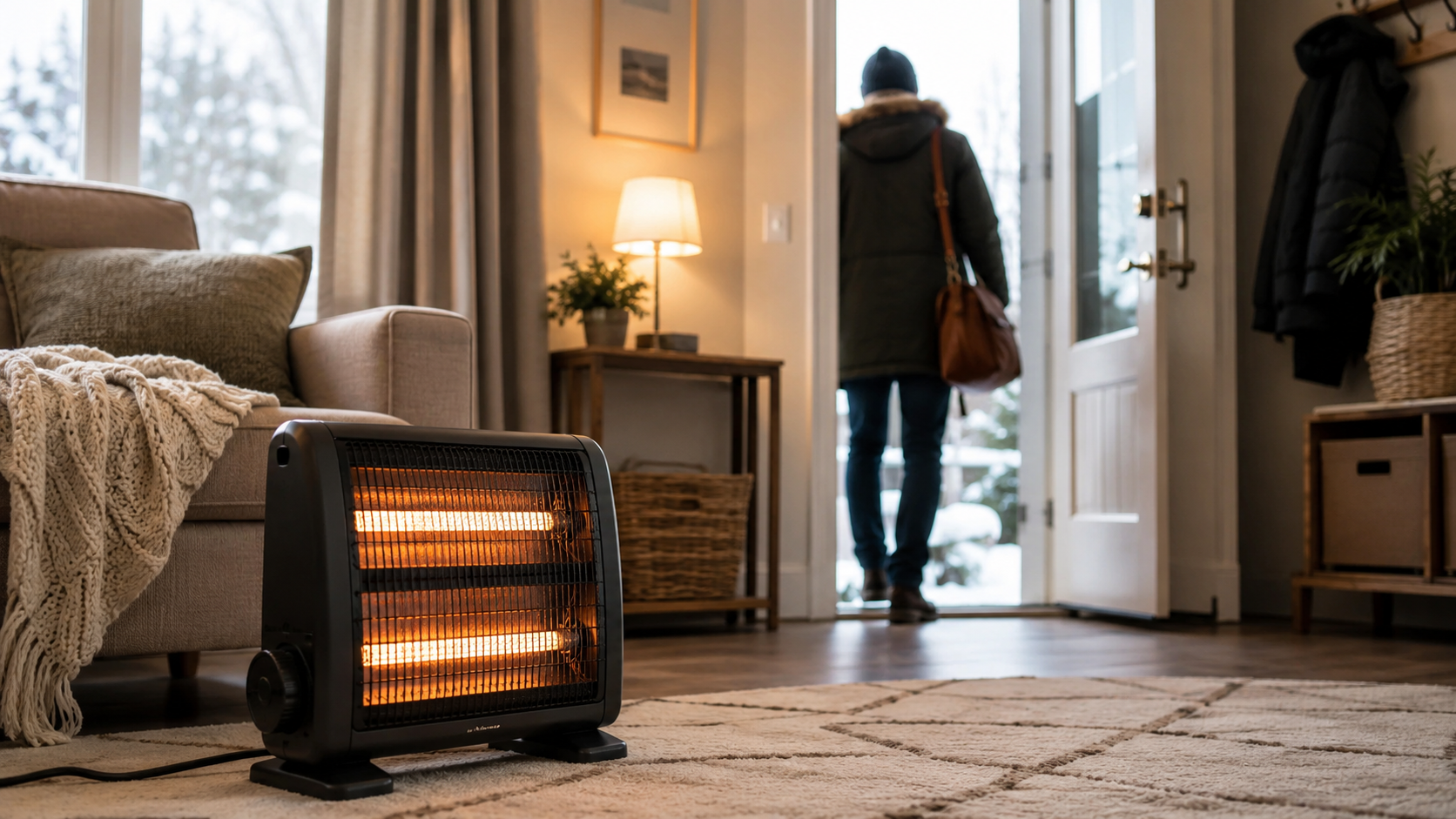

Electric space heaters can make a room warm and comfortable, but leaving one on while you’re away can create avoidable fire and safety risks. Learn why it matters, what common mistakes to avoid, and how to use a heater more safely at home.
The Cozy Convenience That Needs a Little Respect
Electric space heaters are easy to love.
They warm up a chilly bedroom, make a home office more comfortable, and help take the edge off a cold bathroom or basement. If one room always feels colder than the rest of the house, a small electric heater can feel like the simplest fix.
That convenience is exactly why people get casual with them.
You turn one on while getting dressed. You warm up the living room before settling in. You plug one in near your desk and forget it is there. Then you need to run a quick errand, pick up food, walk the dog, or leave for work. The room feels cold, and the thought pops up: “I’ll just leave it on so it stays warm.”
It sounds harmless, especially if the heater is new, has a thermostat, or says it has automatic shutoff. But leaving an electric heater running while no one is home is not a good habit.
A space heater is a high-heat appliance. It uses a lot of power, gets very hot, and sits close to everyday household items like rugs, bedding, curtains, furniture, pet toys, paper, and clothing. If something shifts, falls, overheats, or malfunctions while you are gone, you may not be there to notice the early warning signs.
This does not mean electric heaters are bad. It means they should be used with attention, space, and a clear “turn it off before leaving” rule.
Why Leaving a Space Heater On Is Risky
A space heater is different from a central heating system. Central heat is designed to warm the home through a built-in system. A portable electric heater is a temporary heat source sitting inside your living space.
That difference matters.
It Produces Intense Heat in One Small Area
Space heaters work by concentrating heat. Some blow warm air through a fan. Others radiate heat from glowing or heated elements. Either way, the area around the heater can become very warm.
If the heater is too close to a sofa, blanket, curtain, paper bag, laundry basket, or bedspread, the heat can build up. Materials do not always burst into flame immediately. Sometimes they dry out, discolor, scorch, or warm slowly before becoming dangerous.
When you are home, you may smell something odd or notice an item too close to the heater. When you are away, you lose that chance to catch the problem early.
Household Items Move More Than We Think
A heater may look safely placed when you walk out the door. But homes are not frozen in place.
A pet can knock a blanket down. A curtain can shift with airflow. A child may have left a toy nearby. A piece of paper can slide off a table. A laundry pile can slump. A door can open or close and change the air movement in the room.
Even if nothing dramatic happens, small changes can put something closer to the heater than you intended.
That is one reason the “it was fine when I left” mindset is not enough.
Electrical Problems Can Happen Quietly
Electric heaters draw a lot of power compared with many small household devices. If the outlet, cord, plug, or extension setup is not in good shape, heat can build up where you do not expect it.
A plug may feel warm. A cord may be damaged under a rug. A power strip may be overloaded. An old outlet may not hold the plug tightly. These issues are easier to notice when you are home and awake.
If the heater is running while the house is empty, electrical warning signs can go unnoticed.
Common Accidents That Can Happen
Not every unsafe heater habit leads to a fire. Sometimes the result is a damaged outlet, a melted plug, a scorched rug, or a close call. But those smaller incidents are still worth preventing.
Items Too Close to the Heater
This is one of the most common problems.
A heater placed near bedding, curtains, clothes, paper, cardboard, or upholstered furniture can create a fire risk. Even a small room can be used more safely if the heater has open space around it.
A good everyday rule is to keep the heater at least three feet away from anything that can burn. That includes fabric, furniture, books, baskets, decorations, and clutter.
A Heater Tipping Over
Many newer heaters include tip-over shutoff, which is helpful. But it should not be treated as permission to leave the heater unattended.
A safety feature is a backup, not a plan.
If a heater tips over onto a rug, blanket, or pile of clothes, you want to be nearby to respond. A switch may work as intended, but relying on it completely is not the same as using the heater carefully.
Overheated Cords or Outlets
A warm plug, loose outlet, flickering light, buzzing sound, or burning smell near an outlet should be taken seriously.
Space heaters should usually be plugged directly into a wall outlet, not into an extension cord or power strip. Many power strips are not designed for the high electrical load of a heater.
If you leave the heater on and go out, you may miss the early signs that something is overheating.
Pets Getting Too Close
Pets love warmth. A dog may curl up beside a heater. A cat may stretch near it or jump onto a surface next to it. A curious pet may bump the heater, chew a cord, or drag a blanket closer.
Even if your pet usually behaves well, leaving a heater running with pets unsupervised is not worth the risk.
If the house needs warmth for pets while you are away, it is better to use safer whole-home heating options or pet-safe temperature planning rather than a portable heater left on.
Drying Clothes Near the Heater
This is a surprisingly common mistake.
Someone places socks, gloves, towels, or a damp hoodie near the heater to dry. It works quickly, so the habit continues. But clothing and towels can shift, fall, or overheat.
A space heater is not a clothes dryer. Keep fabric away from it, especially when you are not in the room.
“But It Has Auto Shutoff” — Why That Still Isn’t Enough
Many electric heaters advertise safety features: overheat protection, tip-over shutoff, timers, thermostats, cool-touch housing, or automatic cycling.
These features are useful. They are worth having. But they do not remove the need for supervision.
Safety Features Can Fail or Be Misunderstood
A thermostat may turn the heater on and off based on room temperature, but it does not know whether a blanket is too close. A timer may be set incorrectly. A tip-over switch may not help if the heater stays upright but something falls against it.
Overheat protection may respond to certain internal conditions, but it is not a guarantee that everything around the heater is safe.
The safest approach is to treat features as backup protection, not a reason to leave the appliance running unattended.
“Unattended” Includes Quick Errands
People often think unattended means leaving for the whole day. But a “quick” errand can easily stretch longer than planned.
You run to the store, see a long line, get a call, stop for gas, or talk to a neighbor. A ten-minute trip becomes forty minutes.
Before leaving home, turn the heater off. It is a simple habit that removes the uncertainty.
Common Mistakes People Make With Electric Heaters
Most risky heater habits come from comfort, hurry, or limited space.
Placing the Heater Too Close to the Bed
A cold bedroom makes it tempting to place the heater near the bed. But bedding shifts easily. Blankets hang over edges. Pillows fall. Clothes collect on the floor.
If you use a heater in the bedroom, place it on a hard, level surface with plenty of open space. Turn it off before sleeping or leaving the room for long periods.
Using an Extension Cord
This is a big one. Many people use an extension cord because the outlet is not where they want the heater.
The problem is that space heaters use a lot of electricity, and extension cords or power strips can overheat if they are not rated for that load. Even then, direct wall outlet use is usually the safer choice.
If the heater cord cannot reach a safe outlet, move the heater or choose a different heating plan.
Running the Cord Under a Rug
A cord under a rug may look neat, but it can trap heat and hide damage. People may also step on it repeatedly without noticing.
Keep cords visible and out of walking paths when possible. If the cord creates a tripping hazard, the heater location probably needs to change.
Using the Heater in a Damp Area
Bathrooms, laundry rooms, basements, and garages can be tricky because moisture and electricity do not mix well. Only use a heater in a bathroom or damp space if the product is specifically designed and labeled for that environment.
Never place a heater where it can be splashed, touched with wet hands, or exposed to standing water.
Leaving It On for Pets or Plants
It is understandable to worry about pets, houseplants, or a cold room while you are gone. But a portable heater is not the best unattended solution.
If a room gets too cold when you leave, consider adjusting the main thermostat, sealing drafts, using safe insulation methods, moving plants away from cold windows, or creating a warmer pet area without a running portable heater.
Warning Signs You Should Not Ignore
Electric heaters often give clues when something is wrong. Catching these signs early can prevent bigger problems.
A Burning Smell
A dusty smell when a heater is first used for the season can happen, but a strong burning smell is different. If you smell melting plastic, scorching fabric, or anything sharp and unusual, turn the heater off and unplug it when it is safe to do so.
Do not keep using a heater that smells wrong.
A Hot Plug or Outlet
The plug may get slightly warm with use, but it should not feel hot. The outlet cover should not feel hot either.
If the plug, cord, or outlet feels unusually warm, stop using that setup. The outlet, heater, or electrical circuit may need attention.
Flickering Lights or Tripped Breakers
If lights flicker when the heater turns on, or if the breaker trips repeatedly, the circuit may be overloaded. Do not ignore it and keep resetting the breaker.
Space heaters should not share overloaded circuits with other high-power appliances.
Strange Noises
Buzzing, crackling, popping, or rattling sounds can point to a problem with the heater, outlet, or internal parts.
Turn the heater off and inspect it. If the noise continues, stop using it.
Damaged Cord or Plug
A cracked cord, exposed wire, bent plug, loose prong, or melted area means the heater should not be used.
Do not tape it and hope for the best. Damaged electrical appliances are not worth gambling with.
Safer Habits for Using an Electric Heater
A few simple routines can make heater use much safer.
Turn It Off Before Leaving
Make this the main rule: no one home, heater off.
It is easy to remember and easy to follow. Before leaving, do a quick check of the room and turn the heater off. Unplug it too if that is recommended by the manufacturer or if you want an extra layer of caution.
Keep a Three-Foot Clear Zone
Give the heater space. Keep furniture, curtains, bedding, clothing, paper, and rugs away from it.
In small rooms, this may mean the heater can only go in one safe location. That is okay. Safe placement matters more than perfect warmth.
Use a Flat, Hard Surface
Place the heater on the floor, not on a chair, bed, table, shelf, or unstable surface. It should sit flat and steady.
Avoid thick carpet if the heater’s instructions warn against it. Always follow the manufacturer’s placement guidance.
Plug It Directly Into the Wall
Avoid power strips and extension cords. Plug the heater directly into a wall outlet that fits snugly.
If the plug feels loose in the outlet, use a different outlet and consider having the loose one checked.
Use the Right Size Heater
A small heater is meant to warm a small area, not an entire house. Using a heater that is too small for the room may tempt you to run it constantly or place it too close to where you sit.
Choose a heater appropriate for the space and use it as temporary supplemental heat.
Keep It Away From Water
Do not use a regular space heater near a bathtub, shower, sink, or wet floor. If you need bathroom heat, look for products specifically designed for bathroom use and follow the instructions carefully.
A Simple Leaving-Home Heater Checklist
Before you walk out the door, take a few seconds to check:
- Is the electric heater turned off?
- Is it unplugged if needed?
- Are nearby blankets, curtains, or clothing away from it?
- Are pets unable to knock it over or chew the cord?
- Is the outlet cool and normal-looking?
- Is the heater sitting on a stable, clear surface?
This quick check is especially useful during cold mornings when everyone is rushing.
What If You Want the Room Warm When You Come Back?
This is the reason many people leave heaters on. No one wants to return to a freezing room.
But there are safer ways to manage comfort.
Use Your Main Heating System
If possible, use your home’s central heating or built-in heating system to maintain a safe baseline temperature. It is designed for longer operation in a way portable heaters are not.
Warm the Room When You Return
A space heater can warm a small room fairly quickly once you are back and able to supervise it. It may be mildly inconvenient, but it is safer than leaving it running while the home is empty.
Reduce Drafts
Close curtains, seal obvious drafts, use weatherstripping where appropriate, and keep doors closed to colder rooms. Reducing heat loss can make a room feel warmer without relying as much on portable heat.
Dress the Room Differently
Area rugs, heavier curtains, door draft stoppers, and warmer bedding can help a room feel more comfortable. These are not substitutes for safe heating, but they can reduce the urge to leave a heater running.
Special Situations: Older Homes, Dorms, and Small Apartments
Some living spaces make heater use more tempting and more complicated.
Older Homes
Older homes may have fewer outlets, older wiring, or drafty rooms. That combination can lead people to use extension cords or overloaded outlets.
If you live in an older home, be extra cautious about where you plug in a heater. Avoid running multiple high-power devices on the same circuit.
Dorm Rooms
Many dorms have strict rules about space heaters, and for good reason. Small rooms, shared buildings, overloaded outlets, and lots of fabric create risk.
Follow the housing rules. If space heaters are not allowed, do not use one secretly.
Small Apartments
In a small apartment, it can be difficult to keep a three-foot clear zone. But the rule still matters.
If there is no safe place to put the heater, it may not be the right heating solution for that room.
Teaching the Household the Rule
Safety habits work better when everyone follows the same rule.
A simple household rule is enough:
“Space heater off before leaving.”
You can also add:
“Nothing within three feet.”
“Wall outlet only.”
“No heater while sleeping.”
“No drying clothes on or near it.”
These rules are easy for roommates, teens, family members, and guests to understand.
If someone tends to forget, place a small reminder note near the door during winter. It may look simple, but it helps.
Final Thoughts: Warmth Is Nice, But Supervision Matters
Electric space heaters can be useful, especially when one room feels colder than the rest of the home. They can make a desk area, bedroom, or living room more comfortable without changing the whole house temperature.
But they are not appliances to leave running while you are away.
A heater uses concentrated heat and a lot of electricity. It sits near real-life household items that can move, fall, or get too close. Pets, cords, outlets, curtains, blankets, and clutter all add variables you cannot monitor once you leave.
The safer habit is simple: use the heater only when you are home, awake, and able to keep an eye on it. Turn it off before leaving. Keep a clear space around it. Plug it directly into the wall. Pay attention to warning signs like hot plugs, strange smells, damaged cords, or flickering lights.
You do not have to give up comfort to be careful. You just need a routine that respects what a space heater is: a temporary heat source that works best when someone is nearby.
Before you leave the house, do one last glance around the room. If the heater is on, turn it off. That small habit can keep your home warmer in the way that matters most: calmer, safer, and easier to come back to.

Hi, I’m the creator and editor behind ZestyHabit. I research everyday safety, first aid, and practical wellness topics using official guidance and reliable public sources, then turn that information into clear, realistic steps for daily life.
My goal is to help readers make safer, better-informed choices at home and beyond.


