
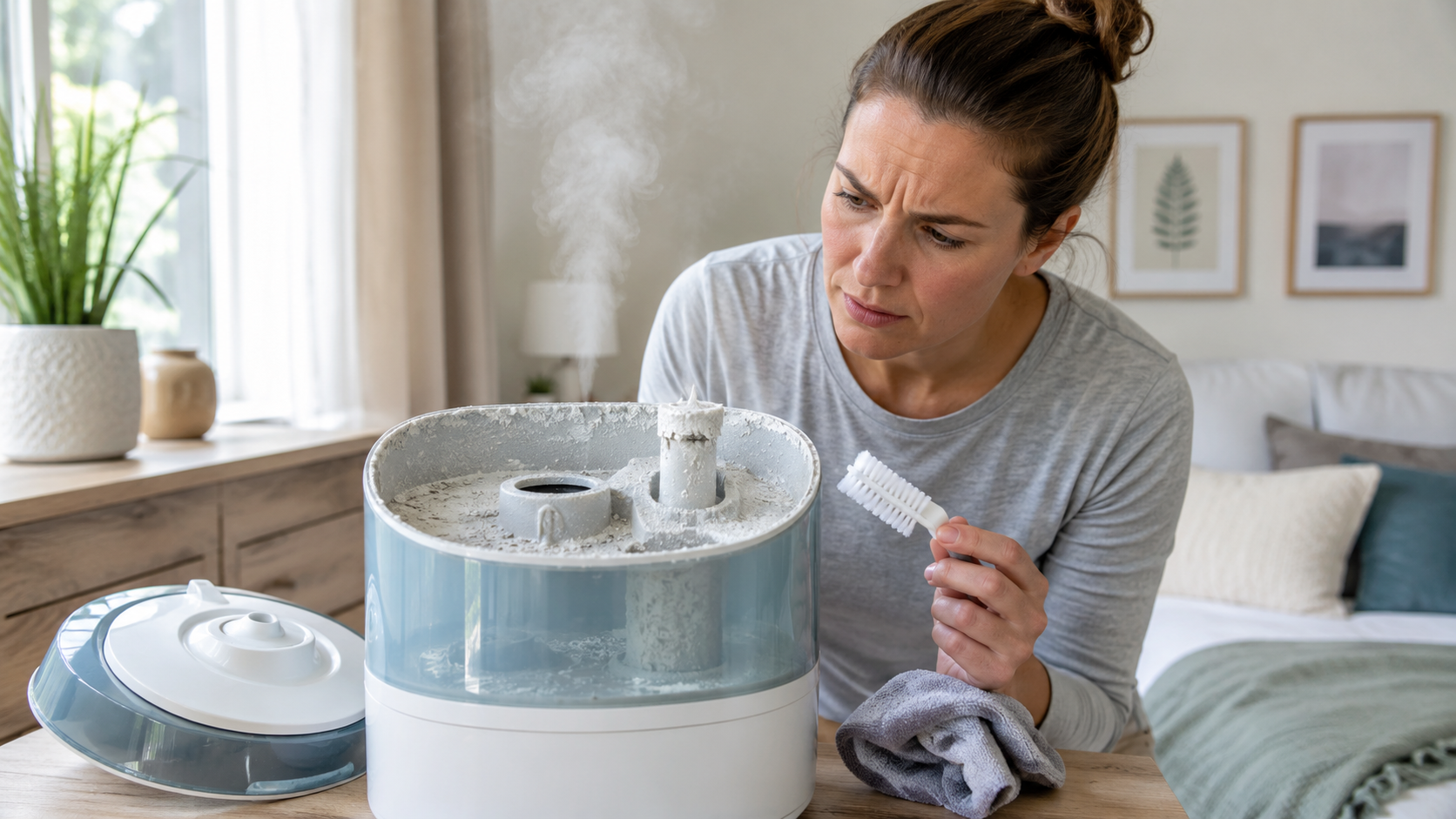

Mineral scale and residue inside a humidifier may seem harmless, but poor cleaning habits can allow minerals, mold, and germs to spread into the air. Learn how humidifier buildup happens, what warning signs to watch for, and how to keep your humidifier cleaner and safer.
Why the Inside of Your Humidifier Matters
A humidifier is one of those appliances people usually buy for comfort. The air feels dry. Your throat feels scratchy in the morning. Your skin feels tight. Maybe the winter heat is running all day, or your bedroom feels dry no matter how many glasses of water you drink.
So you fill the tank, turn it on, and let the mist do its job.
But after a few days or weeks, you may notice something inside the humidifier. A chalky white film. A slippery layer. A yellowish stain near the base. A crusty ring where the water sits. Maybe the tank smells a little musty when you open it.
That buildup is easy to ignore because it is inside the machine. The outside may still look clean, and the mist may still come out. But the inside of a humidifier is exactly where moisture, minerals, and microorganisms can collect.
The short answer is yes: buildup inside a humidifier can potentially affect the air you breathe, especially if the unit is not cleaned regularly. The concern is not just “water stains.” It is what can collect with them: mineral particles, mold, bacteria, and biofilm.
This does not mean you need to be afraid of using a humidifier. It means the humidifier needs the same kind of routine care as anything else that holds water. A humidifier can help make dry air more comfortable, but only when it is kept clean and used properly.
What Is the “Scale” or Buildup Inside a Humidifier?
The crusty or cloudy residue inside a humidifier is often mineral scale. It usually comes from minerals in tap water, especially in areas with hard water.
When water sits in the tank or evaporates, minerals can remain behind. Over time, they collect on the tank, base, mist outlet, heating element, filter, or ultrasonic plate.
Mineral Scale Is Common
If you see white, gray, or chalky deposits, that may be mineral buildup. It is similar to the scale you might see on a faucet, kettle, coffee maker, or showerhead.
By itself, mineral scale is not mold. But it can create rough surfaces and tiny crevices where moisture and residue collect. That can make the humidifier harder to clean.
Slime Is Different From Scale
A slippery, slimy, or musty layer is more concerning than simple white scale. That may be biofilm, which is a sticky layer where microorganisms can grow.
If the inside feels slick, smells stale, or has dark spots, it is time to stop using the humidifier and clean it thoroughly according to the manufacturer’s instructions.
The Water Tank Is Not the Only Problem Area
Many people rinse the tank and forget the base. But the base often holds leftover water. It may also contain small channels, corners, valves, caps, filters, or mist-producing parts.
Those areas can trap water and residue. If they stay damp between uses, buildup can form faster.
How Humidifier Buildup Can Affect Indoor Air
Humidifiers work by putting moisture into the air. That is their purpose. But if the water or internal surfaces are dirty, the mist may not be as clean as you think.
The CDC notes that germs can live in humidifiers and spread through the mist they make. It recommends emptying humidifier water daily, cleaning units according to the manufacturer’s instructions, and letting them air dry after cleaning.
Minerals Can Become “White Dust”
Some humidifiers, especially ultrasonic models, can release minerals from tap water into the air as fine particles. You may notice this as white dust on furniture, electronics, or nearby surfaces.
The EPA recommends using low-mineral water, such as distilled water, to help prevent minerals from being released into the air. It also recommends daily emptying and drying, plus cleaning portable humidifiers every third day to reduce scale and microorganisms.
White dust may seem like a housekeeping issue, but it is also a sign that minerals from the water are moving into the room. If you see dust collecting around the humidifier, it is worth changing the water type and cleaning routine.
Mold and Bacteria Can Spread Through Mist
A humidifier is warm or room-temperature water, sitting in a container, often for hours. That is exactly why cleaning matters.
If water sits too long, or if the tank is only topped off instead of emptied, microorganisms can grow. Once the humidifier runs, tiny droplets may carry some of that contamination into the air.
This can be especially irritating for people who are sensitive to indoor air quality, including children, older adults, and people with asthma or allergies. This article is not medical advice, but as a general home safety habit, breathing mist from a dirty appliance is not something to accept as normal.
Too Much Humidity Can Encourage Mold in the Room
The humidifier itself is not the only concern. If the room becomes too humid, moisture can collect on windows, walls, curtains, carpets, and furniture. That can encourage mold growth in the room.
A humidifier should make the air comfortable, not damp. If windows are fogging, walls feel clammy, or the room smells musty, the humidity may be too high.
Warning Signs Your Humidifier Needs Cleaning
Humidifiers do not always look dirty from the outside. It helps to know the little signs that something inside needs attention.
A Musty or Sour Smell
A clean humidifier should not smell unpleasant. If the tank, base, or mist has a stale, sour, musty, or swampy odor, stop and clean it before using it again.
Do not cover the smell with essential oils, fragrance drops, or room sprays. That only hides the warning sign.
White Dust Around the Room
If nearby furniture, shelves, or electronics develop a white powdery layer after humidifier use, your water likely contains minerals that are being dispersed.
Switching to distilled or demineralized water may help. You should also clean out mineral deposits already inside the unit.
Slimy Surfaces
A slippery tank wall, slimy base, or slick cap is a sign that water has been sitting too long or the unit is not drying between uses.
Rinsing alone may not remove biofilm. Follow the manual’s cleaning and disinfecting steps.
Visible Spots or Stains
Dark specks, pinkish film, greenish areas, or cloudy patches should not be ignored. They may be mold, bacterial growth, algae-like buildup, or residue.
Even if you are not sure what the spot is, it is enough reason to clean before running the unit again.
Reduced Mist or Strange Noises
Mineral scale can interfere with how the humidifier works. If mist output drops, the unit gurgles, vibrates differently, or seems to struggle, buildup may be affecting parts inside.
Cleaning may improve performance and reduce the chance of dirty mist.
Common Mistakes That Make Buildup Worse
Most humidifier problems come from normal habits, not from people trying to be careless.
Topping Off Old Water
This is one of the biggest mistakes.
If the tank is half full, it is tempting to add fresh water on top and turn the machine back on. But that means old water stays inside longer. Any residue or microorganisms already present remain in the tank.
A better habit is to empty leftover water, rinse the tank, and refill with fresh water each day.
Letting Water Sit Between Uses
A humidifier that sits with water inside becomes a little indoor pond. Even if it is turned off, moisture remains.
When you are done using it for the day, empty the tank and base. Let them air dry if the design allows.
Only Cleaning When It Looks Dirty
By the time you see slime, smell odor, or notice crusty buildup, the humidifier has probably needed cleaning for a while.
Routine cleaning prevents the mess from getting established.
Using Tap Water in a Hard-Water Area
Tap water is easy and cheap, but it may leave more mineral deposits. In hard-water areas, buildup can appear quickly.
Distilled water costs more, but it can reduce mineral scale and white dust. For many people, using distilled water in a bedroom humidifier is worth it, especially during heavy winter use.
Forgetting the Filter
Some humidifiers have wicks, cartridges, or filters. These parts can collect minerals and residue. If they are not changed or cleaned as directed, the unit may smell musty or work poorly.
Check the manual for your model. Filters are not all the same.
Using Essential Oils in the Wrong Type of Humidifier
Some people add essential oils to the water tank for fragrance. Many humidifiers are not designed for oils. Oils can coat internal parts, trap residue, damage plastic, or create buildup.
Only use oils if the manufacturer specifically says your model is designed for them. Otherwise, keep the humidifier for water only.
How Often Should You Clean a Humidifier?
The exact schedule depends on your model and how often you use it, but a simple routine works well for most homes.
Daily: Empty and Dry
Every day the humidifier is used, empty leftover water. Rinse the tank and base if the manual allows. Wipe surfaces dry or let them air dry.
This daily habit is one of the best ways to prevent stale water and buildup.
Every Few Days: Clean More Thoroughly
The EPA recommends cleaning portable humidifiers every third day to reduce scale and microorganisms.
That may sound frequent, but humidifiers are water appliances. If you use one nightly, cleaning every few days is reasonable.
Before Storage: Clean and Dry Completely
At the end of the season, do not put the humidifier away with moisture inside. Empty it, clean it, dry it fully, and store it in a dry place.
A damp humidifier stored in a closet can greet you months later with odor, spots, and stubborn residue.
A Simple Cleaning Routine for Everyday Use
Always follow your specific humidifier’s manual first. Designs vary, and some parts should not be submerged or scrubbed harshly.
That said, the basic routine is usually simple.
Step 1: Unplug the Humidifier
Before cleaning, turn it off and unplug it. Water and electricity do not belong together.
Step 2: Empty All Water
Pour out water from the tank and base. Do not leave old water sitting while you clean only the top.
Step 3: Rinse Loose Residue
Rinse removable parts with clean water if the manual allows. Pay attention to corners, caps, channels, and the base.
Step 4: Remove Mineral Scale
Many manuals recommend white vinegar for mineral scale, but check your model first. Vinegar can help loosen chalky deposits in many humidifiers, but it should be rinsed thoroughly afterward.
Do not mix vinegar with bleach or other cleaners.
Step 5: Disinfect Only as Directed
Some manufacturers recommend occasional disinfection with a specific diluted solution. Others provide different guidance.
Follow the label and manual carefully. More disinfectant is not better. If you use any cleaning or disinfecting agent, rinse thoroughly so chemicals are not released into the air when the humidifier runs. The EPA specifically warns to rinse thoroughly after cleaning or disinfecting to avoid releasing chemicals into indoor air.
Step 6: Let It Dry
Drying matters. A clean but wet humidifier can start collecting new residue quickly. Let parts air dry before reassembling if the manual allows.
Choosing Better Water for Your Humidifier
Water choice can make a big difference.
Distilled Water
Distilled water has fewer minerals than most tap water. That means less scale inside the humidifier and less white dust around the room.
The CDC also notes that using distilled water or boiled and cooled water can further reduce germ growth in humidifiers.
For daily use, distilled water is often the easiest low-mineral option.
Filtered Water
Filtered water may reduce some impurities, but not all filters remove minerals. A basic pitcher filter may not prevent white dust.
If mineral dust is your issue, distilled or demineralized water is usually more effective than ordinary filtered water.
Tap Water
Tap water may be acceptable for some humidifiers, but it can increase mineral buildup, especially in hard-water areas. If you use tap water, be extra consistent with cleaning.
Humidity Level Matters Too
A clean humidifier can still cause problems if the room gets too humid.
Many home comfort guides suggest keeping indoor humidity in a comfortable middle range rather than letting the air become damp. A small hygrometer can help you monitor this.
Signs the Room Is Too Humid
Watch for condensation on windows, damp curtains, musty smells, sticky surfaces, or mold spots near walls and ceilings.
If you see these signs, turn the humidifier down or off. More mist is not always better.
Bigger Is Not Always Better
A humidifier that is too large for the room may add moisture too quickly. Use the right size for the space and adjust settings as needed.
Close Monitoring Helps
A humidifier should not run endlessly just because it is there. Use it when the air is dry, then turn it off when comfort improves.
Special Caution for Bedrooms and Kids’ Rooms
Humidifiers are often used in bedrooms because dry air can feel worse at night. That makes cleaning even more important.
You spend hours breathing bedroom air while you sleep. If the humidifier is dirty, musty, or producing white dust, the exposure can continue all night.
In children’s rooms, place the humidifier where it cannot be tipped over or reached easily. Keep cords away from walking paths. Use clean water and clean the unit regularly. Avoid adding fragrance oils unless the model is specifically designed for them.
A humidifier should support comfort, not add another source of indoor air irritation.
When to Replace a Humidifier
Sometimes cleaning is not enough.
Consider replacing the unit if the tank is cracked, the base has stubborn slime that will not clean out, parts are missing, the filter system is neglected, the cord is damaged, or the machine smells bad even after proper cleaning.
A very old humidifier with hidden crevices may be hard to keep clean. If you dread cleaning it because the design is complicated, you may be less likely to maintain it. A simpler model may be a better long-term choice.
Final Thoughts: Clean Mist Starts With a Clean Machine
Humidifier buildup may look like a minor housekeeping problem, but it can affect the quality of the mist your humidifier puts into the air. Mineral scale can contribute to white dust, while standing water and dirty surfaces can allow mold, bacteria, and biofilm to develop.
The good news is that humidifier safety is mostly about routine.
Empty the water every day. Let parts dry. Use distilled or low-mineral water when possible. Clean the humidifier every few days during regular use. Rinse cleaning products thoroughly. Watch for musty smells, slime, white dust, and visible residue.
A humidifier can be a helpful comfort tool in a dry home, especially in winter. It just needs regular care. When the inside of the machine stays clean, the air in your room can feel fresher, calmer, and easier to enjoy.

Hi, I’m the creator and editor behind ZestyHabit. I research everyday safety, first aid, and practical wellness topics using official guidance and reliable public sources, then turn that information into clear, realistic steps for daily life.
My goal is to help readers make safer, better-informed choices at home and beyond.


[…] or mineral buildup on plumbing […]