
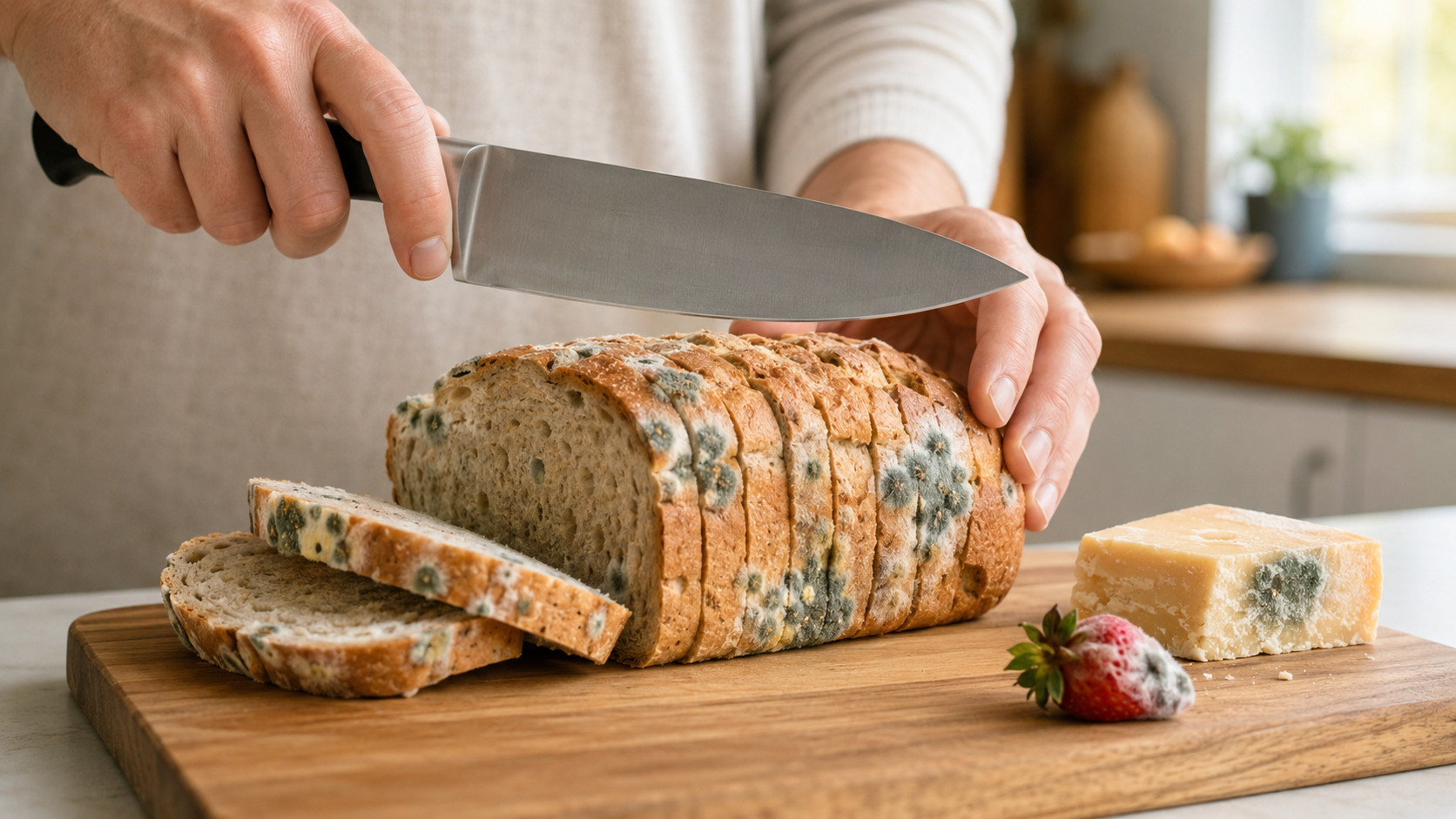

Is it safe to cut mold off food and eat the rest? Learn which foods are riskier, why mold can spread below the surface, and simple habits to prevent moldy food at home.
The Common Kitchen Question: Can I Just Cut the Mold Off?
Almost everyone has had this moment.
You reach for a loaf of bread and notice one fuzzy green spot near the edge. Or you open a container of strawberries and find one berry covered in white mold. Maybe there is a small blue patch on cheese, a strange spot on a tomato, or a little fuzz on leftovers you forgot in the back of the fridge.
The first thought is often, “Can I just remove that part and eat the rest?”
It feels wasteful to throw food away, especially when groceries are expensive. If only one small area looks bad, cutting it off seems like a reasonable compromise.
But moldy food is not always as simple as it looks.
In some foods, mold is only the visible part of a bigger problem. The fuzzy spot you see on the surface may have tiny root-like threads spreading deeper into the food. In soft, moist foods, those threads can travel farther than you might expect. Some molds can also grow along with bacteria or produce substances you do not want to eat.
That does not mean every moldy food situation is equally dangerous. A firm block of hard cheese is very different from a moldy slice of bread or a container of cooked pasta. The key is knowing when trimming is reasonable and when it is better to toss the food.
This guide will keep things practical, calm, and realistic for everyday kitchens.
What Is Mold, Really?
Mold is a type of fungus. It grows from tiny spores that are naturally found in the environment. Those spores can land on food, especially when food is exposed to air, moisture, warmth, or poor storage conditions.
When mold grows, it may appear fuzzy, powdery, slimy, green, white, black, blue, gray, or pink. Sometimes it looks like a small spot. Other times it spreads across the surface.
The visible mold is only part of the story. Under the surface, mold may have thread-like structures that spread into the food. These are easier to imagine if you think of a plant: the fuzzy part is like what you see above ground, but there may be more going on underneath.
Mold Loves Moisture
Mold grows especially well in foods with moisture. That includes bread, fruit, cooked leftovers, soft cheeses, yogurt, sauces, jams, and cooked grains.
Soft foods give mold an easier path to spread. They also tend to spoil faster in general.
Mold Does Not Always Stay in One Spot
One of the biggest kitchen mistakes is assuming the visible spot is the whole problem. With some foods, especially soft or porous ones, mold can spread below the surface before you notice much on top.
That is why cutting off the fuzzy part is not always enough.
Why Eating Around Mold Can Be Risky
Moldy food can be a problem for a few reasons.
First, the mold may have spread beyond what you can see. Second, some moldy foods may also contain bacteria. Third, certain molds can produce toxins under the right conditions.
You do not need to become afraid of your refrigerator. But it helps to understand why “just scrape it off” is not always a safe habit.
Mold Can Spread Below the Surface
This is the main reason soft moldy foods should usually be thrown away. Bread, berries, cooked rice, pasta, soft fruit, yogurt, and leftovers have enough moisture or open texture for mold to move through them.
A tiny spot on the surface may be connected to more mold inside the food.
Bacteria May Be Growing Too
Mold is what you see, but bacteria may be present as well. Food that has been sitting too long, stored too warm, or left uncovered may support more than one type of spoilage.
This is especially important with leftovers, cooked foods, dairy products, and meat-based dishes.
Some Molds Can Produce Toxins
Not all mold produces harmful toxins, and not every moldy food will make someone sick. But because you usually cannot identify the type of mold by sight at home, it is not worth guessing with high-risk foods.
A small fuzzy patch on bread may seem harmless, but you cannot tell what is happening below the surface or what type of mold it is just by looking.
Foods You Should Usually Throw Away If Moldy
For many everyday foods, the safest practical choice is to discard the whole item or container when mold appears. This can feel frustrating, but it is often the wiser choice.
Bread and Baked Goods
Moldy bread should usually be thrown away, even if the mold is only on one slice.
Bread is porous, which means mold can spread through it more easily. A visible spot on one slice may not be the only area affected. This includes sandwich bread, rolls, bagels, tortillas, muffins, pastries, and cakes.
A common mistake is removing one moldy slice and keeping the rest of the loaf. If the loaf was stored together in the same bag, it is better to be cautious.
Soft Fruits and Vegetables
Soft produce with mold should usually be discarded. This includes berries, peaches, tomatoes, cucumbers, grapes, and leafy greens.
Soft fruits and vegetables have high moisture content, so mold can spread quickly. With berries, one moldy berry can also affect nearby berries in the container.
If you find one moldy strawberry, remove and discard it along with any berries touching it. Then check the rest carefully. If mold is widespread, the whole container should go.
Cooked Leftovers
If mold appears on leftovers, throw them away. Do not scrape off the top layer and reheat the rest.
Cooked foods like pasta, rice, casseroles, soups, stews, sauces, meat dishes, and vegetables can support both mold and bacteria. Reheating may not solve every problem, especially if the food has been stored too long.
When leftovers grow mold, that is a clear sign they are no longer worth keeping.
Yogurt, Sour Cream, and Soft Dairy
Moldy yogurt, sour cream, cream cheese, ricotta, cottage cheese, and other soft dairy products should be discarded.
Even if the mold is only on the lid or one corner, the product is soft and moist enough for contamination to spread. Scraping the surface is not a reliable solution.
Jams and Jellies
Many people grew up seeing mold scraped off jam. It may seem harmless because jam is sweet, but mold on jam or jelly is a sign to throw it away.
Mold can grow on the surface and may produce unwanted substances. Because jam is soft and moist, it is not a good candidate for trimming.
Peanut Butter, Nuts, and Nut Butters
If you see mold in peanut butter, almond butter, nuts, or seeds, do not eat them. These foods can be affected by mold in ways that are not always obvious, especially if they have been stored in warm or humid conditions.
Deli Meats and Cooked Meats
Mold on deli meat, cooked meat, bacon, hot dogs, or prepared meat products is a strong reason to throw the food away.
These foods are perishable and not worth trying to save once mold appears.
Foods Where Cutting Around Mold May Be Acceptable
There are a few foods where trimming mold may be reasonable, mainly because they are firm and dense. Even then, it should be done carefully.
Hard Cheese
Hard cheeses, such as cheddar, Parmesan, Swiss, and similar firm cheeses, can often be saved if the mold is limited to a small area.
The usual practical approach is to cut at least one inch around and below the moldy spot, keeping the knife out of the mold so you do not spread it to the clean part. Then rewrap the cheese in fresh wrapping.
This does not apply to soft cheeses. Brie, goat cheese, cream cheese, ricotta, cottage cheese, and shredded cheese should not be treated the same way.
Firm Fruits and Vegetables
Firm produce such as carrots, cabbage, bell peppers, and some hard squash may sometimes be trimmed if the moldy area is small.
Because these foods are dense and lower in moisture than soft produce, mold has a harder time spreading deeply. Cut away at least one inch around the moldy area, and avoid touching the knife to the mold.
If the produce is slimy, soft, badly spotted, or smells off, throw it away instead.
Dry-Cured Products
Some dry-cured foods are made with controlled molds as part of the process. However, this is not something most home cooks need to judge casually.
If you are unsure whether mold is intentional or spoilage, follow the product label or discard the item. Do not assume random mold on meat, cheese, or pantry foods is safe.
What About Cheese That Is Supposed to Have Mold?
Blue cheese, Gorgonzola, Roquefort, Brie, and Camembert may contain intentional molds used during production. That is different from random mold growing after purchase.
Even with these cheeses, you should watch for changes that seem unusual for the product.
For example, if blue cheese develops fuzzy mold in a new color, smells much stronger than usual, becomes slimy, or grows mold on areas where it normally should not, it may be time to throw it away.
The safest rule is simple: mold that belongs to the product is one thing; new, unexpected mold is another.
Common Mistakes People Make With Moldy Food
Moldy food decisions often happen quickly. You are hungry, busy, or trying not to waste money. That is when mistakes are easy.
Mistake 1: Smelling Moldy Food Closely
Avoid putting moldy food right under your nose and taking a deep sniff. Mold spores can become airborne, and inhaling them is not a good idea, especially for people with allergies, asthma, or sensitivities.
If something looks moldy, you do not need a dramatic smell test. Use your eyes and common sense.
Mistake 2: Scraping Mold Off Soft Food
Scraping mold off yogurt, sauce, jam, bread, or leftovers does not make the rest reliable. The mold may already be deeper than the surface.
Soft foods are usually not worth trying to rescue.
Mistake 3: Saving the Rest of a Moldy Loaf
Bread is one of the most common examples. One moldy slice often means the loaf has been exposed to mold spores throughout the bag.
Even if the other slices look fine, the safer choice is to discard the loaf.
Mistake 4: Reheating Moldy Food
Heat can kill some organisms, but reheating moldy leftovers is not a good solution. It may not remove toxins, and it does not undo spoilage.
If leftovers have mold, throw them away.
Mistake 5: Forgetting to Clean the Container or Fridge Area
If moldy food sat in a drawer, bin, shelf, or container, clean the area. Mold spores can spread to nearby surfaces and foods.
A quick wipe with hot soapy water can help prevent the next item from spoiling faster.
Warning Signs That Food Should Be Thrown Away
Sometimes mold is visible. Other times, food is not obviously moldy but still shows signs of spoilage.
Throw food away if you notice:
Visible fuzzy or powdery spots
Slimy texture
Sour or strange odor
Bulging packaging
Unusual color changes
Leaking containers
Mold inside a sealed package
Leftovers older than you remember
Food stored warm by accident
When food seems questionable, it is usually not worth the risk. A few dollars of food waste is frustrating, but food that makes you sick is worse.
How to Prevent Mold From Growing on Food
Prevention is much easier than deciding what to do after mold appears. A few simple storage habits can help food last longer and reduce waste.
Keep the Refrigerator Cold Enough
A refrigerator that is too warm can make food spoil faster. Use a refrigerator thermometer if you are unsure. Many people are surprised to learn that their fridge is warmer than they thought.
Store perishable foods promptly and avoid leaving the door open for long periods.
Use Clear Containers for Leftovers
Clear containers help you see what is inside before it becomes a mystery. Labeling leftovers with the date can also help, especially if your fridge gets crowded.
If you cannot remember when you cooked something, that is a sign it may be time to let it go.
Store Bread Properly
Bread molds faster in warm, humid conditions. If you will not finish a loaf quickly, consider freezing part of it. Frozen bread can be toasted or thawed as needed, and it reduces waste.
Avoid storing bread near the stove, dishwasher, or sunny window where heat and humidity may build up.
Wash Berries Right Before Eating
Berries spoil faster when stored wet. Instead of washing the whole container right away, wash berries shortly before eating them.
Remove any damaged or moldy berries as soon as you notice them so they do not affect the rest.
Let Food Cool Before Sealing Tightly
Hot food sealed in a container can trap steam, which creates moisture. Moisture encourages mold and spoilage.
Divide leftovers into shallow containers, let steam reduce briefly, then refrigerate. Do not leave food out for long periods, but avoid trapping excess heat and moisture.
Keep Food Covered
Uncovered food can dry out, absorb odors, and collect spores from the air. Cover leftovers, wrap cheese properly, and close packages tightly.
Fresh wrapping is especially important after trimming hard cheese.
Clean Fridge Spills Quickly
Spills, crumbs, and old produce pieces can encourage mold growth. Wipe refrigerator shelves and drawers when you notice messes.
A clean fridge helps food last longer and makes it easier to spot problems early.
What to Do If You Find Mold in the Fridge
Finding one moldy item does not mean your entire refrigerator is ruined. Just handle it calmly.
First, remove the moldy food carefully. If it is in a container, close the lid or place it in a bag before throwing it away so spores are less likely to spread.
Next, check nearby foods. Look at items that were touching it or stored in the same drawer.
Then clean the area. Wash the shelf, drawer, or bin with hot soapy water and dry it well. Moisture left behind can encourage more mold.
Finally, think about why it happened. Was the food old? Was the fridge too warm? Was produce stored wet? Was bread left in a humid spot? Fixing the cause helps prevent repeat problems.
Practical Examples From Everyday Kitchens
The Moldy Strawberry Container
You open a container of strawberries and find one berry with fuzzy white mold. If only one berry is affected, remove it and any berries touching it. Check the rest carefully. If many berries look soft, wet, or spotted, discard the container.
Next time, store berries dry and wash them right before eating.
The Bread With One Green Spot
You notice a small green spot on one slice of sandwich bread. Because bread is porous, it is best to throw away the loaf rather than remove one slice and keep eating the rest.
If this happens often, freeze half the loaf when you buy it.
The Hard Cheese With a Small Mold Patch
A block of cheddar has a small mold spot on one corner. If the cheese is otherwise firm and normal, you can cut at least one inch around and below the spot. Keep the knife away from the mold, then rewrap the cheese in fresh packaging.
If it is shredded cheese or soft cheese, throw it away instead.
The Forgotten Leftovers
You open a container of pasta from last week and see a fuzzy spot. Do not scrape it off or reheat the pasta. Throw it away, wash the container well, and clean the fridge area if needed.
Why This Matters for Families
Moldy food decisions can be especially tricky in family kitchens. One person may be more cautious, while another hates wasting food. Kids may not notice mold before eating something. Busy parents may pack lunches quickly without checking every item closely.
A simple household rule helps: soft moldy foods get thrown away; hard foods may be trimmed only when appropriate.
It also helps to organize the fridge so older foods are visible. Keep leftovers in one area, place newer groceries behind older ones, and do a quick check before trash day or grocery day.
These habits reduce both waste and worry.
A Simple Rule to Remember
When deciding what to do with moldy food, ask two questions:
Is the food soft, moist, porous, cooked, or ready-to-eat?
If yes, throw it away.
Is the food hard, dense, and only lightly affected?
If yes, careful trimming may be acceptable.
This simple rule will not cover every unusual food, but it works well for most everyday situations.
When in doubt, do not taste it to decide. Tasting moldy or spoiled food is not a safe test.
Final Thoughts
So, can you cut mold off food and still eat the rest? Sometimes, but not always.
For soft foods like bread, berries, yogurt, jam, leftovers, soft cheese, and cooked meals, it is usually better to throw the food away. Mold can spread below the surface, and bacteria may be present too.
For hard cheeses and some firm fruits or vegetables, careful trimming may be reasonable when the mold is small and the food otherwise looks normal.
The best approach is to prevent mold before it starts: keep the fridge cold, store food properly, use leftovers on time, freeze bread if needed, and clean up spills quickly.
Throwing away food is never fun, especially when groceries cost more than they used to. But with a few steady kitchen habits, you can waste less, worry less, and make safer choices when mold shows up unexpectedly.

Hi, I’m the creator and editor behind ZestyHabit. I research everyday safety, first aid, and practical wellness topics using official guidance and reliable public sources, then turn that information into clear, realistic steps for daily life.
My goal is to help readers make safer, better-informed choices at home and beyond.


