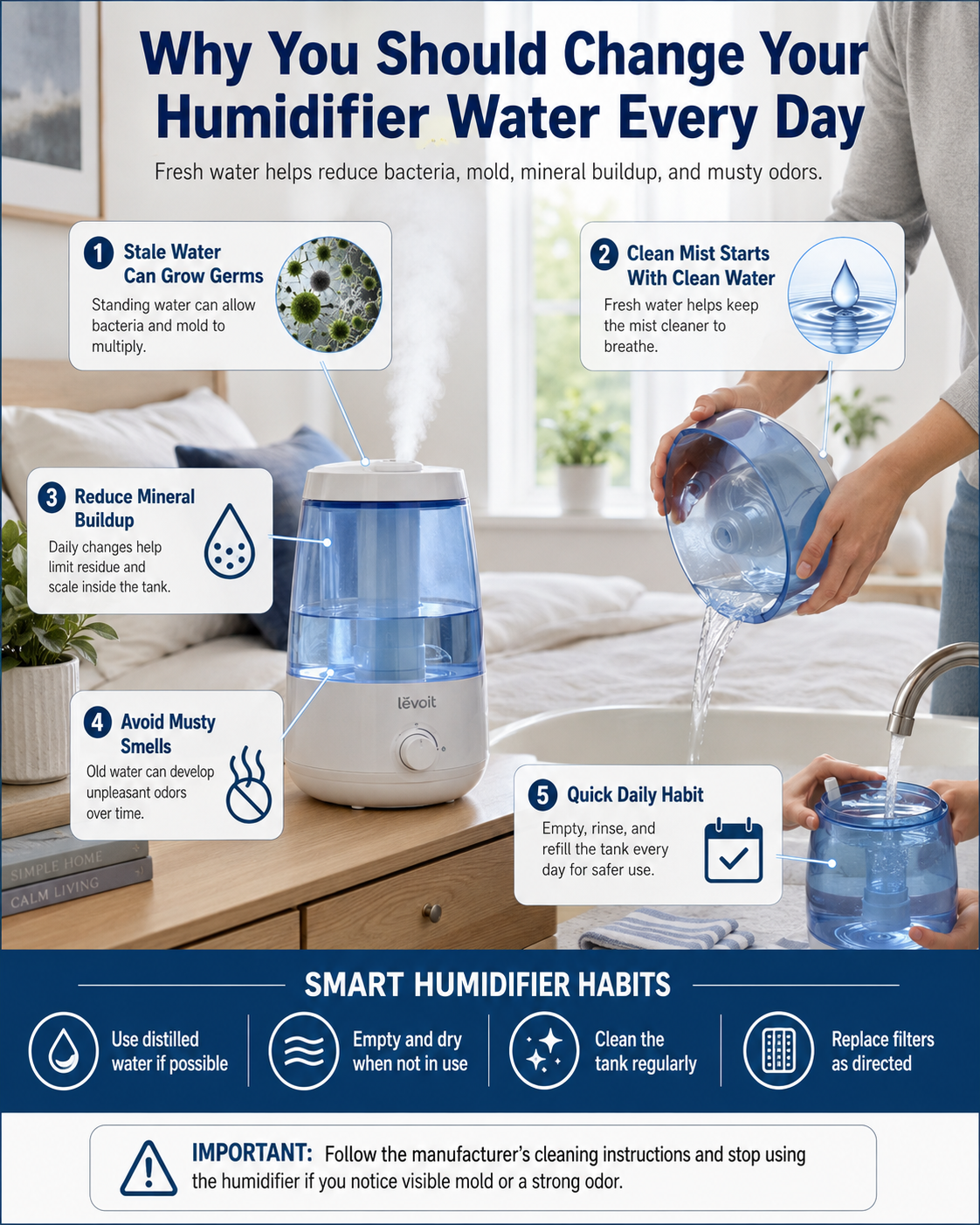
Why You Should Change Your Humidifier Water Every Day
Minjin Park
·
A humidifier can make dry air feel more comfortable, but old water can encourage bacteria, mold, mineral buildup, and musty odors. Learn why daily water changes matter and how to keep your humidifier cleaner.
The Small Daily Habit That Keeps a Humidifier From Becoming Gross
A humidifier can feel like a lifesaver when the air in your home gets dry.
Maybe your bedroom feels scratchy in winter. Maybe your lips crack, your throat feels dry in the morning, or your skin feels tight after the heat has been running all day. So you fill the humidifier, turn it on, and let that soft mist make the room feel a little more comfortable.
It is easy to think of a humidifier as a simple water machine.
Water goes in. Mist comes out. Done.
But there is one habit that matters more than many people realize: changing the water every day.
Leaving yesterday’s water in the tank may not look like a big deal. The water may still look clear. The tank may not smell strange. The humidifier may still run. But standing water inside a warm indoor room can become a place where bacteria, mold, and mineral residue build up. When the humidifier runs, some of what is in the tank or base can end up in the mist you breathe.
That does not mean you need to be scared of your humidifier. It just means the machine needs routine care.
The EPA recommends emptying the tank, wiping surfaces dry, and refilling portable humidifiers with fresh water daily to reduce microorganism growth.
For most households, that one simple step makes humidifier use cleaner, safer, and less unpleasant.
Once you fill it, the water sits inside a device that may be warm, damp, and exposed to air. Tiny particles can enter when you open the tank. Minerals from tap water can settle. A thin film can form on surfaces. If the water is left sitting, the inside of the tank can become less clean than it looks.
This matters because humidifiers are designed to move moisture into the air.
With a cool-mist or ultrasonic humidifier, the unit can release fine droplets or mist into the room. If the water or tank is dirty, that mist may carry unwanted particles into the air. Mayo Clinic notes that dirty humidifier tanks and filters can grow bacteria and mold, and that dirty humidifiers can release mist or steam tainted with bacteria or fungi into the air.
Again, this is not a reason to panic. It is a reason to avoid the “I’ll just top it off” habit.
Fresh water each day is the starting point.
What Happens When You Just Add More Water?
One of the most common humidifier mistakes is topping off the tank instead of emptying it.
It seems practical. If there is still water inside, why waste it? You add more water, turn the machine back on, and move on.
The problem is that topping off does not remove what was already sitting in the tank. Any film, minerals, dust, or early microbial growth stays there. The old water mixes with the new water, and the tank never really gets a fresh start.
Think of it like refilling a cup without washing or rinsing it for days. Even if you keep adding clean water, the cup itself is not getting cleaner.
A better habit is:
Empty the old water.
Rinse the tank.
Wipe or air-dry accessible surfaces.
Refill with fresh water.
That takes a little more effort than topping off, but it is still a small task.
Bacteria and Mold Like Damp Places
Bathrooms, basements, wet towels, shower curtains, and kitchen sponges all have something in common: moisture.
A humidifier tank is another damp environment. If it is not emptied and cleaned regularly, it can develop the kind of residue you do not want near the air you breathe.
You might notice:
A musty smell
Slimy film inside the tank
Cloudy water
Pink, gray, green, or black spots
White crusty buildup
Reduced mist output
A filter that smells stale
A base that feels slippery
These are signs that the humidifier needs more than a refill. It needs cleaning.
The U.S. Consumer Product Safety Commission has warned that bacteria and fungi can grow in humidifier tanks and may be released in the mist, which is why regular cleaning is important.
Daily water changes help reduce the chance that the tank becomes a comfortable little home for growth.
The “White Dust” Problem From Tap Water
If you use tap water in an ultrasonic or cool-mist humidifier, you may notice white dust on furniture, shelves, or surfaces near the unit.
That white dust usually comes from minerals in the water. When the humidifier creates mist, minerals can travel with it and settle around the room.
The EPA recommends using water with low mineral content, such as distilled water, to help prevent mineral buildup and reduce particles released into the air.
Changing the water daily does not remove all mineral issues if your tap water is hard, but it does help prevent old mineral-rich water from sitting and concentrating inside the tank.
If you see white dust often, consider distilled or demineralized water, especially for cool-mist and ultrasonic models.
Why Daily Water Changes Matter More in Bedrooms
Many people use humidifiers in bedrooms, especially overnight.
That makes cleanliness even more important.
A bedroom humidifier may run for hours while you sleep. If the tank has stale water, musty buildup, or mineral residue, the mist is released into the room while your face is nearby for a long time.
Bedroom doors are often closed. Windows may be shut in winter. Air may circulate less than in larger living spaces. That means whatever the humidifier releases can stay concentrated in the room.
This is why a clean tank and fresh water are part of good sleep hygiene, not just appliance maintenance.
A humidifier should make your room feel more comfortable, not leave it smelling damp or dusty.
Different Types of Humidifiers Still Need Care
Not every humidifier works the same way, but all of them need regular maintenance.
Cool-Mist Humidifiers
Cool-mist humidifiers are common in bedrooms and children’s rooms. They do not use hot steam, which many people like. But because they send cool moisture into the air, the tank and internal parts need regular cleaning.
Fresh water matters every day.
Ultrasonic Humidifiers
Ultrasonic models use vibration to create a fine mist. They are often quiet and popular for sleeping spaces.
They can also send minerals from tap water into the air more easily than some other types. That is why distilled water and frequent cleaning are often recommended for these units.
Evaporative Humidifiers
Evaporative models use a wick or filter. The water evaporates through the filter as air passes through.
These may release fewer mineral particles than ultrasonic units, but the filter can become dirty, musty, or clogged. The water still needs to be changed, and filters should be replaced according to the manufacturer’s instructions.
Warm-Mist Humidifiers and Vaporizers
Warm-mist models heat water to create steam or warm vapor. They still need cleaning because minerals can build up and water can sit in the tank between uses.
Also, because they involve heat, they need extra caution around children, pets, and placement.
No matter which type you use, “fresh water daily” is a good baseline unless your manufacturer gives more specific instructions.
Daily Water Changes Are Not the Same as Deep Cleaning
Changing the water every day helps, but it does not replace cleaning.
Daily care is the quick reset. Deep cleaning is what removes buildup, film, and residue from parts of the humidifier.
The CPSC’s general guidance for smaller portable humidifiers includes emptying leftover water, wiping surfaces dry, and refilling with clean water daily, plus sanitizing every seven days.
Your model may have its own cleaning schedule, so the manual should always come first. But for many homes, a simple routine looks like this:
Daily: empty, rinse, dry, refill.
Every few days: clean removable parts.
Weekly: descale or disinfect as instructed.
As needed: replace filters or wicks.
Before storage: clean and dry completely.
This keeps the task from becoming overwhelming.
The Room Can Become Too Humid, Too
Changing water daily keeps the machine cleaner, but humidity level also matters.
More mist is not always better. If a room becomes too humid, it can encourage mold growth on walls, windows, curtains, carpets, and furniture. You may see condensation on windows, damp smells, or a clammy feeling in the room.
Mayo Clinic recommends keeping indoor humidity between 30% and 50%, and warns that too much humidity can promote allergens such as dust mites and mold.
A simple hygrometer can help you see the humidity level instead of guessing. Many are inexpensive and easy to place near the humidifier.
If the windows are wet or the room smells damp, turn the humidifier down or off.
Common Mistakes People Make With Humidifier Water
Leaving Water in the Tank for Days
This is the big one.
Even if you only ran the humidifier for a few hours, leftover water should not sit day after day. Empty it when you are done using it for the night or before refilling the next day.
Only Cleaning When It Smells Bad
By the time a humidifier smells musty, the problem has already built up.
Do not wait for odor. Keep a routine.
Assuming Clear Water Means Clean Water
Water can look clear and still contain minerals, residue, or microorganisms. Visual checks help, but they are not enough.
Using Scented Oils in the Tank
Unless your humidifier is specifically designed for essential oils or additives, do not put fragrance oils, perfumes, disinfectants, or cleaning solutions into the tank.
They can damage the machine or release irritating substances into the air.
Forgetting the Base
Many people rinse the tank but ignore the base, where water also sits. The base can develop slime, scale, or residue.
Clean all water-contact areas according to the manual.
Storing It While Damp
At the end of the season, do not put the humidifier away with water inside or with damp parts sealed together.
Clean it, dry it fully, and store it in a dry place.
How to Change Humidifier Water the Right Way
A daily water change does not need to be complicated.
Step 1: Unplug the Humidifier
Before cleaning or refilling, unplug it. Water and electricity do not mix, and this is a basic safety habit.
Step 2: Empty All Leftover Water
Pour out yesterday’s water from the tank and base. Do not just add more.
Step 3: Rinse the Tank
Rinse with clean water. If the tank has visible residue, follow the manufacturer’s cleaning directions.
Step 4: Wipe or Air-Dry Surfaces
Wipe accessible surfaces dry with a clean towel, or let parts air-dry if the manual recommends it. Drying helps reduce lingering moisture.
Step 5: Refill With Fresh Water
Use fresh water every day. If your water is hard or you notice white dust, consider distilled or demineralized water.
Step 6: Reassemble Correctly
Make sure the tank is seated properly and no parts are loose or leaking.
Step 7: Check the Room Humidity
Run the humidifier only as much as needed. Aim for comfortable humidity, not a damp room.
What About Using Distilled Water?
Distilled water is often recommended because it contains fewer minerals than typical tap water. This can reduce white dust and mineral scale.
It may also help keep the machine cleaner for longer, though it does not eliminate the need for daily water changes or cleaning.
If buying distilled water every day feels impractical, you can still improve your routine by emptying the tank daily, cleaning regularly, and watching for buildup. The perfect water choice matters less if the humidifier is neglected.
Fresh and clean beats stale and forgotten.
Warning Signs Your Humidifier Needs Immediate Cleaning
Clean the unit before using it again if you notice:
Musty or sour odor
Slimy film
Visible mold spots
Pink or orange residue
White crusty scale
Dirty filter
Dusty mist around the machine
Cloudy tank water
Reduced mist output
Water sitting for more than a day
Do not keep running it just because the room feels dry. A dirty humidifier is not doing the job you bought it for.
A Simple Weekly Cleaning Routine
Check your manual first, but a general weekly routine may include:
Unplug the humidifier.
Empty all water.
Disassemble removable parts.
Rinse the tank and base.
Remove mineral scale using the method recommended by the manufacturer.
Disinfect if the manual directs you to.
Rinse thoroughly if required.
Dry all parts completely.
Replace filters or wicks as needed.
Refill with fresh water.
Do not mix cleaning chemicals. Do not use bleach and vinegar together. Do not leave cleaning residue in the tank.
The goal is a clean water path and clean mist.
Making the Habit Easier
Daily water changes are simple, but they are easy to forget. A few small tricks can help.
Tie It to Another Routine
Empty and refill the humidifier when you make the bed, brush your teeth, or turn on the bedside lamp. Habits stick better when attached to something you already do.
Keep a Small Towel Nearby
A dedicated towel makes it easier to wipe the tank and base without hunting for supplies.
Use a Hygrometer
Seeing the humidity number helps you avoid running the humidifier nonstop.
Buy a Model That Is Easy to Clean
If you are shopping for a new humidifier, look for a wide tank opening, removable parts, simple filter access, and clear cleaning instructions.
A humidifier that is hard to clean is more likely to be neglected.
Conclusion: Fresh Water Makes the Mist Feel Better
A humidifier can be a helpful comfort tool when indoor air feels dry, but it is not something you can fill once and forget.
Changing the water every day matters because standing water can encourage bacteria, mold, mineral buildup, musty odors, and dirty mist. The habit is simple: empty the old water, rinse the tank, dry what you can, and refill with fresh water.
Pair that with regular cleaning, the right water type for your machine, and a sensible humidity level.
You do not need a complicated system. You just need consistency.
Fresh water in, clean mist out — that is the whole idea.
Hi, I’m the creator and editor behind ZestyHabit. I research everyday safety, first aid, and practical wellness topics using official guidance and reliable public sources, then turn that information into clear, realistic steps for daily life.
My goal is to help readers make safer, better-informed choices at home and beyond.