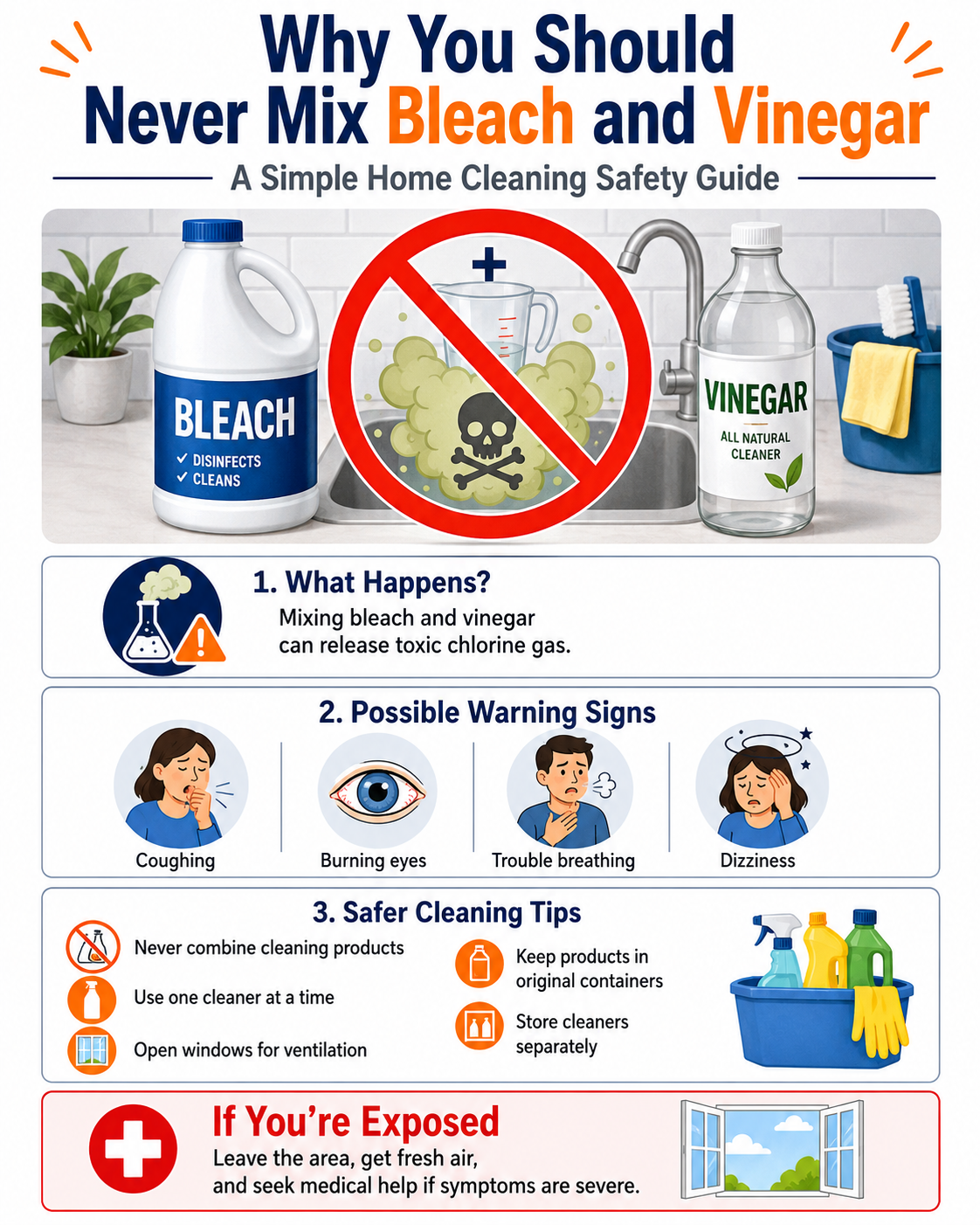
Why You Should Never Mix Bleach and Vinegar: A Simple Home Cleaning Safety Guide
Minjin Park
·
Bleach and vinegar should never be used together because the mixture can release harmful fumes. Learn why this happens, common mistakes to avoid, and safer cleaning habits for everyday homes.
Bleach and vinegar are two common household products. Many people keep bleach in the laundry room or under the kitchen sink. Vinegar may be used for glass, hard water spots, coffee makers, odors, or general cleaning.
Used separately and correctly, each can have a place in home care. But together, they are a dangerous combination.
Mixing household bleach with vinegar can release chlorine gas. This gas can irritate the eyes, nose, throat, and lungs. In a small bathroom, laundry room, or closed kitchen, the fumes can build up quickly and make the situation more serious.
The tricky part is that many people do not mix them because they are being careless. They mix them because they think they are making a stronger cleaner.
That is the habit this article is meant to prevent.
Bleach plus vinegar is not a “deep cleaning hack.” It is not a more powerful disinfectant. It is not a shortcut for mold, drains, toilets, or laundry. It is a combination that should be avoided every time.
Why This Matters in Everyday Homes
Household cleaning often happens when people are busy, tired, or trying to solve a stubborn problem fast.
A bathroom has mildew in the shower. The kitchen sink smells odd. The toilet bowl has stains. A laundry load smells musty. A floor cleaner is not working as well as expected.
So it is tempting to think, “Maybe if I combine two products, it will work better.”
That thinking is understandable, but it can be risky.
Many cleaning products are safe only when used as directed. Once products are mixed, you may create fumes or reactions the label never intended. The danger can be especially easy to overlook because both bleach and vinegar are familiar household items.
Vinegar seems mild and natural. Bleach seems like a strong cleaner. But “natural” and “strong” do not mean they belong together.
A safer home cleaning routine starts with one simple rule: use one product at a time, and follow the label.
What Happens When Bleach and Vinegar Mix?
Household bleach usually contains sodium hypochlorite. Vinegar is acidic. When bleach is mixed with an acid such as vinegar, chlorine gas can be released.
You do not need to understand chemistry to remember the safety message.
Bleach and vinegar do not make each other better. They make the air more dangerous.
This is why you should not mix them in a bucket, spray bottle, toilet bowl, sink, drain, washing machine, or on a surface you are cleaning.
It is also why you should be careful about using one right after the other. If bleach residue is still present and vinegar is added, fumes may still be released. When switching products, the safer approach is to rinse thoroughly, allow the area to dry, and give the room ventilation.
Common Places This Mistake Happens
Bleach and vinegar are rarely mixed in a science-experiment way. Usually, it happens during normal cleaning.
Bathroom Showers and Tile
Someone sprays vinegar on hard water spots, then decides to use bleach on mildew. If both products are on the same surface, fumes can form.
This can be more concerning in small bathrooms with poor ventilation.
Toilet Bowls
Toilet bowls are a common place where cleaners get mixed. A person may pour bleach into the bowl, scrub, and then add vinegar to help with stains or odor.
Do not do this. Toilet bowls can trap fumes close to your face, and bathroom airflow may be limited.
Kitchen Sinks and Drains
Some people pour vinegar down the drain for odor, then use bleach for disinfecting. Others add both because the sink smells bad.
Drains are not a good place to experiment with cleaning products. You may not know what residue is already inside the drain.
Laundry Rooms
Bleach is common in laundry. Vinegar is sometimes used by people trying to reduce odors or soften fabrics.
They should not be used together in the same wash cycle. If you use either product, follow the appliance instructions, clothing care labels, and product label.
Spray Bottles
Mixing bleach and vinegar in a spray bottle is especially risky because spraying can put more of the product into the air.
Also, leftover residue from a previous cleaner can remain inside a bottle. Do not reuse an old cleaner bottle unless it has been thoroughly cleaned and clearly relabeled. Even better, avoid transferring cleaners into unlabeled bottles at all.
The “Natural Cleaner” Misunderstanding
Vinegar has a reputation as a natural cleaner. It can be useful for some mineral deposits, light odors, and certain household tasks.
But natural does not mean harmless in every situation.
Lemon juice is natural. Vinegar is natural. Essential oils can be natural. But natural substances can still irritate skin, damage surfaces, or react badly with other products.
The problem is not vinegar by itself. The problem is mixing vinegar with bleach.
This is an important distinction because people often feel safe combining vinegar with almost anything. But with bleach, acids are exactly what you want to avoid.
“A Little Bit” Still Is Not Worth It
Another common thought is, “I only used a tiny amount.”
But household cleaning is not a place to test chemical combinations. Even if a small amount does not seem to cause a major issue, the habit is still unsafe.
The amount of fumes can depend on the products, concentration, ventilation, temperature, container, and surface area. A small bathroom with the door closed is different from an open kitchen with windows.
The safest rule is simple and consistent: do not mix bleach with vinegar at all.
That is easier to remember than trying to decide how much is “too much.”
Warning Signs You May Have Mixed Cleaners
If bleach and vinegar are accidentally combined, you may notice signs quickly.
A sharp, strong odor may appear. Some people describe it as a pool-like or chemical smell, but stronger and harsher than expected.
You may also notice watery eyes, coughing, throat irritation, chest discomfort, shortness of breath, or a burning feeling in the nose.
Do not stay in the area trying to finish the cleaning job. Stop what you are doing and move to fresh air.
If symptoms are significant, do not try to handle it alone. Contact Poison Control or emergency services for guidance.
For a normal blog reader, the main takeaway is this: if a cleaning product suddenly creates strong fumes, treat it seriously and leave the area.
What to Do Instead of Mixing Products
The safer approach is to choose the right product for the job and use it alone.
For General Cleaning
For many everyday messes, dish soap and warm water are enough. Grease, crumbs, dust, and visible dirt usually need cleaning before disinfecting anyway.
Cleaning and disinfecting are not the same thing. Cleaning removes dirt and residue. Disinfecting targets germs on a surface.
If the surface is not visibly clean first, disinfectants may not work as well.
For Disinfecting
If you use bleach as a disinfectant, follow the label carefully. Use proper dilution if required, make only what you need, and do not mix it with other cleaners.
Use it in a ventilated area and keep it away from children and pets.
Also remember that bleach is not right for every surface. It can damage fabrics, metals, stone, wood, and some finishes.
For Hard Water Spots
Vinegar may help with mineral buildup on some surfaces, but it should not be used on natural stone like marble or granite because acids can damage them.
If you use vinegar, use it by itself. Do not follow it immediately with bleach.
For Odors
Odors often need cleaning at the source, not stronger chemicals. Empty the trash, clean the drain cover, wash the sink area, clean the garbage disposal according to the manufacturer’s instructions, or remove food residue.
Do not pour random combinations of cleaners down a drain.
For Mold or Mildew
Mold and mildew can be frustrating, especially in bathrooms. But mixing products is not the answer.
Use one appropriate product according to its label. Improve ventilation, reduce moisture, repair leaks, and dry wet areas. If the problem is large or keeps returning, it may need more than surface cleaning.
A Safer Cleaning Routine for Bathrooms
Bathrooms are where bleach and vinegar mistakes often happen, so it helps to have a simple plan.
Start by removing bottles, towels, bath mats, and clutter. Open a window or turn on the fan if available.
Clean visible dirt first with a basic cleaner or soap and water. Rinse the area if needed.
Then choose one product for the next step. If you are using bleach, do not use vinegar or other cleaners at the same time. If you are using vinegar for mineral spots, do not use bleach in that area during the same cleaning session.
Keep the products separate, use clean cloths, and rinse surfaces when appropriate.
This kind of routine may feel slower, but it is safer and often more effective.
A Safer Cleaning Routine for Kitchens
In kitchens, the goal is usually to remove food residue, grease, and germs from surfaces.
For counters, tables, and sinks, start with soap and water. Dry the surface. Then use a food-safe disinfecting method if needed, following the label.
If you use vinegar for a coffee maker or mineral buildup, keep bleach away from that task. If you use bleach for a disinfecting job, keep vinegar away from that task.
A good kitchen rule is this: cleaning products should take turns, not work as a team.
How to Store Cleaning Products More Safely
Safe storage can prevent accidental mixing.
Keep bleach in its original container with the label intact. Do the same with vinegar and other cleaners.
Do not store unlabeled spray bottles under the sink. A mystery bottle is a future mistake waiting to happen.
Avoid storing bleach directly beside acids, ammonia-based cleaners, toilet bowl cleaners, or drain cleaners if you can. A little separation helps remind everyone that these products should not be combined.
If you have children, pets, roommates, or older family members at home, clear labels matter even more.
It may help to keep a small note inside the cabinet door that says, “Do not mix cleaning products.”
Simple reminders work.
Common Cleaning Products You Should Not Mix With Bleach
Vinegar is not the only product that should stay away from bleach.
Be especially cautious with ammonia-based cleaners, toilet bowl cleaners, drain cleaners, rust removers, hydrogen peroxide, and acidic products.
You do not need to memorize every chemical name. Read the label, use one product at a time, and avoid mixing.
If a product label says not to combine it with bleach, take that warning seriously.
What About “Bleach-Free” Products?
Some products say “bleach-free” on the label. That can be helpful, but it does not mean the product can be mixed with anything.
Bleach-free bathroom cleaners, disinfecting sprays, and stain removers may still contain ingredients that should not be combined with other products.
The safest habit is the same: use the product by itself and follow the label.
Practical Habits That Make Cleaning Safer
You do not need to be nervous every time you clean. A few habits make household cleaning much safer.
Read labels before using a product.
Use one cleaner at a time.
Never mix bleach and vinegar.
Never mix bleach with other cleaners or disinfectants.
Ventilate small rooms when cleaning.
Wear gloves if the label recommends them.
Keep products in original containers.
Do not reuse spray bottles for different chemicals.
Rinse surfaces before switching products.
Store cleaners away from children and pets.
Throw away mystery bottles.
These habits are simple, but they prevent many avoidable problems.
A Calm Takeaway for Everyday Homes
Bleach and vinegar are both common household products, but they should never be used together. When mixed, they can release chlorine gas, which can irritate the eyes, throat, and lungs and may become dangerous in poorly ventilated spaces.
The safer choice is not complicated. Use one product at a time. Follow the label. Rinse surfaces before switching cleaners. Keep products in their original containers. Avoid mixing cleaning products in buckets, toilets, drains, spray bottles, or washing machines.
Good cleaning is not about using the strongest combination possible. It is about using the right product safely.
A clean home should feel healthier and calmer, not harsher or more stressful. When in doubt, keep it simple: soap and water first, one cleaner at a time, and never bleach with vinegar.
Hi, I’m the creator and editor behind ZestyHabit. I research everyday safety, first aid, and practical wellness topics using official guidance and reliable public sources, then turn that information into clear, realistic steps for daily life.
My goal is to help readers make safer, better-informed choices at home and beyond.