What Can Happen When You Don’t Clean Your Humidifier Tank Properly
Minjin Park
·
A humidifier can make dry air more comfortable, but a neglected water tank can create mold, bacteria, mineral buildup, and indoor air problems. Here’s what to watch for and how to keep it cleaner.
A Humidifier Is Helpful—Until the Water Tank Gets Gross
A humidifier feels like such a harmless little home gadget.
You fill the tank, press a button, and a soft mist starts floating into the room. Dry throat? Better. Chapped lips? Maybe calmer. Stuffy winter air? Less miserable. It sits there quietly on the nightstand or dresser, doing its tiny cloud-machine job.
But there is one part people tend to underestimate: the water tank.
That tank is not just a container. It is a warm-ish, wet, enclosed place where water can sit for hours. Sometimes days, if we are being honest. And anything that holds standing water needs a little respect.
The EPA notes that microorganisms often grow in humidifiers with tanks that contain standing water, and some types of humidifiers can disperse microorganisms and minerals from the tank into indoor air. That does not mean every humidifier is dangerous. It means a humidifier is only as nice as the water and surfaces inside it.
If you leave water in a bottle for a few days, you already know the feeling. It smells a little stale. The inside feels slippery. You suddenly do not want to drink from it anymore.
Now imagine that same idea inside a humidifier tank.
When water sits in the tank, especially if the room is warm, bacteria and mold can start growing on the surfaces. You may not see anything at first. The tank might look fine from the outside. But inside the corners, cap, base, gasket, or tiny grooves, a thin film can build up.
That slippery layer is often called biofilm. It is basically a little microbial neighborhood. Charming, in the worst possible way.
Once that starts, rinsing quickly under the faucet may not be enough. The tank can keep smelling musty, and the humidifier may keep sending out mist from water that has been sitting against dirty surfaces.
Dirty Mist Can Bother Your Breathing
A humidifier’s job is to put moisture into the air. That is exactly why cleaning matters.
If the tank or base contains mold, bacteria, or built-up grime, the mist may carry some of that into the room. This is especially a concern with cool-mist humidifiers, including ultrasonic and impeller models, because they can release small particles from the water into the air. The EPA specifically warns that ultrasonic and impeller humidifiers can disperse materials such as microorganisms and minerals from their tanks.
For some people, that may mean more coughing, throat irritation, stuffiness, or allergy-like symptoms.
Mayo Clinic also warns that mist from a dirty humidifier can trigger or worsen asthma and allergy symptoms. If someone in the home already has asthma, allergies, chronic sinus problems, or a sensitive respiratory system, a dirty tank is not something to shrug off.
The frustrating part is that people may use a humidifier because they are already congested or dry. Then, if the machine is dirty, it can make the air feel worse instead of better.
That is a very annoying plot twist.
Mold Can Grow Where You Don’t Expect It
Mold loves moisture.
That sounds obvious, but humidifiers create moisture on purpose. If the tank is not cleaned and dried regularly, mold can grow inside the humidifier itself. If the humidifier is overused or placed too close to walls, bedding, curtains, carpet, or furniture, nearby surfaces may also become damp.
The CDC recommends keeping indoor humidity no higher than 50% to help prevent mold growth. That number is useful because people often assume “more humidity” means “more comfort.” Not always.
Too much humidity can make a room feel heavy and damp. Windows may collect condensation. Bedding may feel slightly clammy. Corners of the room may smell musty. Dust mites and mold can become more of an issue.
A humidifier should make dry air more comfortable, not turn your bedroom into a tiny indoor swamp.
Signs Your Humidifier May Be Too Damp for the Room
You may be running it too much if you notice:
Condensation on windows A musty smell near the humidifier Damp carpet, curtains, or bedding White or grayish film near the machine A room that feels muggy instead of comfortable More allergy symptoms after using it
A small hygrometer can help. It is just a little humidity reader, and it saves you from guessing. For many homes, keeping humidity around 30% to 50% is a reasonable range, with the upper end needing more caution if your home already has moisture problems.
Mineral Buildup Can Turn Into White Dust
If you use tap water in an ultrasonic humidifier, you may notice a white powdery dust on nearby furniture.
That dust usually comes from minerals in the water. The humidifier does not know the difference between water and dissolved minerals. It can send both into the air, especially with ultrasonic models.
The EPA recommends using water with low mineral content to reduce scale buildup and the release of minerals into the air. Distilled or demineralized water can help reduce that white dust.
Mineral buildup also makes the humidifier harder to clean. Scale can collect around the tank, base, cap, heating element, or ultrasonic plate. Once it hardens, it creates rough surfaces where grime can cling more easily.
It is not just an appearance problem. A crusty humidifier is usually a humidifier that needs attention.
A Bad Smell Is Not Normal
A clean humidifier should not smell sour, musty, swampy, or like an old towel that lost its will to live.
If the mist smells odd, stop using the humidifier and clean it. Do not try to solve the smell by adding essential oils, perfume, or anything scented unless your specific model is made for that purpose. Many regular humidifiers are not designed for oils, and adding fragrance does not fix contamination. It just makes the problem smell like lavender contamination.
A bad smell usually means water has sat too long, the tank has biofilm, the base needs cleaning, or the filter needs replacement.
Also check the area around the humidifier. Sometimes the machine is clean enough, but the surface under it has been staying damp. A wooden nightstand, carpet, or nearby wall can start smelling musty if it is repeatedly exposed to moisture.
The base is where water may sit before it becomes mist. Depending on the model, it may have small channels, a float, a reservoir, a heating area, or an ultrasonic plate. These little parts can hold mineral deposits and slimy buildup.
The cap can get dirty too. So can the gasket, nozzle, mist outlet, handle grooves, and any filter or wick.
This is why the owner’s manual matters, even if reading appliance manuals feels like a punishment. Different humidifiers have different parts, and some need filter replacement on a schedule.
A quick rinse is better than nothing, but a proper cleaning routine should include all water-contact areas.
It Can Make Your Room Feel Worse, Not Better
A neglected humidifier can quietly ruin the comfort it was supposed to create.
Instead of waking up with less dryness, you may wake up stuffy. Instead of the air feeling fresh, the room may feel heavy. You may notice more dust on furniture, a strange smell near the bed, or a scratchy throat that does not make sense.
Sometimes the problem is not dramatic. It is just a subtle feeling that the room is not clean.
That is why it helps to think of a humidifier like a water bottle, not like a lamp.
A lamp can sit there for months and still work. A water bottle needs to be washed. A humidifier tank needs the same kind of thinking.
People With Asthma, Allergies, or Weak Immune Systems Should Be Extra Careful
A dirty humidifier can be irritating for anyone, but some people need to be more cautious.
If you or someone in your home has asthma, allergies, chronic lung disease, frequent sinus infections, or a weakened immune system, humidifier cleanliness matters more. Mayo Clinic recommends talking with a health care provider before using a humidifier if you or your child has asthma or allergies, because there can be risks.
Babies, older adults, and people recovering from respiratory illness may also be more sensitive to indoor air problems.
This does not mean they can never use a humidifier. It means the machine should be cleaned consistently, the room humidity should be monitored, and any worsening symptoms should be taken seriously.
If coughing, wheezing, chest tightness, fever, or breathing trouble appears or gets worse after using a humidifier, stop using it and get medical advice.
The “I’ll Clean It Later” Cycle Is the Real Issue
Most humidifier problems do not come from one forgotten day.
They come from the slow slide.
You fill it at night. In the morning, there is still water left, so you leave it. That evening, you top it off instead of emptying it. A few days pass. The tank looks mostly fine. You rinse it quickly. Then a week later, the inside feels slightly slick.
This is a very normal household pattern. No one is trying to grow bacteria as a hobby.
But topping off old water is one of the easiest ways to keep the tank in a questionable state. It is better to empty leftover water, rinse the tank, and refill with fresh water.
Yes, it is slightly annoying. Many useful home habits are.
What a Cleaner Humidifier Routine Looks Like
The routine does not need to be complicated. It just needs to happen often enough.
Daily
Empty leftover water.
Rinse the tank.
Let it air-dry if you are not using it right away.
Refill with fresh water before use.
Wipe damp surfaces around the humidifier.
This prevents the tank from becoming a standing-water situation.
Every Few Days
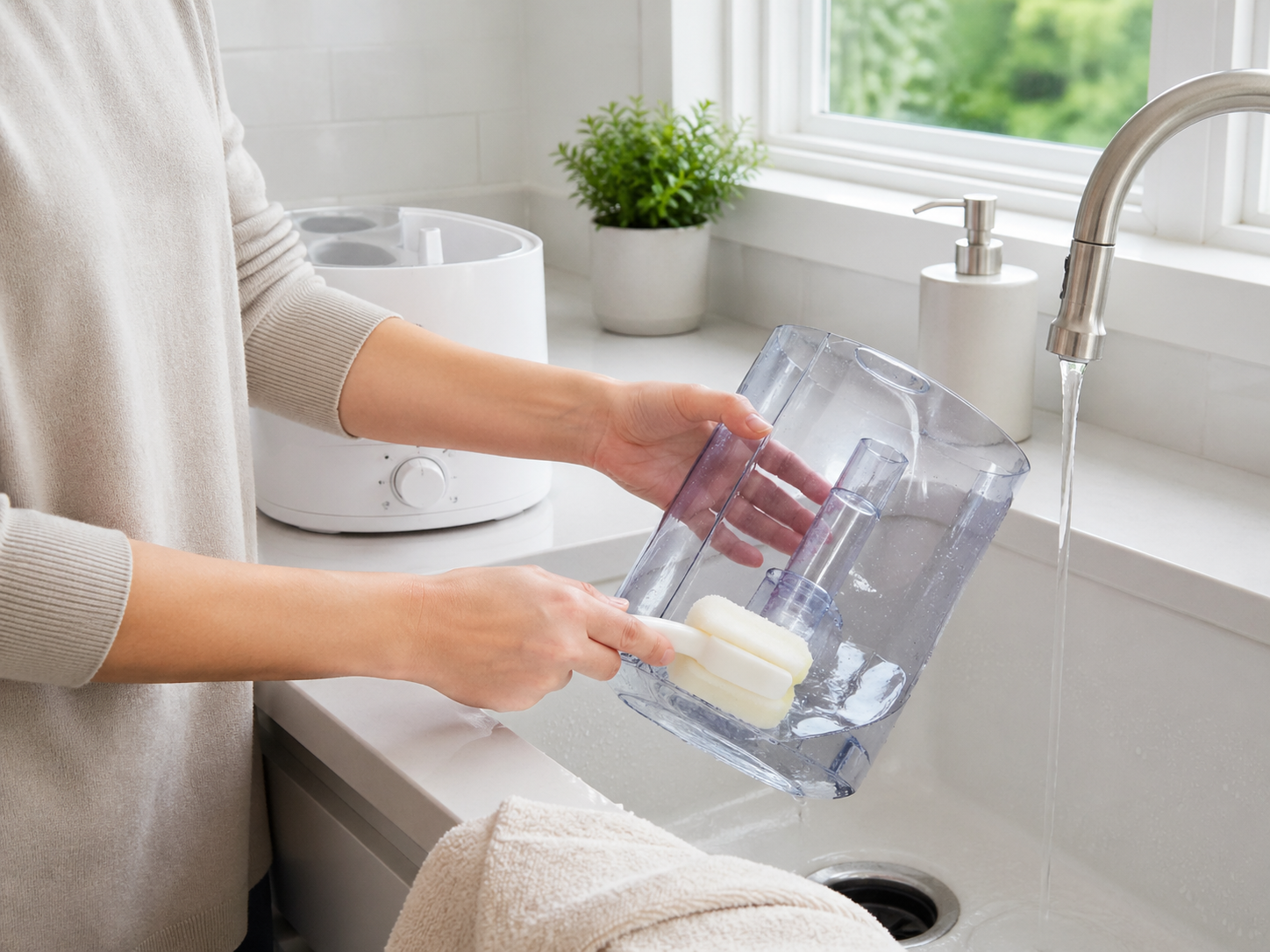
Clean the tank and base according to the manufacturer’s instructions.
The EPA has recommended cleaning portable humidifiers every third day of use, especially to reduce buildup and potential exposure to microorganisms. Use the cleaning method your manual allows. Many people use white vinegar to help loosen mineral scale, but not every material or machine should be treated the same way.
Do not mix cleaning products. Especially do not mix bleach and vinegar. That can create dangerous fumes.
Rinse thoroughly after cleaning so you are not breathing leftover cleaning residue through the mist.
Weekly or As Directed
Check filters or wicks.
Replace them when they look dirty, smell odd, become stiff, or reach the manufacturer’s replacement timeline.
Clean around the mist outlet and any small parts that collect residue.
Look for mineral crust, discoloration, or slime.
Before Storage
Empty all water.
Clean the tank and base.
Let every part dry completely.
Store it dry, not sealed up with moisture trapped inside.
A humidifier put away damp is basically being invited to become disgusting by next season.
Use the Right Water When You Can
Distilled water is often a better choice for humidifiers, especially ultrasonic models.
It can reduce mineral dust and scale buildup. It also makes cleaning a little less frustrating because there is less crust forming inside the machine. If distilled water is not realistic all the time, do what you can. Even using it sometimes may help with white dust.
If you use tap water, be more alert for mineral buildup and clean the machine regularly.
Also, do not assume filtered fridge water is the same as distilled water. It may taste better, but it can still contain minerals.
Placement Matters More Than People Think
Where you put the humidifier affects how clean and useful it stays.
Keep it on a stable, water-resistant surface. Do not place it directly against a wall, curtain, pile of books, or upholstered furniture. Mist needs room to disperse. If it lands on one nearby surface all night, that surface may stay damp.
Do not place it where a child or pet can knock it over. Keep cords safe. Be especially careful with warm-mist units around kids, since hot water or steam can burn.
The mist should not blow directly onto your face all night either. That may sound cozy, but it can make bedding damp and may irritate some people.
A little distance is usually better.
More Humidity Is Not Always Better
When your throat is dry or your skin is tight, it is tempting to turn the humidifier up high and let it run all night.
But too much humidity can create new problems.
High humidity can encourage mold growth on surfaces, worsen dust mite issues, and make the room feel stuffy. The CDC’s guidance to keep indoor humidity no higher than 50% is a good reminder that humidifiers are not meant to run without limits.
If your windows are fogging up in the morning, your room may already be too humid. If the air smells damp, turn the humidifier down or off and ventilate the space.
If the tank has cracks, permanent slime in hard-to-reach areas, a smell that never goes away, visible mold you cannot remove, damaged parts, or a filter system you cannot maintain, replacement may be safer and less stressful.
Older humidifiers with complicated tanks can be especially annoying. If you dread cleaning it because the design has seventeen mysterious corners, you may end up not cleaning it at all.
A simpler model that is easy to empty, scrub, rinse, and dry may be better than a fancy one that slowly becomes a science experiment.
A Few Habits That Prevent Most Problems
If you want the shortest practical version, it is this:
Do not let old water sit.
Do not keep topping off the tank.
Clean all water-contact parts regularly.
Use distilled or low-mineral water when possible.
Keep room humidity under control.
Let the humidifier dry fully before storage.
Pay attention to smells, slime, white dust, and damp surfaces.
That covers most of the trouble.
Not all of it, because appliances have their own personalities, but most.
The Small Chore That Makes the Humidifier Worth Using
A humidifier can be genuinely helpful when indoor air gets dry. It can make winter nights more comfortable, ease dryness, and make a room feel less harsh.
But it is not a set-it-and-forget-it appliance.
The water tank needs regular care because whatever grows or builds up inside may end up in the air you breathe. That is the simple reason cleaning matters. Not because you need another household task to feel guilty about, but because a humidifier should make your room feel better, not questionable.
Empty the old water. Give the tank a real rinse. Clean it before it gets weird. Keep the humidity in a reasonable range.
Hi, I’m the creator and editor behind ZestyHabit. I research everyday safety, first aid, and practical wellness topics using official guidance and reliable public sources, then turn that information into clear, realistic steps for daily life.
My goal is to help readers make safer, better-informed choices at home and beyond.