Why Drying Laundry in Front of a Heater Can Be Riskier Than You Think
Minjin Park
·
Drying clothes in front of a heater may seem convenient in cold weather, but it can create fire risks, moisture problems, and damage to fabrics. Learn safer ways to dry laundry indoors.
When it is cold outside and laundry refuses to dry, placing clothes near a heater feels like the most practical solution.
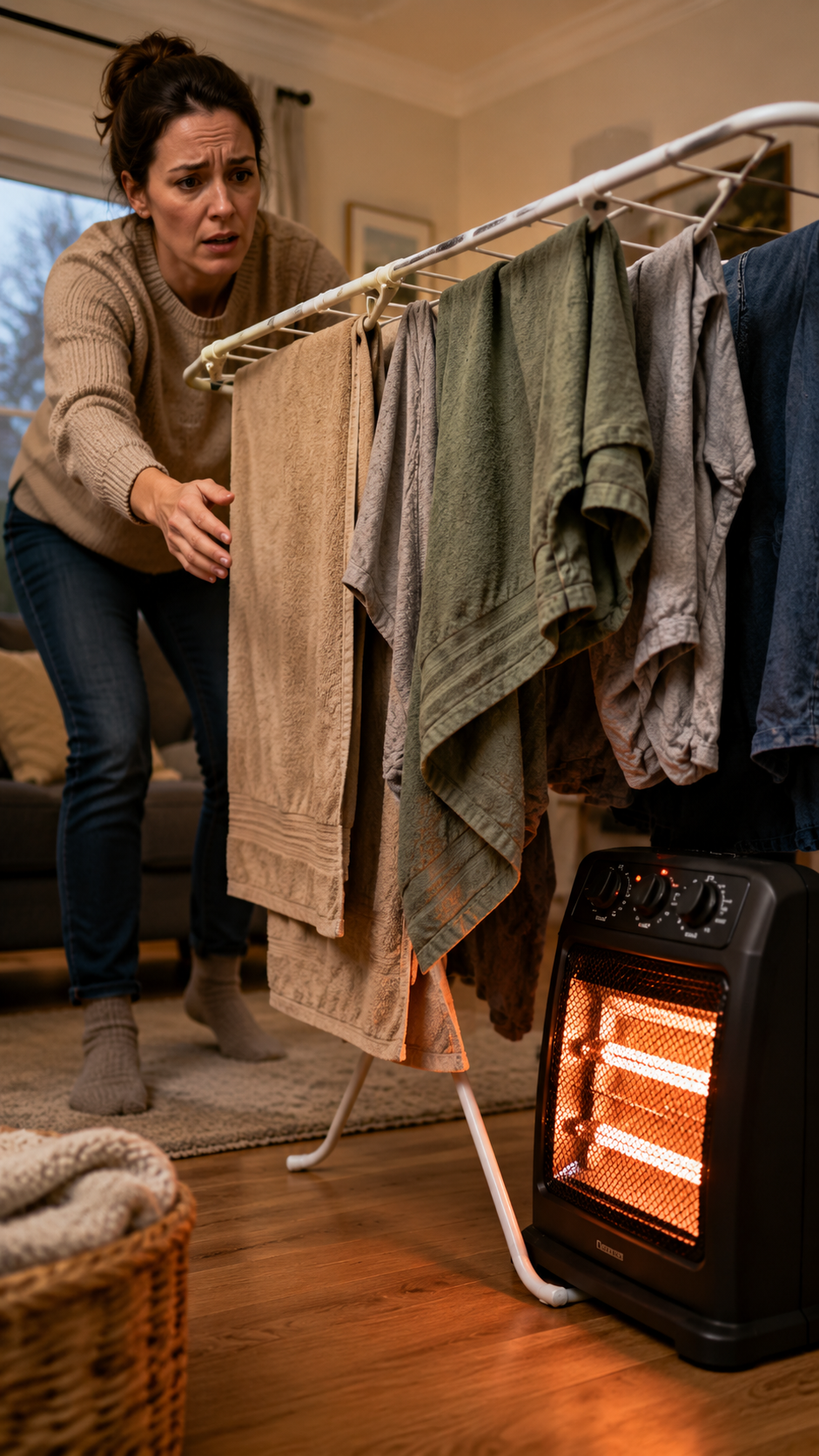
A wet hoodie takes forever on a drying rack. Towels stay damp all day. Socks feel like they will never dry. So you move the rack closer to the space heater, drape a shirt over a chair near the radiator, or hang a towel in front of the heating vent.
It seems harmless. After all, the heater is already warm. The clothes need warmth. Why not use the heat you already have?
The problem is that heaters are not clothes dryers. They are designed to warm a room, not to safely handle damp fabric sitting close to them for long periods. When laundry is placed too close, several things can happen: fabric can overheat, airflow can be blocked, moisture can build up indoors, and electrical or fire risks can increase.
This does not mean you can never dry clothes indoors. Many people do, especially in apartments, rainy climates, or winter weather. The key is keeping laundry away from direct heat and giving moisture somewhere to go.
A little patience and spacing can make a big difference.
Why Drying Clothes Near a Heater Feels So Tempting
Indoor drying is frustrating because wet laundry cools the air around it and dries slowly when ventilation is poor. In winter, people often keep windows closed, which makes the process even slower.
So the heater looks like a shortcut.
A sweater near a heater may feel dry on the outside much faster. A towel may stop feeling cold. Thin socks may dry in less time. That quick result makes the habit easy to repeat.
But faster surface drying does not always mean safer drying. The fabric closest to the heat may become much hotter than you realize, while thicker areas remain damp. At the same time, the heater may be working harder, the room may become humid, and flammable materials may be sitting too close to a heat source.
The convenience is real. So is the risk.
The Main Concern: Fabric Can Overheat
Clothing, towels, bedding, and cleaning cloths are all made from materials that can burn if they get hot enough. Some fabrics are more heat-sensitive than others, but none should be treated like they are safe against direct heater heat.
Clothes can get hotter than the room
A room may feel comfortable, but the surface near a heater can be much hotter. The air directly in front of a space heater, radiator, fireplace, or heating vent may be intense enough to dry fabric unevenly or overheat it.
This matters because people often judge risk by how the room feels, not by how hot the heater surface or airflow is.
A bedroom at 70°F can still have a heater grill or nearby surface that is too hot for clothing.
Damp fabric can give a false sense of safety
Wet clothing may seem less likely to burn because it is damp. That can be misleading.
As the fabric dries, the area closest to the heat becomes less damp first. If it stays close to the heater, it may keep heating after the moisture is gone. A dry sleeve, towel edge, waistband, or sock can become much hotter than expected.
This is especially concerning when laundry is left unattended.
Some fabrics respond poorly to high heat
Synthetic fabrics, elastic bands, printed designs, fleece, microfiber, and delicate materials can be damaged by too much heat. They may shrink, warp, melt, stiffen, discolor, or lose stretch.
Even if nothing catches fire, the clothing may be ruined.
Heat damage is common with items like leggings, sportswear, waterproof jackets, socks with elastic, bras, fleece blankets, and synthetic pajamas.
Blocking Heater Airflow Can Create Problems
Many heaters rely on airflow. Air needs to enter, pass through or around the heating element, and move back into the room. When laundry blocks that airflow, the heater may overheat or work incorrectly.
Space heaters need open space
Portable space heaters are one of the biggest concerns because people often place laundry racks in front of them. A towel hanging over or near the heater can block the hot air path.
This can make the heater run hotter than intended. Some modern space heaters have safety shutoff features, but you should not rely on them as the main safety plan.
A heater’s safety features are backup protection, not permission to place fabric nearby.
Heating vents should stay clear
Forced-air heating vents also need space. If clothes cover a vent or sit directly in front of it, airflow is reduced. The room may heat unevenly, and moisture from drying clothes may spread through the area without proper ventilation.
Blocking vents can also make your heating system less efficient.
Radiators are not drying racks
Radiators may look like a perfect place to drape laundry, but they are still heat sources. Thick fabric placed over them can trap heat and moisture. Depending on the radiator type, this may be unsafe, inefficient, or damaging to the fabric.
If a manufacturer says not to cover a heater, take that seriously.
Fire Risk Is the Biggest Reason to Avoid It
The most important reason not to dry laundry directly in front of a heater is fire prevention.
A small mistake can happen quietly. A shirt slips from the drying rack. A towel edge touches the heater. A blanket falls closer than expected. A child or pet bumps the rack. A sleeve hangs lower as it dries. The heater stays on while everyone leaves the room.
That is how a simple drying shortcut can become a household hazard.
The risk increases when no one is watching
A heater and wet laundry may seem fine while you are nearby. But if you leave the room, go to sleep, take a shower, or leave the house, the situation can change.
Fabric can shift. A rack can tip. A heater can run longer than expected. The clothes can dry out and become more vulnerable to heat.
Heating appliances should always have clear space around them, especially when unattended.
Loose fabric is unpredictable
Laundry does not stay perfectly still. Sleeves dangle. Towels sag. Lightweight shirts move with airflow. A rack that looked far enough away at first may become unsafe after items shift.
This is why “just close enough to speed things up” is not a great rule.
A safer rule is: keep laundry well away from all heaters and heat vents.
Indoor Drying Can Raise Humidity
Fire risk gets most of the attention, but moisture is another big issue.
Wet laundry releases water vapor into the air as it dries. In a small room, that moisture can build up quickly, especially during winter when windows are closed.
Humid air can make a room feel stuffy
A room full of drying laundry may start to feel heavy, damp, or stale. The windows may fog up. The air may feel warmer but less comfortable.
Adding a heater can make this confusing. The room feels warm, but the moisture has not disappeared. It has simply moved from the fabric into the air.
Moisture can lead to musty smells
If clothes dry slowly in a closed room, they may develop a musty odor. The room itself can also start to smell damp.
This is common with towels, jeans, hoodies, bedding, and thick cotton items.
People may then spray air freshener or use scented laundry products to cover the smell, but the real issue is airflow and moisture.
Condensation can collect on windows and walls
When warm, moist air meets a cold window or wall, condensation can form. You may notice water droplets on glass, damp window frames, or wet spots near exterior walls.
Over time, repeated moisture buildup can contribute to mildew or surface damage.
A heater may dry the clothes faster in one sense, but if the moisture has nowhere to go, the room may become less healthy and less comfortable.
Common Mistakes People Make
Most people do not intentionally create a risky situation. They are simply trying to get laundry dry.
Mistake 1: Draping clothes directly over a heater
This is one of the most unsafe habits. Fabric should not touch space heaters, radiators, electric heaters, or heating vents.
Even if it feels normal at first, it can overheat as it dries.
Mistake 2: Placing a drying rack too close
A rack does not need to touch the heater to be too close. Hot airflow can still affect fabric, especially if the heater blows directly onto it.
Give the heater open space. Follow the manufacturer’s clearance instructions if available.
Mistake 3: Leaving laundry and a heater running overnight
This is risky because nobody is awake to notice if fabric shifts, the rack tips, or the heater overheats.
Overnight drying is better done away from heat sources, with safe airflow and ventilation.
Mistake 4: Drying large blankets near heat
Large items can sag, shift, or trap heat. They also release a lot of moisture into the room.
Blankets, comforters, towels, and hoodies need space and airflow, not intense direct heat.
Mistake 5: Ignoring damp air
If the windows are fogging up or the room smells musty, the drying setup needs more ventilation. Heat alone is not solving the problem.
Mistake 6: Using a heater as a laundry appliance
A heater is not built like a dryer. It does not tumble clothes, control fabric temperature, vent moisture outdoors, or shut off based on laundry dryness.
Using it like a dryer can create problems it was never designed to handle.
Warning Signs Your Setup Is Not Safe
It helps to know when a drying setup needs to be changed.
Watch for these signs:
Clothes are hot to the touch. Fabric is very close to the heater grill or vent. A towel, sleeve, or blanket edge is sagging toward the heater. The heater smells dusty, hot, or unusual. The heater shuts off unexpectedly. The room feels damp or heavy. Windows are fogging or dripping. Laundry smells musty after drying. A drying rack is unstable or easy to bump. Pets or children can reach the rack or heater.
If you notice any of these, move the laundry away from the heater and rethink the drying setup.
Safer Ways to Dry Laundry Indoors
You can still dry laundry indoors without putting it directly in front of a heater. The goal is airflow, spacing, and moisture control.
Use a drying rack with space between items
Crowded laundry dries slowly. Spread clothes out so air can move around them.
Hang thick items separately. Turn hoodies and jeans inside out after a while so damp areas get more air.
Choose a well-ventilated room
A laundry area, bathroom with an exhaust fan, or room where a window can be cracked open may work better than a sealed bedroom.
If the weather is cold, even short ventilation periods can help reduce moisture.
Use a fan, not direct heat
A regular fan can move air across laundry without the same heat risk as a heater. Air movement helps evaporation.
Place the fan so it moves air around the clothes, not so close that it knocks items over.
Use a dehumidifier
A dehumidifier can be very helpful for indoor drying, especially in small apartments or damp climates. It removes moisture from the air instead of letting it collect on windows and walls.
Follow the manufacturer’s instructions and empty the tank regularly.
Use the dryer when practical
If you have access to a dryer and the clothing label allows it, that may be the simplest option for towels, bedding, and heavy items.
For delicate items, use low heat or air-dry settings when appropriate.
Use a heated drying rack only as directed
Some drying racks are designed to provide gentle heat. These are different from placing clothes in front of a space heater.
Even then, follow the product directions, avoid overloading, and do not cover the unit in ways the manufacturer warns against.
How Far Should Laundry Be From a Heater?
The exact distance depends on the heater type and manufacturer instructions. Many space heater safety guidelines recommend keeping flammable materials several feet away, often at least three feet.
The practical rule is this: laundry should not be in the direct blast of hot air, should not touch the heater, and should not be close enough to fall onto it.
If the item could slip, sag, blow, or tip toward the heater, it is too close.
When in doubt, move the rack farther away and use airflow rather than direct heat.
Special Care With Different Types of Heaters
Different heating devices create different risks.
Portable space heaters
These need the most caution. Keep them on a stable, flat surface and away from fabric, bedding, curtains, rugs, and laundry. Do not use them as drying machines.
Radiators
Do not assume radiators are safe to cover. Some get very hot, and fabric can trap heat. Use a separate drying rack placed away from the radiator.
Heating vents
Do not block vents with laundry. It reduces airflow and may spread moisture around the room.
Fireplaces and wood stoves
Laundry should stay far away from open flames, sparks, hot glass doors, and heated metal surfaces. A fireplace is not a drying station.
Bathroom heaters
Bathrooms already have moisture. Adding wet laundry near a heater can create a damp, warm environment. Use the exhaust fan and keep fabric away from the heater.
Drying Towels and Heavy Items More Safely
Towels, jeans, sweatshirts, and blankets are the hardest items to dry indoors. They hold a lot of water and can stay damp at the seams.
Try these habits:
Spin laundry well in the washer. Shake items out before hanging. Use more rack space for thick items. Hang towels flat or over two bars instead of folded over one. Turn heavy clothes partway through drying. Use a fan or dehumidifier. Avoid piling damp items together.
The less water the fabric holds at the start, the less tempting it is to use unsafe heat.
Why Bedrooms Are Not Always the Best Drying Spot
Many people dry laundry in bedrooms because there is space for a rack. But bedrooms are not always ideal.
You spend many hours breathing that air. If the room becomes damp, musty, or full of laundry humidity, it may feel uncomfortable. Wet laundry near a heater in a bedroom is also risky because bedding, curtains, and clothing are nearby.
If you must dry clothes in a bedroom, keep them away from heaters and improve airflow. Leave the door open when possible, use a fan, and avoid drying large loads while sleeping.
A Simple Indoor Laundry Safety Routine
Here is an easy routine for cold or rainy days:
Spin clothes well before hanging. Place the rack away from heaters, vents, curtains, and bedding. Spread items out with space between them. Use a fan or dehumidifier for airflow and moisture control. Ventilate the room when possible. Turn thick items once during drying. Check for musty smells or condensation. Never leave fabric close to a heater unattended.
This routine may take a little more thought than placing everything near heat, but it is safer and often better for the clothes.
Final Thoughts: Warm Air Helps, but Direct Heat Is Not Worth the Risk
Drying laundry in front of a heater is tempting because it seems fast and simple. But heaters are not designed to dry clothes. Fabric can overheat, block airflow, shift unexpectedly, or create a fire risk. Wet laundry can also add a surprising amount of moisture to a small room, leading to condensation, stuffiness, and musty smells.
The safer approach is to focus on airflow instead of direct heat.
Keep laundry away from heaters. Spread clothes out. Use a fan, dehumidifier, or proper dryer when available. Ventilate the room when you can. Give heavy items extra space and time.
A warm room can help laundry dry, but the clothes should not be sitting right in front of the heat source. That small bit of distance is what keeps a useful winter habit from turning into an avoidable household risk.
Hi, I’m the creator and editor behind ZestyHabit. I research everyday safety, first aid, and practical wellness topics using official guidance and reliable public sources, then turn that information into clear, realistic steps for daily life.
My goal is to help readers make safer, better-informed choices at home and beyond.
[…] entire home is humid. Indoor moisture can come from cooking, unvented clothes dryers, humidifiers, drying laundry indoors, plumbing leaks, and poor whole-house […]
Loading...
Discover more from
Subscribe now to keep reading and get access to the full archive.



[…] entire home is humid. Indoor moisture can come from cooking, unvented clothes dryers, humidifiers, drying laundry indoors, plumbing leaks, and poor whole-house […]