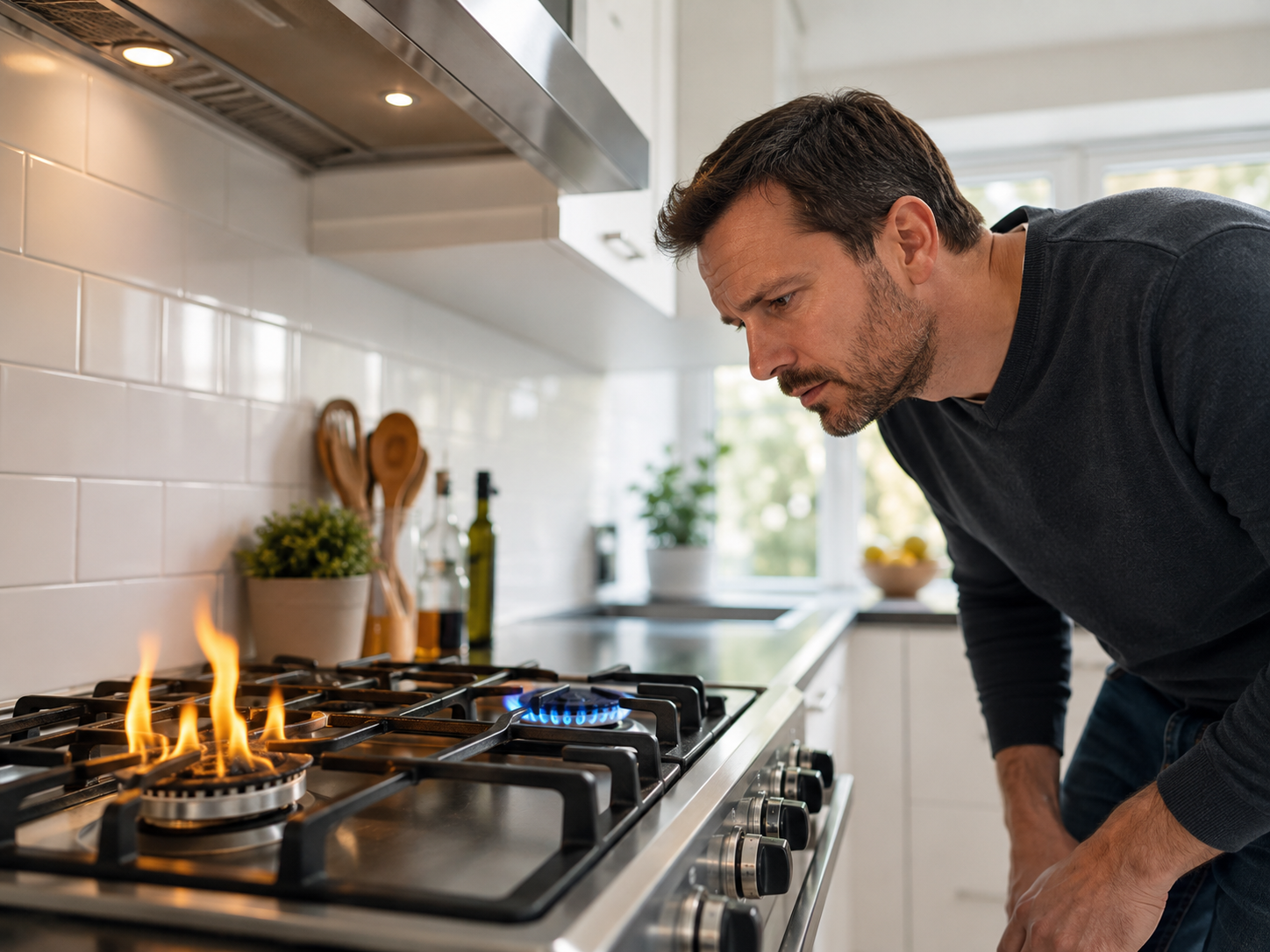
What to Check When Your Gas Stove Flame Looks the Wrong Color
Minjin Park
·
A healthy gas stove flame is usually steady and blue. If your burner flame looks yellow, orange, weak, uneven, or sooty, here’s what to check and when to call a professional.
When a Stove Flame Looks “Off,” It’s Worth Paying Attention
Most of us do not study the flame every time we turn on a gas stove. We light the burner, put a pan on top, and get on with dinner.
But every now and then, something catches your eye.
Maybe the flame looks orange instead of blue. Maybe it flickers yellow at the tips. Maybe one side of the burner burns higher than the other. Or maybe your pot suddenly has black marks on the bottom.
It is easy to brush this off, especially if the stove still “works.” The food heats up, the water boils, and nothing seems urgent.
Still, flame color can tell you something useful about how your gas stove is burning. A clear blue flame usually means the burner is getting the right mix of gas and air. A flame that stays mostly yellow or orange may mean the burner is dirty, misaligned, not getting enough oxygen, or not burning fuel efficiently. Utility safety guidance commonly recommends looking for a clear blue flame and treating yellow or orange flames as a sign the burner may not be operating efficiently.
This does not mean you need to panic every time you see a tiny flash of orange. Cooking is messy. Dust, humidity, food spills, and temporary particles in the air can affect flame color for a moment.
But if the unusual color keeps coming back, or the flame looks weak, lazy, sooty, or uneven, it is worth checking.
What Color Should a Gas Stove Flame Be?
A Healthy Flame Is Usually Blue
On a properly working gas stove, the flame should usually look mostly blue. It may have a lighter blue center and a darker blue outer area. The flame should also look fairly steady and evenly distributed around the burner.
Blue matters because it is generally associated with more complete combustion — meaning the gas and air are mixing well and the fuel is burning efficiently. Appliance safety sources commonly describe a stable blue flame as the normal sign of proper burner performance.
In everyday terms, a blue flame usually means:
The burner is heating efficiently.
The flame is getting enough air.
The burner ports are not badly blocked.
The cookware is less likely to collect soot.
The stove is behaving the way you expect.
You do not need the flame to look perfect every second. But “mostly blue, steady, and even” is the normal look you want.
Yellow or Orange Flames Deserve a Closer Look
A yellow or orange flame can happen for several reasons. Sometimes it is temporary. For example, dust in the air, moisture, cleaning residue, or a recent spill can cause a brief color change.
But a flame that stays yellow or orange may point to incomplete combustion or poor gas-air mixture. Utility and gas-safety guidance notes that yellow or orange gas flames can indicate improper combustion or inefficient burner operation.
That is why it is worth slowing down and checking the simple things first: Is the burner dirty? Is the burner cap sitting correctly? Did food boil over recently? Are the burner holes clogged?
If those checks do not solve it, the issue may need a qualified appliance technician.
Why Flame Color Matters in Everyday Cooking
It Can Affect How Food Cooks
An uneven or weak flame can make cooking frustrating. One side of the pan may get hotter than the other. Water may take longer to boil. Food may brown unevenly or burn in spots.
You may think the problem is your pan or recipe when the real issue is the burner.
A gas stove works best when the flame comes out evenly around the burner. If some ports are blocked, one side may burn stronger while another side barely lights. That can make cooking less predictable.
It Can Leave Soot on Cookware
If you see black soot on the bottom of your pots and pans, do not ignore it.
Soot can happen when the burner is not burning cleanly. It may also happen if cookware is too close to an improper flame or if the gas-air mixture is not right.
A little discoloration from normal cooking is one thing. But repeated black, powdery soot is a sign that something needs attention.
It Can Point to a Maintenance Problem
Many flame issues are simple maintenance problems. Food crumbs, grease, cleaning spray, or mineral residue can block the small holes where gas comes out.
That is especially common after pasta water boils over, sauce splatters, or a pan spills near the burner.
The good news is that some of these issues are easy to prevent with careful cleaning and proper burner placement.
It May Be Connected to Carbon Monoxide Risk
This is the part to take seriously, without turning it into fear.
Gas appliances can produce carbon monoxide when fuel does not burn completely. Carbon monoxide is dangerous because people cannot see or smell it. Public safety and utility sources commonly connect yellow flames, combustion problems, soot, or improper appliance use with potential carbon monoxide concerns.
A weird flame does not automatically mean there is a carbon monoxide emergency. But a persistent yellow or orange flame is not something to ignore, especially if it comes with soot, odd smells, poor ventilation, or repeated burner problems.
That is why every home with gas appliances should have working carbon monoxide alarms installed according to the manufacturer’s instructions and local guidance.
Common Reasons a Gas Stove Flame Changes Color
Dirty Burner Ports
This is one of the most common causes.
Gas burners have small openings where the flame comes out. If those openings get blocked by grease, crumbs, sauce, or dried-on food, the gas may not flow evenly.
That can lead to:
Yellow or orange flame tips
Uneven flame height
Clicking or delayed ignition
One section of the burner not lighting
Weak flame on one side
If your flame changed after a messy cooking session, a dirty burner is a likely suspect.
Burner Caps Not Sitting Correctly
Many gas stovetops have removable burner caps. After cleaning, it is easy to put one back slightly crooked.
Even a small misalignment can change the flame pattern. The burner may still light, but the flame may look uneven, too tall, or oddly colored.
Before assuming something is seriously wrong, let the stove cool completely and check that each burner cap is seated flat and centered.
Food or Liquid Boiled Over
Pasta water, rice water, soup, oatmeal, milk, and sauce can all boil over. Once liquid gets into the burner area, it may leave residue behind.
That residue can block burner holes or affect ignition.
This is why a burner may seem fine one day and strange the next. The problem might simply be yesterday’s spill.
Cleaning Product Residue
Cleaning the stove is good. Leaving cleaner inside the burner area is not.
Some sprays, powders, or degreasers can leave residue if they are not wiped away properly. When the burner is lit, that residue may affect the flame temporarily or create odd smells.
Always follow your stove manual and cleaning product directions. Avoid soaking parts that should not be soaked, and make sure everything is dry before relighting the burner.
Humidity, Dust, or Airborne Particles
Sometimes an orange flame is not really a stove problem.
Dust, humidifier mist, salt particles, or airborne debris can temporarily change flame color. This may happen suddenly and affect more than one burner.
If the flame returns to blue after the air clears or after nearby sources are removed, it may have been temporary. Still, if the color persists, keep checking.
Poor Airflow Around the Burner
Gas needs oxygen to burn properly. If the burner is not getting enough air, the flame may turn yellow, orange, lazy, or unstable.
This could be due to blocked burner parts, poor adjustment, or a deeper appliance issue. Do not try to adjust internal gas parts yourself unless your appliance manual clearly provides a safe user-level step. For gas adjustments and repairs, call a qualified professional.
Wrong Gas Setup or Appliance Conversion Issues
Some stoves are designed for natural gas. Others are set up for propane. Some can be converted, but they must be converted correctly with the proper parts.
If a stove is connected to the wrong type of gas or was not converted properly, the flame can look abnormal. This is especially important in rental homes, older homes, cabins, RVs, or recently renovated kitchens.
If your flame has looked wrong since installation or after a move, do not guess. Have it checked.
What to Check First When the Flame Looks Strange
1. Turn the Burner Off and Let It Cool
Before touching anything, turn the burner off.
Let the burner, grates, caps, and surrounding surface cool completely. Gas stove parts can stay hot longer than they look.
Do not clean or adjust parts while the burner is hot.
2. Look for Obvious Spills or Debris
Once cool, remove the grate and inspect the burner area.
Look for:
Dried sauce
Grease buildup
Rice or pasta starch
Crumbs
Burned-on food
Cleaner residue
Moisture around the burner
If you see buildup, clean it gently according to your stove manual.
3. Check the Burner Cap Position
Make sure the burner cap is sitting flat and centered. It should not wobble, tilt, or sit off to one side.
This is a small detail, but it matters. A crooked cap can make the flame look strange even when nothing else is wrong.
4. Clean the Burner Ports Carefully
If your manual allows it, clean clogged burner holes with a soft brush or recommended tool. Some people use a dry toothbrush for loose debris, but you should avoid forcing anything deep into the openings.
Do not use toothpicks that can break off inside the port. Do not enlarge holes. Do not use harsh methods that could damage the burner.
The goal is to remove debris, not modify the appliance.
5. Dry Everything Before Relighting
Moisture can interfere with ignition and flame quality. After cleaning, let parts dry fully before turning the burner back on.
If you recently washed removable parts, make sure they are completely dry and correctly replaced.
6. Relight and Observe
Turn the burner on and watch the flame.
Ask yourself:
Is it mostly blue?
Is it steady?
Is the flame even around the burner?
Does it light quickly?
Does it make unusual noises?
Does the flame stay yellow or orange?
If it returns to normal, the issue may have been dirt, moisture, or misalignment.
If it still looks wrong, stop using that burner and consider professional service.
Warning Signs That Need More Attention
The Flame Stays Mostly Yellow or Orange
A few orange flickers may be temporary. A flame that stays mostly yellow or orange is more concerning.
That can point to incomplete combustion, poor air mixture, clogged burner parts, or a gas setup issue.
The Flame Is Lazy, Tall, or Floating
A healthy flame usually hugs the burner and stays controlled. If the flame looks lazy, lifts away from the burner, rolls around, or seems unusually tall, something may be off.
You See Soot on Pots or Around the Burner
Black soot is a practical warning sign. It means the burner may not be burning cleanly.
If soot keeps appearing, do not treat it as normal kitchen mess.
The Burner Makes Unusual Sounds
Popping, roaring, sputtering, or repeated clicking may mean the burner is dirty, wet, misaligned, or not igniting correctly.
You Smell Gas After the Burner Is Lit
A brief gas smell during ignition can happen, but it should not continue. If you smell gas strongly or repeatedly, turn the burner off and follow your gas provider’s safety guidance.
Do not keep testing the burner over and over if something seems wrong.
Multiple Burners Change at the Same Time
If every burner suddenly turns orange or yellow, think beyond one dirty burner.
It could be something temporary in the air, such as dust or humidifier mist. But it could also point to a broader issue with gas supply, air quality, or appliance function.
If the problem continues, get it checked.
Common Mistakes People Make
Ignoring It Because the Stove Still Heats
A burner can heat food and still have a problem. “It works” is not the same as “it is working properly.”
Cleaning the Surface but Not the Burner Ports
Wiping the stovetop makes it look clean, but the small burner openings may still be blocked. If flame problems keep happening, look closer.
Putting Burner Caps Back While They Are Wet
Wet burner parts can cause clicking, weak flames, or uneven burning. Let everything dry fully before use.
Using Oversized Cookware on a Small Burner
A huge pan on a small burner can trap heat and affect airflow. It can also make the flame harder to see.
Use cookware that fits the burner well.
Trying to Adjust Gas Parts Without Experience
Some problems require a technician. Gas appliances are not a good place for guesswork. Cleaning removable parts is one thing. Adjusting gas flow, air shutters, valves, or conversion parts is another.
Prevention Tips for Better Burner Performance
Wipe Spills Before They Harden
Once the stove is cool, clean spills before they dry into a crust. Starchy boil-overs are especially good at clogging burner areas.
Keep Burner Parts Properly Seated
After every deep clean, double-check that caps and grates are back in the correct position.
Use Ventilation While Cooking
Use your range hood if it vents outdoors, or improve kitchen ventilation when possible. Good ventilation helps reduce cooking fumes and supports a safer kitchen environment. Safety experts commonly recommend ventilation and working CO alarms for homes with gas appliances.
Install and Test Carbon Monoxide Alarms
Carbon monoxide alarms are an important layer of protection in homes with fuel-burning appliances. Install them according to the manufacturer’s instructions and test them regularly.
Do not place all your trust in your nose. Carbon monoxide cannot be smelled.
Schedule Service When Something Keeps Happening
If one burner repeatedly burns yellow, leaves soot, smells odd, or lights poorly after cleaning, have it checked.
A professional can inspect the burner, gas-air mixture, ignition parts, and installation setup more safely than a homeowner guessing at the problem.
A Simple At-Home Flame Check Routine
You do not need to obsess over your stove. Just make flame-checking part of normal kitchen awareness.
Once in a while, especially after cleaning or a boil-over:
Turn on each burner briefly.
Look for a mostly blue, steady flame.
Check that flame height is even.
Watch for yellow or orange that does not go away.
Look under cookware for soot after cooking.
Notice any unusual smells or sounds.
Stop using a problem burner until you understand what is going on.
This takes less than a minute, and it can catch small problems early.
Final Thoughts: A Strange Flame Is a Helpful Clue
A gas stove flame does not need to be perfect every second. A quick orange flicker may come from dust, moisture, or something temporary in the air.
But a flame that stays yellow or orange, burns unevenly, leaves soot, smells odd, or behaves differently than usual deserves attention.
Start with the simple checks: turn the burner off, let it cool, clean away spills, make sure the burner cap is seated correctly, and dry everything before relighting. Many everyday flame problems come from dirt, grease, moisture, or misaligned parts.
If the flame still looks wrong, do not keep using that burner and hoping it fixes itself. Call a qualified appliance professional or follow your gas utility’s safety guidance.
The practical takeaway is simple: a steady blue flame is what you want. When the flame changes color and stays that way, your stove is giving you a clue. Paying attention early can keep cooking safer, cleaner, and less stressful.
Hi, I’m the creator and editor behind ZestyHabit. I research everyday safety, first aid, and practical wellness topics using official guidance and reliable public sources, then turn that information into clear, realistic steps for daily life.
My goal is to help readers make safer, better-informed choices at home and beyond.