
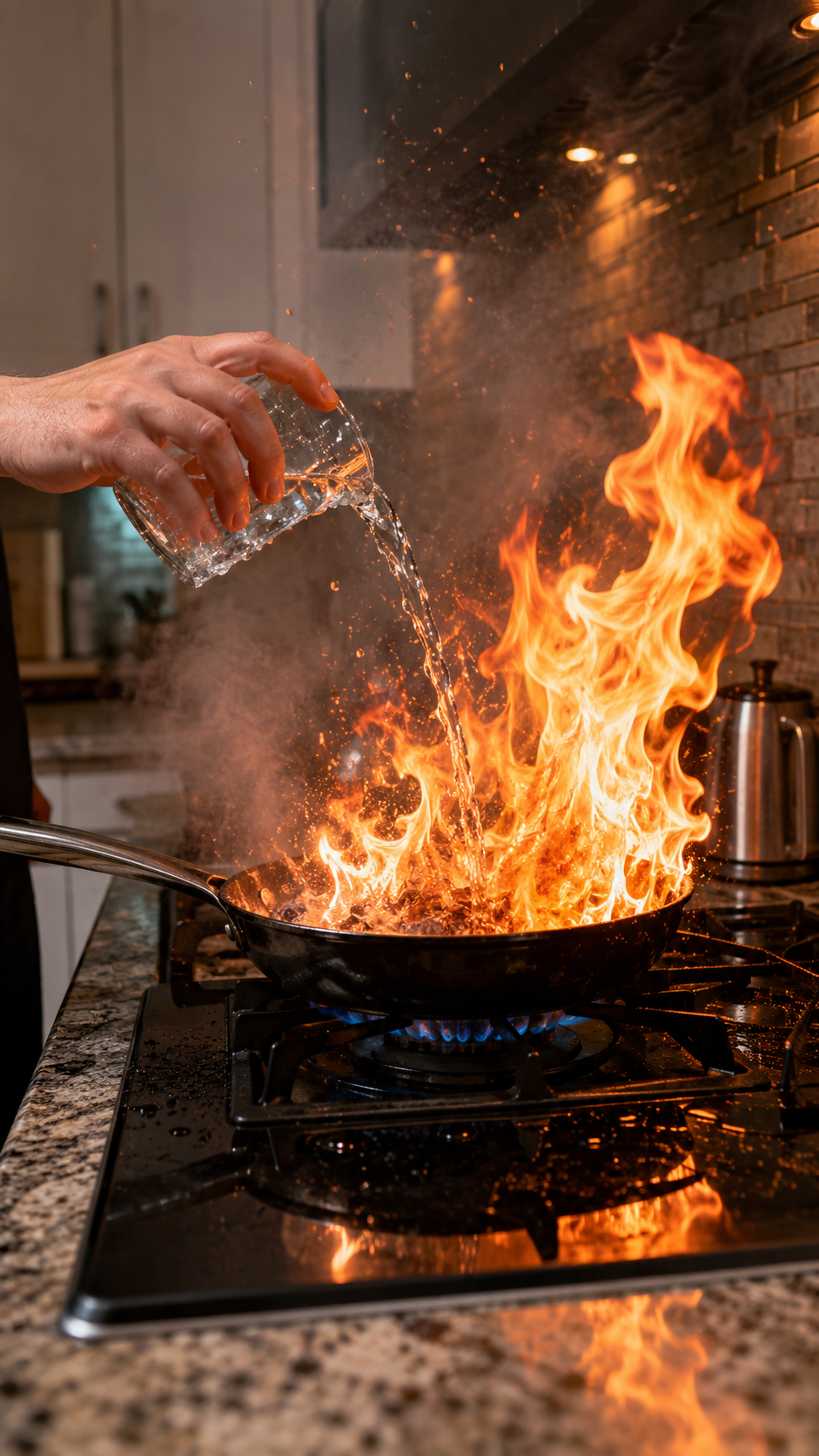
Pouring water on a grease fire can make flames spread violently. Learn why it happens, what to do instead, and how to prevent kitchen oil fires at home.

The Kitchen Mistake That Feels Natural but Can Make Things Worse
When something catches fire, most of us think of water first.
A candle flame? Water.
A campfire? Water.
A smoking trash can? Water, if it is safe and appropriate.
So when a pan of oil suddenly catches fire on the stove, it is easy to understand why someone might panic and reach for a cup of water, the sink sprayer, or a wet towel.
But with a grease fire, water is exactly what you should not use.
A grease fire is different from a small paper fire or an outdoor fire pit. Burning cooking oil is extremely hot, and oil and water do not mix. When water hits hot burning oil, it can sink below the oil, instantly turn into steam, and force burning grease upward and outward. In plain English, it can make the fire flare, splash, and spread.
That is why one small pan fire can become a much bigger kitchen emergency when water is thrown on it.
This article is not meant to scare you away from cooking. Frying eggs, sautéing vegetables, making bacon, deep-frying, and cooking with oil are normal parts of home life. The goal is to know the simple rules before you need them, so you do not have to guess in a stressful moment.
What Is a Grease Fire?
A grease fire happens when cooking oil, grease, or fat gets hot enough to ignite.
This can happen with vegetable oil, canola oil, olive oil, bacon fat, butter mixed with oil, animal fat, or grease buildup on a stovetop or inside an oven.
Most kitchen grease fires start when oil is heated too long, too hot, or without enough attention. For example, a pan of oil is left on the burner while someone answers the door. Bacon grease overheats while someone checks their phone. Oil in a pot starts smoking heavily, and the heat is not turned down in time.
Grease fires often begin small. You may see smoke first, then a shimmer, then flames. The problem is that once oil is hot enough to burn, the situation can change quickly.
Grease Fires Are Commonly Linked to Cooking
Cooking is one of the most common causes of home fires. That does not mean cooking is unsafe by itself. It means cooking needs attention, especially when heat, oil, and open burners are involved.
Many grease fire situations begin with ordinary distractions: a phone call, a child asking for help, a pet underfoot, a delivery at the door, or trying to cook several things at once.
The kitchen can feel familiar, but hot oil deserves respect.
Why Water Makes a Grease Fire Worse
The science behind this is simple enough to remember: water and oil do not mix, and water turns to steam very fast when it hits extremely hot oil.
Cooking oil can reach temperatures far above the boiling point of water. When water is poured into a pan of burning oil, the water sinks below the oil because it is denser. Then it heats almost instantly and expands into steam.
That rapid expansion can blast tiny droplets of burning oil into the air. Instead of cooling the fire, the water can spread the fuel.
The result may be a flare-up, a fireball, or burning grease splattering across the stove, cabinets, walls, floor, or the person standing nearby.
A Small Amount of Water Can Still Be Dangerous
Some people think, “I would not pour a whole pitcher of water. Maybe just a little splash.”
Even a small amount of water can cause hot oil to splatter. The danger is not only the size of the water splash. It is the reaction between water and overheated grease.
A sink sprayer can be especially risky because it may spread the burning oil over a wider area.
Wet Towels Can Be Risky Too
You may have heard advice about using a damp towel or cloth. This can be confusing because some fire-safety tools, like fire blankets, are designed to smother flames. But an ordinary wet kitchen towel is not the same as a fire blanket, and using it incorrectly can be dangerous.
A wet towel may drip water into the oil, spread the fire, or catch fire itself. It may also require you to get too close to the flames.
For an ordinary home cook, the safer simple rule is: do not use water or wet towels on a grease fire.
What to Do Instead for a Small Pan Grease Fire
The safest response depends on the size of the fire and whether you can act without putting yourself in danger.
If the fire is small and contained in a pan, and you are close enough to respond safely, the standard advice is to smother the fire.
Slide a Lid Over the Pan
Use a metal lid or a baking sheet and carefully slide it over the pan. Do not drop it from above if that would splash oil. Sliding helps reduce air reaching the flames.
Fire needs oxygen. Covering the pan cuts off oxygen and can put out a small grease fire.
Use a lid that fully covers the pan. A cookie sheet can work if it is large enough and made of metal.
Turn Off the Burner
If you can do so safely, turn off the heat. Do not move the pan. Moving a burning pan can spill flaming oil and spread the fire.
Once the lid is on and the heat is off, leave the pan covered. Do not lift the lid to “check.” Lifting the lid can let oxygen back in and cause the fire to reignite.
Let It Cool Completely
Leave the pan alone until it is fully cool. Hot oil can reignite if exposed to air too soon.
This is a moment where patience matters. The fire may look out, but the oil can still be dangerously hot.
When to Leave and Call 911
If the fire is not small, not contained, spreading beyond the pan, producing heavy smoke, or making you feel unsure, leave immediately and call 911 from a safe place.
Do not try to be heroic. Do not keep experimenting with different methods. Do not risk getting trapped in the kitchen.
Close the door behind you if you can do so safely. Alert others in the home. Get outside. Call for emergency help.
Trust the “I’m Not Sure” Feeling
Many people hesitate because they do not want to overreact. But fire is not the place to test your confidence.
If you are not sure you can control it immediately and safely, get out.
That is not failure. That is good judgment.
Should You Use a Fire Extinguisher?
A fire extinguisher can be useful, but only if you have the right type, know how to use it, and have a clear escape path.
For many home kitchens, a properly rated kitchen fire extinguisher is a good safety item to have. However, buying one is not enough. You need to know where it is, how it works, and when it is appropriate to use.
If the fire is already spreading, if smoke is heavy, or if you would have to move closer to danger to use the extinguisher, leave and call 911.
Keep Your Exit Behind You
If you ever use a fire extinguisher, stand with a clear exit behind you. You do not want the fire between you and the way out.
Use the extinguisher only from a safe distance and only for a small, contained fire. If it does not go out quickly, leave.
What About Baking Soda or Salt?
You may hear that baking soda can help smother a small grease fire. Baking soda can work on very small flames because it releases carbon dioxide when heated and can help reduce oxygen around the fire.
However, this is only practical for a very small fire, and you need a lot more than a tiny pinch. It is not a good plan for a larger fire.
Salt may also smother a very small flame in some situations, but again, this is not something to rely on if the fire is growing.
Never use flour, baking powder, sugar, or powdered drink mix. Flour and other powders can burn or create a dust hazard. Baking powder is not the same as baking soda.
For most people, the easiest safe memory is: lid first if it is small and safe; get out if it is not.
Common Mistakes During Grease Fires
Most grease fire injuries and kitchen damage come from understandable but risky reactions.
Mistake 1: Pouring Water on the Fire
This is the big one. Water can cause burning grease to splatter and spread. It may turn a pan fire into a larger fire within seconds.
Mistake 2: Carrying the Burning Pan to the Sink
A person may think, “I’ll just move it to the sink.” But carrying a burning pan is extremely risky.
Hot oil can spill on your hands, arms, feet, floor, cabinets, or clothing. The movement can feed the fire with air. You may trip, bump into someone, or drop the pan.
Keep the pan where it is. Smother it if safe. Otherwise, leave.
Mistake 3: Throwing Random Ingredients on the Fire
In a panic, people may throw flour, sugar, water, towels, or whatever is nearby. This can make the fire worse.
Before an emergency happens, decide what you will do: cover the pan, turn off the heat, leave if needed.
Simple plans are easier to follow under stress.
Mistake 4: Lifting the Lid Too Soon
Once the pan is covered, leave it covered. Checking too soon can reintroduce oxygen and cause the fire to flare up again.
Wait until the pan and oil are completely cool.
Mistake 5: Ignoring Smoke
Smoke is a warning sign. If oil is smoking heavily, it is too hot. Turn off the heat or move the pan off the burner if it is safe and there are no flames.
Do not wait for flames to appear before reacting.
Warning Signs Before Oil Catches Fire
A grease fire usually gives some warning signs.
The Oil Starts Smoking
Smoke is one of the clearest signs that oil is too hot. Different oils have different smoke points, but in everyday cooking, visible smoke means you should lower or turn off the heat.
The Oil Smells Sharp or Burnt
Hot oil may smell different before it ignites. If it smells harsh, burnt, or irritating, pay attention.
The Pan Looks Too Hot
If the oil shimmers aggressively, smokes, or seems to ripple heavily, it may be overheating.
Food Is Browning Too Fast
If food burns almost immediately when it hits the pan, the pan or oil may be too hot.
You Feel Rushed or Distracted
This is not a physical sign from the oil, but it matters. Grease fires often happen when someone is multitasking. If you are too distracted to watch the pan, turn the heat down or off.
How to Prevent Grease Fires in Everyday Cooking
Prevention is much easier than response.
Stay Near the Stove
When cooking with oil, stay in the kitchen. If you must leave, turn off the burner.
This is especially important for frying, sautéing, cooking bacon, or heating oil in a pot.
Heat Oil Slowly
Do not crank the burner to high and walk away. Heat oil gradually and adjust as needed.
Many recipes call for medium or medium-high heat, not maximum heat.
Use the Right Size Pan
A pan that is too small can overflow or splatter. A pot that is too shallow can be risky for frying.
Choose cookware that gives food and oil enough space.
Keep the Stove Area Clear
Keep towels, paper towels, wooden utensils, food packaging, oven mitts, cookbooks, and loose clothing away from burners.
Grease fires can spread faster when flammable items are nearby.
Keep a Lid Nearby
When cooking with oil, keep a metal lid or baking sheet within reach. You do not want to search for one after flames appear.
This one small habit can make a big difference.
Clean Grease Buildup
Grease can build up on stovetops, range hoods, backsplashes, ovens, and nearby surfaces. Built-up grease can catch fire or help flames spread.
Wipe spills after cooking once surfaces are cool. Clean range hood filters as recommended by the manufacturer.
Deep Frying at Home: Extra Care
Deep frying needs more attention because it uses more oil.
Do Not Overfill the Pot
Oil rises when food is added. If the pot is too full, hot oil can overflow onto the burner.
Leave plenty of space at the top of the pot.
Dry Food Before Frying
Water on food can cause hot oil to splatter. Pat food dry before placing it in oil.
This is especially important for frozen foods, wet vegetables, and anything marinated.
Add Food Gently
Do not drop food from high above the pot. Lower it carefully to reduce splashing.
Watch the Temperature
If you fry often, use a cooking thermometer. Oil that gets too hot can smoke and ignite.
If oil starts smoking, turn off the heat and let it cool.
What If the Fire Is in the Oven?
Grease fires can also happen in ovens, especially when food drips fat onto the oven floor or heating element.
If a small fire starts inside the oven, keep the oven door closed and turn off the oven. Keeping the door closed helps limit oxygen.
Do not open the door repeatedly to check. If the fire does not go out quickly, spreads, or you are unsure, leave and call 911.
Afterward, do not use the oven again until it has been cleaned and checked as needed.
What If the Fire Is on a Grill?
Grills can flare when fat drips onto flames or hot surfaces. Small flare-ups are common, but they need attention.
Move food away from direct flames if it is safe. Close the grill lid if appropriate to reduce oxygen. Turn off burners on a gas grill if you can safely do so.
Do not pour water on a grease flare-up, especially on a gas grill or burning grease. Keep a proper fire extinguisher nearby when grilling.
Teaching Kids and Teens Kitchen Fire Basics
If children or teens cook at home, teach them the grease fire rule early.
The message can be simple:
Never put water on burning oil.
Turn off the heat if it is safe.
Cover a small pan fire with a metal lid if you know how.
Leave and call for help if you are unsure.
Also teach them not to move a burning pan and not to throw random ingredients onto a fire.
Teen cooks may be confident with snacks, eggs, bacon, or fried foods, but confidence is not the same as fire-safety knowledge.
A Simple Grease Fire Plan for Your Kitchen
You do not need a complicated emergency plan. You need a few clear habits.
Keep a metal lid or baking sheet near the stove.
Keep the stovetop clear of towels and paper.
Stay near hot oil.
Turn off heat if oil smokes.
Never use water on burning grease.
For a small contained pan fire, slide on a lid and turn off the burner.
Leave the lid on until the pan is cool.
If the fire grows or you are unsure, get out and call 911.
Write this plan down if it helps. Share it with everyone who cooks in your home.
Final Thoughts: Remember the One Rule Before You Need It
A grease fire can be frightening because it often starts during an ordinary moment: cooking bacon, frying potatoes, making dinner, or heating oil for a quick meal.
The most important rule is simple: never pour water on a grease fire.
Water can spread burning oil, create violent splattering, and turn a small pan fire into a larger kitchen emergency.
If the fire is small and contained, smother it with a metal lid or baking sheet if you can do so safely, turn off the burner, and leave it covered until completely cool. If the fire is spreading, smoky, or makes you unsure, leave the home and call 911 from a safe place.
Cooking safely is not about fear. It is about knowing a few practical habits before you need them. Stay near hot oil, watch for smoke, keep flammable items away from the stove, and keep a lid nearby.
A calm kitchen is not a kitchen where nothing ever goes wrong. It is a kitchen where you know what to do when something does.

Hi, I’m the creator and editor behind ZestyHabit. I research everyday safety, first aid, and practical wellness topics using official guidance and reliable public sources, then turn that information into clear, realistic steps for daily life.
My goal is to help readers make safer, better-informed choices at home and beyond.


