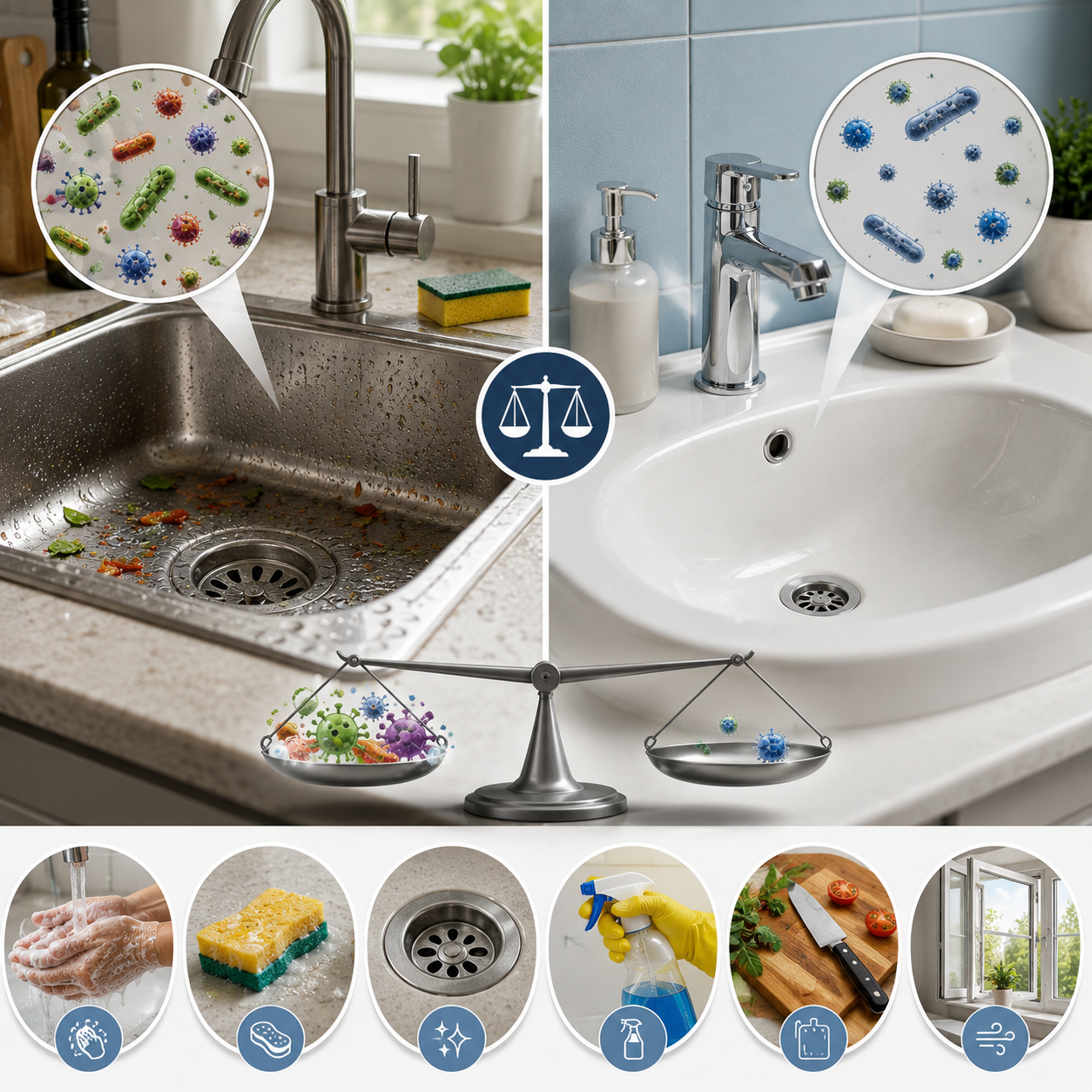
Can Your Kitchen Sink Be Dirtier Than Your Bathroom? What Every Home Should Know
Minjin Park
·
Could your kitchen sink be dirtier than your bathroom? Learn why sinks collect germs, common cleaning mistakes, warning signs, and simple habits to keep your kitchen safer.
Most people think of the bathroom as the “germy” room in the house. It makes sense. Bathrooms have toilets, damp towels, toothbrush holders, and plenty of surfaces we know need regular cleaning.
But the kitchen sink can quietly become one of the dirtiest spots in the home.
That does not mean your sink is dangerous every time you wash a plate or rinse a tomato. It simply means the kitchen sink gets exposed to a lot more than we often realize. Food scraps, raw meat juices, dirty dishes, wet sponges, grease, and standing water all meet in one place.
And because the sink is where we clean things, we sometimes forget that the sink itself also needs cleaning.
A shiny faucet and empty basin can make a sink look clean, but germs, odors, and residue often build up in places we do not see right away—around the drain, under the strainer, along the faucet base, and inside the garbage disposal.
Your kitchen sink handles a little bit of everything. It is not just water and dish soap.
You rinse plates with leftover sauce. You wash cutting boards. You drain pasta. You scrub pans with grease. You rinse fruit, thaw food packages, clean pet bowls, and sometimes dump out old drinks or soup.
That is a lot for one small area.
Food Residue Builds Up Fast
Tiny food particles can collect around the drain, in the sink strainer, and on the sides of the basin. Even when you rinse the sink quickly, small bits of rice, egg, sauce, coffee grounds, or vegetable scraps can stay behind.
Over time, this residue can create unpleasant smells and make the sink feel less fresh.
You may not notice it after one meal. But after breakfast dishes, lunch containers, dinner cleanup, and a wet sponge sitting nearby, the sink can become a busy little collection point.
Moisture Makes the Problem Worse
Bathrooms are damp, but kitchen sinks are wet many times a day.
Moisture helps residue stick around. A wet sink strainer, damp sponge, or puddle near the faucet can stay moist for hours, especially if there is poor airflow or if items are piled in the sink.
This is why a sink can smell musty even when there are no dirty dishes in it.
The Drain Is Easy to Forget
The basin might get wiped down, but the drain area is often ignored. The drain catches food scraps, grease, soap, and dirty water. If you have a garbage disposal, small bits of food can also remain inside.
A clean-looking sink with a dirty drain can still give off odors.
If your kitchen smells slightly sour and you cannot find the source, the sink drain is a good place to check.
How a Kitchen Sink Can Become Dirtier Than a Bathroom
It sounds strange at first, but think about how differently we treat bathrooms and kitchens.
Most people know toilets need regular cleaning. They use bathroom cleaners, disinfect the seat, scrub the bowl, and wash their hands afterward.
But in the kitchen, people often assume dish soap and running water are enough to keep everything clean.
The sink is used as a cleaning station, but it also touches things that would never go near a bathroom sink: raw chicken packaging, greasy pans, old food containers, cutting boards, and dirty sponges.
That combination of food, moisture, and frequent use is exactly why the kitchen sink needs its own cleaning routine.
Common Kitchen Sink Mistakes
Most sink problems are caused by small habits, not major neglect. These mistakes are common in busy homes.
Leaving Dirty Dishes Overnight
It happens to everyone. You finish dinner, feel tired, and decide the dishes can wait until morning.
One night is not a disaster. But when food-covered dishes sit in the sink for hours, moisture and scraps collect. Bowls with sauce, pans with grease, and cups with old milk or juice can all add to odor.
If you cannot wash everything right away, at least scrape plates and rinse off heavy residue before leaving them.
Letting the Sponge Sit Wet
A wet sponge left in the sink is one of the biggest kitchen sink problems.
Sponges hold water and food particles. When they sit flat in a damp sink, they dry slowly and can start to smell. Then that same sponge gets used on dishes, counters, and pans.
A better habit is to rinse the sponge well, squeeze it dry, and store it upright in a holder with airflow.
Using the Same Sponge for Everything
Many people use one sponge for dishes, counters, the sink, stovetop spills, and sometimes even pet bowls.
That may feel efficient, but it can spread residue from one area to another. A dish sponge should ideally be used for dishes only. Use a separate cloth, brush, or cleaning pad for the sink and counters.
This small separation makes the whole kitchen easier to keep clean.
Forgetting the Faucet and Handles
The sink basin gets attention because it is visible. But faucet handles are touched with messy hands all the time.
You might touch the handle after handling raw food, cracking eggs, wiping a spill, or loading dirty dishes. The faucet base can also collect water spots, grime, and residue.
A quick wipe around the handle and faucet base can make a big difference.
Ignoring the Sink Strainer
The sink strainer catches food so it does not go down the drain, but it needs cleaning too.
If food sits in the strainer too long, it can smell. Empty it often, rinse it well, and wash it with dish soap at the end of the day.
If the strainer has tiny holes, use a brush to clean stuck particles.
Warning Signs Your Sink Needs Attention
Your sink does not need to look terrible before it needs cleaning. Small warning signs often show up first.
A Sour or Musty Smell
If the kitchen smells unpleasant near the sink, check the drain, sponge, and garbage disposal.
A sour smell usually means food residue or moisture is sitting somewhere. It may be under the drain stopper, inside the disposal, in the sponge, or around the sink edge.
Slimy Areas Around the Drain
If the drain area feels slippery or slimy, it is time for a deeper clean. This buildup can happen when soap, grease, and food residue mix together.
The area may still look normal from a distance, so touch and smell can be useful clues.
Stains That Keep Coming Back
Coffee, tea, tomato sauce, and mineral deposits can leave marks in the sink. Stains do not always mean the sink is unsafe, but they can hide grime and make the kitchen feel less clean.
If stains keep returning quickly, your sink may need more frequent rinsing and drying.
Fruit Flies or Gnats Near the Sink
Tiny flies near the sink may be attracted to food residue, damp drains, or scraps in the garbage disposal.
If you notice them, clean the drain, empty food waste, wipe the sink area, and avoid leaving dishes or wet food scraps overnight.
A Sponge That Smells Even After Rinsing
Sometimes the sink is not the main problem. The sponge is.
If your sponge smells bad, feels slimy, or looks worn out, replace it. A dirty sponge can make a clean sink smell bad again.
A Simple Daily Sink Cleaning Routine
You do not need a complicated routine or harsh cleaning habits. A few small steps after dinner can keep the sink much fresher.
Step 1: Clear Food Scraps First
Before washing dishes, scrape food into the trash or compost. Avoid pushing large scraps into the sink.
This keeps the drain clearer and makes dishwashing easier.
Step 2: Rinse the Basin
After dishes are done, rinse the sink with warm water. Pay attention to the corners, the drain area, and the sides of the basin.
This removes loose residue before it dries.
Step 3: Wash the Sink With Dish Soap
Use a dedicated sink brush, cleaning cloth, or scrub pad. Add a little dish soap and scrub the basin, drain area, and faucet base.
Do not use your regular dish sponge if you can avoid it. Keep sink-cleaning tools separate from dish-cleaning tools.
Step 4: Empty and Rinse the Strainer
Dump trapped food scraps into the trash. Rinse the strainer and scrub it if needed.
A clean strainer helps prevent odor.
Step 5: Dry the Area
Use a clean towel or let the sink air dry. Wiping away puddles around the faucet and counter edge helps prevent musty smells and water spots.
This step is easy to skip, but it makes the sink look and feel cleaner.
How Often Should You Deep Clean the Kitchen Sink?
For many homes, a quick daily rinse and scrub is enough for regular upkeep. A deeper clean once or twice a week is a good habit, especially if you cook often.
A deeper clean might include scrubbing around the drain, cleaning the faucet base, washing the sink stopper, and refreshing the garbage disposal if you have one.
If you cook every day, handle raw meat often, or have a large family, your sink may need attention more often.
If you mostly use the dishwasher and cook lightly, you may not need as much deep cleaning, but you should still keep the sink dry and free of food residue.
What About the Garbage Disposal?
A garbage disposal can be helpful, but it is not a magic trash can. It can hold onto small food particles, especially if you do not run enough water while using it.
To keep it fresher, run cold water before, during, and after using the disposal. Avoid overloading it with large amounts of food at once.
You can also clean the rubber splash guard, which is often one of the smelliest parts. Lift the flaps carefully and scrub underneath with a brush and dish soap.
If your disposal smells, the problem may not be deep in the pipes. It may be right under that rubber guard.
Safer Habits Around Raw Meat and Seafood
Raw meat, poultry, and seafood require extra care in the kitchen. You do not need to be anxious, but you do need a clear routine.
Try not to rinse raw poultry in the sink, because splashing water can spread droplets around the sink area and nearby surfaces. Instead, follow safe food preparation habits and cook food properly.
If raw meat juices touch the sink, cutting board, or counter, clean the area right away with appropriate cleaning products for your surface.
Use paper towels or a dedicated washable cloth for messy raw food cleanup, not your everyday dish sponge.
Also, wash your hands after handling raw food and before touching the faucet, fridge handle, or clean dishes.
Should You Disinfect the Kitchen Sink?
For everyday cleaning, dish soap and scrubbing remove a lot of residue. But after raw meat cleanup or heavy messes, disinfecting may be appropriate.
Always follow the label instructions on household disinfectants. Different products need different contact times, and some surfaces require special care.
Never mix cleaning products, especially bleach and ammonia-based cleaners. Mixing chemicals can create harmful fumes.
If you prefer a gentler routine for daily cleaning, focus on removing food residue, drying the sink, and keeping tools separate. Save stronger disinfecting for situations where it makes sense.
Don’t Forget the Area Around the Sink
The sink is not just the basin. The surrounding area matters too.
Counter Edges
Water and food crumbs often collect along the counter edge near the sink. Wipe this area daily, especially after cooking.
Soap Dispensers
Soap bottles and dispensers can get sticky at the base. Pick them up and wipe underneath them.
Dish Racks
Dish racks hold clean dishes, but they can collect water and residue underneath. Empty and wash the tray regularly.
Sink Mats
If you use a rubber sink mat, lift it often. Food particles and moisture can collect underneath. Wash and dry it regularly, or it can become part of the problem.
Small Prevention Tips That Actually Help
A cleaner sink comes from repeatable habits, not perfection.
Keep a small brush near the sink for drain and strainer cleaning. Replace your dish sponge regularly. Store sponges and brushes where they can dry. Do not let food scraps sit in the strainer. Wipe faucet handles after messy cooking. Rinse the sink after pouring out soups, sauces, or dairy.
These habits are simple, but they work because they reduce the three things that make sinks unpleasant: food, moisture, and neglect.
When the Sink Still Smells After Cleaning
If you cleaned the basin and it still smells, check the hidden spots.
Look under the drain stopper. Clean the garbage disposal splash guard. Replace the sponge. Wash the dish rack tray. Check the trash can nearby. Rinse the sink overflow opening if your sink has one.
Sometimes the smell is not from the sink at all, but from a wet cloth, old sponge, or food packaging in the trash.
If an odor is strong, persistent, or seems related to plumbing, it may be worth contacting a qualified professional. But for everyday kitchen smells, the cause is often simple buildup.
A Clean Sink Makes the Whole Kitchen Feel Better
The kitchen sink is easy to overlook because it is associated with cleaning. But it needs regular care just like the bathroom sink, toilet, shower, or floor.
In some homes, the kitchen sink can become dirtier than the bathroom because it handles food residue, grease, dirty dishes, raw food messes, and constant moisture. That does not mean you need to worry every time you use it. It just means the sink deserves a steady routine.
Scrape food first. Rinse after use. Scrub the basin daily if you cook often. Clean the drain area and strainer. Keep sponges dry and replace them regularly. Pay attention to smells, slime, and hidden buildup.
A cleaner sink is not about chasing perfection. It is about making one of the busiest places in your home safer, fresher, and easier to live with. With a few calm, practical habits, your kitchen sink can stay exactly what it should be—a helpful cleaning space, not a hidden source of mess.
Hi, I’m the creator and editor behind ZestyHabit. I research everyday safety, first aid, and practical wellness topics using official guidance and reliable public sources, then turn that information into clear, realistic steps for daily life.
My goal is to help readers make safer, better-informed choices at home and beyond.