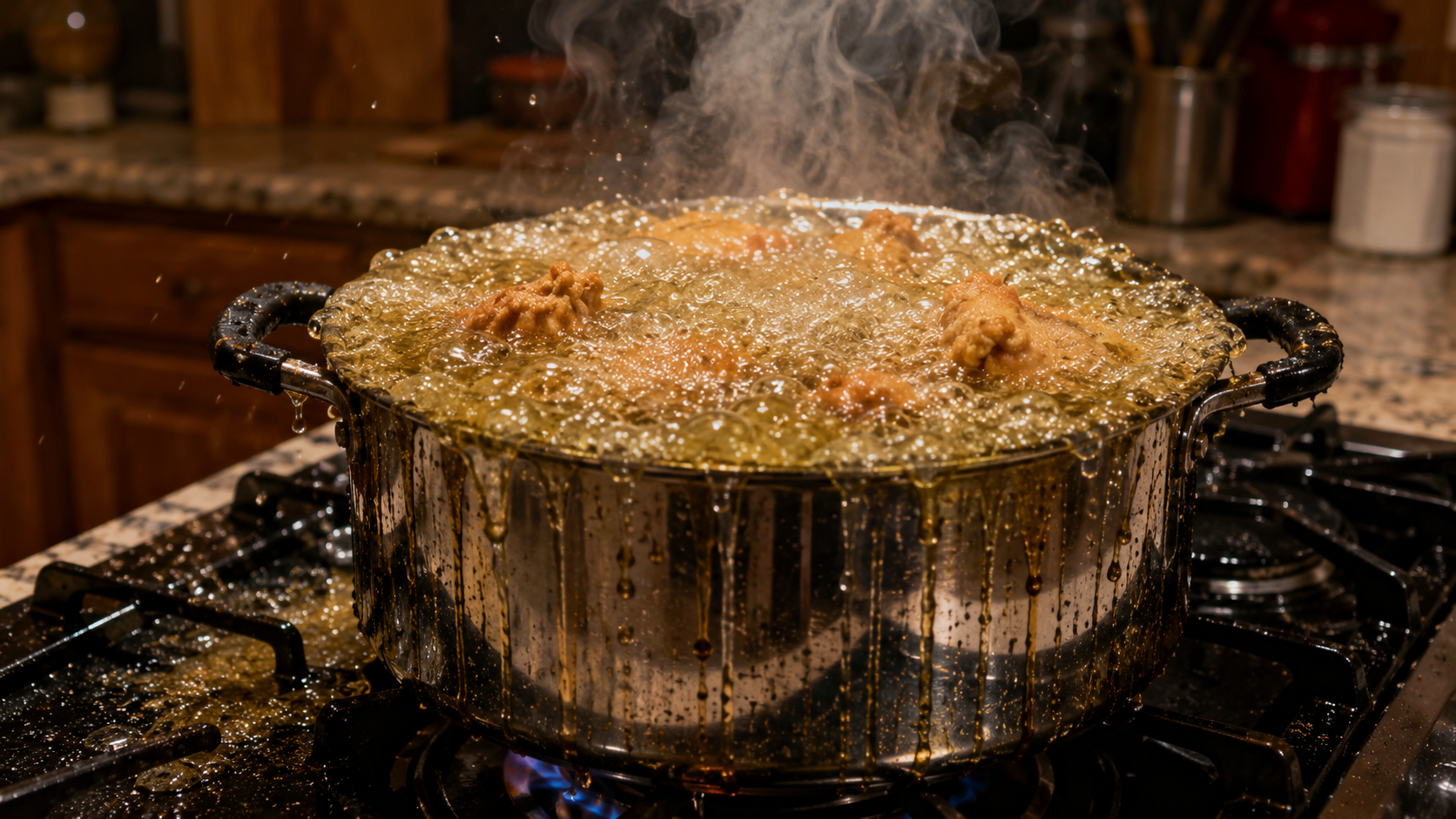
Why Overfilling a Pot While Deep-Frying Can Be Dangerous
Minjin Park
·
Overfilling a pot during deep-frying can lead to oil overflow, splattering, temperature drops, and kitchen fire risks. Learn simple frying safety habits for home cooking.
Deep-fried food has a way of making an ordinary meal feel special. Crispy chicken, homemade fries, doughnuts, onion rings, tempura, and fried fish all have that golden crunch people love. And while many home cooks do not deep-fry every day, it is common to pull out a pot of oil for weekend meals, holidays, game-day snacks, or family gatherings.
But frying at home is one of those kitchen tasks where small choices matter.
One of the most common mistakes is filling the pot too full. Sometimes the pot is too full of oil. Sometimes too much food is added at once. Sometimes both happen at the same time. It may not seem serious at first, especially if you are trying to cook faster or avoid using multiple batches.
But an overfilled pot can quickly become messy, stressful, and unsafe.
Hot oil expands, bubbles, splatters, and rises when food is added. If there is not enough empty space in the pot, oil can overflow onto the stovetop. That can cause burns, smoke, slipping hazards, and in serious situations, a fire risk if oil reaches a flame or hot burner.
The good news is that deep-frying can be much more manageable with a few practical habits. You do not need a restaurant setup or fancy equipment. You just need enough pot space, the right amount of oil, small batches, and a calm routine.
The Main Problem: Hot Oil Needs Room to Move
When oil is sitting quietly in a pot, it may look controlled. The surface is flat. The pot seems stable. There is no obvious sign that anything dramatic will happen.
Then food goes in.
Food contains moisture. Even foods that look dry still release steam when they hit hot oil. That steam pushes upward and creates bubbling. Breaded or battered foods can make the bubbling even stronger. Frozen foods can cause even more activity because ice crystals and surface moisture turn to steam quickly.
If the pot is too full, the oil has nowhere to go.
Instead of bubbling safely below the rim, it may rise up, spill over, or splatter onto nearby surfaces. This is why a pot that looked fine before adding food can suddenly become too full after the first batch goes in.
A safe frying setup always leaves extra room for bubbling and movement.
Why Oil Overflow Is So Risky
Oil overflow is one of the biggest concerns with overfilled frying pots. It can happen faster than people expect.
When hot oil spills over the side of the pot, it may land on the burner, stovetop, floor, countertop, or your hands. Unlike water, oil is thick and clings to surfaces. It can cause painful burns and is harder to clean up safely while everything is still hot.
If oil spills onto a gas flame or very hot electric element, it can also create a fire hazard. This is why deep-frying should never be treated casually.
Overflow Can Happen in Seconds
One reason frying accidents feel scary is that they can happen suddenly. You may add a handful of fries, see bubbles rise, and then realize the oil is climbing too high.
At that point, it is tempting to panic, move the pot, or grab something quickly. But moving a pot full of hot oil is dangerous. Prevention is much safer than trying to react once the oil is already spilling.
Overfilling With Food Is a Problem Too
Many people focus only on the oil level, but the amount of food matters just as much.
If you add too much food at once, several things can happen. The oil bubbles more aggressively. The temperature drops. Food pieces stick together. Crumbs and batter break off. The food may absorb more oil and come out greasy instead of crisp.
This is especially common when people are cooking for a crowd. You want to finish quickly, so you add a big batch. But the pot becomes crowded, the oil cools down, and the food cooks unevenly.
A crowded pot is not faster if the food turns soggy or if the oil becomes hard to control.
Small Batches Are Safer and Better
Small batches give oil room to bubble and recover. They also help food cook more evenly.
French fries crisp better when they are not packed tightly. Fried chicken browns more evenly when pieces are spaced apart. Doughnuts puff and turn better when they have room to float. Tempura stays lighter when the oil is not overloaded.
In other words, safety and food quality go together.
Why Temperature Drops Make Frying Harder
When food goes into hot oil, the oil temperature naturally drops. This is normal. But when too much food is added at once, the drop can be dramatic.
Oil that is not hot enough does not crisp food properly. Instead, food may sit in the oil longer and absorb more of it. The coating may become heavy, greasy, or pale. Potatoes may soften instead of crisping. Chicken may brown unevenly.
Then many home cooks respond by turning up the heat. That can create another problem: the oil may later get too hot, smoke, or become harder to manage once the food is removed.
A steady temperature is easier to maintain when the pot is not overcrowded.
Common Foods That Cause Oil to Rise Quickly
Some foods are more likely to create bubbling, splattering, or overflow.
Frozen Foods
Frozen fries, nuggets, mozzarella sticks, and frozen battered foods can release moisture quickly. Ice crystals on the surface turn to steam, which makes oil bubble.
Never dump a large amount of frozen food into hot oil at once. Shake off loose ice crystals if the product allows, and fry in small batches.
Wet Foods
Food that has been rinsed but not dried can make oil splatter. This includes potatoes, vegetables, seafood, and herbs.
Pat foods dry before frying whenever possible. Moisture and hot oil do not mix calmly.
Battered Foods
Wet batter can puff, drip, and bubble when it hits oil. If the pot is already full, battered foods can push the oil level higher than expected.
Add battered pieces gently and one at a time.
Breaded Foods
Breadcrumbs and flour coatings can break off and collect in the oil. These bits can burn, smoke, and make the oil degrade faster.
Avoid crowding breaded foods, and remove loose crumbs between batches when practical.
Dough-Based Foods
Doughnuts, fritters, and other dough foods may expand as they cook. If you fill the pot too tightly, they can bump into each other, cook unevenly, and raise the oil level.
Give them room to float.
How Full Should a Frying Pot Be?
A good general habit is to fill the pot no more than about halfway with oil. Many cautious home cooks use even less, especially if the pot is not very deep.
The exact amount depends on the pot shape, the food, and the cooking method, but the principle is simple: leave plenty of empty space above the oil.
You need room for:
Bubbling when food is added
Food displacement
Steam release
Safe stirring or turning
Oil movement
Avoiding overflow
If the pot looks nearly full before food goes in, it is already too full.
Choose a Deeper Pot Than You Think You Need
A wide, shallow pan may feel convenient, but it gives you less protection from splatter and overflow. A deeper, heavy pot is often safer for deep-frying because it leaves more vertical space above the oil.
A Dutch oven or heavy-bottomed deep pot can work well for many home frying tasks. The heavy base helps hold heat more steadily, and the taller sides help contain bubbling.
Avoid using a lightweight, shallow pot filled close to the top.
If oil bubbles within an inch or two of the top, the pot is too full or the batch is too large. Do not add more food.
Let the bubbling calm down and reduce the batch size.
Oil Splashes Onto the Stovetop
A little tiny popping can happen, especially with moist foods, but repeated splashes around the burner mean something needs to change.
Dry the food better, lower the batch size, or use a deeper pot.
Food Pieces Are Packed Together
If food cannot move freely, the pot is overcrowded. Pieces should have space around them so oil can circulate.
Crowded food cooks unevenly and can cause more bubbling.
Oil Foams and Does Not Settle
Persistent foaming may mean the oil is old, contaminated with food particles, or overloaded with moisture. Stop adding food and reassess the oil.
The Oil Smokes
Smoking oil is a warning sign. The oil may be too hot, old, or breaking down. Turn off or reduce the heat carefully and let the oil cool.
Do not keep frying in smoking oil.
Common Mistakes That Make Frying More Dangerous
Most frying problems come from simple habits that can be changed.
Mistake 1: Using a Pot That Is Too Small
A small pot may seem efficient because it uses less oil, but it can become dangerous if filled too high. If the pot is small, use less oil and very small batches.
Do not try to force a full family-size batch into a small saucepan.
Mistake 2: Pouring in Too Much Oil
People often add extra oil because they want food fully submerged. But if the oil level is too high, there is no room left for bubbling.
Use a deeper pot instead of filling a shallow one too high.
Mistake 3: Adding Food Too Quickly
Dropping in a whole basket, handful, or plate of food at once can cause a sudden surge of bubbles. Add food gradually and gently.
This is especially important with frozen or battered foods.
Mistake 4: Frying Wet Food
Water turns into steam when it hits hot oil. That steam causes popping, splattering, and bubbling.
Pat food dry before coating or frying. If using frozen food, avoid adding clumps of ice.
Mistake 5: Walking Away
Deep-frying is not a “start it and leave it” cooking method. Oil temperature can change quickly. Food can brown fast. Bubbling can rise suddenly.
Stay nearby and keep your attention on the pot.
Mistake 6: Letting Kids or Pets Near the Stove
A pot of hot oil should be treated as a high-attention cooking task. Children, pets, and crowded kitchen traffic increase the chance of bumping the stove, pulling a handle, or distracting the cook.
Keep the area calm and clear.
How to Set Up a Safer Frying Station
A little preparation makes frying feel less chaotic.
Use the Right Pot
Choose a deep, sturdy pot with enough room above the oil. Make sure it sits flat and stable on the burner.
Turn pot handles inward so they cannot be bumped or pulled.
Keep the Area Clear
Before heating oil, clear the stovetop and nearby counter. Move paper towels, packaging, plastic bags, dish towels, wooden utensils, and anything flammable away from the burner.
Have a clean landing area ready for cooked food.
Prepare Food Before Heating Oil
Cut, dry, season, bread, or batter the food before the oil is hot. Frying becomes risky when you are rushing to prepare food while hot oil is waiting.
Use a Thermometer If You Have One
A kitchen thermometer helps you avoid guessing. Many frying problems happen because oil is too hot or too cool.
If you do not have a thermometer, watch carefully and use a small test piece, but a thermometer is the more reliable tool.
Keep a Lid or Sheet Pan Nearby
A metal lid or baking sheet can be useful if you need to cover a pot in a grease-fire situation. You should not use water on burning oil. The best prevention is avoiding overflow and overheating in the first place, but having a safe cover nearby is a smart habit.
Do not place the lid directly on the pot during normal frying unless the recipe specifically calls for it, because trapped steam can drip water back into oil.
What to Do If the Oil Starts Rising Too High
If the oil bubbles higher than expected, stay calm.
Do not add more food. Do not move the pot. Reduce the heat or turn it off if needed. Let the bubbling settle.
If food is causing the surge and it is safe to do so, you may carefully remove a few pieces with long tongs or a slotted spoon. But do not reach over violent bubbling or put your face close to the pot.
Once things calm down, continue with smaller batches or switch to a larger pot.
If oil has spilled, wait until the area is safe and cool enough before cleaning. Hot oil on a stovetop can remain dangerous for a while.
Why You Should Never Pour Water on Hot Oil
Water and hot oil are a dangerous combination. Water sinks below the oil, turns rapidly into steam, and can force hot oil upward and outward.
This is why wet food splatters, and it is also why water should never be used on an oil fire.
For everyday prevention, keep water away from the frying pot. Dry utensils before using them. Do not rinse a spoon and put it straight into hot oil. Do not add wet food without drying it.
If you are deep-frying, this simple rule matters: keep moisture controlled.
Practical Examples From Everyday Kitchens
Homemade French Fries
You cut potatoes, rinse them, and drop a large handful into oil. The pot bubbles aggressively and nearly spills.
The safer approach is to dry the potatoes thoroughly after rinsing and fry in small batches. Leave enough room in the pot for bubbling.
Fried Chicken Night
You have a big bowl of breaded chicken and want dinner finished quickly. You pack the pot with pieces. The oil temperature drops, the coating gets greasy, and crumbs burn at the bottom.
Instead, fry fewer pieces at a time. Let the oil return to temperature between batches.
Frozen Mozzarella Sticks
Frozen snacks can seem easy, but they can bubble and leak cheese if crowded or overheated. Add only a few at a time and watch carefully.
If the oil bubbles too high, stop adding more.
Doughnuts or Fritters
Dough expands as it cooks. If the pot is crowded, pieces may stick together or push oil higher.
Give dough foods extra space and turn them gently.
How to Fry in Batches Without Feeling Slowed Down
Many people overfill the pot because they are trying to save time. But small batches do not have to feel inefficient.
Set up a simple system.
Place uncooked food on one tray. Set a paper towel-lined plate or rack for cooked food. Keep seasonings nearby. Use a timer if helpful. Let oil return to temperature between batches.
You can also keep cooked batches warm in a low oven while finishing the rest, depending on the food.
A calm batch system usually produces better food and less stress than one overloaded pot.
Cleaning Up After Frying
Safety does not end when the food is done. Hot oil needs time to cool.
Turn off the burner and leave the pot in a stable place where it will not be bumped. Keep kids and pets away. Do not pour hot oil into the sink or trash.
Once the oil is fully cool, decide whether to discard or save it. If saving, strain out food particles and store it in a clean, sealed container. If discarding, pour cooled oil into a disposable container and throw it away according to local guidelines.
Wipe greasy surfaces carefully so the floor or stovetop does not become slippery.
A Simple Deep-Frying Safety Checklist
Before frying, ask yourself:
Is the pot deep and stable? Is the oil level no more than about halfway up the pot? Is the food dry enough? Am I frying in small batches? Is the stovetop area clear? Are kids and pets away from the stove? Do I have a safe place for cooked food? Am I staying nearby the whole time?
This quick check can prevent most common frying problems.
Final Thoughts
Overfilling a pot while deep-frying can be risky because hot oil needs room to bubble, rise, and move when food is added. If the pot is too full, oil can overflow, splatter, smoke, or spill onto the burner or stovetop. Adding too much food at once can also drop the oil temperature, make food greasy, and create more bubbling than expected.
The safer habit is simple: use a deep, sturdy pot, fill it only partway with oil, dry food well, and fry in small batches. Keep the stove area clear, stay nearby, and do not rush the process.
Deep-frying at home does not have to feel intimidating. With enough space in the pot and a little patience, you can make crisp, satisfying food while keeping the kitchen calmer, cleaner, and safer.
Hi, I’m the creator and editor behind ZestyHabit. I research everyday safety, first aid, and practical wellness topics using official guidance and reliable public sources, then turn that information into clear, realistic steps for daily life.
My goal is to help readers make safer, better-informed choices at home and beyond.