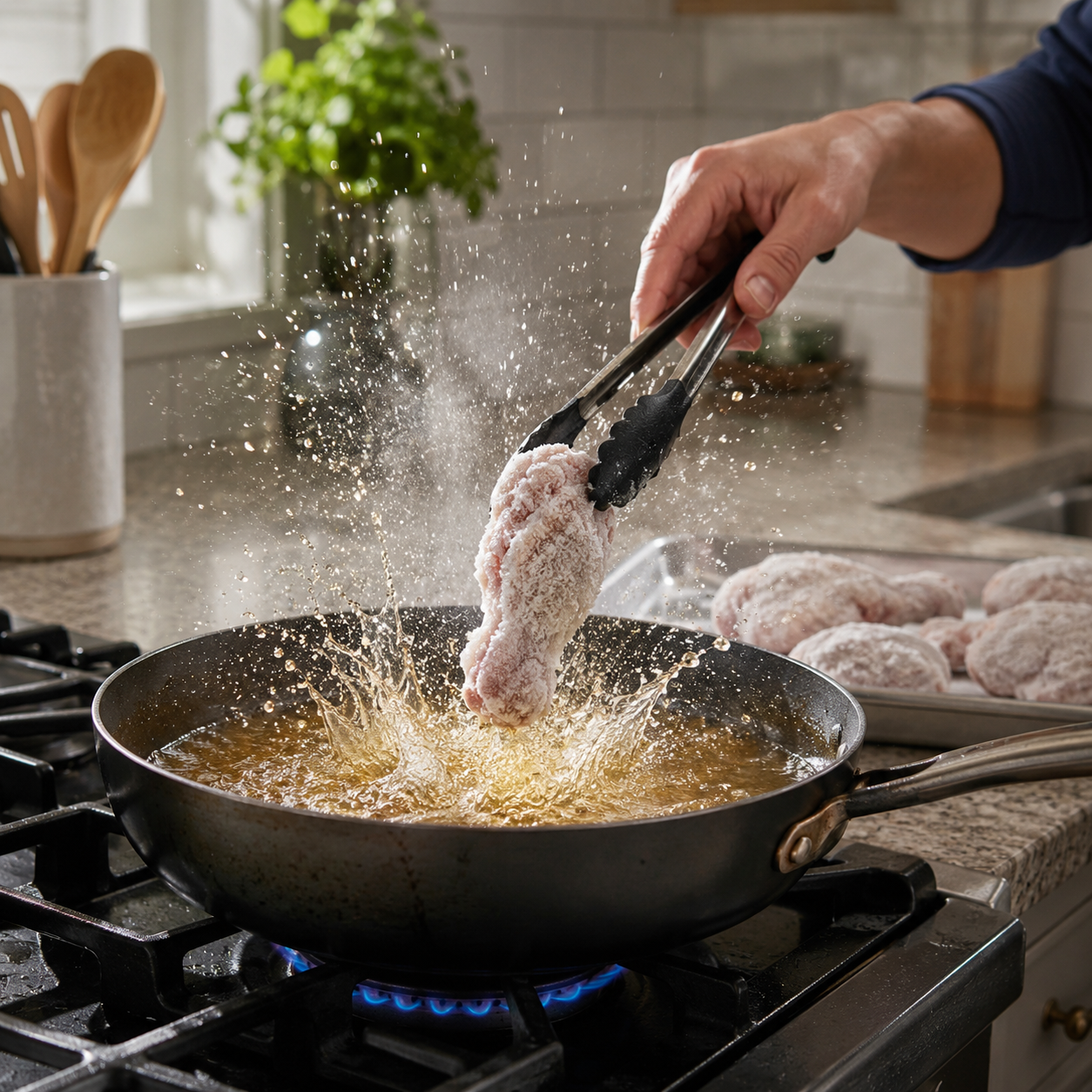
You drop a frozen dumpling, French fry, fish stick, or chicken nugget into hot oil, and suddenly the pan starts snapping.
Tiny drops of oil jump onto the stove. A few hit your hand. You step back quickly, maybe grab a lid, and wonder why something so simple became so stressful.
Most home cooks have had this happen at least once. Frozen foods are convenient, but they can behave unpredictably when they meet hot oil. The outside may look dry enough, but ice crystals, frost, and trapped moisture can quickly turn into steam. When that steam pushes through hot oil, the oil can splatter.
This is not just messy. Hot oil can cause painful burns, create slippery surfaces, and in more serious situations, contribute to kitchen fires if oil overheats or spills onto a burner.
The goal is not to make frying feel scary. It is to understand what is happening, slow down a little, and use safer habits when cooking frozen foods at home.
Why Frozen Food Makes Oil Splatter
The basic reason is water.
Frozen food often has ice crystals, frost, or surface moisture. Even if you cannot see much ice, there may still be frozen moisture on the surface or inside the food.
Hot oil and water do not mix calmly. When water hits hot oil, the water heats very quickly and turns into steam. Steam takes up much more space than liquid water. That sudden expansion pushes oil outward, causing popping and splattering.
The colder and wetter the food is, the more dramatic the reaction can be.
This is why a dry potato slice may fry quietly, while a frosty frozen mozzarella stick can make the oil bubble hard and spit. It is also why food with cracks, breading, pockets, or fillings can be unpredictable. Moisture may escape suddenly from inside.
In everyday terms, oil splatter is often steam trying to get out.
Frozen Does Not Always Mean “Ready for Hot Oil”
Many frozen foods are designed to be cooked straight from frozen, but that does not mean every method is equally calm or safe.
Some packages say to bake. Some say to air fry. Some say to deep fry. Some give different instructions depending on the appliance.
The package directions matter because manufacturers test cooking methods for that specific food. A frozen food that works well in the oven may fall apart or splatter badly in a shallow pan of oil.
Before frying frozen food, check the label. Look for the recommended method, temperature, and whether the food should be cooked from frozen or thawed first.
If the package does not clearly say the food can be fried from frozen, be cautious. Choose the oven or air fryer if that is the listed method.
Convenience foods are not all built the same. A frozen French fry is different from a frozen dumpling, which is different from a stuffed cheese snack.
Frost on the Surface Makes Splatter Worse
One of the biggest clues is visible frost.
If frozen food is covered in loose ice crystals, it is more likely to splatter when it hits oil. That frost is basically extra water waiting to flash into steam.
This often happens when a bag has been opened and closed several times, when food has thawed slightly and refrozen, or when the freezer has temperature swings.
A little frost on frozen food is common. Heavy frost, clumps of ice, or food stuck together in a block can make frying messier and less predictable.
Before cooking, shake off loose ice crystals over the sink or trash. If the food is heavily frosted, follow the package instructions carefully and consider using the oven or air fryer instead of oil.
Do not rinse frozen food to remove frost before frying. That adds more water, which is exactly what you are trying to avoid.
Why Shallow Frying Can Feel More Chaotic Than Deep Frying
Many people think using less oil is always safer. Sometimes it is. But with frozen foods, shallow frying can still splatter quite a bit.
In shallow frying, part of the food sits above the oil while part touches the hot surface. Moisture can escape unevenly. Food may stick, tear, or release steam from one side. Turning the food can also cause sudden popping.
Deep frying surrounds the food more evenly, but it comes with its own risks: a larger amount of hot oil, overflow, overheating, and fire risk if handled carelessly.
For most home kitchens, the safest choice is often not “more oil” or “less oil.” It is using the cooking method recommended on the package and choosing the one you can manage calmly.
If you are not comfortable managing hot oil, the oven or air fryer is often the better option.
Do Not Overfill the Pan
Overcrowding is one of the most common frying mistakes.
When you add too much frozen food at once, several things happen. The oil temperature drops quickly. Moisture is released from many pieces at the same time. Food may stick together. Bubbling can rise higher than expected.
If the pan is too full, oil can overflow or splash onto the stovetop.
Cook in small batches instead. Leave space around each piece. Let the oil settle between batches.
This may take a little longer, but it is calmer and safer. It also helps food cook more evenly.
A crowded pan is stressful. A pan with space is easier to control.
Use a Pan With High Sides
A shallow skillet may work for some foods, but it gives hot oil less room to bubble.
When frying frozen food, a heavy pan with higher sides is usually safer than a very shallow pan. It helps contain splatter and gives bubbling oil more room.
You do not need to fill the pan with oil. In fact, too much oil can create its own hazard. But the pan should be deep enough that oil does not easily jump over the edge when food is added.
A Dutch oven or deep heavy pot can be useful for deep frying because the sides are tall and stable. For shallow frying, choose a pan that gives you space, not one that is filled right to the edge.
Also make sure the pan is dry before adding oil. Water droplets in a pan can cause popping as the oil heats.
Add Food Slowly and Gently
Dropping frozen food from a height is asking for splatter.
Instead, lower food into the oil gently. Use tongs, a slotted spoon, or a spider strainer, depending on the food. Place the food away from you so any splash moves toward the back of the pan, not toward your hand or body.
Do not toss frozen pieces into hot oil like you are adding popcorn to a bowl.
If the oil starts bubbling aggressively, pause. Let it calm down before adding more.
This small habit makes a big difference. Most oil splatter happens in the first few seconds after food is added, so those seconds deserve your full attention.
Keep Your Hands, Face, and Sleeves Back
Hot oil splatter can happen fast.
Wear short sleeves or snug sleeves when frying. Loose sleeves can brush the pan, catch on handles, or get too close to the flame.
Keep your face away from the pan when adding food. Do not lean over to inspect it right as frozen food hits the oil.
Use long tongs or a long-handled slotted spoon. Keep a dry towel or oven mitt nearby, but do not let towels hang near the burner.
If children or pets are in the kitchen, create space before you start. Hot oil is not a good time for someone to run underfoot.
This is especially important in small kitchens where the stove area is also a walkway.
Water Is the Main Thing to Avoid Around Hot Oil
Once oil is hot, keep water away from it.
Do not add wet food.
Do not use a wet spoon.
Do not rinse frozen food right before frying.
Do not let water drip from your hands into the pan.
Do not place a wet lid over hot oil.
Even small amounts of water can cause popping. Larger amounts can cause violent splattering.
If food needs to be patted dry, use paper towels before it goes near the stove. If frozen food has loose frost, shake it off gently while still frozen. If package directions say to cook from frozen, do not thaw it in a way that leaves the surface wet unless the instructions tell you to do so.
Dry tools and dry surfaces are simple burn prevention.
Watch the Oil Temperature
Oil that is too cool can make food greasy and soggy. Oil that is too hot can smoke, break down, burn food, or increase fire risk.
A thermometer is helpful if you fry often. It takes away some guesswork.
If you do not have a thermometer, watch for warning signs. Oil that smokes before food goes in is too hot. Oil that bubbles violently and darkens quickly may also be overheated or contaminated with old food particles.
Do not leave oil heating unattended. Oil can go from warm to smoking faster than expected, especially in a thin pan or on a powerful burner.
If oil starts smoking, turn off or lower the heat and let it cool. Do not add frozen food to smoking oil.
That moment is not the time to “use up” the food quickly. It is time to slow down.
Use a Splatter Screen Carefully
A splatter screen can help reduce oil droplets on the stove and counter.
It is not a shield that makes frying risk-free, but it can make shallow frying more manageable. Choose a screen that fits the pan and has a handle that stays away from heat.
Do not use a solid lid tightly over active frying unless the recipe specifically calls for it. A tight lid traps steam, and when you remove it, condensation may drip back into the oil. That can cause popping.
A splatter screen lets steam escape while reducing some splatter. That is the balance you want.
If you do use a lid briefly to calm splatter, hold it carefully like a shield and avoid letting water drip into the pan. But for regular frying, a splatter screen is usually a better tool.
Keep the Stove Area Clear
Before frying, clear the area around the stove.
Move paper towels, food packaging, plastic bags, wooden utensils, dish towels, and anything else that does not need to be near hot oil.
Oil splatter can make nearby surfaces greasy. A crowded stove also makes it harder to react calmly if the pan bubbles over or smokes.
Turn pan handles inward so they cannot be bumped, but do not let them sit directly over another burner.
Keep the floor dry and uncluttered. Oil on the floor is slippery, and stepping back quickly from a popping pan can become a fall risk.
This is not about making the kitchen perfect. It is about giving yourself room to cook without rushing.
Never Pour Water on a Grease Fire
Because this topic involves hot oil, a gentle fire safety reminder matters.
If oil catches fire, do not pour water on it. Water can spread burning oil and make the situation worse.
For a small contained pan fire, general kitchen safety guidance often includes turning off the heat if it is safe to do so and covering the pan with a metal lid or baking sheet to smother the flames. But if the fire is spreading, you are unsure, or you feel unsafe, leave the area and call emergency services.
A kitchen-rated fire extinguisher can be helpful, but it should be used only if you know how to use it and can do so safely with a clear exit behind you.
The best prevention is to stay near the stove, avoid overheating oil, use the right pan, and keep flammable items away.
Do Not Move a Pan of Hot Oil
If oil is splattering, smoking, or bubbling, your first instinct may be to move the pan.
That can be dangerous.
A pan of hot oil is heavy, slippery, and easy to spill. Carrying it across the kitchen increases the chance of burns. If the oil is smoking, moving it can also splash oil onto the stove, counter, floor, or your skin.
Instead, turn off the heat if you can safely reach the control. Step back. Let the oil calm down.
Wait until oil has cooled before straining, pouring, or disposing of it.
Hot oil deserves patience.
Air Frying and Baking Can Be Safer Options
For many frozen foods, baking or air frying is easier and calmer than pan frying.
An oven or air fryer still gets hot, and you still need to avoid burns. But there is usually less loose oil, less splatter, and less fire risk from a pot of hot oil.
Many frozen foods are designed for oven or air fryer cooking. They may turn crisp without deep frying, especially if they already contain some oil in the coating.
Use the package instructions as your starting point. Preheat if directed. Arrange food in a single layer. Do not overcrowd the basket or tray.
If using an air fryer, remember that very greasy foods can still drip and smoke. Keep the appliance clean, and do not block ventilation.
What About Frozen French Fries?
Frozen fries are one of the most common foods people fry.
Commercial frozen fries are often designed to be cooked from frozen, but they can still splatter if they have frost, ice, or are added too quickly to hot oil.
Shake off loose ice crystals before frying. Add fries in small batches. Do not dump a whole bag into the pot.
If the oil bubbles up fast, stop adding fries and let it settle.
For many home cooks, oven-baking or air frying frozen fries is simpler and safer. It may not taste exactly like deep-fried restaurant fries, but it avoids managing a pot of hot oil.
What About Frozen Dumplings, Fish, or Chicken?
Frozen dumplings can be tricky because they may have thin wrappers, fillings, and trapped moisture. If they crack or stick, steam can escape suddenly. Follow the package directions carefully. Many dumplings are better pan-steamed, boiled, or cooked with a controlled method rather than dropped straight into deep oil.
Frozen fish can splatter because of surface ice and moisture. Breaded fish may also shed crumbs that burn in the oil. If the package recommends baking, bake it.
Frozen chicken pieces need special attention because they must be cooked safely inside, not just browned outside. Follow package directions and use a food thermometer when appropriate. Do not rely only on color or crispness.
If a frozen food is raw inside, oil splatter is not the only concern. Proper internal cooking matters too.
Clean Up Oil Safely
After frying, let oil cool completely before handling it.
Do not pour hot oil into the trash. Do not pour oil down the sink. Oil can clog pipes and create plumbing problems.
For small amounts, wipe cooled oil with paper towels and throw them away. For larger amounts, pour cooled oil into a container with a lid and dispose of it according to your local waste rules.
Wipe the stove after it cools. Oil residue can become sticky and may smoke during future cooking.
If oil splattered onto the floor, clean it well. Even a thin film can be slippery.
A safe kitchen is not only about cooking. It is also about what happens after the pan is off.
A Calm Routine for Frying Frozen Foods
Before frying frozen food, take a moment to set up.
Read the package directions.
Choose a deep enough pan.
Use a reasonable amount of oil.
Clear the stove area.
Keep water away.
Shake off loose frost.
Heat oil carefully.
Add food slowly in small batches.
Stand back and use long tools.
Stay near the stove.
Let oil cool before cleanup.
This routine is simple, but it prevents most of the common problems that make frying feel chaotic.
Final Thoughts
Frozen foods can make hot oil splatter because ice and moisture quickly turn into steam. That steam pushes oil outward, causing the popping and jumping droplets that make frying stressful.
The safest approach is not complicated. Follow the package directions, avoid wet or heavily frosted food, use a pan with enough space, add food gently, and keep your hands and face back. If the food can be baked or air fried, that may be the calmer choice.
Hot oil deserves respect, but it does not need to make you nervous. With a little preparation and a slower pace, frozen foods can be cooked more comfortably, with fewer surprises and a much cleaner stove afterward.
Hi, I’m the creator and editor behind ZestyHabit. I research everyday safety, first aid, and practical wellness topics using official guidance and reliable public sources, then turn that information into clear, realistic steps for daily life.
My goal is to help readers make safer, better-informed choices at home and beyond.